

Bachelor of Science in Exercise Science: Sports Performance Emphasis
Study Sports Performance Techniques for Athletes at Any Level
This BS in Exercise Science at Grand Canyon University is designed to help prepare you for direct entry into the field of sports performance and strength and conditioning at various levels of athletics, including high school, college, club, professional sports and private practice, among others.
You can expect coursework that may prepare you to pursue graduate-level studies and qualify you to seek various nationally recognized professional certifications in the field.
Earn Your Bachelor’s in Exercise Science for Sports Performance at GCU
This bachelor’s degree includes flexible electives that can enable you to align your academic path with your career plans, which may include nutrition, entrepreneurial studies, business, sport management, communication or behavioral health, among others.
This program delves into the scientific principles and processes pertaining to exercise science and athletic performance, which may position you to better support athletes as they strive to reach their full potential. In addition, the program offers comprehensive coursework in areas such as corrective exercises, resistance training and cardiovascular exercise.
Loading Form
Topics Covered in the Sports Performance Courses
Enjoy an active learning environment while you earn your bachelor’s in exercise science degree on GCU’s supportive, friendly campus. You will have opportunities to examine the many factors that contribute to overall health and wellness, as well as sports performance. As you work through the exercise curriculum, you will be taught competencies in content areas that include:
- Principles of sound nutrition and how food selection contributes to overall wellness
- Foundational basics of sports performance, including plyometrics, acceleration, multidirectional speed, exercise techniques and the science of coaching
- The structures and functions of human anatomy, including the integumentary, skeletal, muscular and nervous systems
- Effective exercise programming in resistance training and cardiovascular fitness
- The design of health education and physical fitness programs through the lens of special populations
- The analysis of human movement, its influences and proper biomechanics
The sports performance courses include a capstone course, which is intended to give you an opportunity to demonstrate the competencies taught in this program. There is a focus on preparation for exercise science careers. This educational program is structured to provide you with the tools to prepare yourself for the rigors of exercise science professions, including a comprehensive foundation and preparation in exercise physiology, assessment techniques and the latest industry trends.
At GCU, you will have opportunities to gain hands-on experience with a variety of populations. Through our research program and outreach activities, including research and design labs and clinics, exercise science students have had the opportunity to work with firefighters, law enforcement, the military, and a variety of athletic teams on and off campus, including professional sports teams.
GCU has an exercise science teaching laboratory that may allow you the opportunity to experience what it is like to act as an athletic performance professional, conducting tests similar to those performed by professional sports coaches. You will be taught how to use high-tech laboratory equipment throughout the exercise science and sports performance courses.
Career Paths With a BS in Exercise Science: Sports Performance Emphasis
Sports and exercise science is a versatile field that may be applicable to a range of industries. With a foundation of competencies in this field, you might pursue a variety of potential career opportunities. Some may even choose to pursue a master’s or doctoral level education to further specialize in an area of sports performance or a related field. This may increase your chances of earning advanced certifications in the strength and conditioning industry, which may allow you to position yourself to potentially enhance career qualifications and opportunities.
While the U.S. Bureau of Labor Statistics (BLS) may not offer specific details on careers in exercise science, related occupations such as exercise physiologists are among the fields relevant to this degree, focusing on assessing, improving and maintaining individuals' physical fitness and overall health.3
With this bachelor’s in exercise science sports performance emphasis, you may be positioned to pursue work as an exercise physiologist. Professionals in this role develop physical activity programs to help people improve components of their fitness, such as cardiovascular function, muscular strength or flexibility.3
It’s important to note that some careers within exercise science may require additional training, practicum experience or certification beyond a graduate degree.
NSCA Recognized Program from an Institutionally Accredited University
GCU is proud to be recognized by the National Strength and Conditioning Association (NSCA) as one of their Education Recognition Program (ERP) universities. This recognition reflects our program’s ability to offer preparation for certification through the NSCA.
In addition, GCU holds accreditation from the Higher Learning Commission (HLC), a testament to our commitment to maintaining high educational standards and providing quality academic programs. GCU is pleased to offer institutionally accredited programs to continue in our longstanding tradition of prioritizing the quality of our curriculum and instruction. At GCU, you will be taught by instructors who are knowledgeable in their respective fields, and who are committed to supporting all students.
Bachelor’s in Exercise Science: Sports Performance FAQs
Your choices of a degree and career path are significant decisions for your future. Take some time to review the following frequently asked questions and answers, which may help you become more familiar with the exercise science field.
The science behind how the body works — the kinesiology — is complex. The majority of exercise science courses are science-intensive, with challenging content in areas such as human anatomy and human physiology. This BS in exercise science: sports performance emphasis may challenge you with practical sessions, lab work and theory that apply to sport and exercise. If you enjoy research-driven coursework and are eager to apply theories to practical situations, then a bachelor’s in exercise science may be a good choice for you.
A sports scientist is often used as a broader term that encompasses areas of sports medicine. They specialize in studying matters that pertain to sports and exercise science, ranging from injury prevention to the way in which the body responds to exercise.4 It’s a multidisciplinary field, and the career often requires a relevant master’s degree or doctorate, in addition to a bachelor’s in exercise science and relevant experience.4 A sports scientist may choose to earn professional certifications, such as the Certified Performance and Sport Scientist® credential from the National Strength and Conditioning Association.5 Aspiring sports scientists can benefit from strong problem-solving, research and communication skills.4
With the sports science field representing a wealth of career opportunities, earning additional certifications has the potential to help you become a more qualified job candidate. Certifications are earned specialty qualifications outside of earning your degree that may present an opportunity for candidates to demonstrate specialized knowledge in particular areas of interest. While this BS in Exercise Science: sports performance degree from GCU does not provide any specific certifications, this degree may set you up to be able to pursue certifications, such as:6
- Certified personal trainer
- Certified exercise physiologist
- Certified group exercise instructor
- Sports management
- Sports coaching
If you have the drive to further your health and wellness education and strengthen your career potential, a degree in exercise science may be worth it. Many students who graduate from GCU’s bachelor’s in exercise science degree may also choose to pursue higher education after completion of an undergraduate sports science degree. With exercise science and exercise physiology closely related fields within the realm of health and fitness, the U.S. Bureau of Labor Statistics Occupational Outlook Handbook estimates job growth for exercise physiologists, to increase by about 10% from 2022 to 2032, much faster than average, accounting for an estimated increase of 1,700 jobs in the field.1
Exercise science majors within our BS degree with a sports performance emphasis may have the opportunity to pursue a career as an exercise physiologist. The BLS may not detail careers in exercise science, but related fields like exercise physiology are pertinent. According to the U.S. Bureau of Labor Statistics, exercise physiologists had a median annual wage of $51,350 as of May 2022.2 Additionally, a degree with a sports performance focus may offer you a steppingstone to other professions.
Are you eager to combine your passion for sports and fitness with purpose for your future career? Fill out the form on this page to learn more about GCU’s Bachelor of Science in Exercise Science with an Emphasis in Sports Performance degree.
1 COVID-19 has adversely affected the global economy and data from 2020 and 2021 may be atypical compared to prior years. Accordingly, data shown is effective September 2022, which can be found here: U.S. Bureau of Labor Statistics, Occupational Outlook Handbook, Exercise Physiologists, retrieved on Oct. 6, 2023.
2 The earnings referenced were reported by the U.S. Bureau of Labor Statistics (BLS), Exercise Physiologists as of May 2022, retrieved on Oct. 6, 2023. Due to COVID-19, data from 2020 and 2021 may be atypical compared to prior years. BLS calculates the median using salaries of workers nationwide with varying levels of education and experience. It does not reflect the earnings of GCU graduates as exercise physiologists, nor does it reflect earnings of workers in one city or region of the country or a typical entry-level salary. Median income is the statistical midpoint for the range of salaries in a specific occupation. It represents what you would earn if you were paid more money than half the workers in an occupation, and less than half the workers in an occupation. It may give you a basis to estimate what you might earn at some point if you enter this career. Grand Canyon University can make no guarantees on individual graduates’ salaries. Your employability will be determined by numerous factors over which GCU has no control, such as the employer the graduate chooses to apply to, the graduate’s experience level, individual characteristics, skills, etc., against a pool of candidates.
3 U.S. Bureau of Labor Statistics (2023, Sept. 27). What Exercise Physiologists Do. Occupational Outlook Handbook. Retrieved on Oct. 10, 2023.
4 Indeed (2023, Jan. 25). How to become a sports scientist (definition and skills). Retrieved Oct. 6, 2023.
5 National Strength and Conditioning Association (n.d.). Become a Certified Performance and Sport Scientist (CPSS). Retrieved Oct. 6, 2023.
6 Sports Management Degree Guide (n.d.). Top 5 sports certifications. Retrieved Oct. 6, 2023.
General Education Requirements
General Education coursework prepares Grand Canyon University graduates to think critically, communicate clearly, live responsibly in a diverse world, and thoughtfully integrate their faith and ethical convictions into all dimensions of life. These competencies, essential to an effective and satisfying life, are outlined in the General Education Learner Outcomes. General Education courses embody the breadth of human understanding and creativity contained in the liberal arts and sciences tradition. Students take an array of foundational knowledge courses that promote expanded knowledge, insight, and the outcomes identified in the University's General Education Competencies. The knowledge and skills students acquire through these courses serve as a foundation for successful careers and lifelong journeys of growing understanding and wisdom.
Requirements
Upon completion of the Grand Canyon University's University Foundation experience, students will be able to demonstrate competency in the areas of academic skills and self-leadership. They will be able to articulate the range of resources available to assist them, explore career options related to their area of study, and have knowledge of Grand Canyon's community. Students will be able to demonstrate foundational academic success skills, explore GCU resources (CLA, Library, Career Center, ADA office, etc), articulate strategies of self-leadership and management and recognize opportunities to engage in the GCU community.
Course Options
- UNV-103, University Success: 4
- UNV-303, University Success: 4
- UNV-108, University Success in the College of Education: 4
Requirements
Graduates of Grand Canyon University will be able to construct rhetorically effective communications appropriate to diverse audiences, purposes, and occasions (English composition, communication, critical reading, foreign language, sign language, etc.). Students are required to take 3 credits of English grammar or composition.
Course Options
- UNV-104, 21st Century Skills: Communication and Information Literacy: 4
- ENG-105, English Composition I: 4
- ENG-106, English Composition II: 4
Requirements
Graduates of Grand Canyon University will be able to express aspects of Christian heritage and worldview. Students are required to take CWV-101/CWV-301.
Course Options
- CWV-101, Christian Worldview: 4
- CWV-301, Christian Worldview: 4
Requirements
Graduates of Grand Canyon University will be able to use various analytic and problem-solving skills to examine, evaluate, and/or challenge ideas and arguments (mathematics, biology, chemistry, physics, geology, astronomy, physical geography, ecology, economics, theology, logic, philosophy, technology, statistics, accounting, etc.). Students are required to take 3 credits of intermediate algebra or higher.
Course Options
- MAT-154, Applications of College Algebra: 4
- MAT-144, College Mathematics: 4
- PHI-105, 21st Century Skills: Critical Thinking and Problem Solving: 4
- BIO-220, Environmental Science: 4
Requirements
Graduates of Grand Canyon University will be able to demonstrate awareness and appreciation of and empathy for differences in arts and culture, values, experiences, historical perspectives, and other aspects of life (psychology, sociology, government, Christian studies, Bible, geography, anthropology, economics, political science, child and family studies, law, ethics, cross-cultural studies, history, art, music, dance, theater, applied arts, literature, health, etc.). If the predefined course is a part of the major, students need to take an additional course.
Course Options
- HIS-144, U.S. History Themes: 4
- PSY-102, General Psychology: 4
- SOC-100, Everyday Sociology: 4
Core Courses
Course Description
This is an introductory course in general nutrition and wellness, including the definitions of fitness and health, and review of fundamental nutritional principles. This course provides for a basic understanding of nutritional science and applications to food selection and overall health and wellness.
Course Description
This course provides the knowledge necessary to enter the field of sports performance. The topics of movement preparation, plyometrics, acceleration, absolute speed, and multidirectional speed are introduced. Students are also introduced to testing, movement skills, nutrition, mindset, motivation science, exercise techniques, and regeneration, as well as program planning for energy system development designed to improve strength, power, sprint, and speed. The course includes a focus on the science of coaching and training tactical populations such as fire, police, and military. Co-Requisite: EXS-210L.
Course Description
This course provides the skills necessary to enter the field of sports performance, with a focus on field and laboratory experiences designed to reinforce the practical application of the skills introduced in lecture. Co-Requisite: EXS-210.
Course Description
This writing intensive course is designed to provide the foundation of healthy behavior change in relation to influential factors. Content includes motivation for physical activity and healthy choices, as well as an introduction to the psychology of sports.
Course Description
This course is the first of a two-course sequence examining the structure and function of the human body and mechanisms for maintaining homeostasis within it. This portion includes the study of cells; tissues; genetics; and the integumentary, skeletal, muscular, and nervous systems. Co-requisite: BIO-201L.
Course Description
This course is a systematic study of human gross anatomy and function. Topics include the integumentary, skeletal, muscular, and nervous systems. Co-Requisite: BIO-201.
Course Description
This course introduces the principles and techniques of strength and cardiovascular training. Musculoskeletal, cardiac, and respiratory anatomy are discussed, as well as how these systems adapt and manage the stress of regular exercise. Effective exercise programming is also discussed and applied to various physical abilities to develop a well-rounded program. Knowledge gained in this course prepares students for professional certification in the field of Resistance Training and Cardiovascular Fitness. Prerequisites: EXS-210 and EXS-210L. Co-Requisite: EXS-250L.
Course Description
This field and laboratory experience course introduces exercises that target specific muscle groups and systems of the body to show students how to design an effective exercise program. Students are introduced to effective coaching strategies, including progression, regression, coaching cues, and proper evaluation; these skills can then be applied to the professional development and delivery of an exercise session. Prerequisites: EXS-210 and EXS-210L. Co-Requisite: EXS-250.
Course Description
This course introduces analysis of special populations to assist in designing health education and physical fitness programs.
Course Description
This course is the second of a two-course sequence examining the structure and function of the human body and mechanisms for maintaining homeostasis within it. This portion includes the study of immunity; metabolism; energetics; fluid, electrolyte and acid-base balance; and the endocrine, hematologic, cardiovascular, lymphatic, respiratory, digestive, urinary, and reproductive systems. Prerequisites: BIO-201 and BIO-201L. Co-requisite: BIO-202L.
Course Description
This course is a systematic study of human gross anatomy and function. Topics include the endocrine, cardiovascular, respiratory, digestive, renal, and reproductive systems. Prerequisites: BIO-201 and BIO-201L. Co-Requisite: BIO-202.
Course Description
This writing intensive course is a study of the effects of exercise on the body. Topics include nutrition as the basis for physical activity; how energy is produced and utilized during physical activity; the energy delivery and vital functions of the respiratory, cardiovascular, muscular, and nervous systems during exercise; how these systems can be enhanced through training; the impact of ergogenic aids and environmental stress on performance; and the effect of exercise on body composition, weight control, aging, and disease prevention. The body’s responses and adaptations to exercise at the systemic, as well as the subcellular level, are also discussed. Prerequisites: BIO-155 and BIO-155L, or BIO-201 and BIO-201L, or BIO-210 and BIO-210L. Co-Requisite: EXS-340L.
Course Description
This is a course of field and laboratory experiences designed to reinforce the basic principles learned in the lecture course. Skills of measurement and evaluation, including computerized methods employed to facilitate testing, are applied to physiological and systemic principles of exercise. Prerequisites: BIO-155 and BIO-155L, or BIO-201 and BIO-201L, or BIO-210 and BIO-210L. Co-Requisite: EXS-340.
Course Description
This course provides the knowledge necessary to teach motor skills throughout the lifespan and apply current principles and theories of motor control and motor learning to exercise and rehabilitation populations. Content includes foundational neuroscience and connections with the musculoskeletal system, developmental motor milestones, motor control and motor learning principles, practice and feedback variables, teaching skill acquisition, and achieving maximum performance and retention. Prerequisite: BIO-202 or BIO-211.
Course Description
This course is an analysis of human movement, integrating knowledge of the skeletal, muscular, and neurological systems with the effects that gravity, friction, internal and external forces, and the laws of motion have on their functions. Topics presented include biomechanics of human bone, joint, and skeletal muscle; structure and function of the upper extremity, lower extremity, and spine; concepts of linear and angular kinematics and kinetics as applied to human motion; equilibrium and stability on land; and motion through a fluid medium of air or water. Included is the application of these factors to various types of physical skills. Prerequisites: BIO-155 and BIO-155L, or BIO-201 and BIO-201L, or BIO-210 and BIO-210L. Co-Requisite: EXS-335L.
Course Description
This laboratory course is designed to apply the anatomical, kinesiological, and biomechanical principles learned in the lecture course to human body movement. Movement of all of the major joints of the body is analyzed by relative and absolute joint position and muscle action, and biomechanical terms such as linear and angular kinematics, friction, work, power, energy, and torque are applied to human motion. Prerequisites: BIO-155 and BIO-155L, or BIO-201 and BIO-201L, or BIO-210 and BIO-210L. Co-Requisite: EXS-335.
Course Description
This capstone course acts as a culmination of the learning experiences during the exercise science program. A focus will be on career preparation including resume building, portfolio creation, and networking. Prerequisite: EXS-250 or EXS-318 or EXS-430 or EXS-485.
Course Description
This course expands the principles and techniques of strength training including sport- and activity-specific program design and implementation. Knowledge gained in this course will contribute to student preparation for professional certification in the field. Prerequisites: EXS-250, EXS-250L, EXS-340 and EXS-340L. Co-Requisite: EXS-455L.
Course Description
This course applies the principles and techniques of strength training including sport- and activity-specific program design and implementation. Prerequisites: EXS-250, EXS-250L, EXS-340 and EXS-340L. Co-Requisite: EXS-455.
Course Description
This course provides students with basic instruction in research methods needed to read and critique published research in physical activity, health, nutrition, and sports performance. The course will also provide you with the skills needed to design studies and develop a research proposal. Statistical terminology and calculations will be introduced in the context of evaluating research. Students will be required to use statistical software throughout the course.
Course Description
This course incorporates evidence-based concepts and application of corrective exercises to improve muscle imbalance and movement efficiency to decrease injury risk and promote recovery. Techniques include myofascial release, static and neuromuscular stretching, strength training, isometrics, and integrated dynamic movements. Prerequisites: BIO-155 and BIO-155L, or BIO-201 and BIO-201L, or BIO-210 and BIO-210L.
Course Description
In this course, students learn how sports performance professionals engage with athletes to promote health and human performance and apply content knowledge to a sports performance experience. Knowledge gained in this course prepares students for certification exams and careers in the field of sports performance. Prerequisite: EXS-250 or EXS-318 or EXS-430 or EXS-485.
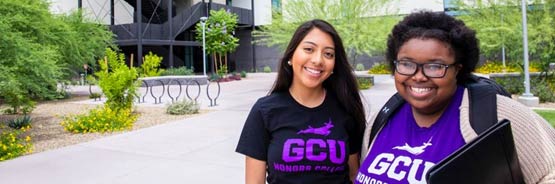
Join Grand Canyon University’s vibrant and growing campus community, with daytime classes designed for traditional students. Immerse yourself in a full undergraduate experience, complete with curriculum designed within the context of our Christian worldview.
* Please note that this list may contain programs and courses not presently offered, as availability may vary depending on class size, enrollment and other contributing factors. If you are interested in a program or course listed herein please first contact your University Counselor for the most current information regarding availability.
* Please refer to the Academic Catalog for more information. Programs or courses subject to change.