

Online Bachelor’s Degree in Law Enforcement Advancement

Online Bachelor’s Degree in Law Enforcement Advancement
journey today.
In the criminal justice system, police officers, detectives and investigators rely on strong and supportive leaders behind the scenes to perform effectively on the front lines. These leaders are charged with upholding public trust, promoting professional ethics and ensuring that all officers adhere to policies and procedures. If you have a desire to position yourself for possible career advancement while serving and protecting those in your community, earning a bachelor’s degree in law enforcement advancement may be an ideal first step.
The Bachelor of Science in Law Enforcement Advancement degree at Grand Canyon University covers all components of the justice system while emphasizing advanced leadership models for law enforcement professionals. In this program, you will have the opportunity to prepare for professional growth by developing the skills to guide your agency through the challenges of policing diverse communities and safeguarding the public from various threats.
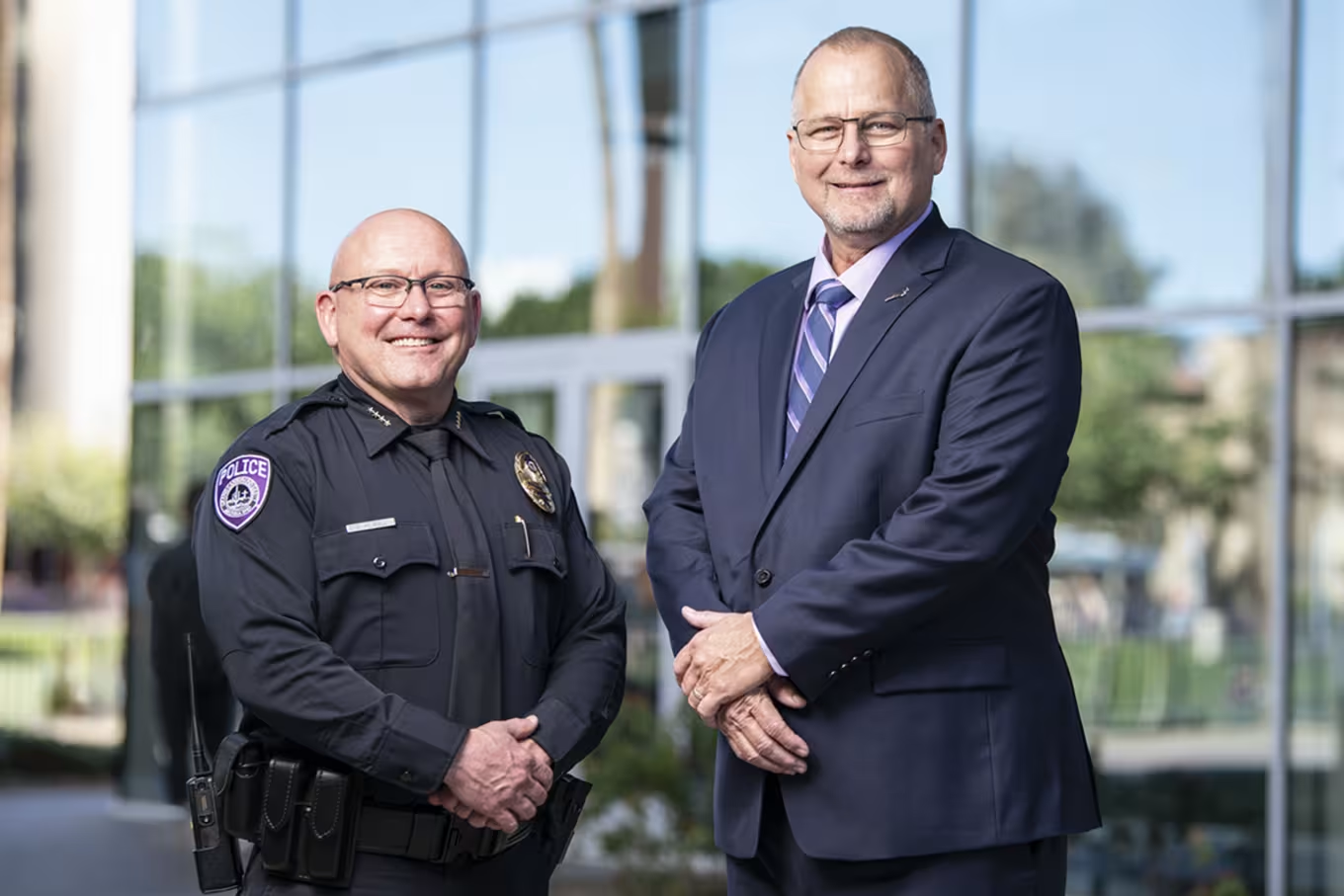
The online law enforcement degree provides the flexibility to complete your studies on your own schedule, seamlessly fitting education into your busy life. With guidance from experienced faculty, you can gain valuable insights and access helpful online resources, all while studying from the comfort of your home while maintaining your current full-time career. This supportive environment can enhance your learning experience.

You will explore a variety of essential topics that can help you prepare for a career in criminal justice. Courses in this program are designed to teach you the knowledge and skills to lead and navigate the complexities of the law enforcement field effectively.
This program empowers future leaders to gain competencies in the following key areas of the criminal justice field:
This degree offers you the opportunity to gain self-confidence in your leadership style as you examine the core principles of communication, team-leading and ethical practices in law enforcement. In addition, you will examine the function, organization, issues and practices of law enforcement agencies throughout the U.S.
GCU’s degree in law enforcement online focuses on servant leadership. You will be expected to develop skills to effectively communicate your organization’s mission and vision to diverse audiences and key stakeholders.
You will also be taught competencies in:
As part of GCU’s Christian learning community, you will be taught leadership skills that place special importance on contributing to the greater social good. In coursework and discussion forums, you will explore the fundamentals of how to inspire and lead others through established, modern theories with the ethical principles of servant leadership.
Additionally, this degree examines topics of significance to future law enforcement leaders, such as:
This online degree program will teach you how to use ethical principles to build and maintain ethics-driven law enforcement organizations.
As a graduate, you will be expected to:
Program Capstone
Toward the end of your online law enforcement degree, you’ll complete a capstone course where you’ll create a community policing strategic plan through a detailed process. This hands-on project reinforces your learning and can equip you with practical skills to make a meaningful impact in your community.

Schooling for law enforcement professionals is designed to provide these future leaders with the skills needed to guide and support their teams on the front lines.
Earning a degree in law enforcement online may prepare you to pursue future career opportunities or to apply to an advanced criminal justice degree program.
GCU has been institutionally accredited by the Higher Learning Commission since 1968. The College of Humanities and Social Sciences shares the university’s commitment to upholding the principles and standards established by our accrediting bodies.
Frequently Asked Questions
If you want to learn more about schooling opportunities for law enforcement professionals, read our answers to these frequently asked questions.
Within the law enforcement field, there are typically three main areas — uniformed officers, support staff and detectives and investigators. If you want to help families and communities through advocacy and policy change, then you may want to consider a justice studies degree. On the other hand, a bachelor’s degree in law enforcement is an appropriate choice for those looking to pursue a leadership role in law enforcement.
Depending on your career goals, GCU offers additional undergraduate concentrations for future law enforcement professionals, including:
A law enforcement degree program aims to challenge you to develop your critical thinking, communication and leadership skills. You’ll dive into key areas like criminal procedure, strategic planning and policing competencies. At GCU, our dedicated faculty members are committed to supporting your progress.
Many students choose to earn an online degree for the convenience and flexibility it can provide. GCU is an accredited university, which provides a foundation of trust for quality education. As a student in this program, you will be taught by faculty who are knowledgeable in criminal justice and other relevant fields.


Advocate for Community Safety
Prepare for advancement in law enforcement by examining leadership competencies.