

Bachelor’s in Strength and Conditioning Degree
Develop Performance and Injury Prevention Strategies
The Bachelor of Science in Strength and Conditioning explores human movement through anatomy, kinesiology and physiology, emphasizing performance optimization and injury prevention. The program integrates evidence-based training methods, exercise programming, nutrition and behavior change strategies.
Offered through the College of Natural Sciences, this program combines science-based training principles with ethical leadership, helping you develop the skills to support physical performance, reduce injury risk and serve others with purpose.

Campus: $8,250 per semester [More Info]
Up to 90 credits, only 84 can be lower division
Credits: Fill out the Lopes Eval to find out what will transfer
Admission Requirements (Bachelor's)
- 16+ years old
- High School Graduate
- 2.8+ Unweighted GPA
OR 2.5+ Unweighted GPA and
- ACT: 19
- SAT: 1000*
Admission requirements may differ based on degree level, program and modality, or transfer status. Some programs of study may require a higher GPA and/or other qualifying criteria for admission. Please review full admission and program requirements in the University Policy Handbook.
*Math and reading only on a 1600 point scale (test date after 3/1/2016). SAT score of 1380 required for 2400 point scale (test date before 3/1/2016).
Why Should I Study Strength and Conditioning at GCU?
Students can gain hands-on experience by applying their knowledge under the guidance of an NSCA-certified Strength & Conditioning Specialist (CSCS). Grounded in ethical and professional principles and a Christian worldview, the curriculum aligns with NSCA standards, preparing students for the CSCS certification.
At GCU, you’ll be part of a vibrant campus community where learning happens inside and outside the classroom. With access to modern training facilities and opportunities to connect with peers, professors and athletic professionals, you’ll have the opportunity to grow personally, professionally and spiritually as you pursue your passion for strength and conditioning.
GCU is committed to making quality education affordable. With competitive tuition rates and financial support options like scholarships and aid, you can focus on developing your skills and advancing your future in strength and conditioning without unnecessary cost barriers.
At GCU, you will be supported with dedicated resources designed to help you stay on track and reach your goals. From one-on-one academic guidance to career services that help you prepare for certification and employment, you’ll have a network focused on helping you confidently move from student to strength and conditioning professional.
Key Topics in Strength and Conditioning Courses
The BS in Strength and Conditioning coursework is designed to help you build a strong foundation in human anatomy, movement science and exercise physiology while applying evidence-based training principles to target peak athletic performance. You’ll explore strength and conditioning methods, sport nutrition and coaching strategies, while gaining hands-on lab and field experience aligned with NSCA standards and CSCS certification preparation.
Key topics covered in the strength and conditioning bachelor's degree include:
What Can You Do With a Strength and Conditioning Degree?
A bachelor’s in strength and conditioning degree from GCU can help you build the scientific knowledge and practical training skills needed to support physical performance, movement quality and injury prevention across a range of environments. Graduates may choose to apply their learning in performance, fitness and wellness settings, or continue their education in advanced studies in kinesiology, exercise physiology and related fields.
Strength and conditioning coaches work across settings including:(See disclaimer 1)
Professional sports teams
Fitness centers
High schools and colleges
Military and law enforcement
Earn Your Degree From an Accredited University
GCU is institutionally accredited by the Higher Learning Commission, reflecting the university’s commitment to academic quality and continuous improvement. The College of Natural Sciences supports this mission by offering rigorous, science-based programs that emphasize ethical practice, critical thinking and service.

Frequently Asked Questions
Explore these frequently asked questions as you decide if a BS in Strength and Conditioning is right for your career goals and aspirations.
What is the difference between strength and conditioning and exercise science?
Will this program prepare me for the CSCS certification?
Is a bachelor’s in strength and conditioning worth it?
What skills will I build for coaching and performance roles?
How does nutrition fit into strength and conditioning courses?
How does this program support injury prevention and safe training practices?
Program Curriculum
General Education Requirements
Core Courses

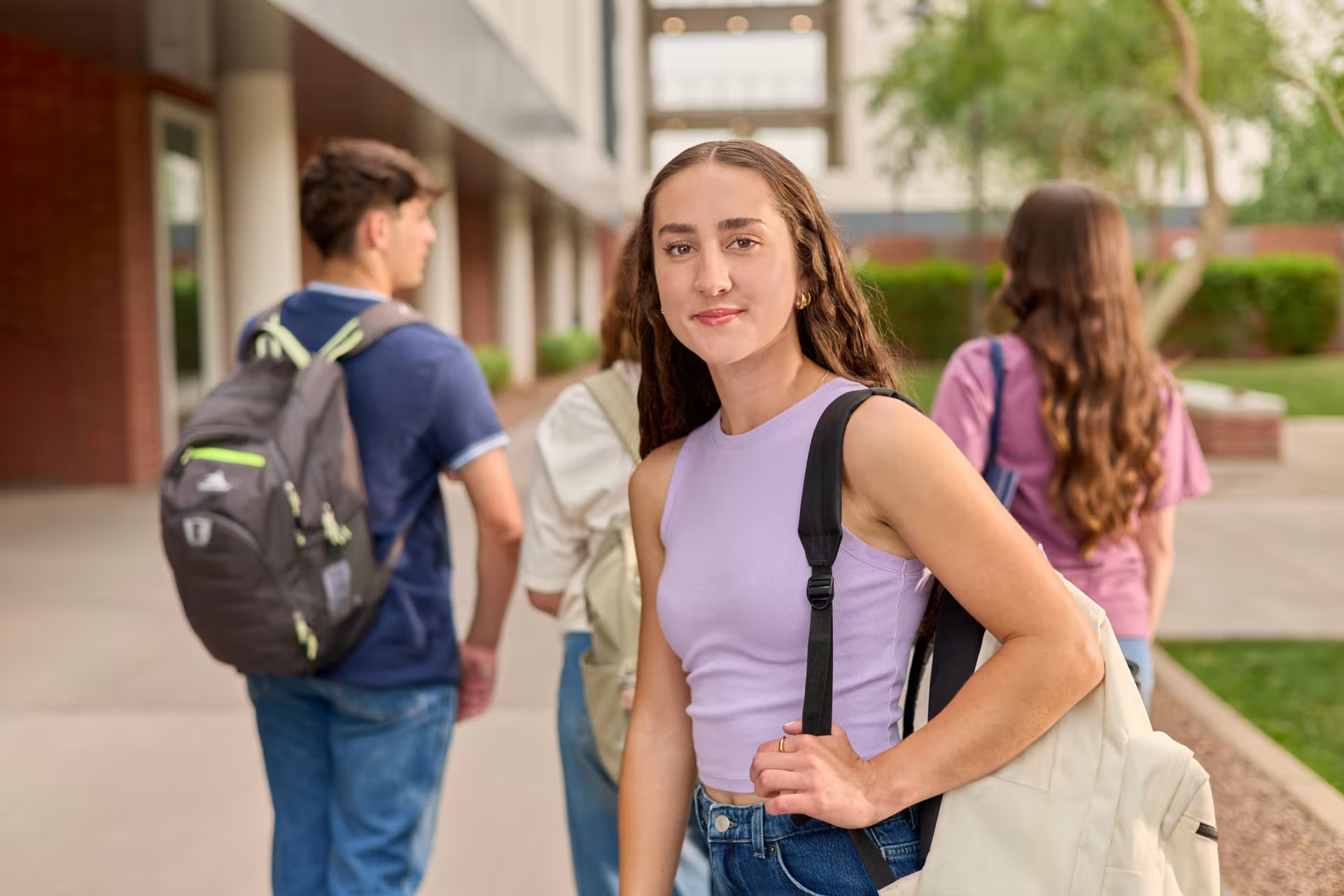
Take the next step toward a career in strength and conditioning. Apply to GCU’s BS in Strength and Conditioning to begin developing the knowledge and experience to support athletic performance and injury prevention.
1. U.S. Bureau of Labor Statistics. (2025, Aug 28). Work Environment. Occupational Outlook Handbook. Retrieved February 2026.
2. The earnings referenced were reported by the U.S. Bureau of Labor Statistics (BLS), Exercise Physiologists, as of May 2024, retrieved February 2026. Due to COVID-19, data from 2020 to 2023 may be atypical compared to prior years. BLS calculates the median using salaries of workers nationwide with varying levels of education and experience. It does not reflect the earnings of GCU graduates as exercise physiologists, nor does it reflect the earnings of workers in one city or region of the country or a typical entry-level salary. Median income is the statistical midpoint for the range of salaries in a specific occupation. It is very unlikely that a median salary will reflect an entry-level salary. It represents what you would earn if you were paid more money than half the workers in an occupation, and less than half the workers in an occupation. It may give you a basis to estimate what you might earn at some point if you enter this career. Grand Canyon University can make no guarantees on individual graduates’ salaries. Your employability will be determined by numerous factors over which GCU has no control, such as the employer the graduate chooses to apply to, the graduate’s experience level, individual characteristics, skills, etc. against a pool of candidates.
3. COVID-19 has adversely affected the global economy and data from 2020 to 2023 may be atypical compared to prior years. Accordingly, data shown is effective August 2025, which can be found here: U.S. Bureau of Labor Statistics, Occupational Outlook Handbook, Exercise Physiologists, retrieved February 2026.