


Bachelor of Arts in Dance for Secondary Education
Initial Program – Leads to Initial Teacher Licensure
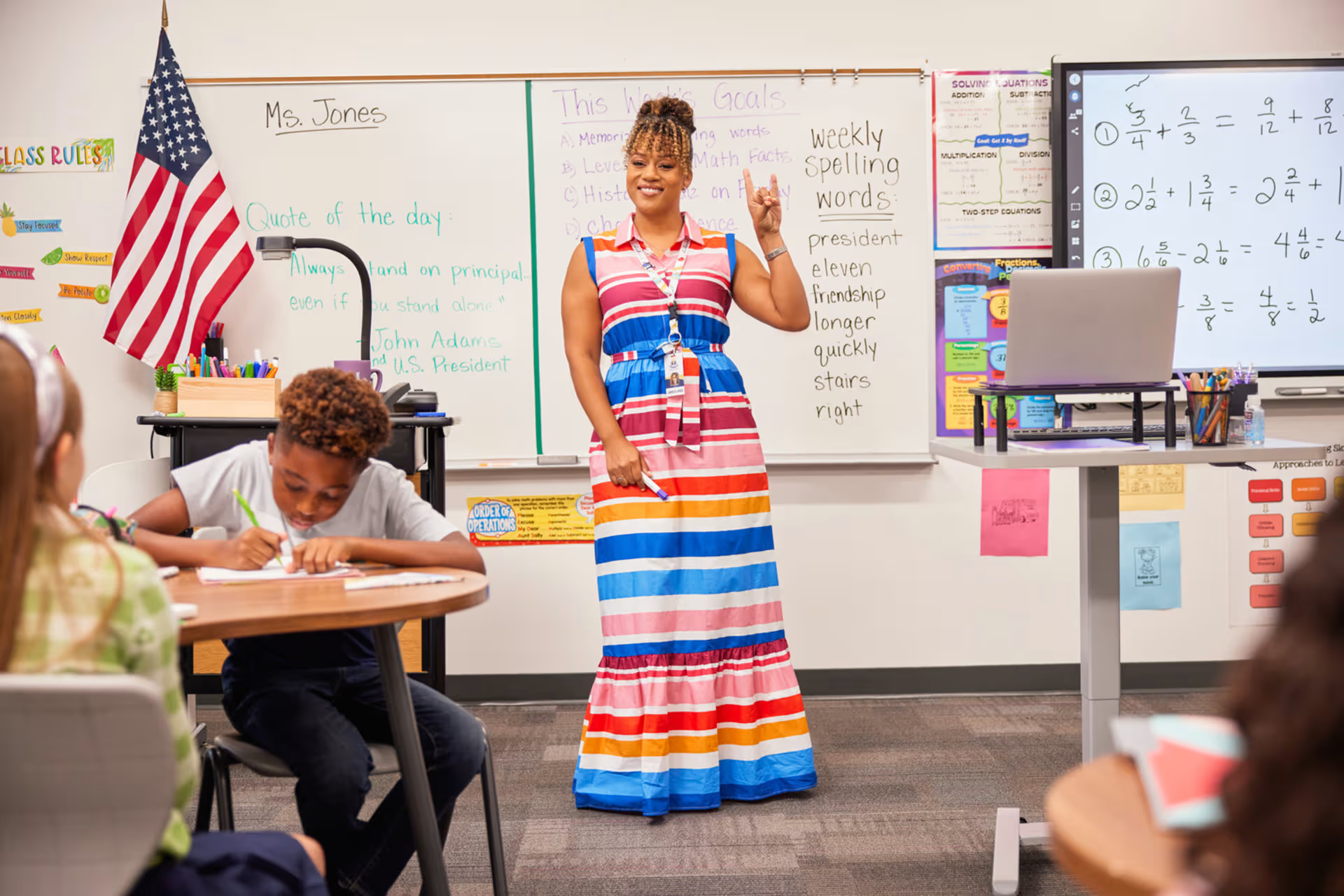
If you feel called to a teaching career, a degree from Grand Canyon University can help equip you with the skills and experience needed to pursue it. Teaching education programs combine knowledgeable faculty with practical experiences from a variety of disciplines specific to your interests that can help you work toward a valuable education.
Our College of Education engages a diverse and global community of learners with purpose and passion through advanced curriculum and instruction techniques by promoting servant leadership in educational communities. Many of our degrees in teaching are offered as licensure programs that can prepare you to start pursuing your teaching career and non-licensure programs that can help you position yourself for potential growth within your teaching career — so you can find the one that is right for your unique path.
Students who graduated from GCU's College of Education since 2009(See disclaimer 1)
With a focus on adult learning techniques and innovative leadership, many teaching degrees can prepare you for a career in education while keeping class sizes small.
Explore our teaching bachelor’s, master’s, doctoral, and certificate programs to gain an advanced education tailored to your aspirations. Each program provides the foundation and expertise needed to unlock your potential for career growth.
Some of our education degrees utilize a cross-disciplinary approach with other colleges, helping you gain a deeper understanding of your chosen area of study. Whether you want to become an English or history teacher by earning your bachelor’s degree or pursue a master’s degree focused on educational leadership, there is an in-person or online teaching program for you.
103 Matching Degrees





A bachelor's degree is typically a prerequisite for teaching, although specific requirements can vary depending on your state of residence. Our faculty focuses on teaching future educators how to strengthen the bond between students and teachers through One Foundation, rooted in a Christian worldview.
If you’re aiming to become a teacher who leaves a lasting impression, education degree programs can:
Build strong relationships
Demonstrate effective communication
Lead by example
Instill confidence
Start Achieving Your Goals as an Educator
GCU offers 52 total teacher licensure and educational academic programs (as of June 2026).
A variety of undergraduate and master’s teaching programs can help you work toward finding the right fit for your needs.
Equip yourself for a teaching career by specializing in subjects such as:
Mathematics
Secondary education
English
Administration
Curriculum and instruction

We have has been preparing knowledgeable educators who continue to demonstrate a commitment to quality education since 1968. The College of Education aligns its curriculum with the standards set by the Higher Learning Commission (HLC) as well as national accreditors and professional affiliates. These standards help us work toward producing credible, qualified teachers and professionals through our education and teaching degrees both online and on campus.
Flexible Online or On-Campus Degrees
Commitment to Affordable Education
Earning a degree in teaching doesn't have to be confusing. Find answers to your most frequently asked questions regarding teaching education programs.
How do you become a teacher?
How long does it take to become a teacher?
What can you do with an education degree?
Do you need a bachelor’s in education to teach?
What is a doctorate in education?

Teaching education programs provide flexibility and a rigorous curriculum, empowering you to achieve your career goals.
If you are seeking licensure/certification, please refer to the "Accreditation and Compliance/State Disclosures” link for the specific program of interest’s website for your location and/or employment state’s licensure requirements, per 34 CFR 668.14(b)32 and 668.43(c).
Excluding observational and practice-based experiences and student teaching.