

Robotics is where engineering intersects with computer science to design, build and operate machines that are programmed to complete certain tasks. Robotics is an interdisciplinary field that focuses on the design, manufacture and operation of robotic machines and devices. Robotic machines or robots, are generally designed to perform repetitive tasks, often mimicking human motion. According to Built In, more advanced robots may be integrated with artificial intelligence technology, which can enable these robots to handle more complex tasks.(See disclaimer 2)
According to Exponential Science, the main goal of robotics is to create machines that are capable of interacting productively with the world around them. Robotic devices may operate autonomously or under human supervision.(See disclaimer 1)
There are multiple options for careers in robotics, including robotics engineers, technicians and operators. If you’re interested in working with robotic technology after college, consider choosing an engineering major that offers hands-on experience in robotics-focused labs.
How Do Robots Work?
All robots are composed of both hardware and software. The hardware is the physical makeup of the robot, such as its wheels or mechanical arms. The software, which may be simple or complex, is code that tells the robot what to do and how to do it. Robots also have an electrical system that powers the machinery.(See disclaimer 2)
The control of a robot is an important consideration. A robot may be fully pre-programmed to perform certain repetitive tasks, such as working on a manufacturing assembly line.(See disclaimer 2)
Some robots are autonomous, which means they can operate independently from humans. These use sensors to detect information about their surroundings. Then, the computer program enables these robots to make decisions about what to do.(See disclaimer 2)
Other robots operate with human oversight, control and direction. These remotely operated robots are often deployed in hostile environments or situations in which a human presence would otherwise be undesirable.(See disclaimer 2) For example, a Mars rover can collect samples from Mars — an environment completely inhospitable to humans.
What Is Robotics Technology Used For?
Robotic technology can be used in many different ways, depending on the specific setting, purpose and configuration of the technology. Robotics technology has applications across numerous industries, including healthcare, retail, logistics, agriculture, public safety, critical infrastructure, science and manufacturing.
Some applications of robotic machinery include:(See disclaimer 1)
Robotic devices can also make everyday life easier for people, such as by automating floor cleaning or lawn mowing.(See disclaimer 1)
Main Types of Robotics
If you’re considering how to learn robotics, you may find it helpful to explore the various types of robots.
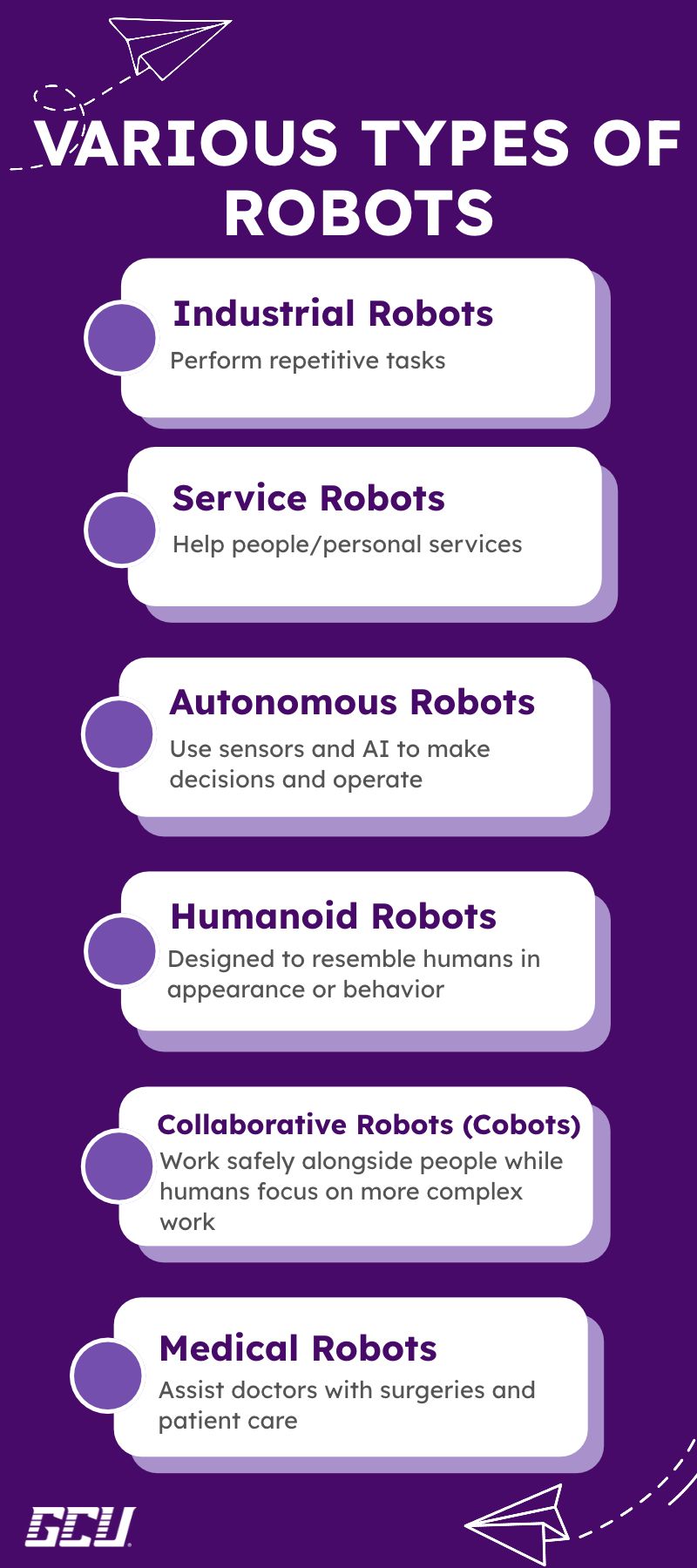
Industrial Robots
Industrial robots are generally those that perform repetitive tasks, according to a guide on robots published by the Institute of Electrical and Electronics Engineers (IEEE). Commonly found in manufacturing settings, these robots may perform tasks such as welding, polishing, painting, assembling and packaging. Industrial robots may also be found in warehouses, where they may handle inventory checks and order fulfillment.(See disclaimer 3)
Service Robots
Most robots are generally designed to serve human society in some way, but service robots are a specific category of robotic technology. Service robots provide personal services to humans, such as making deliveries or cleaning. Some service robots support the work of firefighters, while others serve as receptionists.(See disclaimer 3)
Autonomous Robots
Autonomous robots are those that can act with little to no human oversight or influence. Operating in real time using data collected from sensors, these robots are often integrated with AI technology to support their decision-making process. Autonomous robots will often include safeguards to prevent undesirable actions.(See disclaimer 1)
Humanoid Robots
Humanoid robots may look similar to a human or they may emulate human behavior. For example, they may perform human-like activities, such as running and jumping. Some of them may be given human-like faces, and they may be able to mimic human expressions.(See disclaimer 2)
Collaborative Robots
Collaborative robots, sometimes called cobots, operate alongside human workers.(See disclaimer 3 )This human-machine collaboration typically frees up the humans to perform more complex tasks while the machine handles repetitive tasks. Sensors and slow movements are used to promote safety in close proximity to humans.(See disclaimer 2)
Why Robotics Is Important
Robotics has helped advance human society in numerous ways. According to the European Space Agency (ESA), robots can help keep humans safer by operating in dangerous environments, thereby reducing or eliminating the need for a human presence there. They can also handle toxic chemicals, preventing exposure to humans, or lift heavy loads, preventing musculoskeletal injuries.(See disclaimer 4)
Robots can also improve accuracy and precision. In the medical field, for example, robot-assisted surgical devices can perform intricate procedures with smaller incisions, reducing pain and recovery time.(See disclaimer 4)
Robotics Fields and Areas of Study
After you’ve become familiar with what robotics is, you may be interested in how to learn robotics. You can look for a degree program in mechanical engineering with a concentration in robotics. In this type of program, you’ll study foundational engineering principles and practices, taking a close look at how robotic technology works and how to design it.
Within the robotics subfield, there are numerous opportunities to specialize, according to Think Robotics.
These areas of focus include:(See disclaimer 5 )
Robotics Careers
One robotics career that might interest you is that of a robotics engineer. What does a robotics engineer do? Robotics engineers design and develop all types of robots. They also work on making improvements to existing robots. According to GeeksforGeeks, robotics engineers are often responsible for not only designing the robot, but also writing the computer code that instructs its operation.(See disclaimer 6)
Other career pathways and areas of focus within robotics include:(See disclaimer 6)
The Future of Robotics
Time will tell what the future of robotics looks like, but some have predicted that robotics will become increasingly integrated into everyday life. General-purpose robots may be assisting humans in their homes and in their workplaces as they become better able to perform more complex tasks, according to McKinsey & Company.(See disclaimer 7)
In order for robotic machinery to become more commonplace, it’s likely that the process of designing and building robotic technology will need to become more cost-effective, and the devices themselves will need to provide a service with economic benefits. Additionally, it's predicted that the robots that will be the most highly valued will be those that perform needed tasks reliably and safely.(See disclaimer 7)
Study Robotics at GCU
The College of Engineering and Technology at GCU offers an emphasis program in robotics that explores robotics design principles, with hands-on application in labs. Learn more about our Bachelor of Science in Mechanical Engineering with an Emphasis in Robotics program at GCU.
Study the Future of Robotics
Explore robotics design and gain the knowledge to help shape tomorrow's technology.