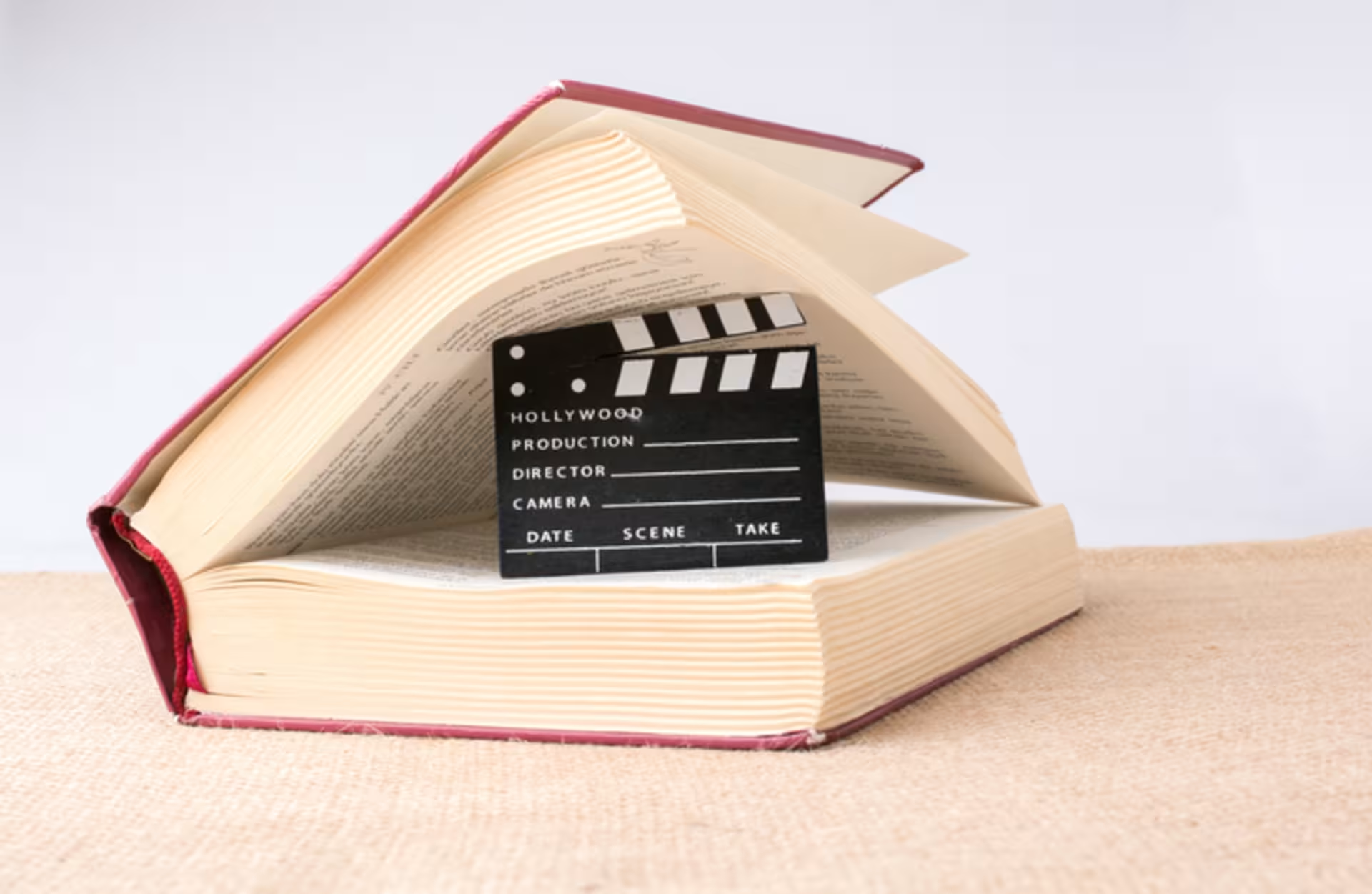

Writing a screenplay can be a challenging task. So, too, is the process of writing a book. When you combine the two, you’ll end up with the adapted screenplay, meaning: a book that has been adapted for the screen and turned into a screenplay
When you’re writing a book-to-movie adaptation, you may find yourself challenged with how to translate one type of writing to another. It can be helpful to take a closer look at how to adapt a book into a screenplay while preserving the intent and themes of the original work.
Why Books and Movies Tell Stories Differently
Books and movies share many things in common. They both need to offer character development, thematic appeal, a plot and subplots, for example. Both mediums typically also feature dialogue, although it’s possible to have either art form lack dialogue.
Despite these commonalities, books and movies do tell stories in markedly different ways. Books, for example, can have a complex structure with multiple plotlines. Screenplays tend to be more straightforward with a three- or four-act structure.
Books use language and the reader’s imagination for world-building, whereas movies rely on visual details, music and cinematography. Other differences include:
Narrative Pacing
The differences between the pacing of the narrative in books vs. movies are often dependent on the genre of the work. Most novels, for example, do not need to follow a fast pace the way most movies do. However, some novel genres, like thrillers, do have a fast pace, and some movies, such as dramas, may not.
Both books and movies need to use appropriate pacing for the genre in order to capture and maintain the audience’s attention.
Visual vs. Internal Storytelling
The main difference between storytelling mediums lies in the internal vs. external action. Books excel at internal storytelling. A book can provide access to a character’s thoughts and clearly spelled out emotions, whereas a movie relies on the talent of the cast to convey emotions. In addition, screenwriters may struggle to provide glimpses of internal dialogue.
Audience Expectations
The expectations of the audience play another role in how stories are told in books vs. movies. While there are exceptions depending on genre, audiences generally expect movies to have more subtext than books. The subtext of a story refers to the gaps that the audience fills in for themselves using their imagination.
In a book, the author can explain exactly what a character is thinking at any given moment. In a movie, the actor must allow their facial expressions, body language and other visual cues to explain their emotions, and the audience then extrapolates what the actor is thinking or feeling.
Audience expectations also differ with regard to detail. Readers generally expect that novels will provide detailed information about the setting, the characters and the plot. In contrast, movies provide a broader view of the story, adding in details where they are necessary to move the plot along.
What Is an Adapted Screenplay?
An adapted screenplay is a movie or TV show script that is based on an existing story, such as from a novel, short story or play. There are also adapted screenplays based on video games, such as “The Last of Us,” “Resident Evil” and “Fallout.” It’s even possible to make an adapted screenplay based on a toy, as in the case of “Battleship,” “Barbie” and “The LEGO Movie.”
An adapted screenplay transforms existing source material into a visual work of art. In doing so, the movie or TV show often needs to take some creative liberties with the original work in order to translate the story to the screen.
How Books Are Transformed Into Movies
Every project is unique, and every writer has their own preferences for approaching an adaptation. There are some common factors to consider, however, such as the following:
Compression of Story Elements
It’s often not possible to translate all of the details of a book into a movie or TV show, unless perhaps you’re adapting a short story into a screenplay. You’ll need to plan on trimming details and subplots from the story so that it can fit well into the typical timeframe of a movie or show. To do so, identify the elements that are most essential to the story (which you’ll need to preserve) and those that are less important.
Visual Emphasis and Cinematic Structure
It’s common for films to have a three-act structure:
You’ll need to become familiar with the plot of the original work and get to know the characters well to adapt the story to the cinematic structure. You’ll also need to add in details for the cast. For example, if you want to convey that a character is confused, you might direct the actor to furrow their brow and rub their forehead.
How To Adapt a Book Into a Screenplay: General Tips
While you’re learning how to adapt a book into a screenplay with the following tips, it can also be helpful to think about how you’ll get your project made. Look for networking opportunities, such as internships in Hollywood or working on indie film projects. Have copies of your screenplay ready to pass out to interested individuals who might help you get your movie or TV show made.
Get To Know the Story
When you start out trying to adapt a book to a movie, you need to know the story inside out. Read the book multiple times, reflecting on different aspects of storytelling each time.
The first time you read the story, focus on the world and the setting of the story. This will help you ground the rest of your understanding of the book. Then, consider how the characters are developed and how the plot unfolds.
Learn About the Characters
Even plot-driven books need memorable characters. A novelist includes characters with complex events happening in their lives to drive a story forward. Each character has a background that has shaped them, as well as events that make up the current story in the book.
When you write a book adaptation, you will want to determine those back stories and how they influence the present day for each character. You will also need to narrow down the most important things that the audience needs to know about each of the main characters.
Pinpoint the Conflict
All novels have a core conflict. When you write a book-to-movie adaptation, you need to identify the conflict and how and why it happened. Because this is the core conflict, it will remain central in the screenplay. Other timelines and plots may be cut out, but this core conflict is the heart of the story.
Choose the Best Dialogue
Fans of the book who see the movie may be expecting characters to say something special in the movie as well. Find several lines of the best dialogue for each character that drive the plot forward and are vital to character development. Consider including those pieces of dialogue exactly or closely in the screenplay adaptation.
Stick to the Theme
A movie adaptation of a book should leave viewers feeling the same way as the readers did about the book. Those feelings are conjured by the theme and the lessons learned by the characters and the readers or viewers. Identify the major theme of the book and ensure that the book-to-movie adaptation leaves people feeling the same way.
Launch Your Screenwriting Journey With a Film Degree From GCU
If you are an aspiring screenwriter who has a few books you would like to see turned into movies, consider writing your book adaptations during your tenure in GCU’s Bachelor of Arts in Digital Film with an Emphasis in Screenwriting program. During the capstone course, you’ll gain immersive experience by completing a full-length feature film screenplay.
Ignite Your Creativity at GCU
Pursue your passion for writing by studying digital film and screenwriting at GCU.