
Whether you’re studying graphic design, film production or another creative discipline, your portfolio is one of the most important tools you’ll develop in college. When reviewing student portfolio examples, it’s easy to see that the most successful ones tell a clear story about skills, creativity and growth.
A well-crafted portfolio goes beyond class assignments; it showcases your potential to future employers. By starting early and refining your work over time, you can graduate with a professional portfolio that can help you enter the creative industry.
What Is a Portfolio for Students?
If you’re wondering, what is a portfolio for students? it’s essentially a curated collection of your best academic and creative work. It should highlight your abilities, document your progress and demonstrate how you apply your skills in practical contexts.
Many student portfolio examples show that a strong portfolio can:
• Showcase technical and creative skills
• Demonstrate growth and improvement
• Highlight your personal style
• Provide proof of experience
For design and film majors, portfolios are especially important because employers rely on visual work to evaluate your capabilities.
Types of College Portfolio Examples: Design and Film
There are many types of college portfolio examples, especially within creative fields like design and film. While all portfolios aim to showcase your skills and experience, the format and content will vary depending on your specialization and career goals.
Understanding different student portfolio examples can help you identify what employers in your field expect — and how to present your work in a way that feels both professional and authentic.
Your portfolio format will typically align with your focus area:
As you explore different student portfolio examples, pay attention to how each one is structured, how projects are presented and how the creator communicates their role in the work. This research can help you choose a format that not only showcases your abilities but also aligns with your future career path in design or film.

"For my personal job that I have set up, the professors were really great and supportive about interview prep. They were great with updating and critiquing my portfolio to make it industry-ready. I think that gave me the confidence to apply and interview and land that job."
— Ruby Kaites, Graphic Design and Advertising Student
Essential Elements of a Strong Student Portfolio
When building your portfolio, it’s important to think beyond just showcasing finished work. The strongest portfolios give viewers a clear sense of who you are, how you think and what you’re capable of creating. Looking at a range of student portfolio examples can help, but your goal should be to present your work in a way that feels intentional and personal.
Some of the key elements to make a part of your portfolio include:
Personal Statement and Resume
Start with a short introduction that explains your interests, creative focus and goals. This personal statement doesn’t need to be formal; it should sound like you. A few thoughtful sentences can help set the tone for your entire portfolio.
Pair this with a clean, well-organized resume that highlights your:
Together, these elements give context to your work and help viewers understand your background at a glance.
Projects and Assignments
A common mistake students make is trying to include everything they’ve ever created in their portfolios. Instead, focus on selecting a smaller group of projects that truly represent your strengths.
Strong portfolios often include a mix of:(See disclaimer 1)
If you’re in design, consider showing a bit of your process, including early concepts, sketches or iterations, not just the final result. If you’re building a film reel, lead with your strongest footage right away to capture attention. The goal is to show both what you can create and how you approach your work
Awards, Certifications and Extracurriculars
While your projects are the focus, additional experiences can help round out your portfolio. Including achievements can show that you’re actively building your skills and getting involved beyond the classroom.
You might consider including:
Extracurricular experiences can be especially valuable for design and film students. Opportunities like Canyon Creative at GCU allow students to work on real client projects in a collaborative, agency-style environment. This kind of hands-on experience not only strengthens your portfolio but also helps you develop practical skills in communication, teamwork and creative problem-solving.
Per a 2025 GCU News article, Dr. Craig Detweiler, Dean of the College of Arts and Media, spoke on Canyon Creative as an opportunity for students to expand their portfolios, all while “sharpening their skills and learning how to deliver to clients on time and on budget. He added that “Canyon Creative enables students to work for clients on real-world deadlines while being mentored by an industry-savvy professor. That’s the kind of real-world scenario that accelerates student learning.”
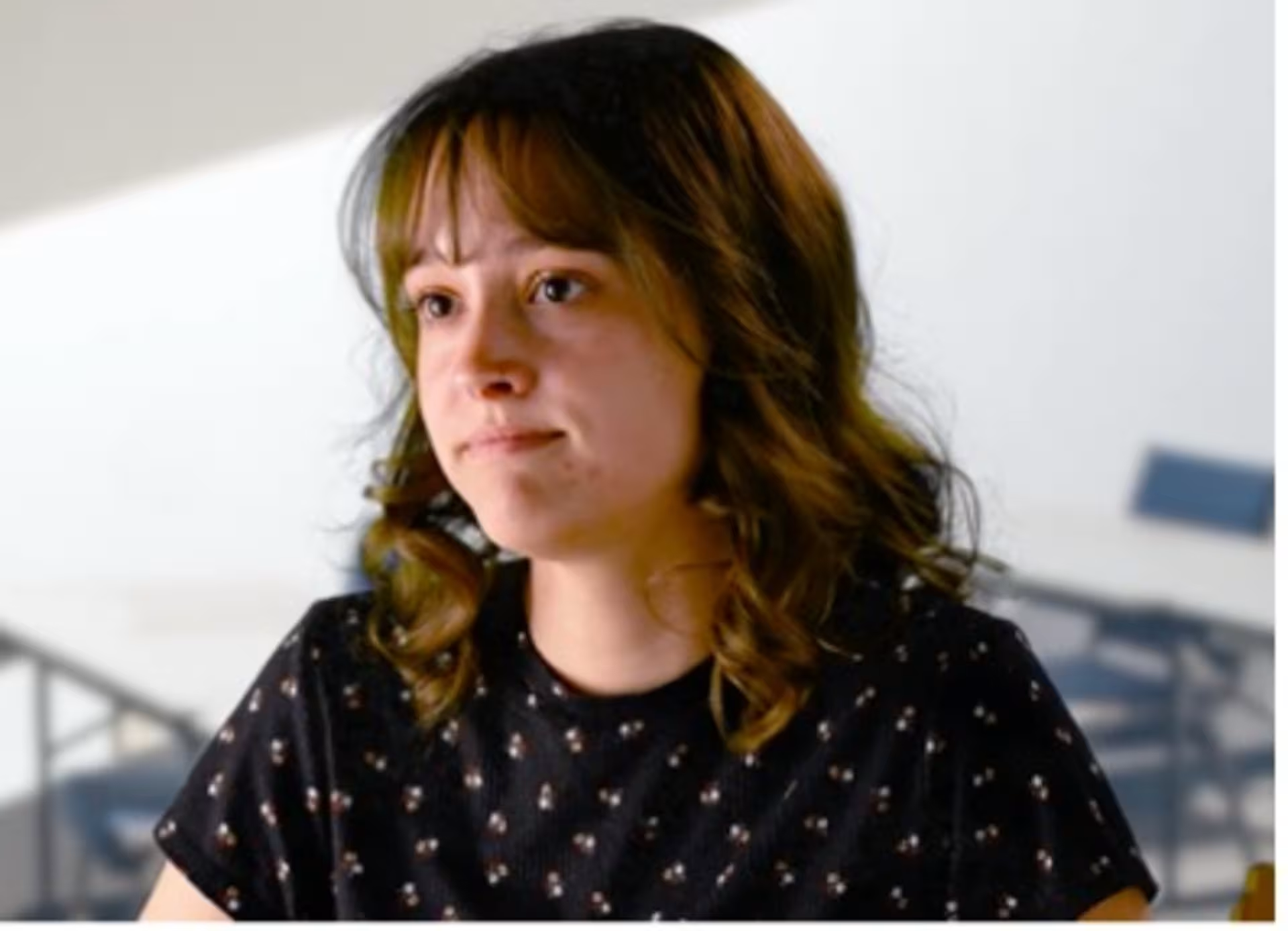
"What I like the most about CAM (College of Arts and Media) is the people. I like the experiences. I like the clubs and the organizations, such as Canyon Creative, such as AAF, that I get to be a part of. I've also been able to network with the professors who are also working in the industry, as well as building my portfolio."
— Audrey Lotz, Graphic Design and Advertising Major
Portfolio Ideas for Students
If you’re looking for portfolio ideas for students, consider both digital and physical formats to showcase your work effectively. Many modern student portfolio examples use digital platforms because they are easy to share with employers and can represent your digital competence.(See disclaimer 2)
Some digital portfolio ideas can include the following:
Exploring different college portfolio examples can help you determine the best combination of formats for your field. A more traditional, physical portfolio can accompany a digital portfolio and provide instant access to your works.
Printed portfolio examples can include:
How To Build Your College Portfolio Step-by-Step
Building a portfolio can feel overwhelming at first, but breaking it down into clear steps can make the process more manageable. When you look at strong student portfolio examples, you’ll notice that they are thoughtfully curated, easy to navigate and intentional in how each piece is presented.
Select Your Best Work
To begin building your portfolio, choose projects that align with your interests and career goals. Instead of trying to fit in your entire creation history, focus on work that highlights your strengths and shows a range of skills. This may also involve creating multiple portfolios that highlight different work media or have different focuses.
Student portfolios typically include 8–15 pieces that demonstrate both depth and versatility.(See disclaimer 3) As you review your work, ask yourself:
It can also be helpful to revisit and refine older projects. Improving past work can be as valuable as creating something new, especially if it better reflects your current abilities.

"I actually have two portfolios. I have one for motion design and one as a brand owner. I have a clothing brand called Illuminate."
— Lela Lewis, Digital Design Major
Organize and Present Your Content
Once you’ve selected your work, think about how it’s presented. Structure plays a big role in how your portfolio is received. Effective college portfolio examples should be clean, easy to navigate and visually consistent.
Consider how you want someone to move through your portfolio:
For digital portfolios, make sure your site loads quickly and works well on both desktop and mobile. For physical portfolios, pay attention to print quality, layout and overall presentation. The goal is to make it easy for viewers to focus on your work without distractions.
Add Descriptions and Results
Your portfolio shouldn’t just show what you created; it should explain how and why you created it. Adding context helps employers and collaborators understand your thinking and problem-solving skills.
The best student portfolios include short, clear descriptions for each project that outline:
Including this level of detail turns your portfolio into a reflection of your creative process and professional potential, rather than just a gallery.
Begin Crafting Your Portfolio at GCU
GCU offers a variety of digital film and digital arts programs that are designed to help you build on your professional portfolio from day one. Through hands-on coursework, collaborative projects and opportunities like Canyon Creative, you can graduate with tangible experience and polished work samples.
Explore programs within the College of Arts and Media, including the BA in Digital Film: Production Emphasis, BA in Advertising and Graphic Design, BA in Digital Design: Web Design Emphasis and BA in Digital Design: Animation Emphasis, to begin developing your creative portfolio. Your portfolio is your story; start building it now at GCU and let your work speak for itself.