


Labor and Delivery Nurse Career Guide
What Is a Labor and Delivery Nurse?
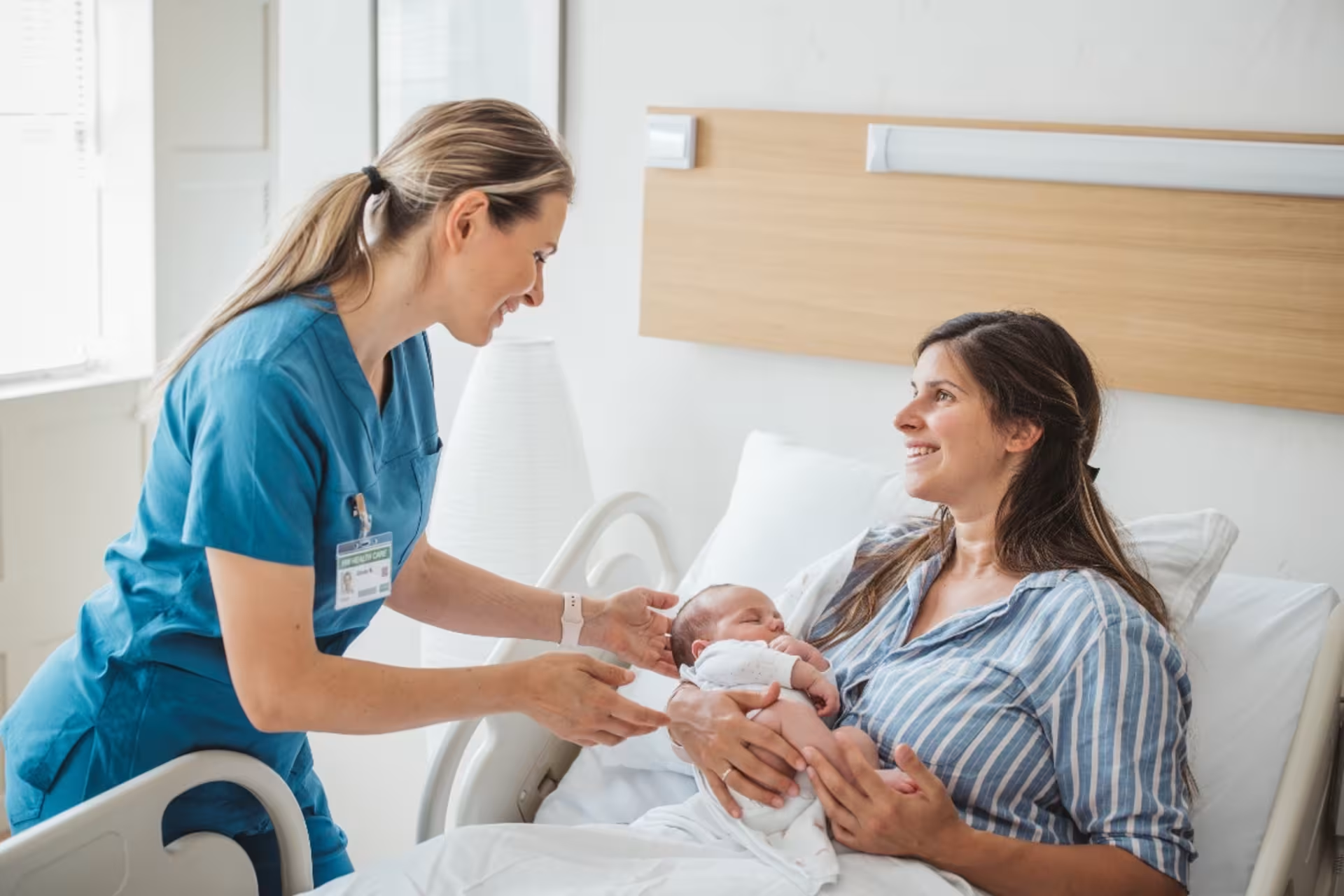
A labor and delivery (L&D) nurse is a registered nurse (RN) who cares for patients throughout labor, childbirth and the immediate postpartum period while also assessing newborns after delivery. How to become a labor and delivery nurse begins with earning an accredited nursing degree, such as a Bachelor of Science in Nursing (BSN) or an Associate Degree in Nursing (ADN), passing the NCLEX-RN® licensing exam and obtaining state licensure. Labor and delivery nurses work alongside obstetricians, certified nurse midwives, anesthesiologists and neonatal care teams to provide clinical care and emotional support throughout childbirth.

ADN vs. BSN vs. ABSN: Which Nursing Degree Path Is Best for Labor and Delivery Nurses?
There are several educational pathways you can take to become registered nurses.(See disclaimer 1) An ADN, BSN or accelerated BSN program can all help prepare you for RN licensure; each pathway differs in length, depth of preparation and career flexibility. If your goal is to pursue a career in labor and delivery nursing, earning a BSN can help provide a strong foundation for specialty nursing practice.
What Does a Labor and Delivery Nurse Do?
Labor and delivery nurses monitor patients throughout labor, assist with childbirth, assess both the parent and baby, administer medications and provide postpartum care. Working as a member of a team, an L&D nurse provides extensive patient education and emotional support, often interacting with the patient’s partner or other family members.
The three main responsibilities of an L&D nurse are:
L&D nurses monitor the vital signs of the mother and baby, as well as the timing of contractions, providing nursing care when indicated.
They support mothers during labor with pain management and by coaching them through breathing and pushing.
Labor and delivery nurses assist midwives and doctors with vaginal and C-section deliveries.
Labor and Delivery Nurse Job Outlook and Salary
The job outlook for all types of registered nurses looks robust for the foreseeable future. According to the U.S. Bureau of Labor Statistics (BLS), the job growth rate for RNs is expected to be 5% from 2024 to 2034, faster than average for all professions. At this rate of growth, healthcare employers expect to hire about 189,100 nurses annually from 2024 to 2034.(See disclaimer 2) Additionally, the median annual salary for registered nurses was $93,600 in May 2024, according to the BLS.(See disclaimer 3)
Although the BLS does not track employment data specifically for L&D nurses, the general trend in nurse hiring can provide insights into nursing career growth.

Where Do Labor and Delivery Nurses Work?
A labor and delivery nurse can work anywhere patients give birth, including hospitals and birthing centers. Their work setting may be fast-paced at times, particularly as their patients transition from labor to delivery. According to Johnson & Johnson, no matter where L&D nurses work, they can expect to provide a combination of nursing care and emotional support.(See disclaimer 4)
As you explore what is a labor and delivery nurse, you'll find that these professionals commonly work in settings such as:
Labor and delivery units
Many L&D nurses work in the L&D unit or maternity ward of a hospital.
Birthing centers
Birthing centers provide a highly patient-centered approach to labor and delivery.
Neonatal Intensive Care Unit (NICU)
An L&D nurse may care for newborns within the hospital NICU, collaborating with neonatal specialists to support infants with complex medical needs.
How To Become a Labor and Delivery Nurse
The process of becoming a labor and delivery nurse is much like becoming any other type of RN. Future L&D nurses will need to fulfill the education and licensure requirements before pursuing a job in the labor and delivery nursing specialty.(See disclaimer 1) Trusted Health states that L&D nurses may then pursue additional certifications and specializations relevant to their practice area.(See disclaimer 5)
Follow these steps to become an L&D nurse:
Earn a Nursing Degree
Earn a nursing degree, such as a BSN,(See disclaimer 1) by completing coursework, skills labs and clinical rotations.
Obtain RN Licensure
After graduating, pass the licensure exam to obtain a state-issued RN license.(See disclaimer 1)
Obtain Nursing Certifications
Obtain professional certifications relevant to your practice area to demonstrate expertise.(See disclaimer 5)

What Degree Does a Labor and Delivery Nurse Need?
There are multiple pathways to a labor and delivery nursing career. It’s possible to become an RN with a nursing diploma, an associate degree or a bachelor’s degree in nursing. Many employers prefer or require nurses to have a bachelor’s degree,(See disclaimer 1) so the BSN is recommended.
Percentage of healthcare employers either preferring or requiring new nurse hires to have a bachelor’s degree(See disclaimer 6)
Nursing Degrees for Aspiring Labor and Delivery Nurses


What Labor and Delivery Nurse Skills Do You Need?
An L&D nurse needs strong nursing knowledge, particularly in the areas of obstetrics, women’s health and neonatal care. They also need clinical skills related to patient monitoring and childbirth assistance, including medical equipment management. In addition, L&D nurses benefit from a range of soft skills, including compassion and empathy.(See disclaimer 5)
Some of the most important skills for an L&D nurse include:(See disclaimer 5)
Compassion and empathy
Patients need plenty of compassion and empathy from their nurses as they navigate difficult circumstances.
Advocacy
An L&D nurse must be an effective advocate for their patients, ensuring that the mother’s healthcare rights and choices are respected.
Teamwork
L&D nurses must work collaboratively as members of the obstetrics team.
Patience
Patients may be in labor for long hours; patience is very beneficial.
Is Labor and Delivery Nursing Right for You?
Labor and delivery nursing may be a career fit if you want to support patients and families before, during and after childbirth. L&D nurses monitor patients, support labor, assist with delivery and help care for newborns. This career can be a strong choice for people who are compassionate, detail-oriented, calm under pressure and comfortable working closely with patients, families and healthcare teams.
L&D nursing can also be physically and emotionally demanding. Nurses may work long shifts, respond to urgent changes and support patients through intense experiences. If you prefer predictable routines, limited patient interaction or a slower-paced work environment, you may want to compare L&D nursing with other nursing specialties before choosing your career path.
Labor and delivery nursing may be a good fit if you:
Labor and delivery nursing may not be the best fit if you:
More Resources on the Nursing Industry
Learn more about pursuing a career in nursing with the following blogs.

There are many reasons to become a nurse, such as job growth, earnings potential and the meaningful impact on your community.

Get ready for nursing school by exploring what you’ll study and do, including common courses and clinical placements.
Discover some of the most important skills needed for a nursing career, including communication and leadership.
Labor and Delivery Nurse FAQs
If you still have questions about how to become a labor and delivery nurse, learn more about education requirements, certifications, daily responsibilities and what to expect from this nursing specialty.
Do labor and delivery nurses need a BSN?
How long does it take to become a labor and delivery nurse?
What does a labor and delivery nurse do during a shift?
What certifications can help labor and delivery nurses?
Is labor and delivery nursing a difficult specialty?
What is the difference between a labor and delivery nurse and a nurse-midwife?

Take the next step toward becoming a registered nurse. Explore GCU’s pre-licensure nursing degree options and build the foundation to pursue labor and delivery nursing or another nursing specialty.
- U.S. Bureau of Labor Statistics. (2025, Aug. 28). How To Become a Registered Nurse. Occupational Outlook Handbook. Retrieved June 2026.
- COVID-19 has adversely affected the global economy and data from 2020 to 2023 may be atypical compared to prior years. Accordingly, data shown is effective August 2025, which can be found here: U.S. Bureau of Labor Statistics, Occupational Outlook Handbook, Registered Nurses, retrieved June 2026.
- The earnings referenced were reported by the U.S. Bureau of Labor Statistics (BLS), Registered Nurses as of May 2024, retrieved June 2026. Due to COVID-19, data from 2020 to 2023 may be atypical compared to prior years. BLS calculates the median using salaries of workers nationwide with varying levels of education and experience. It does not reflect the earnings of GCU graduates as registered nurses, nor does it reflect the earnings of workers in one city or region of the country or a typical entry-level salary. Median income is the statistical midpoint for the range of salaries in a specific occupation. It is very unlikely that a median salary will reflect an entry-level salary. It represents what you would earn if you were paid more money than half the workers in an occupation, and less than half the workers in an occupation. It may give you a basis to estimate what you might earn at some point if you enter this career. Grand Canyon University can make no guarantees on individual graduates’ salaries. Your employability will be determined by numerous factors over which GCU has no control, such as the employer the graduate chooses to apply to, the graduate’s experience level, individual characteristics, skills, etc. against a pool of candidates.
- Johnson & Johnson. (n.d.). Labor and Delivery Nurse. Retrieved June 2026.
- Trusted. (n.d.). What Is a Labor and Delivery Nurse? Retrieved June 2026.
- American Association of Colleges of Nursing. (2023). New Graduate Employment Data. Retrieved June 2026.
- Morris, G. (2025, Dec. 23). How To Become a Labor and Delivery Nurse. NurseJournal. Retrieved June 2026.
- Nursa. (n.d.). Labor & Delivery Nurse Certification. Retrieved 2026.