

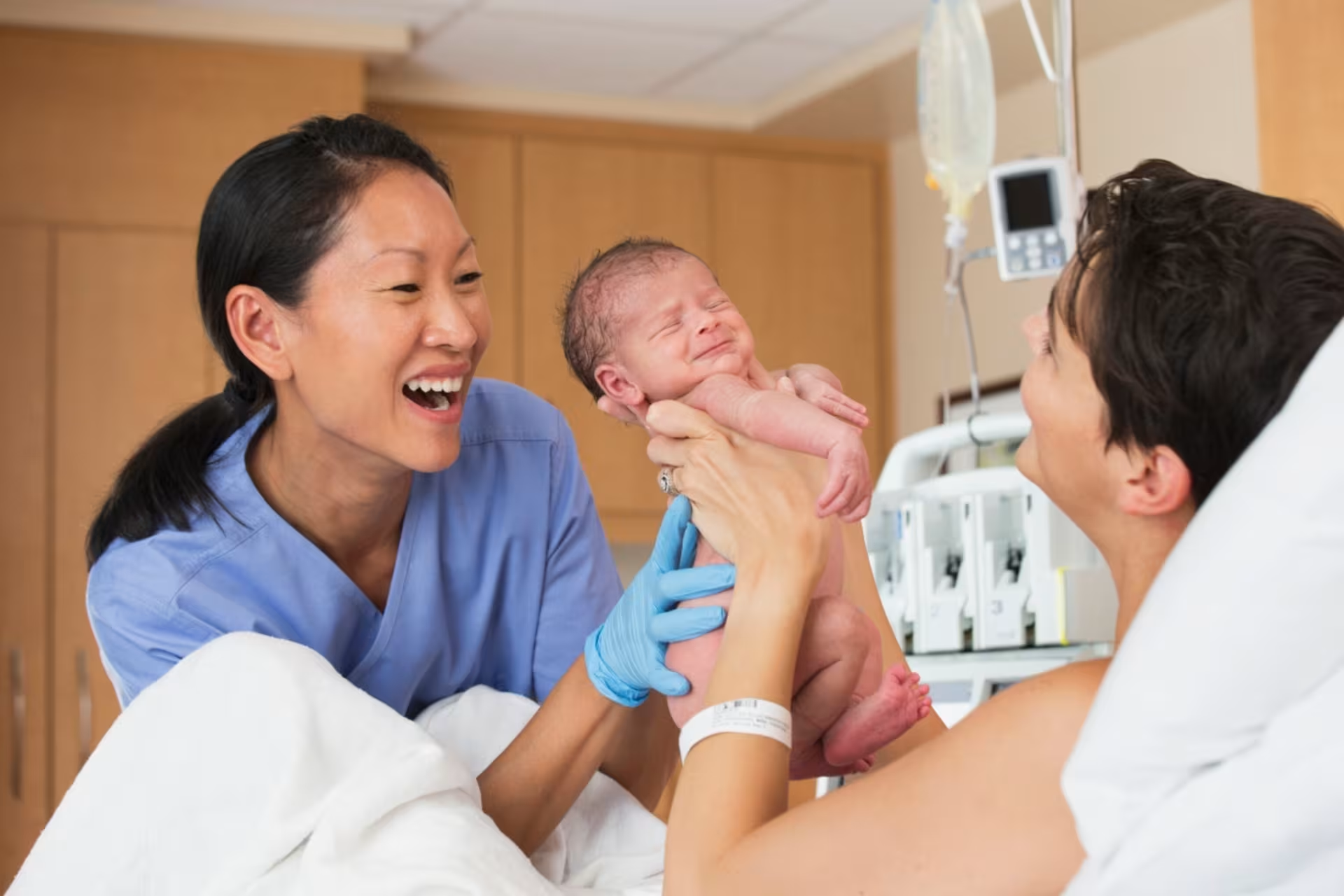
How To Become a Nurse Midwife
What Is a CNM?
A Certified Nurse Midwife (CNM) is a type of advanced practice registered nurse (APRN) who specializes in childbirth and women’s reproductive health, specifically. If you’re already a registered nurse (RN) with a passion for women’s health and a desire to further your education to help mothers and babies, a nurse midwife position may be ideal for you. It can be a lengthy process, as CNMs must be highly trained. You will need to earn graduate-level degrees and obtain an advanced, specialty certification and license.
Estimated number of nurse midwives employed in the U.S. in 2024(See disclaimer 1)
What Does a Nurse Midwife Do?
CNMs play a vital role in supporting patients across the reproductive lifespan, combining clinical expertise with compassionate, patient-centered care. From routine wellness visits to labor, delivery and postpartum support, their responsibilities span a wide range of hands-on tasks that promote safe outcomes for both mothers and babies.
Some of the many tasks of a CNM includes:(See disclaimer 2)
Perform exams
CNMs regularly conduct physical exams, gynecological assessments and diagnostic evaluations to support ongoing women’s healthcare.
Help with family planning
They can counsel patients on contraception, fertility awareness and reproductive care based on individual needs and goals.
Provide prenatal care
CNMs monitor the health of both mother and baby throughout pregnancy through routine checkups and screenings.
Deliver babies
Midwives provide labor and birth management, delivering babies and offering clinical care and emotional support during childbirth.
Manage emergencies
When obstetric emergencies occur, CNMs identify and respond, coordinating care with physicians and healthcare teams as needed.
Provide surgical assistance
They will assist physicians during C-sections by supporting surgical procedures and ensuring patient safety.
Provide wellness care
CNMs deliver preventive and primary care services, including routine screenings, health education and postpartum care follow-up.
What Experience and Education Does a CNM Need?
The journey to becoming a midwife can be a long one; however, the path is relatively structured. Having an idea of the steps to come can give you a better grasp on how to prepare for your midwifery career, no matter what stage of your education you’re currently in.
High School Diploma
College Degree
Clinical Experience
Professional Certifications
Best Degrees for a Nurse Midwife
A midwifery degree can prepare RNs for advanced practice roles focused on providing comprehensive, patient-centered care across the lifespan, with an emphasis on women’s and reproductive health. These programs build on nursing foundations through advanced coursework and supervised clinical experiences that integrate evidence-based theory with hands-on practice. Together, academic and clinical components help RNs learn to support individuals and families through all stages of reproductive and primary healthcare.
You can expect to cover the following topics while pursuing your midwifery master’s degree:(See disclaimer 3)
Advanced health assessment
Diagnostic reasoning/clinical decision-making
Evidence-based practice
Family-centered care
GCU Recommends Starting Your Midwifery Journey With These Programs


What Skills Does a Nurse Midwife Need?
Along with a set of advanced clinical and technical skills, CNMs must also possess a strong set of soft skills in order to perform the many tasks related to their jobs and provide compassionate care for their patients.
Some of these important skills include:(See disclaimer 5)
Clear communication
Problem-solving capability
Flexibility and adaptability
Attention to detail
Confidence
Where Do Nurse Midwives Work?
According to the U.S. Bureau of Labor Statistics, almost half — 46% — of nurse anesthetists, nurse midwives and nurse practitioners work in physicians’ offices.(See disclaimer 1) However, there are other work settings possible for CNMs.
Additional work settings for CNMs include:
Hospitals
CNMs working in hospital settings may provide prenatal, labor and delivery, postpartum and newborn care while collaborating closely with physicians and interdisciplinary care teams.
Outpatient care centers
In outpatient clinics and birth centers, CNMs often focus on routine gynecologic care, prenatal visits, family planning and postpartum follow-up in a scheduled, community-based setting.
Offices of other health practitioners
CNMs may practice in physician or group medical offices, offering primary and reproductive healthcare services alongside OB-GYNs, family physicians or other advanced practice providers.
Educational services
In educational environments, CNMs can contribute through teaching, clinical instruction, research or curriculum development to help prepare the next generation of healthcare professionals.
Average media salary for nurse anesthetists, nurse midwives and nurse practitioners as of May 2024(See disclaimer 6)
Estimated job growth for nurse anesthetists, nurse midwives and nurse practitioners as of May 2024(See disclaimer 7)

Advancement Opportunities for Aspiring Nurse Midwives
Nurse midwives have several pathways for professional advancement as they grow in experience and expertise. Some may choose to pursue a Doctor of Nursing Practice (DNP) degree, which can support advanced clinical leadership, quality improvement initiatives and system-level change in maternal and women’s healthcare. Others may move into education, serving as faculty or clinical preceptors in nursing and midwifery programs. Additional opportunities may include leadership or administrative roles, research involvement or policy and advocacy work focused on improving maternal and reproductive health outcomes.
Explore More on Nurse Midwives
Dive deeper into the nursing profession by browsing through some of our many nursing blogs.

Discover the meaningful motivations and personal passion that draw people to a career in nursing.
Learn about the essential clinical and interpersonal skills nurses rely on every day to provide quality, compassionate care.

Explore the key personal and professional traits that help nurses make a lasting impact on patients and communities.

Take the next step toward a career supporting women and families across the lifespan. Explore GCU’s nursing programs.
- U.S. Bureau of Labor Statistics. (n.d.). Work Environment. Occupational Outlook Handbook. Retrieved January 2026.
- U.S. Bureau of Labor Statistics. (n.d.). What Nurse Anesthetists, Nurse Midwives and Nurse Practitioners Do. Occupational Outlook Handbook. Retrieved January 2026.
- Midwifeschooling.com. (n.d.). Master's in Nurse Midwifery: Complete CNM Degree Guide 2026. Retrieved January 2026.
- American Midwifery Certification Board. (2026). Step-by-Step Exam Application Process. Retrieved February 2026.
- Cascade Health Care. (n.d.). 5 Qualities All Professional Midwives Should Have. Retrieved January 2026.
- The earnings referenced were reported by the U.S. Bureau of Labor Statistics (“BLS”), Nurse Anesthetists, Nurse Midwives and Nurse Practitioners, as of May 2024, retrieved January 2026. Due to COVID-19, data from 2020 to 2023 may be atypical compared to prior years. BLS calculates the median using salaries of workers nationwide with varying levels of education and experience. It does not reflect the earnings of GCU graduates as nurse anesthetists, nurse midwives and nurse practitioners, nor does it reflect earnings of workers in one city or region of the country or a typical entry-level salary. Median income is the statistical midpoint for the range of salaries in a specific occupation. It is very unlikely that a median salary will reflect an entry-level salary. It represents what you would earn if you were paid more money than half the workers in an occupation, and less than half the workers in an occupation. It may give you a basis to estimate what you might earn at some point if you enter this career. Grand Canyon University can make no guarantees on individual graduates’ salaries. Your employability will be determined by numerous factors over which GCU has no control, such as the employer the graduate chooses to apply to, the graduate’s experience level, individual characteristics, skills, etc. against a pool of candidates.
- COVID-19 has adversely affected the global economy and data from 2020 to 2023 may be atypical compared to prior years. Accordingly, data shown is effective August 2025, which can be found here: U.S. Bureau of Labor Statistics, Occupational Outlook Handbook, Nurse Anesthetists, Nurse Midwives and Nurse Practitioners, retrieved January 2026.