

Pediatric Nurse Career Guide
What Is a Pediatric Nurse?
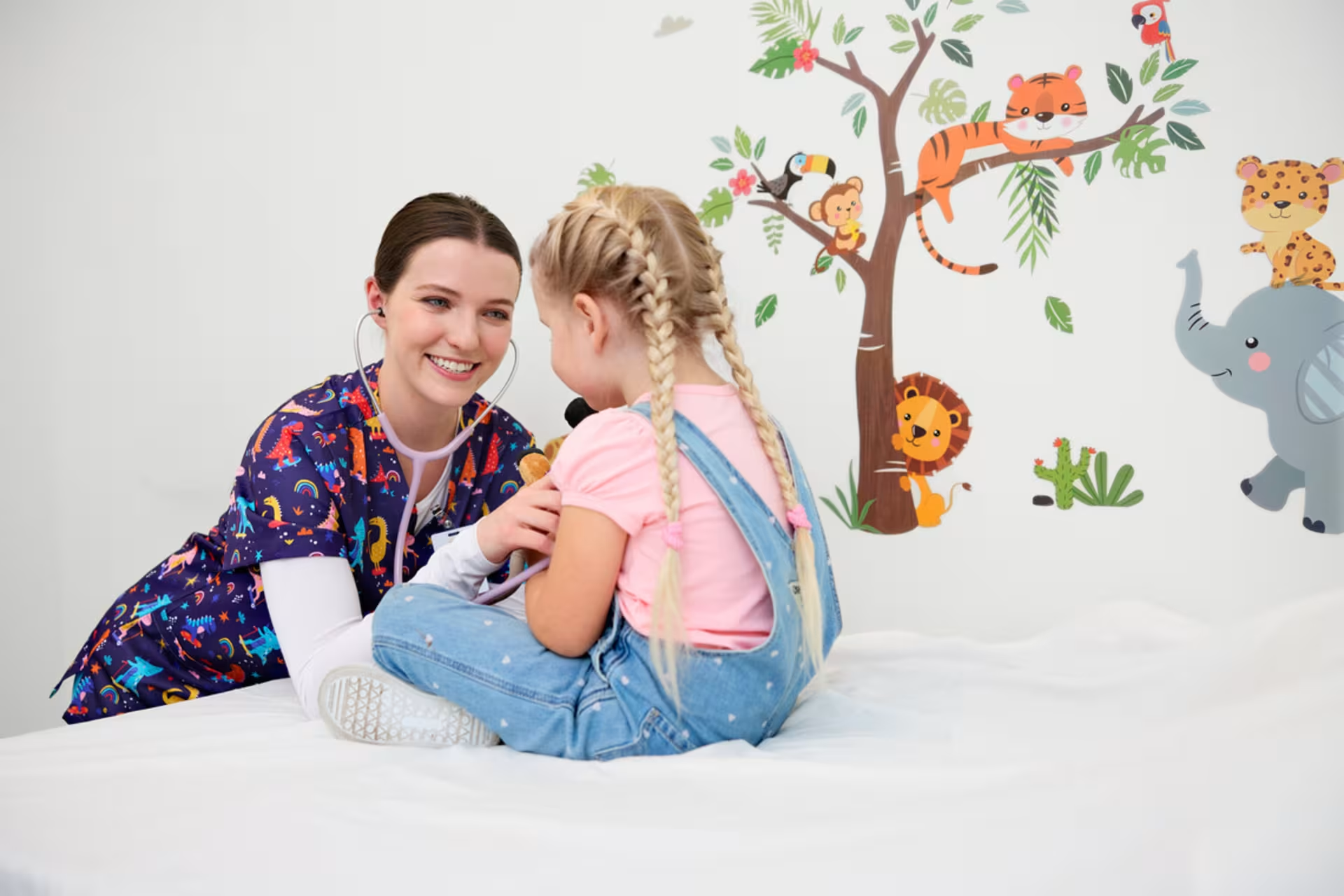
A pediatric nurse is a registered nurse (RN) who works with infants, children and adolescents from birth through age 18. Pediatric nurses assess patients, administer medications and treatments, educate families and help manage preventive care, acute illnesses, injuries and chronic conditions in settings such as hospitals, clinics, schools and physician offices.
Pediatric RNs can work in a variety of nursing specialties. They may treat children in primary care settings or work within endocrinology, developmental disability nursing or the pediatric intensive care unit (PICU). Different settings and specialties may have different career requirements, but in general, a registered nurse must earn a nursing degree and obtain RN licensure by passing a licensure exam, according to the U.S. Bureau of Labor Statistics (BLS).(See disclaimer 1)

Pediatric Nurse Career Snapshot
Pediatric nursing offers the opportunity to care for infants, children and adolescents while supporting their families through every stage of growth and development. If you're considering this specialty, take a look at some of the rewards, trends, specializations and challenges associated with the role.
What Do Pediatric Nurses Do?
A pediatric RN promotes wellness in young patients from birth through age 18. These nurses treat infants, children and adolescents in varying developmental stages, helping them recover from acute injuries and illnesses. Pediatric RNs often focus on preventive wellness through health services such as health screenings, family education and immunizations and by promoting healthy lifestyle choices.
During a shift, some main responsibilities of pediatric nurses are:
These nurses assess patients, review medical history and discuss symptoms with patients and with family caregivers.
They administer medications and other treatments to help children recover from acute injuries and illnesses or to manage chronic conditions.
Pediatric nurses educate older children about health topics and help family caregivers learn how to care for their children.
Is Pediatric Nursing a Good Career?
Learning how to become a pediatric nurse can be a good choice for those who are passionate about children’s healthcare. According to the BLS, there is a need for all types of RNs. The projected job growth rate for all registered nurses is expected to be 5% from 2024 to 2034, faster than average, accounting for an increase of about 166,100 jobs in the field.(See disclaimer 3) The BLS reports that registered nurses made a median annual salary of $93,600 as of May 2024.(See disclaimer 4)
Where Do Pediatric Nurses Work?
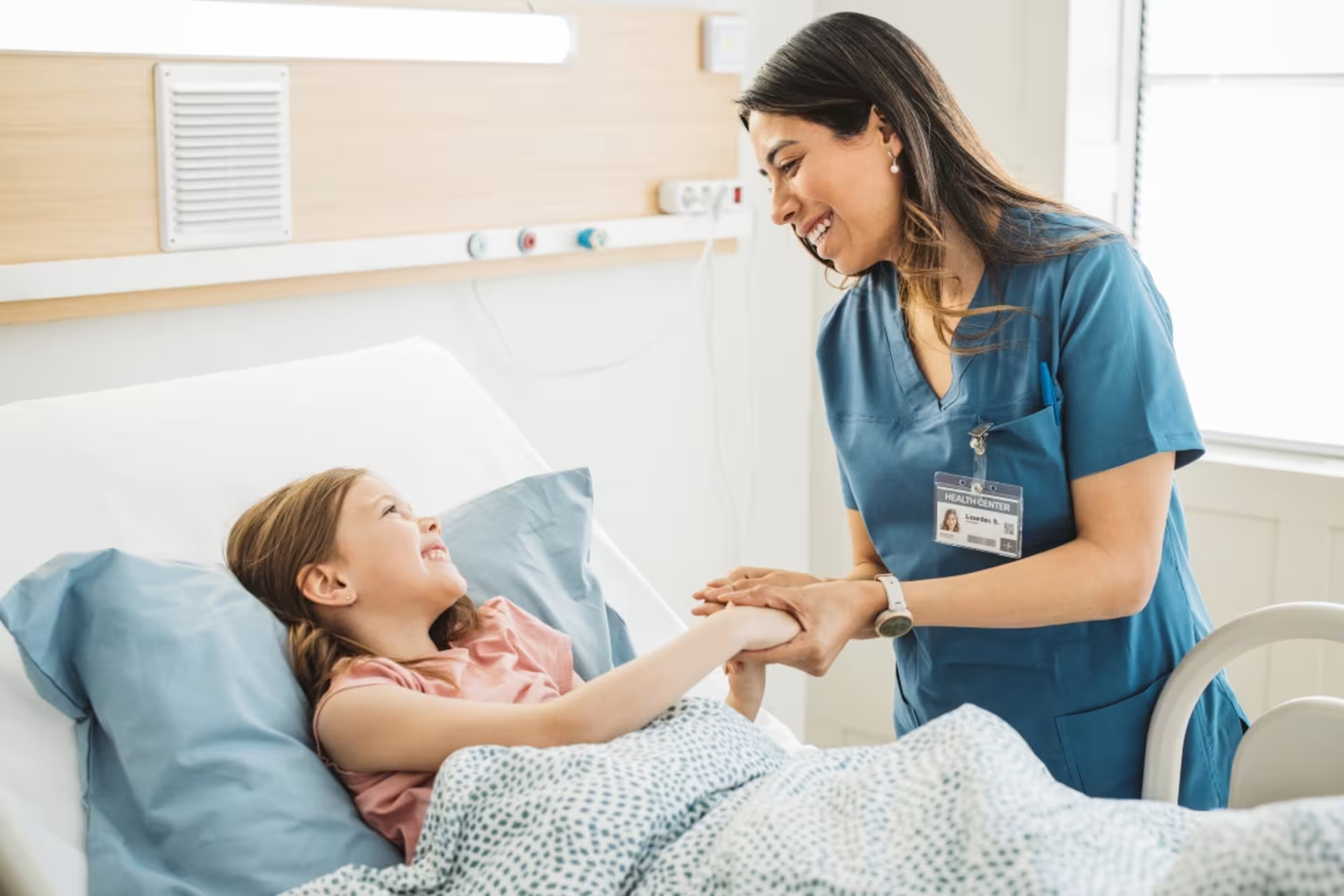
The typical work setting for pediatric RNs can depend on whether they work in acute care or primary care. Primary care nurses may work in physician offices, schools, ambulatory/outpatient clinics and surgery centers, according to the Society of Pediatric Nurses (SPN). In acute care, nurses may work in the emergency room, intensive care or in rehabilitative facilities.(See disclaimer 5)
A pediatric nurse’s work environment includes settings such as:(See disclaimer 5)
Physician offices
Pediatric RNs may treat children across the lifespan within physician offices, including primary care offices.
Schools
School nurses can be pediatric RNs who care for children during the school day.
Emergency room
In the emergency room, pediatric RNs can treat children with acute injuries and illnesses that may be severe or life-threatening.
Surgery centers
In surgery centers, pediatric nurses comfort children before and after they undergo surgery, as well as monitor their physical health and manage complications.
How To Become a Pediatric Nurse

To pursue a career in pediatric nursing, you’ll need to earn a nursing degree and obtain licensure as an RN by passing an exam.(See disclaimer 1) Although these fundamental requirements remain consistent, there are multiple pathways to a nursing career. For example, if you do not have prior college experience, you may consider a traditional Bachelor of Science in Nursing (BSN) program. If you have a non-nursing degree or transfer credits, you may pursue a faster pathway with an accelerated BSN (ABSN) program that can prepare you for licensure.
Follow these steps to help direct your pursuit into pediatric nursing:(See disclaimer 1)
Earn a nursing degree
Earn a nursing degree with a combination of college coursework, nursing skills labs, immersive simulations and clinical rotations
Obtain an RN license
Pass the licensure exam to obtain an RN license and become a nurse
Gain clinical experience and specialize
Gain clinical experience at the bedside in your preferred pediatric nursing specialty and consider pursuing specialized certifications
What Degree or Schooling Does a Pediatric Nurse Need?
It’s possible to become a pediatric RN with an Associate Degree in Nursing (ADN). However, the industry is trending toward more advanced education for all types of RNs. According to the American Association of Colleges of Nursing (AACN), the majority of all RNs hold at least a bachelor’s degree.(See disclaimer 11) Some pediatric RNs may choose to earn a graduate degree, such as a Master of Science in Nursing (MSN) or Doctor of Nursing Practice (DNP), after they gain clinical experience.
A nursing degree teaches both nursing theory and hands-on clinical skills. Students are expected to develop foundational knowledge across all areas of nursing practice, including pediatric nursing and family health.
Percentage of the nursing workforce in 2024 with a BSN or higher(See disclaimer 11)
Recommended Nursing Degrees for Becoming a Pediatric Nurse



What Skills Does a Pediatric Nurse Need?
Pediatric nurses need a blend of clinical and soft skills. They need a broad knowledge of the different stages in a child’s development, including typical milestones and behavioral tendencies. They also benefit from technological literacy, as these nurses need to operate medical equipment and use software platforms.(See disclaimer 8)
Some of the most important skills for a pediatric nursing professional include:(See disclaimer 8)
Relationship building
Pediatric nurses must develop a good rapport with their young patients and their family caregivers.
Empathy
These nurses should demonstrate empathy and compassion for patients with complex emotional needs.
Communication skills
They need to communicate well with their young patients and family caregivers, who may have varying degrees of health literacy.
Observation
Because their patients may not be able to verbally communicate well, pediatric RNs need strong observation skills.
Frequently Asked Questions About Becoming a Pediatric Nurse
Explore the following frequently asked questions and answers to learn more about the pediatric nursing career and how to become a pediatric nurse.
Is it hard to be a pediatric nurse?
How much do pediatric nurses get paid?
What age groups do pediatric nurses care for?
Can you become a pediatric nurse with a BSN?
What certifications are available for pediatric nurses?
How long does it take to become a pediatric nurse?
Is Pediatric Nursing Right for Me?
Your interests, strengths and preferences can help you decide whether pediatric nursing is the right specialty for you. Consider the following characteristics.
Pediatric Nurse vs. School Nurse
A nursing career provides diversity of choice. Consider your academic interests, career goals, preferred work environment and strengths when deciding which specific pediatric nursing career you’d like to pursue.
Pediatric Nursing Resources and Career Insights
Take a deeper dive into the pediatric nursing career and learn more about this profession.



To become a pediatric nurse, you'll need a nursing degree, RN licensure and clinical experience. GCU offers nursing degree programs that can help you prepare for each step of your journey toward a career in pediatric nursing.
- U.S. Bureau of Labor Statistics. (2025, Aug. 28). How To Become a Registered Nurse. Occupational Outlook Handbook. Retrieved July 2026.
- Dhanrao, P.M., Gaikwad, S.A. & Ghegadmal, K.S., et. al. Trends and Challenges in Pediatric Nursing: A Review. International Journal of Research in Pediatric Nursing. Retrieved July 2026.
- COVID-19 has adversely affected the global economy and data from 2020 to 2023 may be atypical compared to prior years. Accordingly, data shown is effective August 2025, which can be found here: U.S. Bureau of Labor Statistics, Occupational Outlook Handbook, Registered Nurses, retrieved July 2026.
- The earnings referenced were reported by the U.S. Bureau of Labor Statistics (BLS), Registered Nurses as of May 2024, retrieved July 2026. Due to COVID-19, data from 2020 to 2023 may be atypical compared to prior years. BLS calculates the median using salaries of workers nationwide with varying levels of education and experience. It does not reflect the earnings of GCU graduates as Registered Nurses, nor does it reflect the earnings of workers in one city or region of the country or a typical entry-level salary. Median income is the statistical midpoint for the range of salaries in a specific occupation. It is very unlikely that a median salary will reflect an entry-level salary. It represents what you would earn if you were paid more money than half the workers in an occupation, and less than half the workers in an occupation. It may give you a basis to estimate what you might earn at some point if you enter this career. Grand Canyon University can make no guarantees on individual graduates’ salaries. Your employability will be determined by numerous factors over which GCU has no control, such as the employer the graduate chooses to apply to, the graduate’s experience level, individual characteristics, skills, etc. against a pool of candidates.
- Society of Pediatric Nurses. (n.d.). Becoming a Pediatric Nurse. Retrieved July 2026.
- Nurse.com. (2025, Dec. 18). How To Become a School Nurse. Retrieved July 2026.
- Children’s Hospital Association. (n.d.). Courses To Prepare for Certification Exams. Retrieved July 2026.
- Indeed. (2025, Sept. 23). Pediatric Nurse Skills (With Definition and Examples). Retrieved July 2026.
- Pediatric Nursing Certification Board. (n.d.). Pediatric Nursing Career Pathways. Retrieved July 2026.
- Nurse.com. (2025, July 16). Career Pathways for NICU Nurses. Retrieved July 2026.
- American Association of Colleges of Nursing. (n.d.). Nursing Workforce Fact Sheet. Retrieved July 2026.
- Secondary applicants must transfer a minimum of 60 of the required 123 credits or have completed a baccalaureate degree which includes nine prerequisite courses/labs and 10 general education courses prior to starting the core nursing courses, which can be completed in as few as 16 months. Direct entry applicants that do not transfer 60 credits but meet the minimum requirements can complete these credits through GCU prior to starting the core nursing courses. Depending on the state where student has enrolled or intends to complete the program, student may require additional courses. This may include, but is not limited to, additional general education courses, courses in the major, clinical courses or a different course sequence. See our University Policy Handbook.
Approved and verified accurate by the Associate Dean of the College of Nursing and Health Care Professions on Aug. 11, 2026.