


How To Become a Travel Nurse
What Is a Travel Nurse?
A travel nurse is a registered nurse (RN) who accepts short-term assignments at healthcare facilities in different locations, providing support wherever staffing needs are highest. Many nurses are drawn to travel nursing for the opportunity to work in new environments, meet new people and experience different parts of the country. This career path can also offer a level of flexibility that appeals to nurses seeking variety in their work.
Travel nursing has experienced a 430% growth between 2018 and 2024.(See disclaimer 1)
What Does a Travel Nurse Do?
The typical travel nurse requirements are much the same as those for any other RN. However, since travel nurses accept short-term assignments and frequently find themselves starting new jobs at different hospitals, they must also be able to adapt quickly to new environments and situations. It’s a great learning environment for RNs, as travel nurses have the ability to learn from a wide range of people and situations. Travel nurse assignments will often depend on their area of nursing specialty.
Some of the day-to-day tasks of a travel nurse include:(See disclaimer 2)
Performing assessments
Travel nurses assess a patient’s condition by checking symptoms, history and overall health status to guide care decisions.
Collecting labs
They often draw blood or collect specimens to support diagnosis, treatment planning and ongoing monitoring.
Assisting with procedures
They can support physicians or advanced providers during clinical procedures by preparing supplies, positioning patients and maintaining safety.
Admitting and discharging patients
Travel nurses will complete intake documentation, patient education and care coordination to ensure smooth transitions in and out of the facility.
Monitoring vitals
They can track key measurements like blood pressure, heart rate and oxygen levels to identify changes in patient status.
Performing wound care
These nurses will clean, dress and assess wounds to promote healing and reduce the risk of infection.
What Experience and Education Does a Travel Nurse Need?
Before you can take your first travel assignment, you’ll need to follow a clear educational and licensure path to become a registered nurse. Understanding these steps early can help you plan your timeline, choose the right program and build the experience employers typically look for in travel nurses.
High School Diploma
College Degree
Clinical Experience
Professional Certifications
Best Degrees for a Travel Nurse
For many aspiring travel nurses, earning a BSN can be the first step toward this career path, as it is preferred over an ADN.(See disclaimer 3) A BSN program can help build the clinical foundation and professional skills needed to provide safe, effective care in a wide range of healthcare settings all over the globe.
BSN programs will cover important foundations of nursing practice, such as:
Health assessment
Pharmacology
Adult health
Behavioral health
Population health
Childbearing family health
Nutrition
Degree Programs for a Travel Nurse


What Skills Does a Travel Nurse Need?
Because a travel nurse is an RN, their skill set is much the same as that of other RNs. However, other skills, such as adaptability, flexibility and exceptional communication skills, may be more relevant to this role due to the demanding nature of consistent travel and differences between healthcare systems.
Various skills that are imperative to the job of an RN include:(See disclaimer 4)
Critical-thinking
Compassion
Detail-oriented
Emotional stability
Organization
Physical stamina
Where Do Travel Nurses Work?
Due to the flexibility of this type of nurse, travel nurses may find themselves working in a variety of different settings based on need. Depending on the assignment, they may provide care in hospitals, clinics or specialized units based on staffing needs and their clinical experience.
Some examples of common settings where travel nurses may work include:(See disclaimer 2)
Long-term care facilities
Travel nurses in long-term care facilities provide ongoing support and medical care to residents, helping manage chronic conditions and promote overall wellness in a residential setting.
Medical-surgical units
In medical-surgical units, travel nurses deliver care to patients recovering from surgery or managing acute illnesses, coordinating treatments and monitoring progress across diverse medical conditions.
Intensive care units
Travel nurses in ICUs provide specialized, high-acuity care for critically ill patients, using advanced monitoring and interventions to support complex medical needs.
Average median wage for registered nurses as of May 2024(See disclaimer 5)
Estimated number of job openings each from for registered nurses from 2024 to 2034(See disclaimer 6)
Advancement Opportunities Within Travel Nursing
Travel nursing can offer many opportunities for professional growth beyond short-term assignments. As you gain experience in diverse clinical settings, you may qualify for higher-level travel roles, specialized assignments or leadership opportunities, such as charge nurse or clinical educator positions.
Many travel nurses also use their on-the-job experiences as a foundation for advancing their education. Pursuing a Master of Science in Nursing (MSN) can help you position yourself for potential advanced practice roles, leadership positions, education or healthcare administration. For those seeking the highest level of clinical and professional preparation, the Doctor of Nursing Practice (DNP) can further expand your qualifications. Together, travel experience and continued education can help build a highly versatile nursing career.

Explore More on Travel Nursing
Browse through some related articles to gain more insight into the nursing profession.
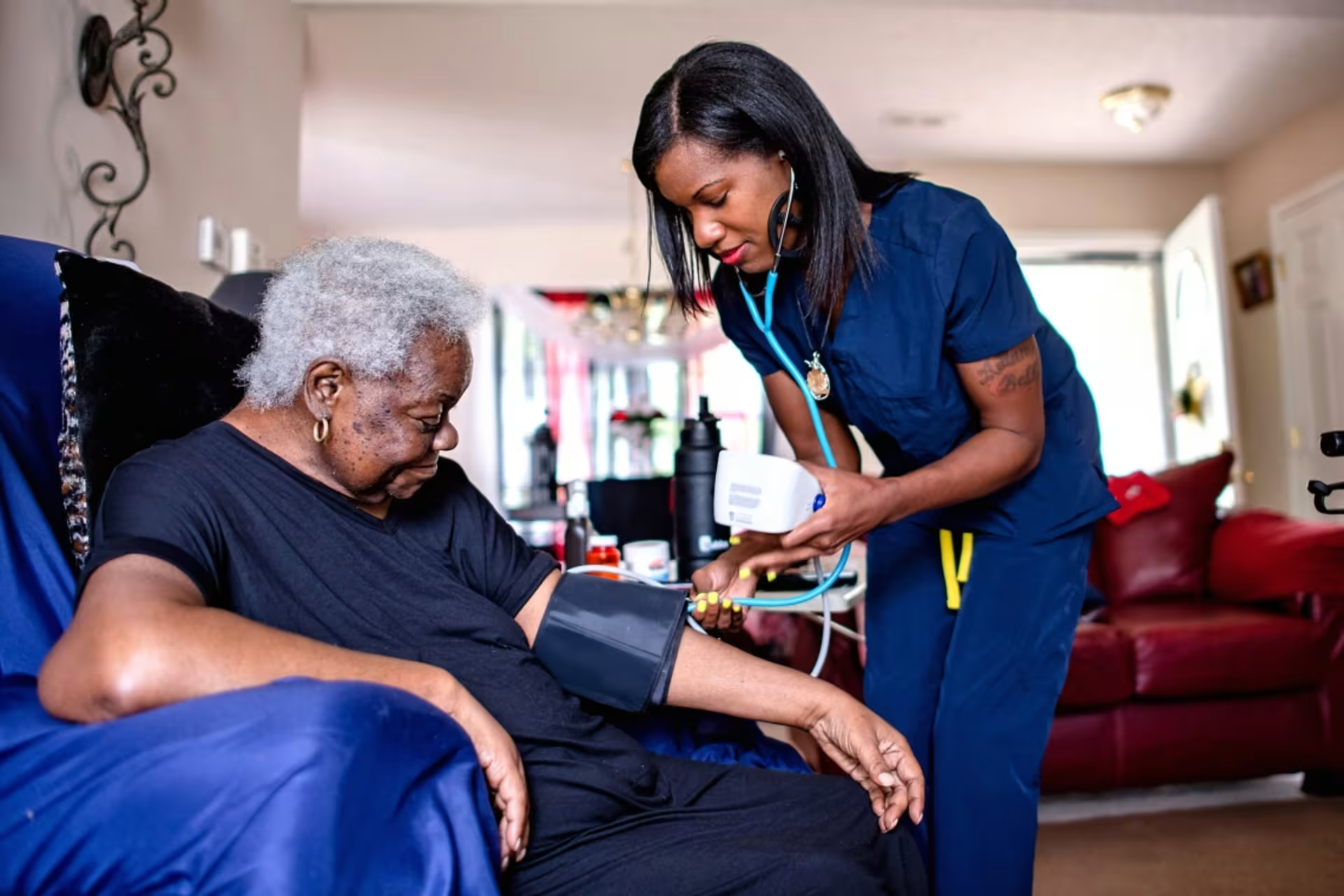
Explore the essential roles and responsibilities of nursing professionals, from patient care and advocacy to education and specialty practice. Better understand the day-to-day tasks and heart of the profession.
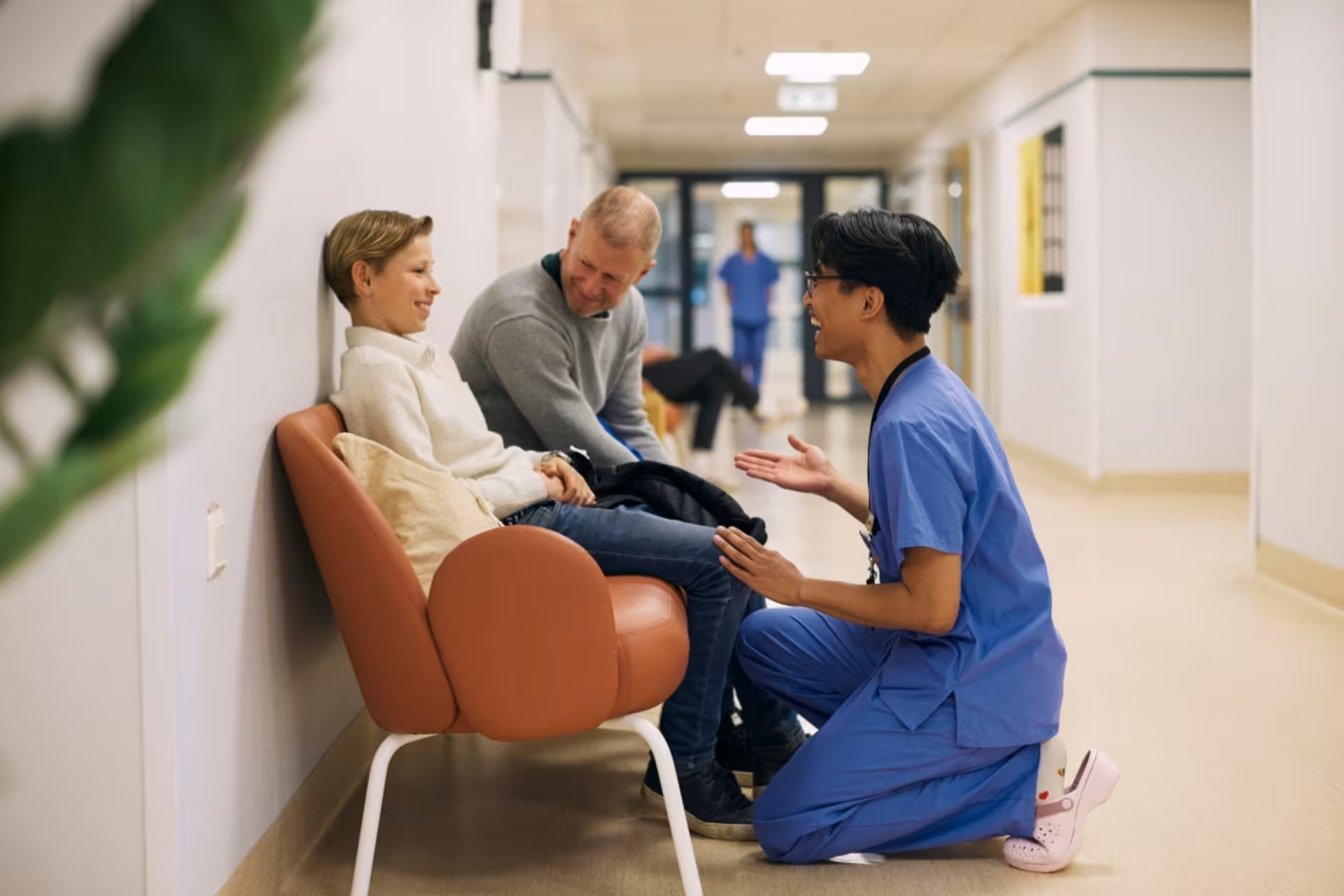
Learn more about the motivations and meaningful outcomes that draw many people to nursing, including the opportunity to support patients, families and communities through every stage of care.

Discover the variety of nursing roles and specialties available across healthcare and gain insight into how different career paths can align with your interests and strengths.

Explore our nursing degree programs and take the next step toward caring for patients wherever you’re needed most.
- AB Staffing Solutions. (2025, Jan. 31). Travel Nursing Statistics for 2025 and Beyond. Retrieved February 2026.
- Davidson, A. (2025, Oct. 8). How To Become a Travel Nurse. NurseJournal. Retrieved February 2026.
- American Nurses Enterprise. (2023, May 18). How To Become a Travel Nurse. ANA Nursing Resources Hub. Retrieved February 2026.
- U.S. Bureau of Labor Statistics. (2025). How To Become a Registered Nurse. Occupational Outlook Handbook. Retrieved February 2026.
- The earnings referenced were reported by the U.S. Bureau of Labor Statistics (“BLS”), Nurse Anesthetists, Nurse Midwives and Nurse Practitioners, as of May 2024, retrieved February 2026. Due to COVID-19, data from 2020 to 2023 may be atypical compared to prior years. BLS calculates the median using salaries of workers nationwide, who have varying levels of education and experience. It does not reflect the earnings of GCU graduates as nurse anesthetists, nurse midwives and nurse practitioners, nor does it reflect earnings of workers in one city or region of the country or a typical entry-level salary. Median income is the statistical midpoint for the range of salaries in a specific occupation. It is very unlikely that a median salary will reflect an entry-level salary. It represents what you would earn if you were paid more money than half the workers in an occupation, and less than half the workers in an occupation. It may give you a basis to estimate what you might earn at some point if you enter this career. Grand Canyon University can make no guarantees on individual graduates’ salaries. Your employability will be determined by numerous factors over which GCU has no control, such as the employer the graduate chooses to apply to, the graduate’s experience level, individual characteristics, skills, etc. against a pool of candidates.
- COVID-19 has adversely affected the global economy and data from 2020 to 2023 may be atypical compared to prior years. Accordingly, data shown is effective August 2025, which can be found here: U.S. Bureau of Labor Statistics, Occupational Outlook Handbook, Registered Nurses, retrieved February 2026.