

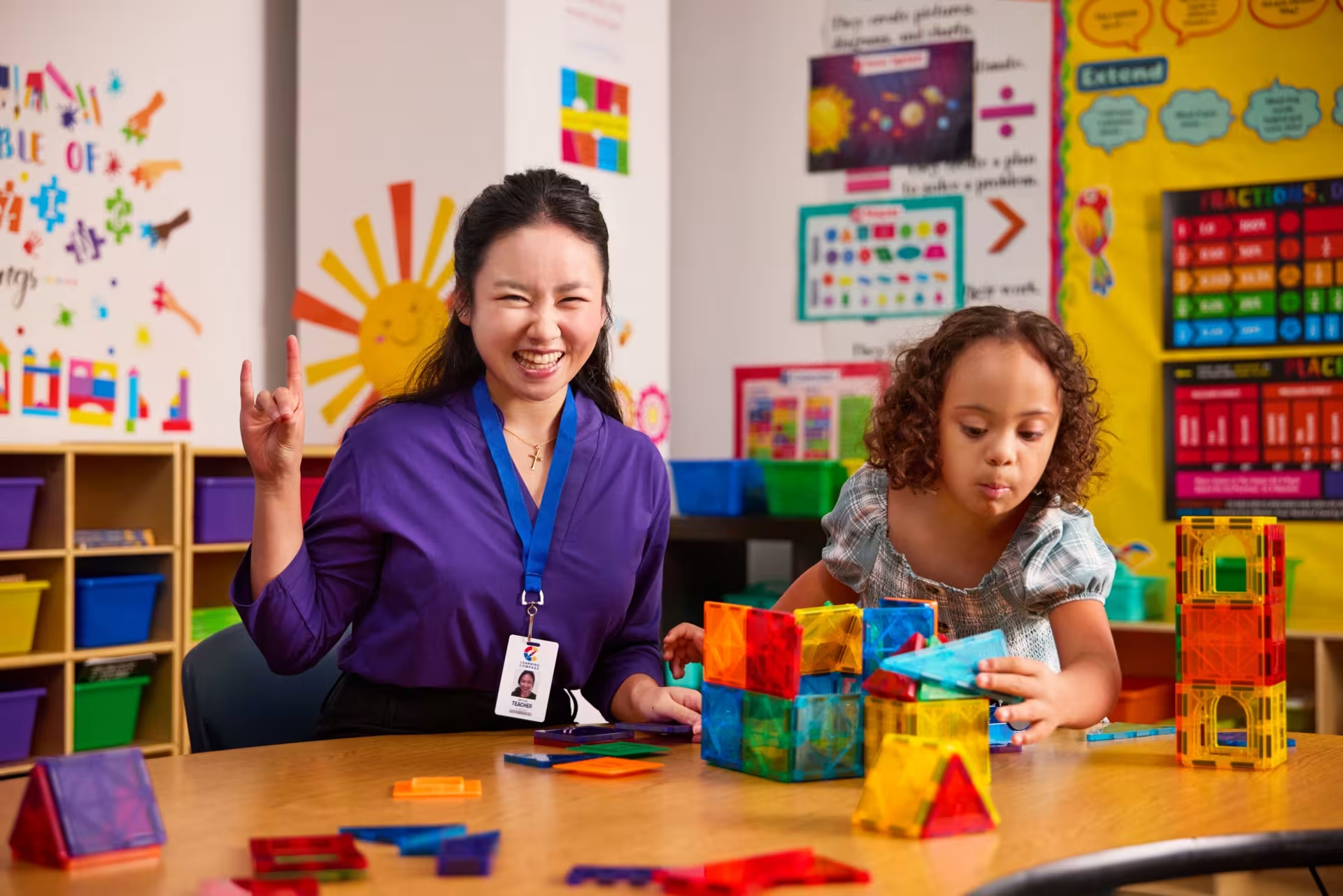
Bachelor’s in Special Education Degree: Mild to Moderate Disabilities, Grades K-12
What Is a BS in Special Education Degree?
A BS in Special Education degree is designed to help prepare future educators to support students with mild to moderate disabilities in grades K-12. This bachelor’s program focuses on how students learn and develop across cognitive, social, emotional and behavioral areas, and how to apply that knowledge in welcoming classroom settings.
In this program, you can develop skills in supporting student needs, conducting assessments, understanding the special education process and planning instruction for individualized education programs (IEPs). The curriculum aligns with professional standards such as Interstate Teacher Assessment and Support Consortium (InTASC), Council for Exceptional Children (CEC) and International Society for Technology in Education Standards for Educators (ISTE-E), helping connect your learning to widely recognized expectations for educators.
Up to 90 credits, only 84 can be lower division
Credits: Fill out the Lopes Eval to find out what will transfer
Admission Requirements (Bachelor's)
- 16+ years old
- High School Graduate
- 2.8+ Unweighted GPA
OR 2.5+ Unweighted GPA and
- ACT: 19
- SAT: 1000*
Admission requirements may differ based on degree level, program and modality, or transfer status. Some programs of study may require a higher GPA and/or other qualifying criteria for admission. Please review full admission and program requirements in the University Policy Handbook.
*Math and reading only on a 1600 point scale (test date after 3/1/2016). SAT score of 1380 required for 2400 point scale (test date before 3/1/2016).
What’s It Like Going to GCU for Your Bachelor's Degree in Special Education?
Earning your bachelor’s degree in special education at GCU means engaging in a learning experience that connects you with a community and encourages personal and professional growth. Whether you choose to pursue an online(See disclaimer 1) special education degree or attend classes on campus, you can expect a structured, supportive environment grounded in a Christian worldview.
What To Expect in a BS in Special Education Degree: Mild to Moderate
Flexible Online Special Education Degree Coursework
GCU’s online(See disclaimer 1) special education degree offers flexibility for students who need to balance their education with other responsibilities. Courses are delivered in a structured format that helps you stay on track while allowing you to access materials, participate in discussions and complete assignments online.(See disclaimer 1) Throughout your coursework, you can engage with instructors and peers, helping you stay connected while progressing through your degree.

Accreditation That Supports Your Teaching Journey
GCU has been institutionally accredited by the Higher Learning Commission since 1968. The College of Education shares the university’s commitment to upholding the principles and standards established by our accrediting bodies.
Campus Living at a Christian College in Phoenix
For students who prefer a traditional college experience, GCU’s campus in Phoenix, Arizona offers opportunities to learn and connect in person. As a Christian university, GCU integrates a Christian worldview into the student experience, encouraging you to reflect on values such as service, compassion and ethical responsibility. On campus, you can engage with peers, participate in student life and build relationships while working toward your bachelor’s in special education.

Dedicated Support for You in Special Education
At GCU, you’ll have access to educational resources designed to support you throughout your academic journey. From knowledgeable faculty to academic support services, we provide guidance as you progress through your special education degree. Whether you are navigating coursework, preparing for field experiences or planning next steps after graduation, support is available to help you stay focused and move forward with confidence.
What Will I Study in a Bachelor’s in Special Education Degree?
Throughout the program, you will study differentiated instruction, progress monitoring, collaboration and data-informed decision-making. These skills focus on developing your confidence in supporting students’ academic, functional and communication needs. As you progress through your bachelor’s degree in special education, your coursework will move beyond foundational concepts and into practical strategies you can apply in K-12 settings. You will examine how to support diverse learners and understand how to meet the academic, social, and emotional needs of students with mild to moderate disabilities. Through targeted instruction, collaboration and ongoing assessment, you will study how to develop approaches that align with professional expectations in special education.
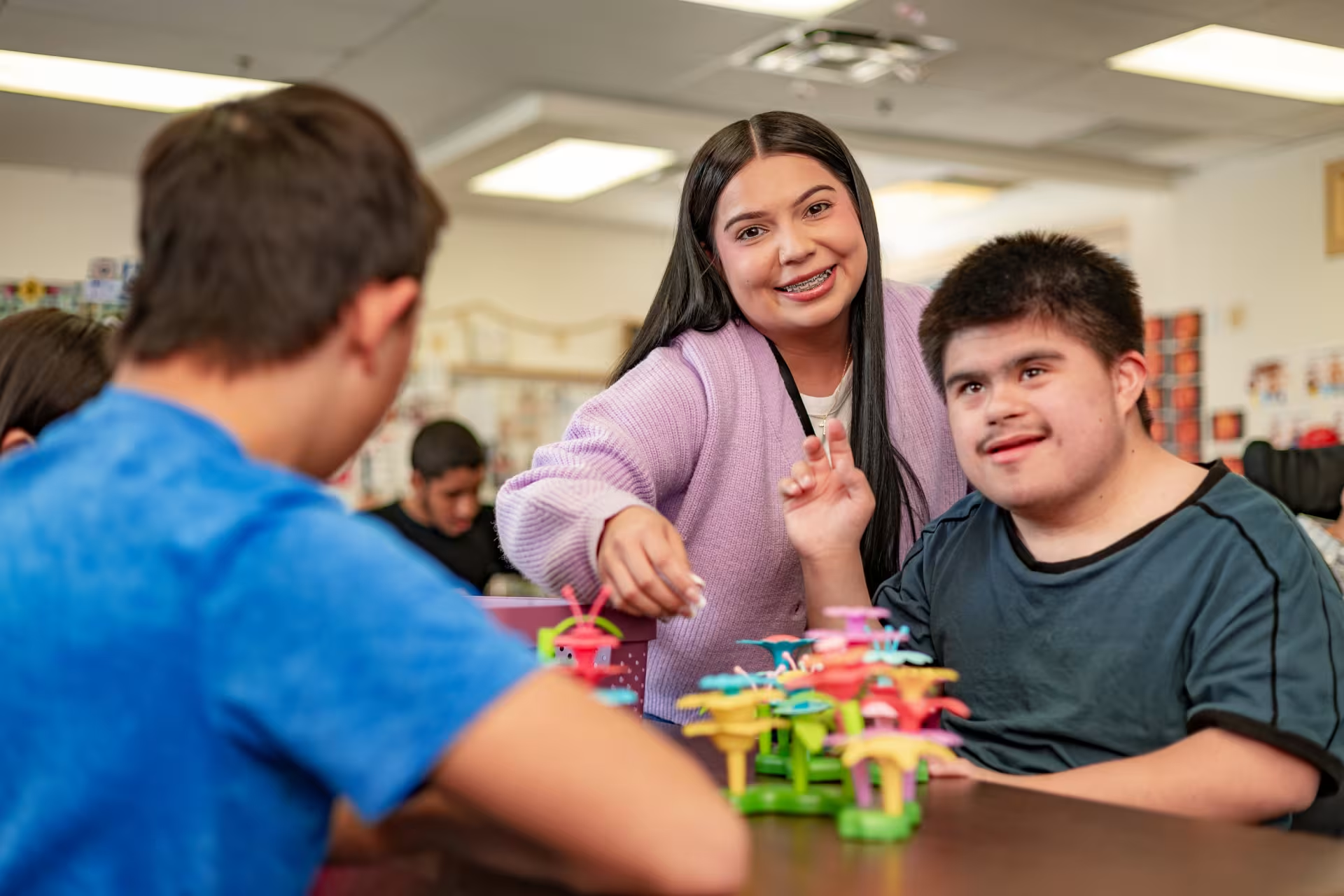
Special Education Degree Core Course Topics
Coursework focuses on building the knowledge and skills to support students with mild to moderate disabilities, including:
Foundations of Mild to Moderate Disabilities
Gain an understanding of the characteristics and educational approaches related to mild to moderate disabilities, along with an overview of the special education process, laws and regulations.
IEP Development
Discover how to plan and implement instruction aligned to IEPs, including differentiation, accommodations and data-informed strategies to support student progress.
Assessment and Decision Making
Explore how to use multiple assessment methods and data sources to support eligibility decisions, monitor progress and guide instructional planning for students with diverse learning needs.
Literacy and Language Development
Examine how students develop reading, writing and communication skills, and apply strategies to support language development, early literacy and varied communication needs.
Behavior and Classroom Support
Develop strategies to support behavior, self-regulation and executive functioning, including approaches to creating structured learning environments and promoting student independence.
Collaboration and Professional Practice
Build skills for working with families, general education teachers and support staff, while applying ethical practices, advocacy and professional standards in special education settings.
Apply Your Knowledge Through Field Experience and Student Teaching
This online(See disclaimer 1) special education degree also emphasizes practical application through 115 hours of observational and practice-based experiences, culminating in a full-time, 15-week student teaching component in a K-12 mild to moderate setting.
These experiences give you opportunities to apply what you have learned in real classroom environments, working alongside experienced educators. You may observe instructional strategies, support diverse learners and begin developing your own approach to classroom management and welcoming teaching methods.
What Can I Do With a Special Education Degree?
A bachelor’s degree in special education can help prepare graduates for a variety of careers in special education across different grade levels and learning environments. From early childhood education through secondary school, special education professionals may adapt instruction, support student development and help learners build academic, social and life skills that support long-term success.
Explore the following career options for bachelor’s in special education graduates:
Preschool special education teacher
Support young children with developmental delays or disabilities through early learning activities that build foundational social, behavioral and communication skills.
Kindergarten special education teacher
Help students transition into structured learning environments by adapting instruction to meet diverse developmental and academic needs.
Elementary school special education teacher
Provide individualized instruction across core subjects while helping students strengthen academic, social and organizational skills.
Middle school special education teacher
Guide students through increasing academic expectations by modifying curriculum and fostering independence and self-advocacy.
Secondary school special education teacher
Prepare students for life beyond school by tailoring instruction, supporting academic progress and helping them build practical and vocational skills.
Median annual wage for special education teachers in May 2024(See disclaimer 2)
Openings expected for special education teachers, each year, from 2024 to 2034(See disclaimer 3)
Plan Ahead With Transparent and Affordable Tuition Costs
Earning your bachelor’s degree in special education is an investment in your future, and GCU is committed to helping you plan with confidence. Tuition rates are designed to be transparent, so you can better understand the cost of your online(See disclaimer 1) special education degree or on-campus experience before you begin.
We offer resources to help you explore ways to manage the cost of your education, including financial aid opportunities for those who qualify, scholarships and guidance from university counselors.

GCU has not increased campus tuition rates since 2009
Ways To Save
Your education is an important financial investment, and there are several ways to help manage costs while earning your degree. GCU’s university counselors are available to help you explore available options and provide personalized guidance on your estimated cost of attendance.
Complete the Free Application for Federal Student Aid (FAFSA) annually to determine eligibility for federal grants and student loans. Since some aid is awarded on a first‑come, first‑served basis, GCU recommends submitting the FAFSA as early as possible after Oct. 1 to maximize funding opportunities.
If you’ve earned college credits from another institution, you may be able to complete your degree sooner at GCU by transferring those credits. Submit the Lopes Unofficial Credit Evaluation form, then connect with a university counselor who can provide you with personalized guidance.
You may be able to reduce your college costs by applying for GCU’s on-campus or online student scholarships. We invite you to explore available institutional scholarships and determine which opportunities you may be eligible for. GCU also encourages students to seek out third‑party scholarships and grants.
Explore Your Financial Options
Talk with a university counselor today to discover savings opportunities.
Bachelor's Degree in Special Education Frequently Asked Questions
Learn more about our special education programs, including curriculum topics, licensure information and potential career pathways for graduates.
What does “mild to moderate disabilities” mean in a special education degree?
What skills will I develop in a bachelor’s degree in special education?
Is a degree in special education worth it?
What advanced degrees are available after a BS in special education degree?
Does this bachelor’s in special education degree lead to licensure?
How does a bachelor’s degree in special education differ from an elementary and special education degree?
Getting Into GCU
Applying to GCU is a straightforward process. Whether you plan to enroll in the online(See disclaimer 1) special education degree or attend classes on campus, you can review admission requirements, explore campus resources and connect with a university counselor to get started.
You can apply to a degree program at GCU in just three simple steps. Your university counselor is standing by to assist you with any questions about the application process.
It starts with selecting the program that aligns with your goals from one of GCU's 380+ academic programs — from undergraduate degrees to post-master’s certificate programs to doctoral degrees.
Pick your program
Explore our on-campus, online or evening cohort options under the Degree Programs page to find the right program for you.
Complete our online application
Your university counselor will direct you to the online application. Fill in all required information and submit the form.
Submit supporting documents
Submit your official transcripts and any relevant test scores, and confirm with your university counselor that all forms for your desired program are submitted.
Program Curriculum
General Education Requirements
Required General Education Courses
Core Courses


Take the next step toward supporting students with diverse learning needs with GCU’s bachelor’s in special education degree program.
If you are seeking licensure/certification, please refer to the "Accreditation and Compliance/State Disclosures” link for the specific program of interest’s website for your location and/or employment state’s licensure requirements, per 34 CFR 668.14(b)32 and 668.43(c).
Excluding observational and practice-based experiences and student teaching.
- The earnings referenced were reported by the U.S. Bureau of Labor Statistics (BLS), Special Education Teachers, as of May 2024, retrieved May 2026. Due to COVID-19, data from 2020 to 2023 may be atypical compared to prior years. BLS calculates the median using salaries of workers nationwide with varying levels of education and experience. It does not reflect the earnings of GCU graduates as special education teachers, nor does it reflect the earnings of workers in one city or region of the country or a typical entry-level salary. Median income is the statistical midpoint for the range of salaries in a specific occupation. It is very unlikely that a median salary will reflect an entry-level salary. It represents what you would earn if you were paid more money than half the workers in an occupation, and less than half the workers in an occupation. It may give you a basis to estimate what you might earn at some point if you enter this career. Grand Canyon University can make no guarantees on individual graduates’ salaries. Your employability will be determined by numerous factors over which GCU has no control, such as the employer the graduate chooses to apply to, the graduate’s experience level, individual characteristics, skills, etc. against a pool of candidates.
- COVID-19 has adversely affected the global economy and data from 2020 to 2023 may be atypical compared to prior years. Accordingly, data shown is effective August 2025, which can be found here: U.S. Bureau of Labor Statistics, Occupational Outlook Handbook, Special Education Teachers, retrieved May 2026.