
Occupational Therapy Programs
What Is Occupational Therapy?

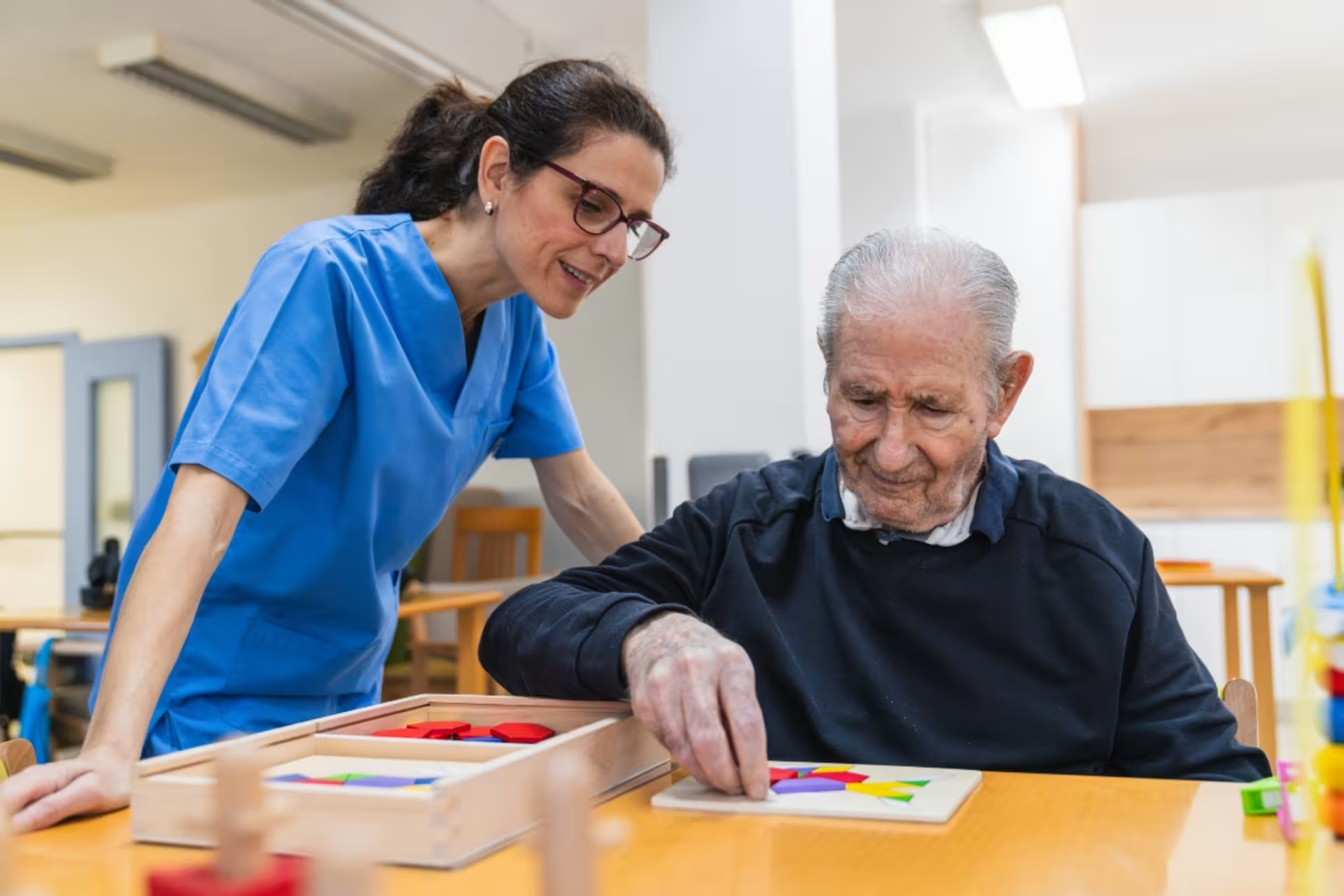
Occupational therapy (OT) focuses on improving health, well-being and quality of life by empowering clients to participate in the activities of daily living (ADLs) and become more independent. OT emphasizes personalized treatment planning and caregiver and family training. OT professionals strive to help individuals with physical, cognitive and functional limitations increase their safety and independence in daily life.(See disclaimer 1)
Occupational therapists are allied health professionals who support patients across the lifespan and with a broad range of health concerns, including spina bifida, stroke and surgery recovery.(See disclaimer 2 )They help clients accomplish their goals through assessment, treatment planning, neurological and physiological interventions and the use of adaptive equipment. They also help adjust the home environment.(See disclaimer 1)
Explore GCU Occupational Therapy Programs


What You’ll Study in Our Online OT Programs
In online(See disclaimer 3) OT programs, you’ll study human anatomy and physiology, along with movement and its effects on bones, joints and muscles. You’ll also learn medical terminology and explore key OT practice areas, including mental health, neurological and physical rehabilitation and pediatric and geriatric care.
These programs include hands-on experiences and in-depth online projects. GCU offers a few pathways into the OT field.

At the undergraduate level, GCU offers a bachelor’s degree in occupational therapy assistant (OTA), which serves as a strong starting point for entering the field or preparing for occupational therapy graduate programs.

The Master of Science in Occupational Therapy (MSOT) program provides an evidence-based education covering functional anatomy, intervention strategies and psychosocial practice, along with on-campus learning components, fieldwork and NBCOT exam preparation.
.jpg)
The OT bridge pathway helps you complete prerequisite coursework and build the foundational knowledge needed to transition into the MSOT program, if you have a bachelor's degree in an unrelated field.
Where Do Occupational Therapists Work?
Occupational therapists work in a variety of settings, including clients’ homes, outpatient clinics, inpatient healthcare facilities and community environments.(See disclaimer 1) In home-based care, they may travel to conduct assessments and provide rehabilitative therapy sessions. Across all settings, occupational therapists collaborate as part of an interdisciplinary care team that can include physicians, specialists, nurses, physical therapists (PTs) and occupational therapy assistants (OTAs) to support coordinated, patient-centered care.
Some of the most common work settings for occupational therapists include:(See disclaimer 1)
Clients’ homes
Hospitals
Outpatient clinics
Schools
Long-term care facilities
Community centers
Median annual salary for occupational therapists as of May 2024(See disclaimer 4)
Median annual salary for occupational therapy assistants and aides as of May 2024(See disclaimer 5)
Occupational Therapy Program FAQs
Before taking the first step with an online occupational therapy program, explore more about occupational therapy and your academic options with the following frequently asked questions and answers.
What is the difference between occupational therapy and physical therapy?
Do occupational therapy degrees prepare you for licensure?
What degree do you need to be an occupational therapist?
Are occupational therapy degrees worth it?
Do you need a master's to be an occupational therapist?
What skills can you develop in an occupational therapy degree program?
Why Choose GCU’s Occupational Therapy Programs?
At GCU, OT programs are designed to support students at different stages of their academic and professional journey, whether you are beginning as an undergraduate or transitioning from another field through a bridge pathway. As a mission-driven university, GCU integrates faith and values into the curriculum, emphasizing ethical practice, compassion and service in patient care.
Students are taught by faculty with experience in healthcare and rehabilitation, gaining insight into practical occupational therapy practice. Throughout the program, you will have access to academic support resources and a structured learning environment that helps you prepare for graduate study and the next steps toward eligibility for the NBCOT certification exam.
GCU offers transfer-friendly pathways for students at different stages of their educational journey, whether you’re bringing in prior credits or transitioning into occupational therapy from another field. With supportive guidance and multiple entry points, you can be confident in your educational plan as you take the next step toward your OT degree.
The BS in Occupational Therapy Assistant and MS in Occupational Therapy have been granted Candidacy Status by the Accreditation Council for Occupational Therapy Education (ACOTE). Upon ACOTE accreditation, graduates will be able to take the National Board for Certification in Occupational Therapy (NBCOT(See disclaimer ®)) certification examination, which is required by most states to obtain state licensure as an occupational therapist or occupational therapy assistant. GCU is also institutionally accredited by the Higher Learning Commission.
To make higher education more accessible and flexible for our students, GCU offers online(See disclaimer 3) coursework for undergraduate and graduate OT students. You can study from anywhere via our interactive e-learning platform and benefit from the same quality of education as our on-campus students.
Student Resources
All our students have access to a robust suite of student resources, including tutoring and other academic support, as well as technical support for online students. You can benefit from mentorship from our experienced faculty members, committed to facilitating academic progress.

Make a difference in the lives of patients with functional deficits. Study critical occupational therapy coursework at a purpose-based university.
- American Occupational Therapy Association. (n.d.). What Is Occupational Therapy? Retrieved March 2026.
- Cleveland Clinic. (2024, Feb. 27). Occupational Therapy. Retrieved March 2026.
Requires on-campus experiences.
- The earnings referenced were reported by the U.S. Bureau of Labor Statistics (BLS), Occupational Therapists, as of May 2024, retrieved March 2026. Due to COVID-19, data from 2020 to 2023 may be atypical compared to prior years. BLS calculates the median using salaries of workers nationwide with varying levels of education and experience. It does not reflect the earnings of GCU graduates as occupational therapists, nor does it reflect the earnings of workers in one city or region of the country or a typical entry-level salary. Median income is the statistical midpoint for the range of salaries in a specific occupation. It is very unlikely that a median salary will reflect an entry-level salary. It represents what you would earn if you were paid more money than half the workers in an occupation, and less than half the workers in an occupation. It may give you a basis to estimate what you might earn at some point if you enter this career. Grand Canyon University can make no guarantees on individual graduates’ salaries. Your employability will be determined by numerous factors over which GCU has no control, such as the employer the graduate chooses to apply to, the graduate’s experience level, individual characteristics, skills, etc. against a pool of candidates.
- The earnings referenced were reported by the U.S. Bureau of Labor Statistics (BLS), Occupational Therapy Assistants and Aides, as of May 2024, retrieved May 2026. Due to COVID-19, data from 2020 to 2023 may be atypical compared to prior years. BLS calculates the median using salaries of workers nationwide with varying levels of education and experience. It does not reflect the earnings of GCU graduates as occupational therapy assistants and aides, nor does it reflect the earnings of workers in one city or region of the country or a typical entry-level salary. Median income is the statistical midpoint for the range of salaries in a specific occupation. It is very unlikely that a median salary will reflect an entry-level salary. It represents what you would earn if you were paid more money than half the workers in an occupation, and less than half the workers in an occupation. It may give you a basis to estimate what you might earn at some point if you enter this career. Grand Canyon University can make no guarantees on individual graduates’ salaries. Your employability will be determined by numerous factors over which GCU has no control, such as the employer the graduate chooses to apply to, the graduate’s experience level, individual characteristics, skills, etc. against a pool of candidates.
- U.S. Bureau of Labor Statistics. (2025, Aug. 28). How To Become an Occupational Therapist. Occupational Outlook Handbook. Retrieved March 2026.
- COVID-19 has adversely affected the global economy and data from 2020 to 2023 may be atypical compared to prior years. Accordingly, data shown is effective August 2025, which can be found here: U.S. Bureau of Labor Statistics, Occupational Outlook Handbook, Occupational Therapists, retrieved March 2026.