


Online Master’s in Reading Education K-12 Degree
Strengthen Strategies for Literacy Development in K–12 Classrooms
The Master of Arts in Reading Education K-12 degree at Grand Canyon University is designed for current teaching professionals who are interested in specializing in reading and literacy instruction in K-12 classrooms. Offered by the College of Education, this non-licensure master’s in reading education can help you prepare to meet the needs of diverse learners by deepening your understanding of evidence-based literacy practices, assessment methods and instructional strategies.
Through coursework focused on developmental reading, language acquisition and data-informed intervention, educators can build the skills needed to support students at every grade level. This program is for teachers who already hold a teaching license or at least one year of verified teaching experience.

Up to 12 credits or 1/3 of the total program requirements in transfer (whichever is less)
Credits: Fill out the Lopes Eval to find out what will transfer
Admission Requirements (Master's)
- Undergraduate Degree*
- 2.8+ GPA
OR 2.5+ Unweighted GPA and
- GMAT: 500
- GRE: 300 combined**
Admission requirements may differ based on degree level, program and modality, or transfer status. Some programs of study may require a higher GPA and/or other qualifying criteria for admission. Please review full admission and program requirements in the University Policy Handbook.
* Degree must be from an accredited college or program that has been approved by GCU.
** Combined verbal/quantitative, after August 2011 (1,000 combined verbal and quantitative, prior to August 2011).
The GCU Difference in K–12 Reading Education
GCU is committed to empowering educators to provide the personalized literacy support that students need. In this master’s degree in reading education for K-12 students, you will be immersed in pedagogy that emphasizes servant leadership and Christian principles. The Christian worldview is fully integrated into the coursework, inspiring our learners to uphold values of human dignity, compassion and accessibility in their classrooms.
As a transfer-friendly university, GCU invites you to complete the Lopes Unofficial Credit Evaluation form to see how your credits could transfer to this master’s degree. A transfer specialist at GCU can provide personalized guidance and step-by-step support throughout the admission process.
This online(See disclaimer 1) master’s in reading education is designed for K-12 educators who need geographic independence and flexibility in scheduling. You can continue to uphold your current responsibilities while earning your degree.
GCU understands that working educators need affordable options for higher education. Here, you can earn your master’s degree with competitive online tuition rates that are the same for in-state and out-of-state students.
Course Topics in a Master’s Degree in Reading Education
Prepare for an in-depth dive into the nuances of language, literacy and reading instruction grounded in the science of reading. You will explore the theoretical and evidence-based principles of reading and writing development, instructional methods and literate-rich environments in this degree. You’ll also consider how best to meet the needs of diverse students, including English language learners and students with dyslexia and other exceptionalities. This degree requires practicum/field experience hours for hands-on application and immersive learning experiences, which must be completed in person.
This master’s degree in reading education focuses on these key areas:
Theories of how children acquire language
Learning anchored in neuroscience
Foundations in educational research
Reading assessment techniques
Dyslexia diagnosis strategies
Environments fostering literacy
K-12 reading instruction techniques
Advanced strategies in K-12 reading remediation
Leadership models for literacy promotion
Professional ethics for educators
Dedicated to Purpose-Driven Education

"While our college serves many students across the United States, it’s our commitment to purpose-driven education that helps us see to it that our graduates don’t just enter classrooms as skilled teachers, but as passionate changemakers driven by service and excellence."
"While our college serves many students across the United States, it’s our commitment to purpose-driven education that helps us see to it that our graduates don’t just enter classrooms as skilled teachers, but as passionate changemakers driven by service and excellence."

Career Opportunities With a Master’s in K-12 Reading Education
With a firm foundation in reading instruction, you can support struggling readers by applying appropriate instructional strategies and providing personalized reading instruction that fosters confidence and engagement. This approach can help inspire students to cultivate a lifelong appreciation for the written word. As a K–12 educator, you can pursue a range of education-based opportunities that draw on well-developed competencies in language and literacy.
Upon earning this degree, you may pursue career opportunities in settings such as:(See disclaimer 2)
Public or private elementary schools
Public or private secondary schools
Child daycare centers
Postsecondary institutions
Earn Your Master’s in Reading Education From an Accredited University
This master’s degree in reading education for K-12 is accredited by the Association for Advancing Quality in Educator Preparation (AAQEP). AAQEP accreditation is an indicator of the program's quality and its effectiveness in preparing educators. The format and courses of this accredited program are aligned to the International Literacy Association (ILA) and the Interstate Teacher Assessment and Support Consortium (InTASC) standards.
Further, GCU holds institutional accreditation from the Higher Learning Commission as well as authorization in Arizona from the Arizona State Board for Private Postsecondary Education. These accreditations signify GCU’s excellence and the quality of its academic offerings.

Frequently Asked Questions
As an educator, you already understand the value of furthering one’s education with a graduate degree. As you research your options, the following FAQs and answers can provide some insight on GCU’s linguistics and literacy program.
Is a master's in reading education K-12 degree worth it?
What does a reading specialist or interventionist do?
What is the difference between a reading teacher and a reading specialist?
Program Curriculum
Core Courses

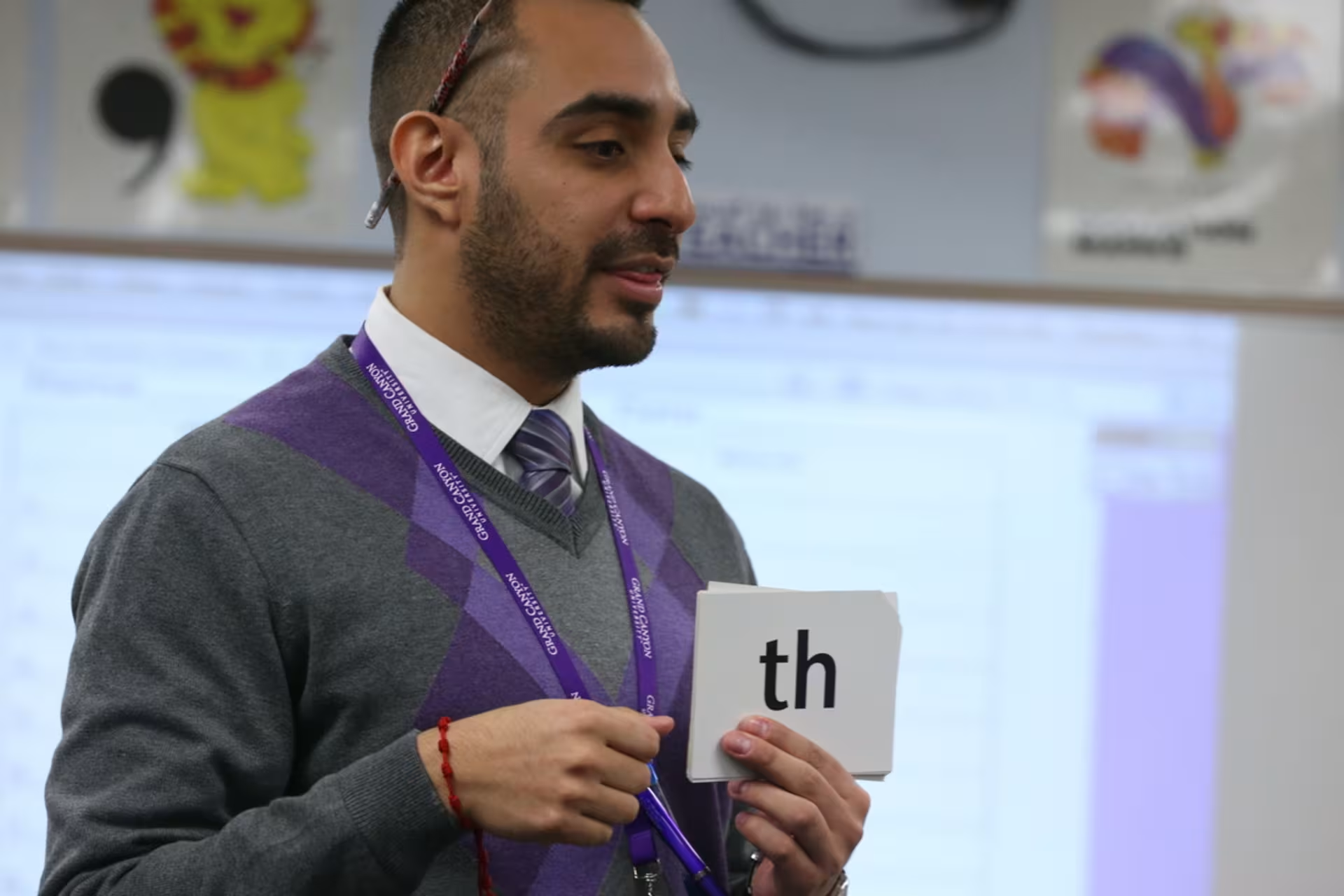
Strengthen language and literacy instruction with a master’s in reading education at GCU.
If you are seeking licensure/certification, please refer to the "Accreditation and Compliance/State Disclosures” link for the specific program of interest’s website for your location and/or employment state’s licensure requirements, per 34 CFR 668.14(b)32 and 668.43(c).
- Excluding observational and practice-based experiences and student teaching.
- U.S. Bureau of Labor Statistics. (2025, Aug. 28). Kindergarten and Elementary School Teachers: Work Environment. Occupational Outlook Handbook. Retrieved January 2026.
- Sprig Learning. (2022, June 2). The ABCs of Supporting Reading Specialists. Retrieved January 2026.