


Master’s in Mathematics: Education Emphasis
Delve Into Mathematics Pedagogy for Effective Teaching
The Master of Science in Mathematics with an Emphasis in Education from Grand Canyon University is designed for those who have a background in math and wish to work in a higher education career. As a master’s student, you will be taught the skills needed to teach undergraduate math courses at higher education institutions and work toward being qualified to teach in online environments.(See disclaimer 1,2)
Teaching a deeper understanding of mathematics is one goal of this degree emphasis. A second goal is to teach pedagogy and classroom techniques to help you pursue your goal of becoming an undergraduate math instructor. Theoretical and practical applications of both mathematics and instruction are at the heart of this degree program. It’s important to note that teachers at the postsecondary level typically need a doctoral degree in their field. However, a master’s degree may be accepted at some universities and community colleges.(See disclaimer 3)

Online: $610 per credit [More Info]
Up to 12 credits or 1/3 of the total program requirements in transfer (whichever is less)
Credits: Fill out the Lopes Eval to find out what will transfer
Admission Requirements (Master's)
- Undergraduate Degree*
- 2.8+ GPA
OR 2.5+ Unweighted GPA and
- GMAT: 500
- GRE: 300 combined**
Admission requirements may differ based on degree level, program and modality, or transfer status. Some programs of study may require a higher GPA and/or other qualifying criteria for admission. Please review full admission and program requirements in the University Policy Handbook.
* Degree must be from an accredited college or program that has been approved by GCU.
** Combined verbal/quantitative, after August 2011 (1,000 combined verbal and quantitative, prior to August 2011).
Benefits of a Mathematics: Education Emphasis at GCU
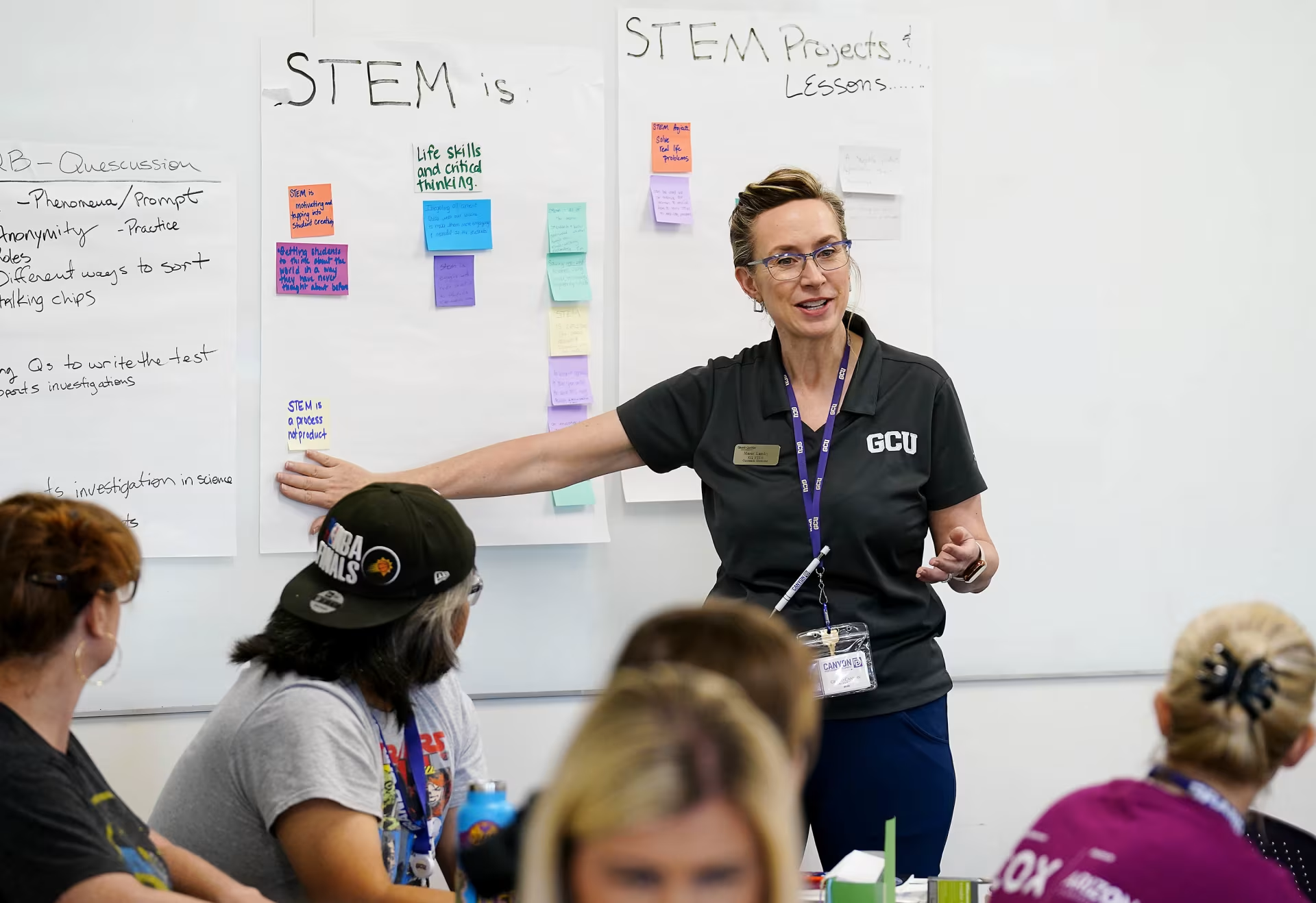
This MS degree is offered through the College of Humanities and Social Science and may provide you the opportunity to become a qualified instructor who can apply to STEM career openings at postsecondary institutions.(See disclaimer 3) Math is essential not only for STEM students but for many degree programs, which indicates that math instructors are needed across a variety of postsecondary institutions.(See disclaimer 4)
If you’re passionate about math education as a means to help students achieve their career goals, then this degree program could be a good fit for you. During this online program, you will be immersed within a supportive Christian learning environment that encourages intellectual discussions and personal growth.
Master’s in Mathematics Program Prerequisites
To be admitted to this graduate degree in math instructional strategies, you will need to possess a background in mathematics. This is required to help ensure that students who are admitted can demonstrate the foundational knowledge and skills necessary for successfully navigating the curriculum and assignments.
You will need one of the following prerequisites to apply:
This degree program is offered fully online, providing a flexible learning format that allows students to complete coursework while balancing professional and personal responsibilities. Access your coursework and connect with fellow learners and instructors as you examine core concepts in mathematics pedagogy.
Course Topics in This Program
Math knowledge and teaching skills make up the core competencies in this graduate degree program. As a mathematics student, you will be expected to successfully develop lesson plans, teach the coursework and consider how to thrive in a university teaching landscape.
This program explores the following topics:
Career Opportunities After Earning Your Master’s
This master’s in mathematics degree program with an education emphasis is designed to prepare graduates to pursue teaching positions at the postsecondary level. Additionally, professionals who already possess a valid teaching license or certification may elect to earn this MS to further their current teaching qualifications at the secondary level. In some states, high school teachers may be required to earn a master’s degree within a certain period of time after employment as a secondary education teacher.(See disclaimer 5)
With a firm foundation in mathematics pedagogy competencies and a graduate degree, math teachers may be prepared to pursue employment at:(See disclaimer 1)

Earn Your Master’s at an Institutionally Accredited University
GCU is proud to be an institutionally accredited university — a designation that indicates a strong commitment to academic quality across all of our colleges. The Higher Learning Commission has continually accredited GCU since 1968. The College of Humanities and Social Sciences shares the university’s commitment to upholding the principles and standards established by our accrediting bodies.
Frequently Asked Questions
For those interested in pursuing this graduate degree, review our responses to these commonly asked questions.
What is the importance of mathematics in education?
What is the difference between mathematics and mathematics education?
What opportunities are available with a focus on mathematics pedagogy?
Is a mathematics: education emphasis program worth it?
How hard is a master’s in mathematics: education emphasis?
Program Curriculum
Core Courses


Prepare to inspire undergraduate students with effective math pedagogy.
- U.S. Bureau of Labor Statistics. (2024, April 17). Postsecondary Teachers: Work Environment. Occupational Outlook Handbook. Retrieved August 2024.
- Indeed Editorial Team. (2024, July 2). How to Become an Online Professor in 5 Steps. Indeed. Retrieved August 2024.
- U.S. Bureau of Labor Statistics. (2024, April 17). How to Become a Postsecondary Teacher. Occupational Outlook Handbook. Retrieved August 2024.
- COVID-19 has adversely affected the global economy and data from 2020 to 2023 may be atypical compared to prior years. Accordingly, data shown is effective August 2024, which can be found here: U.S. Bureau of Labor Statistics, Occupational Outlook Handbook, STEM Occupations, retrieved September 2024.
- U.S. Bureau of Labor Statistics. (2024, April 17). How to Become a High School Teacher. Occupational Outlook Handbook. Retrieved August 2024.
- International Commission on Mathematics Instruction. (n.d.). The Role of Mathematics in the Overall Curriculum. ICMI. Retrieved August 2024.