

Choosing a college and planning your future can feel overwhelming, especially when you’re balancing classes, work, family and long-term career goals. That’s where an academic advisor can make a major difference. Academic advisors help students navigate their educational journey, stay on track toward graduation and connect their degree program to future career opportunities.
At GCU, our academic advisors are called student services counselors (SSCs). While the title is different, the role serves a similar purpose: supporting students throughout their college experience. SSCs work closely with students to help them understand degree requirements, register for classes and stay on track from enrollment through graduation.
Whether you’re just starting college or returning to school after years away, understanding the role of an academic advisor can help you make the most of your educational experience.
What Does an Academic Advisor Do?
Academic advisors help guide students through college academically and personally. Academic advisors provide support that can help students make informed decisions about their education and future.
An academic advisor may help students:
Academic advisors often act as a central point of contact throughout a student’s college experience. They can answer questions, provide encouragement and help students feel more confident about their path forward.
At GCU, SSCs regularly communicate with students about schedules, deadlines, financial aid questions and academic progress. For many online students, especially, this consistent support can help create a more connected college experience.
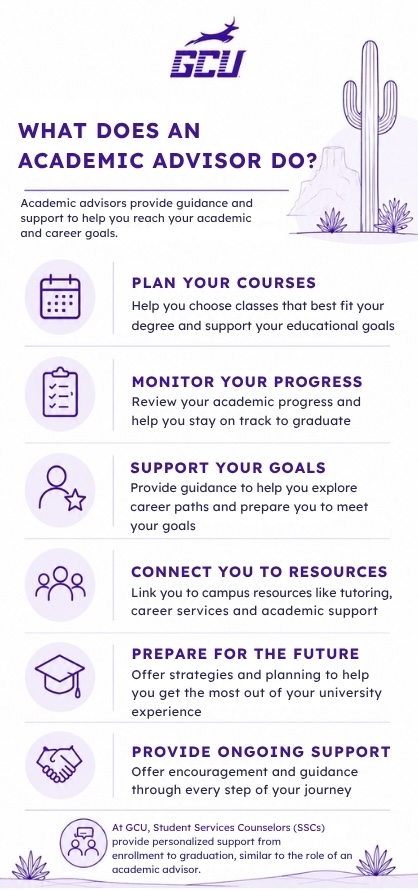
Academic Advisor vs. School Counselor
People sometimes confuse the role of an academic advisor with that of a school counselor, but the two roles are different.
A school counselor typically works in elementary, middle or high schools. School counselors may help students with personal development, emotional support, college preparation and career exploration.
Meanwhile, an academic advisor primarily works in higher education, with colleges and universities. Their focus is on helping students successfully navigate higher education requirements and complete their degree programs.
While both roles support students throughout their academic journeys, academic advisors specialize in college-level planning and progression.
Types of Academic Advisors
Not all academic advisors work in the same way or with the same goal. Depending on the school, program and where they are in their academic path, students may interact with different types of advisors throughout their education.
Some of these advisors include:
General Academic Advisors
General academic advisors help students understand university-wide requirements, foundational coursework and overall degree planning. These advisors are especially common for first-year, transfer or undeclared students who may still be exploring their academic interests and career goals.
At many universities, general academic advisors also serve as a student’s primary point of contact throughout their college experience. SSCs at GCU fulfill a similar role by helping students navigate course scheduling, enrollment, academic progress and university processes.
They also provide ongoing encouragement and personalized guidance throughout a student’s journey, from the start of their program through graduation. This consistent support can be especially valuable for online learners balancing school with work, family or other responsibilities.
Faculty Advisors
Faculty advisors are professors or department faculty members who provide academic guidance within a specific field of study. Because they teach courses and work directly within that field, they can offer students deeper insight into their major, industry trends and potential career paths related to their degree.
In addition to helping students understand program requirements, faculty advisors may assist with course recommendations, research opportunities, internships, graduate school preparation and professional development within a student’s chosen field. They can be especially valuable for students pursuing specialized or advanced degree programs, as they often bring firsthand industry experience and subject matter expertise. Their mentorship may help students gain a better understanding of what to expect in their profession and how to prepare for opportunities after graduation.
Career Advisors
Career advisors focus on helping students connect their education to professional goals. They may assist with resumes, internships, networking opportunities and job preparation.
At GCU, career-focused support can be found through the Career Services department. These resources include resume assistance, interview preparation, career-planning tools, virtual hiring events and job search support designed to help students prepare for life after graduation. GCU’s Career Connections platform also gives students and recent graduates access to digital career resources and opportunities to connect with employers.
Specialized Student Support Advisors
Some academic advisors specialize in supporting specific student populations, such as transfer students, military students, graduate students or online learners. These specialized student support advisors provide guidance tailored to the unique needs, schedules and goals of those groups.
These advisors often provide more personalized support because they are familiar with the unique challenges and opportunities their student population may face. In addition to academic planning, they may connect students with specialized resources, support services and campus programs designed to help them during their time with the university.
Why an Academic Advisor Is Important for Students
From choosing classes to understanding graduation requirements, students are often expected to manage many moving parts throughout their academic journey. An academic advisor can help simplify that process by providing guidance, support and encouragement along the way.
Academic advisors can:
Help students stay on track: One of the most important roles of an academic advisor is helping students stay on track toward graduation. Advisors help students understand which courses they need to take, when to take them and how different academic requirements fit together within their degree program.
Provide personalized support: Because every student’s situation is different, academic advisors can help them create a plan that fits their individual needs and schedule. For online learners especially, having a dedicated support contact can help make the college experience feel more manageable and connected.
Connect students with resources: Many students may not realize how many support services are available to them. Academic advisors can serve as a bridge between students and campus or online resources. If a student needs tutoring, technical support, academic assistance or career guidance, an advisor can help point them in the right direction.
Encourages confidence and motivation: Starting or returning to college can sometimes feel overwhelming. Academic advisors provide encouragement and reassurance while helping students navigate challenges that may come about during their program.
Having someone who regularly checks in, answers questions and helps problem-solve can make a meaningful difference in helping students stay focused on their goals.
"They’re college students. They have stressful lives. They’re working and have multiple things going on. A lot of times, they come in and they want to talk about these issues with the SSCs, and the SSCs are trained to do a good job, being like, ‘Hey, we’re here for you. There are resources for you.’"
What To Expect When Meeting With an Academic Advisor
In most cases, advising meetings are designed to help students feel supported and informed about their educational path. Depending on the specific questions you have there are different things you can expect from an advising appointment.
Some topics you may discuss include:
How To Meet With an Academic Advisor
Students can typically meet with an academic advisor at various points throughout their college experience, including before starting classes, during registration periods or whenever academic questions arise. The process for scheduling an advising appointment may vary by institution, but many schools offer multiple ways for students to connect with advisors, such as by scheduling an appointment through email, phone or online. At GCU, you can get in contact with your SSC by calling 1-855-428-5673 or by filling out the form to request a call.
Embrace Support From Enrollment to Graduation at GCU
At Grand Canyon University, students have access to support throughout their educational journey, whether it be in person or online, from enrollment to graduation. Whether you’re exploring your options for the first time or returning to school to pursue new goals, you can look forward to having an SSC on our team to keep you on track and supported every step of the way. Explore our bachelor’s degree programs and find the path that aligns with the future you want.
Get Personalized Support From Day One
Connect with a dedicated GCU student services counselor to plan your courses, stay on track and reach your goals with confidence.