

Supervised field experiences are a core component of counseling education, according to CACREP, providing students with the opportunity to apply classroom knowledge in practical settings under professional guidance.(See disclaimer 1 )These experiences help students build skills, confidence and begin forming their professional identities as counselors. However, many students struggle to distinguish between a practicum and an internship.
While both involve supervised, hands-on learning, they vary in scope, responsibility and timing within a counseling degree program. Understanding these differences can help students set realistic expectations and choose suitable programs.
Here, we break down how these supervised experiences typically function within counseling programs, how they compare and why each plays an important role in counselor preparation. You’ll also gain insights from Desiree Jackson, PhD, LPC, a core faculty member in Grand Canyon University’s clinical mental health counseling program who serves as the practicum and internship coordinator, offering an expert perspective on the progression from foundational skills to advanced clinical application.
Why Supervised Experience Matters in Counseling Education
Experiential learning is essential for preparing future counselors. While coursework provides theoretical knowledge, supervised fieldwork enables students to apply these concepts in real client interactions,(See disclaimer 1) helping them develop the skills and confidence to support individuals, families and communities effectively.

Supervised experiences are especially important for helping students bridge the gap between theory and practice. As Desiree Jackson, PhD, LPC, explains, "The bridge between theory and practice is where students begin to discover their voice, confidence, and identity as counselors. Counselor professional identity is developed through the experiences gained in practicum and internship.” Through applied training, students begin to see how counseling theories manifest in real situations, refining their approach through interactions with clients, peers, supervisors and interdisciplinary teams.
Dr. Jackson also emphasizes that these experiences support growth. “This is where the personal and professional self emerge, shaping the counselor you become ,” she notes, describing how students begin to see their development “bloom throughout the stages” as they engage in individual counseling, group work, and supervision with peers and faculty. This reflective process helps students identify their strengths and emerging professional identity.
What Is a Counseling Practicum?
A counseling practicum is a structured and supervised experience that allows students to begin applying classroom learning in clinical environments.(See disclaimer 2) Practicum serves as an introduction to applied training and a prerequisite for more advanced field experiences. As Dr. Jackson explains, "Practicum is the bridge between the classroom and clinical practice, providing students with their first supervised opportunities to work with clients and develop their professional identity."
During this phase, the focus is on learning and observation rather than full clinical responsibility. Students are introduced to professional settings through guided participation, skill practice and close supervision. According to Dr. Jackson, practicum is "when students focus on observation, supervised practice, and building foundational counseling competencies” allowing students to build confidence in their emerging counseling skills within a closely monitored environment.
During this experience, students may engage in activities such as:
A key feature of the practicum is the emphasis on feedback and reflection, helping students evaluate strengths, identify areas for improvement and connect theory with practice. Faculty supervision enhances this process by linking practical experience with academic learning, focusing on skill development and preparing students for advanced training.
What Is a Counseling Internship?
A counseling internship is an advanced professional experience that occurs near the end of a counseling degree program.(See disclaimer 2) This phase builds on earlier coursework and supervised learning, allowing students to immerse themselves in professional practice while still receiving structured oversight.
By the time students reach this stage, they have already developed a solid grasp of counseling theories, ethics and basic techniques. The internship builds on that preparation by allowing them to take on more responsibility and apply their skills independently. While supervision remains a central component, students are expected to demonstrate growing confidence, professionalism and clinical judgment.
During this advanced field experience, students typically engage in activities such as:
The internship focuses on consistency and integration, teaching students to balance responsibilities, documentation and client care while adapting to professional environments. Regular supervision offers guidance to refine their skill and tackle challenges. These internships are key in boosting students' competence, confidence and readiness for post-graduate work.
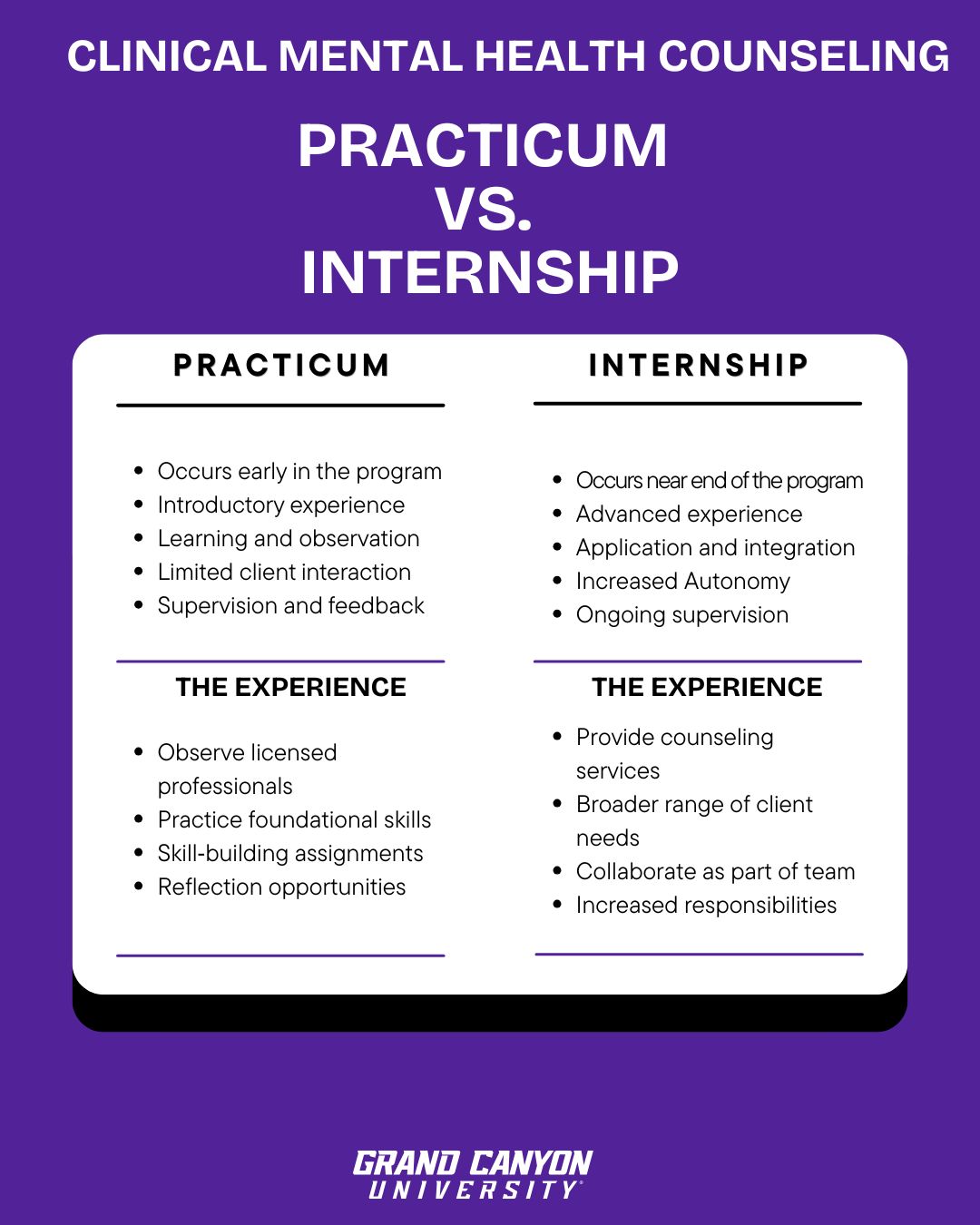
Counseling Practicum vs. Internship Experience
Supervised field experiences in counseling programs help students transition from guided learning to independent practice. While specific requirements vary by program, students usually complete a set number of hours at each stage. Practicum experiences usually require fewer hours and focus on skill development, while internship experiences involve a greater time commitment and consistent engagement in professional settings.
When it comes to whether or not these experiences are paid, Dr. Jackson explains, “internships may be paid or unpaid, depending on the site and agency, and whether the site meets program and clinical training requirements.”
Dr. Jackson further explains, "it is important for students to follow established processes through the Office of Field Experience, and approval from the college is contingent on both program guidelines and site eligibility.
Regardless of compensation, these experiences remain academically focused, providing supervised practice, structured feedback and exposure to real counseling environments that support students’ professional development and readiness for future practice.
What students can expect evolves throughout both practicum and internship. In practicum, students begin applying counseling skills in a supervised clinical setting while developing confidence, professional identity and foundational competencies. As they progress into internship, they continue receiving supervision while expanding their clinical responsibilities, increasing direct client contact, strengthening documentation skills and collaborating with counseling and interdisciplinary teams. Throughout both experiences, students engage in ongoing supervision, consultation, and professional collaboration as they prepare for professional practice.
It is important to note that degree-based experiences are not the same as post-graduation supervised hours required for licensure. Practicum and internship are completed while enrolled in a counseling program to prepare students for entry into the profession. Post-graduate licensure hours occur after earning a degree and involve additional supervised practice under state-specific regulations.
Experience Across Specialties
Supervised field experiences in the clinical mental health program share common elements, yet daily experiences can vary based on program focus and individual placement. Dr. Jackson highlights that similarities and differences shape these experiences, with cohort continuity being a consistent factor. “They stay with the same cohort,” she explains, noting that students work alongside a familiar group of peers and meet weekly with the same faculty supervisor for structured supervision. “These weekly sessions are 1.5 hours in length and provide students with a consistent space to reflect on their clinical experiences, discuss challenges, receive support, and continue their professional development throughout the nine-month training experience.”
Although students may change courses as they progress, consistency is encouraged in other areas. Dr. Jackson explains, “It is recommended that students remain at the same site throughout practicum and internship because there is an approval process involved,” she says. “Staying at one location allows students to build stronger relationships with clients, become more familiar with the agency’s systems and culture, and gain a deeper understanding of the clinical work being done there. Changing sites midway through training can interrupt that continuity and may delay progress as students navigate a new onboarding and approval process.”
This structure fosters professional immersion by allowing students to work consistently with the same clients, supervisors and peers. Jackson emphasizes that this ongoing engagement enhances learning and confidence, enabling students to focus on practical application.
Settings for Practicum and Internship Experiences
Counseling students can gain valuable experience through their supervised field experiences, and site selection can significantly shape their learning. According to Dr. Jackson, while choosing a placement is an independent decision, it should be made thoughtfully. She recommends selecting a site that provides a comprehensive training experience, diverse client populations and opportunities for collaboration with counselors and other professionals.
Dr. Jackson highlights the importance of diversity in training, advising students to seek placements that provide exposure to diverse client populations, opportunities to facilitate or co-facilitate group counseling, and observation of various theoretical and clinical approaches. She emphasized that, “in my experience, many counselor educators recommend gaining exposure to a variety of clinical experiences during practicum and internship. Such experiences help students build their counselor professional identity, develop foundational competencies, and make informed decisions about future areas of specialization.”
Practicum and internship placements may occur in a variety of clinical settings, including private practices, community mental health agencies, schools, healthcare systems and other behavioral health organizations. Although students often seek placements that align with their professional interests and preferred client populations, site selection should also be guided by the program's clinical training requirements. According to Dr. Jackson, students should carefully evaluate whether a prospective site or agency can support the completion of required direct and indirect service hours, particularly as they progress into more advanced clinical experiences.
Exposure to complex situations is another important consideration. Dr. Jackson highlights the value of working in environments where students can experience crises, mandated clients and group facilitation. These experiences help students understand the realities of counseling practice. She notes that while students may choose a niche after licensure, practicums and internships are intended to be formative experiences that shape growth, confidence and readiness for their counseling careers.
Internship vs. Practicum Commitment and Hours
The time commitment for supervised field experiences in counseling programs increases as students advance. Practicum requires fewer hours focused on learning and observation. In contrast, internship experiences demand more time and consistent presence, helping students adapt to the pace and expectations of professional counseling environments. Dr. Jackson shares the timeline for both experiences, “Practicum provides an introductory clinical training experience, while internship offers an extended opportunity for students to further refine their counseling skills, deepen their confidence, and continue developing their professional counselor identity. Through internship, students gain broader experience in client care, supervision, and the professional responsibilities associated with entry-level counseling practices.”
According to Jackson, the practicum phase is intentionally structured to prioritize observation and supervision. "The practicum requirements in our Clinical Mental Health Counseling program include a combination of direct and indirect clinical experiences, with a substantial emphasis on activities such as clinical supervision, observation, and professional development," she explains. "At this stage, we want counselors-in-training to spend time observing experienced clinicians and becoming familiar with the clinical environment before taking on greater counseling responsibilities. The goal is to help students build confidence, develop skills, and gain a deeper understanding of what it feels like to function within a professional counseling setting."
As students move forward, the time commitment increases to reflect their growing readiness for applied practice. Dr. Jackson notes that this shift is intentional: "In practicum, students are learning what it feels like to be in a clinical setting and beginning to apply their counseling skills," she explains. "Once they move into internship, they're taking on a more active role with clients and are required to complete an increase in direct client care. That increase allows them to gain more hands-on experience, build confidence in their counseling abilities, and continue developing professionally while receiving ongoing supervision." This developmental approach prioritizes learning before advancing to professional practice.
Focus of the Experience
Supervised field experiences in counseling programs shift from skill acquisition in early stages to skill integration later on, emphasizing observation and foundational development initially and then focusing on consistent application, increased responsibility and functioning as part of a professional team.
As Dr. Jackson explains, the transition is a natural increase in clinical responsibility and professional expectations. “When students move into internship, they’re taking on a more active counseling role, so I often compare it to onboarding at a new place of employment,” she says. “During practicum, it begins with learning the clinical environment, becoming familiar with the electronic health record system, learning how to write clinical notes and treatment plans, and understanding the day-to-day expectations of professional counseling practice.”
By the time students reach internship, expectations change. “Internship is different because you’re no longer being introduced to the clinical environment,” Dr. Jackson notes. “I often compare it to moving beyond the onboarding phase of a new job. Sites are trusting you with more responsibilities, more client contact, and a broader range of clinical experiences while you continue to receive supervision and support.” This stage emphasizes integration, bringing together theory, skills and professional judgment in real-time practice.
Strategies To Support Your Counseling Practicum or Internship
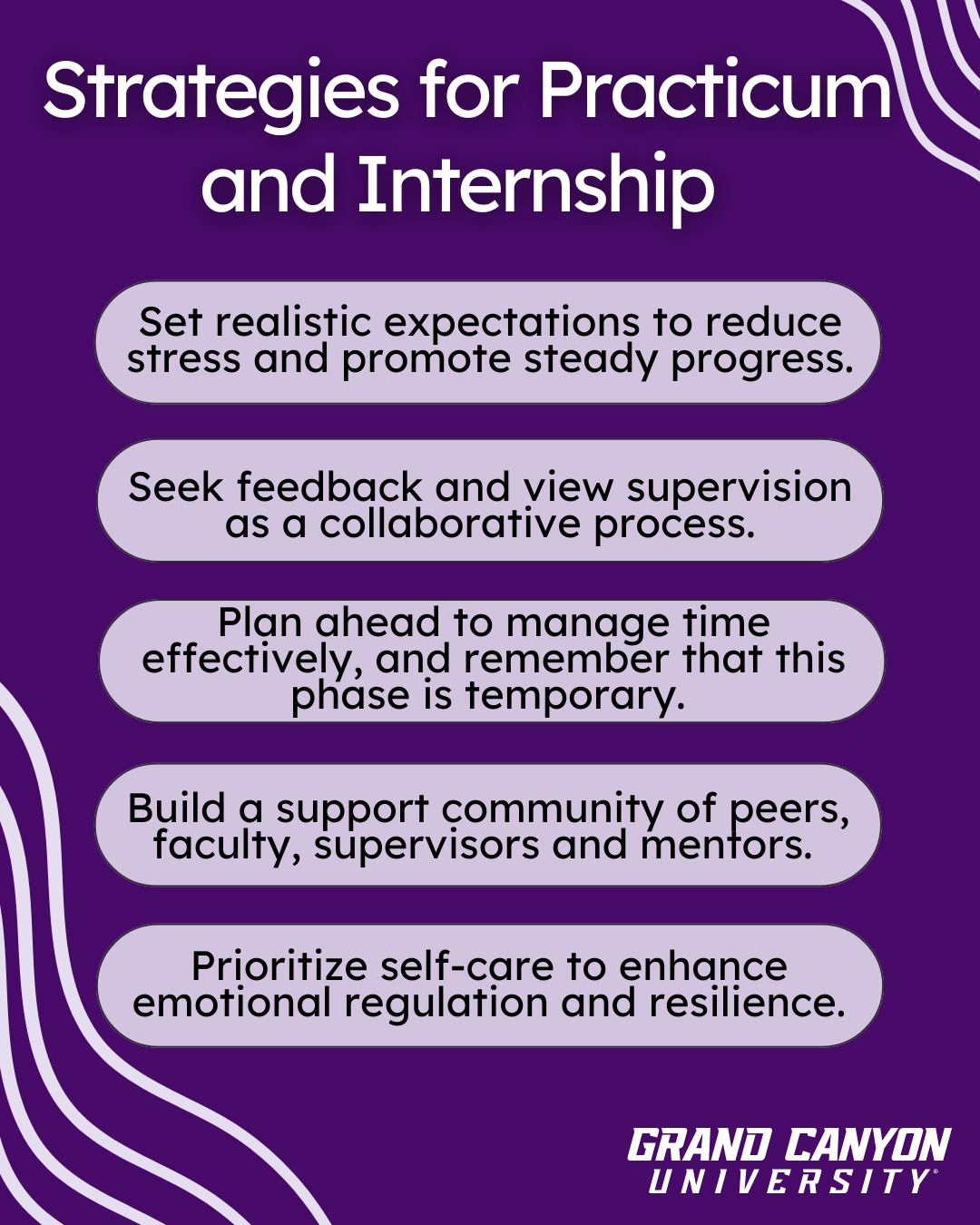
Navigating supervised field experiences requires thoughtful preparation, flexibility and a realistic understanding of what each stage involves. One of the most important strategies is setting clear, attainable expectations and goals. These experiences focus on learning and growth, not perfection. A development-focused mindset can help reduce stress and support steady progress.
Engagement plays a key role in maximizing the value of applied training. Actively seeking feedback, asking questions and reflecting on experiences can enhance learning and strengthen professional skills. Students who view supervision as a collaborative process often gain greater insight into their strengths and areas for growth.
Flexibility is equally important as students’ progress in their training. Clinical counseling can be unpredictable, and adapting to changes in schedules, responsibilities, or learning methods can help students navigate challenges more effectively.
Additional strategies for support can include:
Expert Advice on Preparing for Supervised Experiences
Preparing for supervised field experiences also involves practical and financial planning well before the experience begins. Dr. Jackson encourages students to think ahead, noting the importance of preparation “six months to a year before.” Many counseling students continue working while completing applied training, and this is often part of the planning process. As Dr. Jackson explains, “Many of our students work a full-time job or a part-time job while also completing practicum and internship. That is common.” Planning schedules, understanding time commitments and building flexibility into work and personal responsibilities can help students manage this demanding period more effectively.
Prepare Financially and Mentally
Dr. Jackson emphasizes the need to plan financially in advance. “Financially plan ahead, even if that means setting money aside before you begin practicum and internship,” she advises. “For many students, balancing coursework, clinical hours, and employment can be challenging. Just remember that this season is temporary.” In addition to financial readiness, mental and emotional preparation are critical. “Be prepared mentally, physically, and emotionally” Dr. Jackson notes. Building a supportive community, prioritizing well-being and maintaining perspective can help students navigate this challenging but meaningful stage of their professional journey.
Another critical strategy for navigating supervised field experiences is prioritizing self-care from the very beginning. Jackson offers this suggestion, “Self-care, self-care, self-care. Always plan for it, plan to care for yourself.” She encourages students to be intentional and proactive, recognizing that this training period can be mentally, physically and emotionally demanding. Preparing for how you will manage stress, regulate emotions and stay grounded is just as important as preparing academically.
Dr. Jackson highlights the importance of building a strong support network during this time. Your faith, family, friends, clinical supervisors, faculty supervisors, and peers. “This is you building your community,” she notes, explaining that having multiple people to turn to helps students navigate challenges throughout their practicum and internship experience. Finding coping strategies that work for you, and knowing when to lean on others, can make a meaningful difference.
Self-care can take many forms, and students are encouraged to explore what best supports their well-being, such as:
As Dr. Jackson reminds students, “yes, you're training to become a counselor, and you're also learning how to sustain yourself in the profession. What are you doing to fill your own cup so you can continue showing up for others in a meaningful way?” By planning for self-care and building supportive relationships, students can approach their training with greater resilience, balance and sustainability.
Resources to Support Practicum and Internship Experiences
Centralized resources help counseling students navigate their supervised field experiences. Jackson points out that “The Student Success Center has many of the resources students need as they move through practicum and internship in any counseling program,” she says. “Whether students are preparing for field experience or actively completing internship, there are resources available to support them throughout the process and help them navigate their clinical training requirements.”
Students can access detailed information about required hours, program expectations and documentation processes. Dr. Jackson highlights that everything from the graduate field experience manuals to counseling training handbooks is available, covering all counseling programs. “Everything students need, from hour requirements and documentation expectations to program policies and procedures, is available in one place and easily accessible,” she says.
These resources are not limited to students alone. According to Dr. Jackson, site supervisors and external partners can also access relevant materials, helping ensure alignment and clear communication throughout the experience.
Take the Next Step in Your Counseling Journey
Understanding the difference between these supervised experiences can help you approach your training with greater clarity and confidence. Instead of viewing practicum vs. internship as a mere comparison, it’s more beneficial to see them as interconnected stages in a continuum of learning. Each stage is designed to support your growth, progressing from foundational skill development to professional readiness.
Together, these experiences offer structured opportunities to apply theoretical knowledge and prepare for the responsibilities of counseling practice. When exploring counseling as a career path, learning how these experiences are integrated into GCU's clinical mental health counseling master's program can help you make informed decisions and set realistic expectations.
Explore Counseling Programs at GCU
Learn more about GCU’s counseling programs and how they support hands-on learning and professional preparation.