

Video Editor Career Guide
What Is a Video Editor?
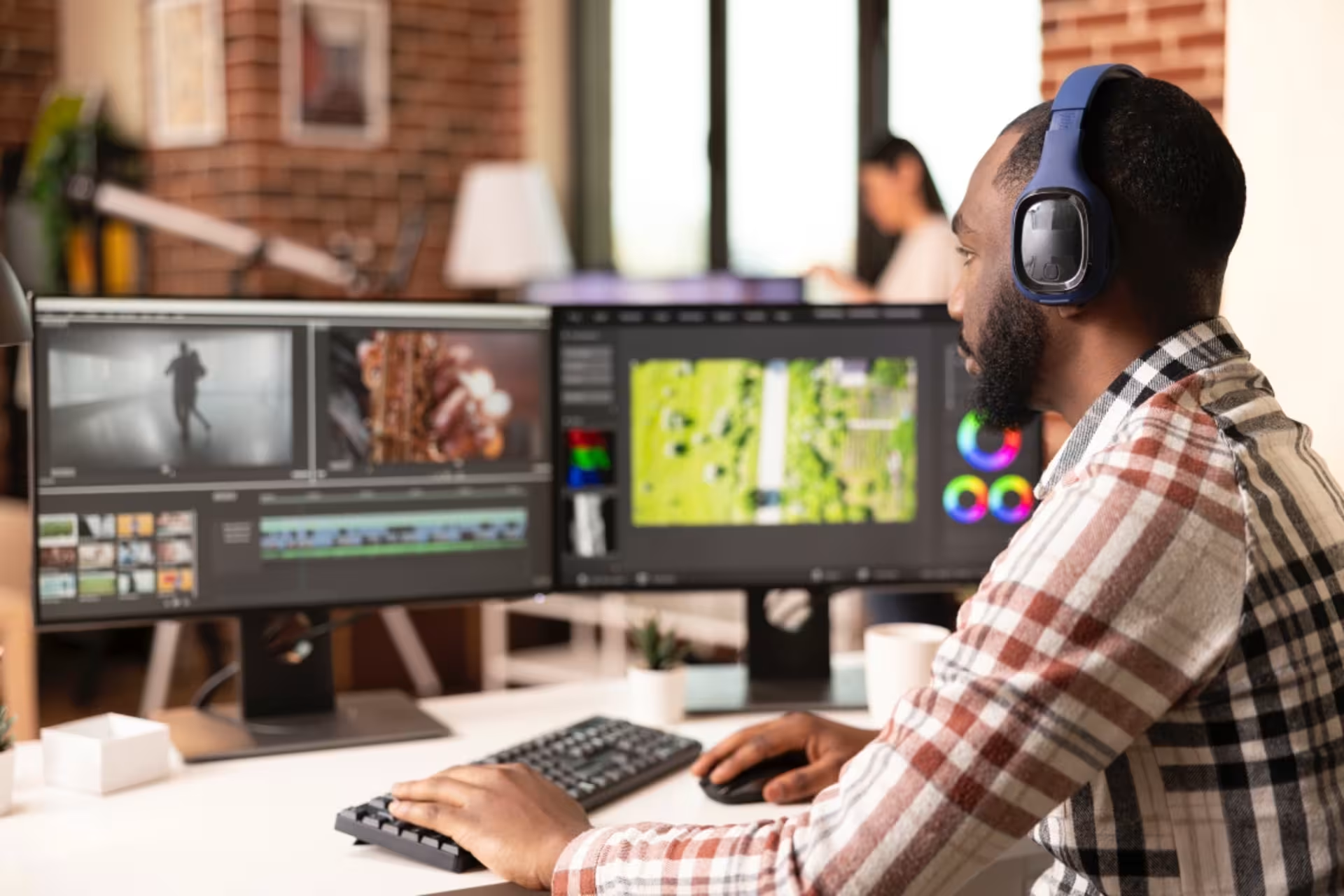
A video editor is an audiovisual professional who turns raw footage into a cohesive story by editing scenes, adding transitional shots and ensuring that the audio and visual components of the footage work well together. Video editors may work on projects such as television and movie productions, and they may also work on videos intended for publication on social media.
According to the U.S. Bureau of Labor Statistics (BLS), these professionals typically need a bachelor’s degree in a related field, such as film studies or broadcasting. While not a universal requirement, video editors may enhance their career qualifications by earning certification in different types of video editing software.(See disclaimer 1)

Video Editor Career Snapshot
Video editors typically need a bachelor’s degree and work across film, television and digital media. Aspiring editors may gain experience through on-the-job training and can pursue optional software certifications to strengthen their qualifications. Video editors work across film, television and digital media, combining creative storytelling with technical editing skills.(See disclaimer 1)
What Does a Video Editor Do?
A video editor reviews raw footage, selects the best shots and arranges them into a finished video that tells a story, evokes an emotion or informs an audience. Using video editing software, editors trim and sequence footage, create transitions, synchronize audio and add elements such as music, sound effects, graphics and subtitles.
Some video editor’s main tasks include:
Choose the strongest shots and organize them into a logical sequence
Trim footage and arrange scenes to create a cohesive narrative
Add transitions, titles, subtitles, graphics and other visual enhancements
Synchronize dialogue, adjust audio and incorporate music or sound effects
Is Video Editing a Good Career?
Video editing may be a good career for people who enjoy combining creative storytelling with technology. Film and video editors work across motion picture production, broadcasting and other organizations, while some are self-employed. Because the work can be project-based, editors may also experience periods of overtime followed by periods of underemployment or unemployment between projects.(See disclaimer 1)
According to the BLS, film and video editors made a median annual wage of $75,420 in May 2025.(See disclaimer 2) The BLS has projected that film and video editors can expect a 4% job growth rate from 2025 to 2035, about as fast as the average for all professions.(See disclaimer 3) These figures can help provide context for the career, but individual earnings and employment opportunities vary based on factors such as experience and employer.
Projected employment of film and video editors by 2035(See disclaimer 3)
Median annual salary of film and video editors in May 2025(See disclaimer 2)
Projected job growth for film and video editors from 2025 to 2035(See disclaimer 3)
Where Does a Video Editor Work?
Film and video editors typically work in studios or offices, both by themselves and with producers and directors. Work hours can fluctuate in this career. Many video editors work full-time, but part-time work is also common. It’s not unusual to put in overtime to finish a project and then go through a period of under- or unemployment while looking for a new project, according to the BLS.(See disclaimer 4)
If you’re interested in how to become a video editor, you might pursue work in any of the following settings:(See disclaimer 4)
Motion picture industry
Many video editors work on movies, including Hollywood productions.
Broadcasting companies
Film and video editors may work on TV productions, such as news shows.
Community organizations
Some video editors work for civic, grant-making and religious organizations.
Self-employed
Experienced video editors may run their own small business, providing editing services to a range of clients.

How To Become a Video Editor
Becoming a video editor typically involves earning a bachelor’s degree in film, broadcasting or a related field and developing proficiency with video editing software. Relevant college coursework may include cinematography and video editing, and some editors receive additional software training on the job. Video editors may also pursue optional certifications in specific editing software to demonstrate their technical skills.(See disclaimer 1)
Follow these steps to learn how to become a video editor:(See disclaimer 1)
Earn a bachelor’s degree
Obtain a relevant bachelor’s degree, such as one in film broadcasting or communications.
Learn video editing software
Develop proficiency with video editing technology and become familiar with multiple software platforms; employers may also provide training in their preferred software.
Get certified
Vendor-administered certifications are optional but may help demonstrate proficiency with specific video editing software.
What Education Does a Video Editor Need?
Film and video editors typically need a bachelor’s degree with a major in an area such as film studies, broadcasting, communications or fine and performing arts. Advanced education is not required,(See disclaimer 1) and only about 5% of video editors have a master’s degree, according to Zippia.(See disclaimer 5) Video editors may instead pursue ongoing education and professional development by earning certifications in specific types of video editing software.(See disclaimer 1)
Percentage of video editors with a bachelor’s degree(See disclaimer 5)
What Degrees Can Help You Become a Video Editor?
5 Matching Degrees


What Skills Does a Video Editor Need?
Aspiring film and video editors need a blend of knowledge in STEM fields like technology and humanities fields like English and the arts. They need to bring a creative eye to their work, as well as be proficient with video editing technologies, such as the Adobe suite, according to My Next Move. It’s also helpful to have strong soft skills that facilitate both independent and collaborative work.(See disclaimer 6)
Some of the most important skills for a video editor include:(See disclaimer 1, 6)
Computer skills
Video editors need proficiency in sophisticated video editing software.
Creativity
Creativity is essential for organizing shots and scenes into a coherent narrative.
Problem-solving skills
Video editors may need to identify and troubleshoot various problems.
Communication skills
Strong communication is vital for working well with others.
Video Editor Frequently Asked Questions
Explore the following frequently asked questions to learn more about how to become a video editor.
What qualifications do I need to be a video editor?
What industries hire video editors?
What software do video editors use?
What is the difference between a video editor and a film editor?
How do video editors use AI in their work?
What degrees can help prepare you for a video editing career?
Is Becoming a Video Editor Right for Me?
A video editing career may be a good fit if you enjoy combining creative storytelling with technology and are comfortable working both independently and collaboratively. Video editors also need to learn sophisticated editing software and may experience changing workloads or periods between projects. Consider the following factors when deciding whether this career aligns with your interests and strengths.
Explore more Digital Arts Topics
Learn more about career paths in digital arts to find a role that aligns with your interests.



Develop the creative, technical and communication skills used in video editing through a relevant degree program at GCU. Explore opportunities to study film, broadcasting, communications and digital production as you prepare to pursue your career goals.
- U.S. Bureau of Labor Statistics. (2026). How To Become a Film and Video Editor or Camera Operator. Occupational Outlook Handbook. Retrieved September 2026.
- The earnings referenced were reported by the U.S. Bureau of Labor Statistics (BLS), Film and Video Editors as of May 2025, retrieved September 2026. BLS calculates the median using salaries of workers nationwide with varying levels of education and experience. It does not reflect the earnings of GCU graduates as film and video editors, nor does it reflect the earnings of workers in one city or region of the country or a typical entry-level salary. Median income is the statistical midpoint for the range of salaries in a specific occupation. It is very unlikely that a median salary will reflect an entry-level salary. It represents what you would earn if you were paid more money than half the workers in an occupation, and less than half the workers in an occupation. It may give you a basis to estimate what you might earn at some point if you enter this career. Grand Canyon University can make no guarantees on individual graduates’ salaries. Your employability will be determined by numerous factors over which GCU has no control, such as the employer the graduate chooses to apply to, the graduate’s experience level, individual characteristics, skills, etc. against a pool of candidates.
- Data shown is effective August 2026, which can be found here: U.S. Bureau of Labor Statistics, Occupational Outlook Handbook, Film and Video Editors, retrieved September 2026.
- U.S. Bureau of Labor Statistics. (2026). Film and Video Editors and Camera Operators: Work Environment. Occupational Outlook Handbook. Retrieved September 2026.
- Zippia. (2025, Jan. 8). Video Editor Education Requirements. Retrieved September 2026.
- My Next Move. (n.d.). Film and Video Editors. Retrieved September 2026.
- Coursera. (2026, Jan. 22). What Is Video Editing? Retrieved September 2026.
- Adobe. (2026, Jan. 7). Overview of Text-based Editing. Retrieved September 2026.
Approved and verified accurate by the Film and Broadcast Chair of the College of Arts and Media on Oct. 1, 2026.