

How To Become a Pastor
What Is a Pastor?
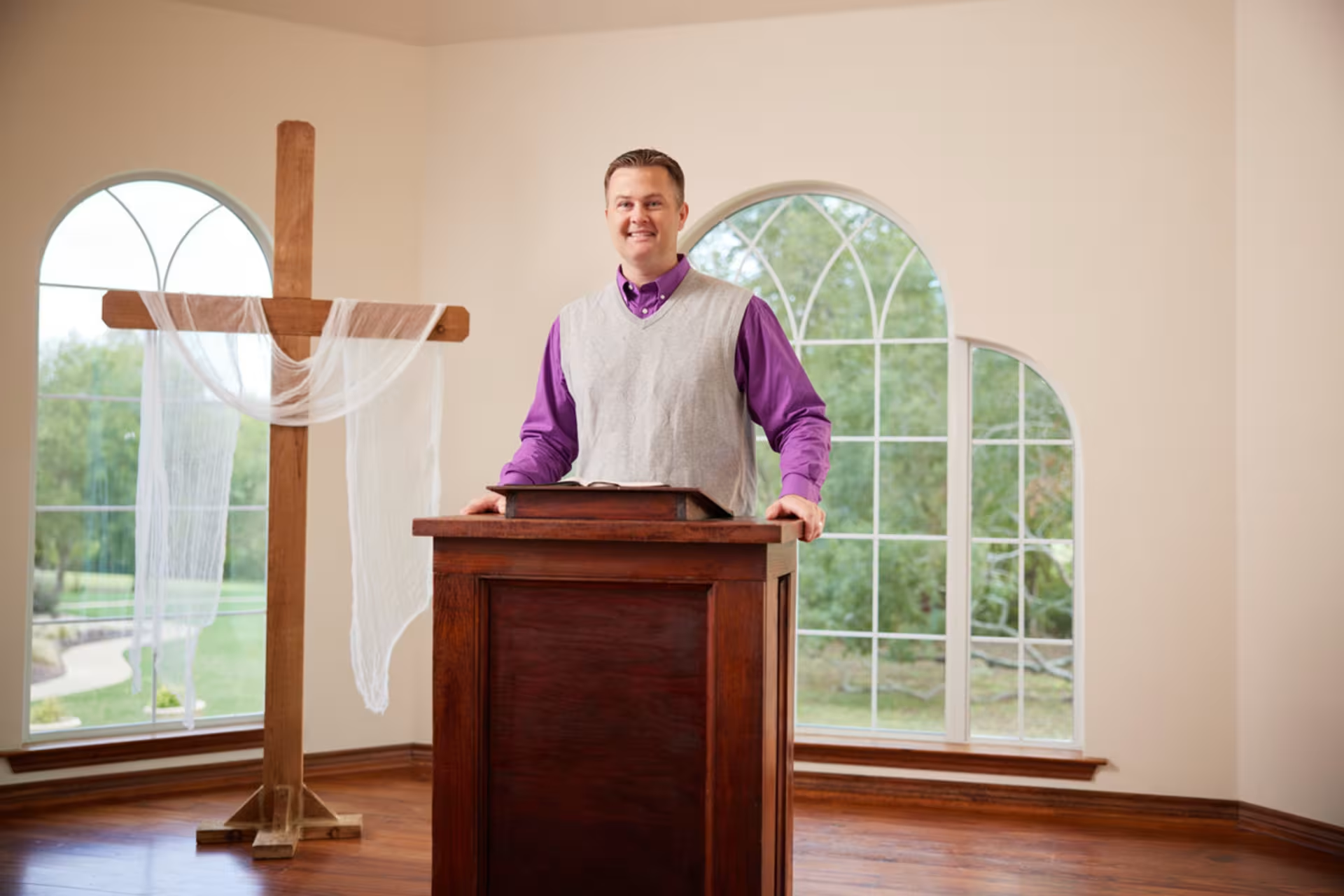
A pastor is a religious leader who ministers to a congregation in a church in one of the Christian denominations. Pastors serve their congregations, delivering spiritual leadership and guidance, and often conducting outreach activities in the broader community.
Working as a pastor is a calling in service to God and His people. Pastors lead congregations by preaching the Word of God and helping their members make life decisions that are spiritually aligned with the Bible. Similarly, pastors are expected to emulate a Christ-like character by living a life of good moral character.

What Does a Pastor Do?
A pastor's responsibilities extend beyond weekly worship services, requiring strong communication, compassion and organizational skills. Depending on the church or ministry setting, a pastor’s day-to-day duties can vary widely.
Here are a few key responsibilities of pastors:
Preaching sermons
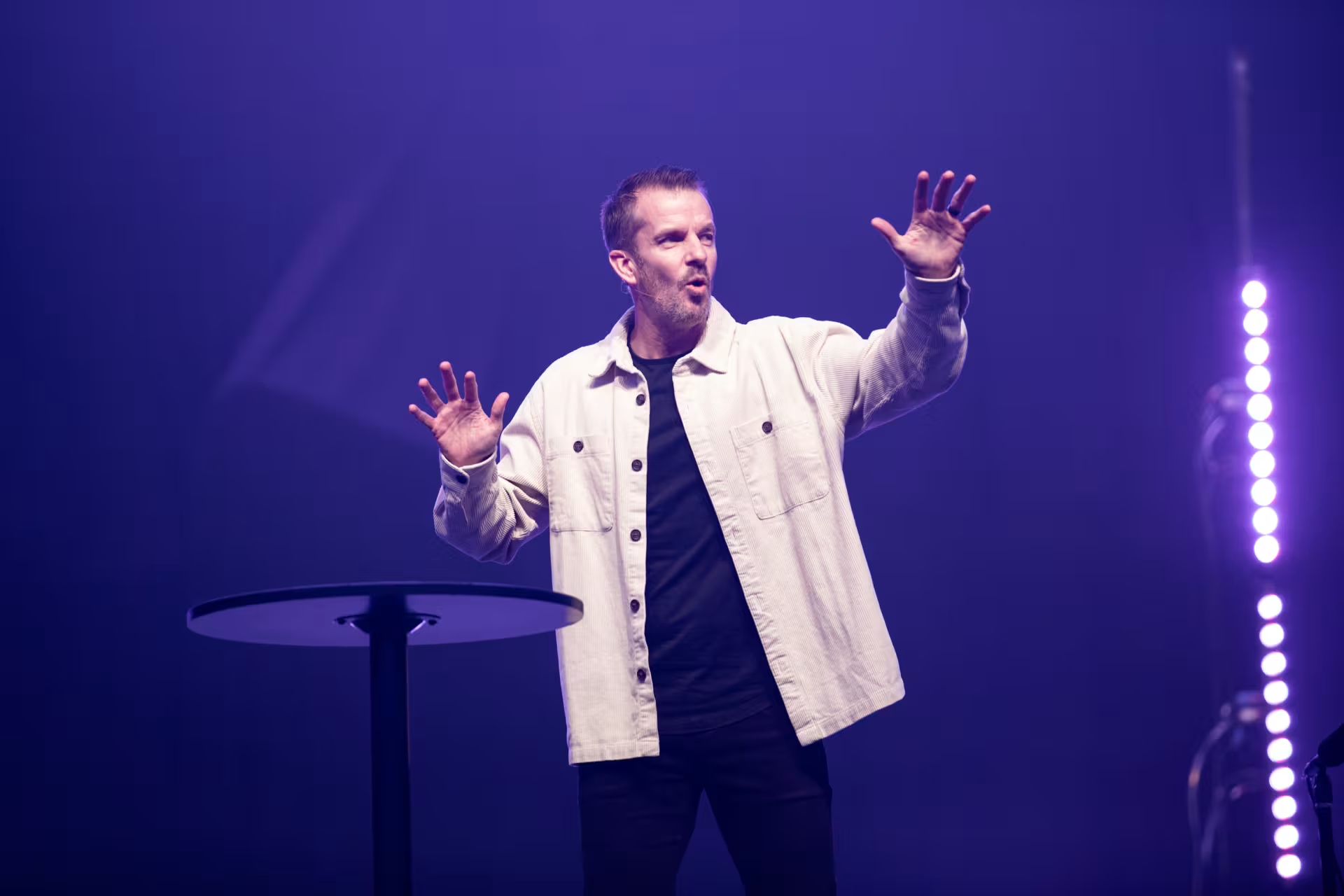
Pastors prepare sermons and preach the Word of God at church services.
Counseling parishioners
Pastors provide guidance to church members who are navigating challenges.
Officiating ceremonies
Pastors can lead baptisms, weddings, funerals and confirmations.
Performing administrative tasks
Pastors manage the daily operations of the church, including budgeting, events, fundraising and supervising staff and volunteers.
What Experience and Education Does a Pastor Need?
There are no universal denominational requirements for becoming a pastor, as each church and denomination establishes its own ordination process, qualifications and preferences.(See disclaimer 1) However, Scripture does provide universal biblical qualifications for pastoral leadership, including standards of character, spiritual maturity and conduct outlined in passages such as 1 Timothy 3:1-7 and Titus 1:5-9.
In addition to meeting these biblical requirements, one of the most important qualifications is a strong commitment to the Christian faith and a deep understanding of Scripture. Depending on the denomination, there may also be specific educational, training and ministry experience requirements for those pursuing pastoral ministry.(See disclaimer 2)
High School Diploma
College Degree
Entry-Level Roles
Professional Certifications
Best Degrees for Pastors
Pastors are generally expected to have a solid knowledge of the Bible. Degrees in theology, ministry or similar areas are typically preferred by church leadership according to Indeed.(See disclaimer 3) Through these programs, individuals can explore how to become a pastor who leads effectively, cares for the flock and provides inspiring spiritual leadership. They teach the knowledge and skills needed to lead effectively, care for their congregations and provide inspiring spiritual leadership.
A degree that focuses on theology or Christian ministry may cover topics such as:
The Old and New Testaments
Principles of biblical hermeneutics
Christian ethics, worldview and personal morality
Communicating in ministerial contexts
Degree Programs for Aspiring Pastors
9 Matching Degrees









What Skills Does a Pastor Need?
Because pastors fulfill a wide range of responsibilities, they must draw from a diverse skill set to serve their congregations effectively. In addition to a strong Christian faith and a deep understanding of Scripture, pastors rely on a variety of soft skills, such as communication, leadership and compassion, to guide, support and care for others in both church and community settings.(See disclaimer 3)
Some of the most important skills for a pastor include:(See disclaimer 3)
Public speaking
Leadership
Compassion
Strong ethics
Where Do Pastors Work?
Pastors provide spiritual leadership through a combination of worship leadership, teaching and pastoral care. Their responsibilities commonly include preparing and delivering sermons, leading religious services, offering guidance and counseling to individuals and families and providing support during significant life events.(See disclaimer 3)
Pastors also have additional duties including administrative and organizational duties, collaboration with other leaders and participation in outreach efforts that extend beyond the church, serving both their congregations and the broader community.(See disclaimer 4)
Pastors carry out these responsibilities across a variety of settings, including:(See disclaimer 4)
Churches and places of worship
Community and faith-based organizations
Educational or ministry-affiliated institutions
Institutional settings
Median annual salary for clergy as of May 2025(See disclaimer 5)
Estimated number of new jobs for clergy from 2025 through 2035(See disclaimer 6)

Advancement Opportunities For Pastors
What does a pastor do to advance their career? Some churches have a hierarchical leadership, with pastors starting as associate pastors and eventually working their way up to becoming senior pastors after gaining experience.(See disclaimer 7) Others may pursue other types of faith-based opportunities after working as a pastor. These may include seminary professor, church consultant, missionary ambassador and church planting coach.(See disclaimer 8)
Explore More on Pastors
If you believe that God has called upon you to serve His people as a pastor, it’s helpful to spend time in thoughtful reflection and prayer, and to learn more about the profession. Explore these blogs to become familiar with the career.

Reflect on what spiritual leadership means and how you can serve God’s people.

Discover the essential skills that worship leaders need to lead a congregation.
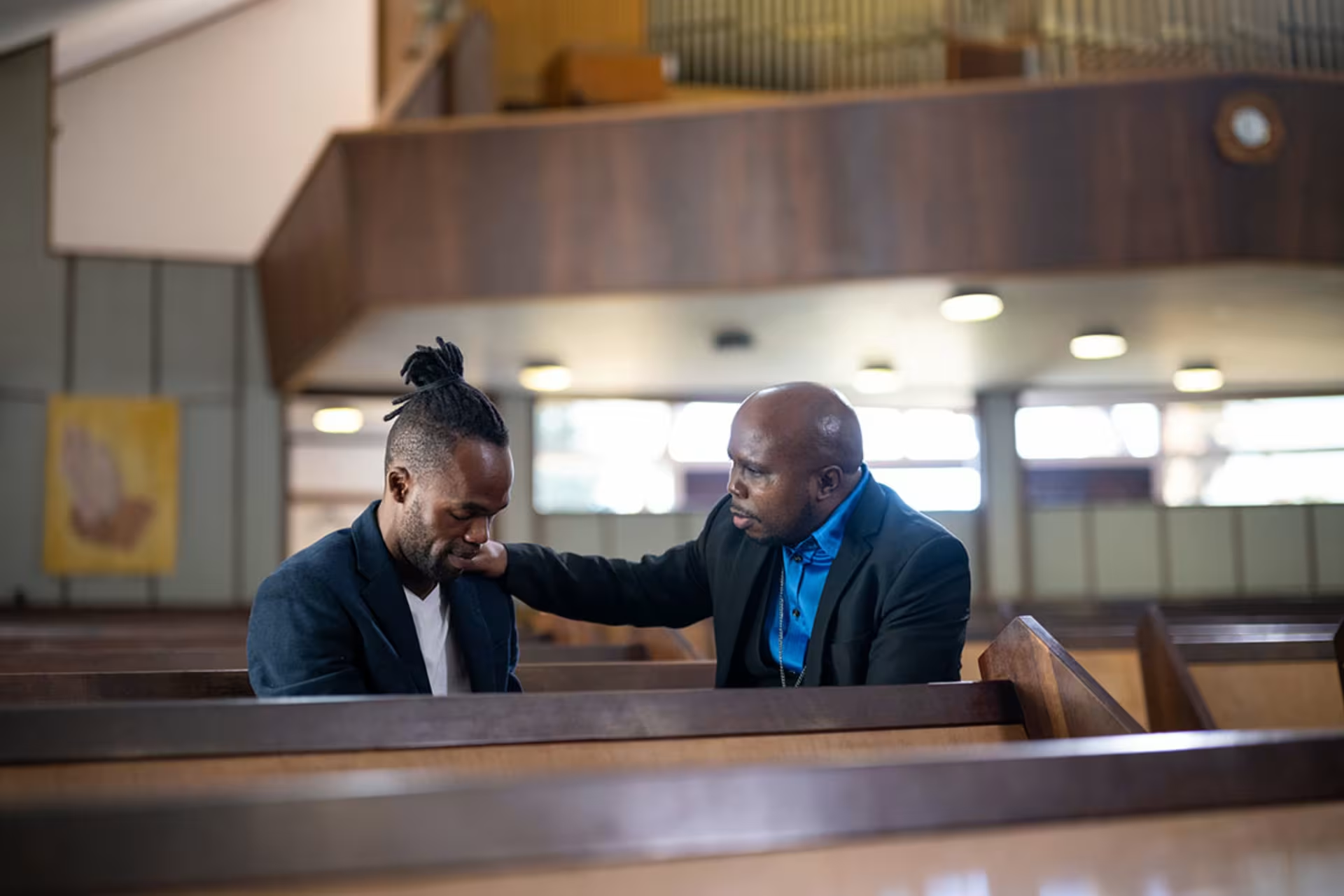
Pastors often counsel church members in crisis. Learn more about delivering spiritual guidance.

Heed the calling to serve as a pastor by studying ministry at GCU.
- Indeed Editorial Team. (2025, Nov. 27). How to Become a Pastor: A Step-by-Step Guide, With Tips. Indeed. Retrieved April 2026.
- Illinois Career Information System. (n.d.). Pastoral Studies and Counseling - Program Admission. Illinois Department of Employment Security. Retrieved April 2026.
- Indeed Editorial Team. (2025, March 25). What Is a Pastor? Indeed. Retrieved April 2026.
- Barnett, D.S. (2026, March 9). What Does a Pastor Actually Do? MinistryJobs. Retrieved April 2026.
- The earnings referenced were reported by the U.S. Bureau of Labor Statistics (BLS), Clergy, as of May 2025, retrieved September 2026. BLS calculates the median using salaries of workers nationwide with varying levels of education and experience. It does not reflect the earnings of GCU graduates as clergy, nor does it reflect the earnings of workers in one city or region of the country or a typical entry-level salary. Median income is the statistical midpoint for the range of salaries in a specific occupation. It is very unlikely that a median salary will reflect an entry-level salary. It represents what you would earn if you were paid more money than half the workers in an occupation, and less than half the workers in an occupation. It may give you a basis to estimate what you might earn at some point if you enter this career. Grand Canyon University can make no guarantees on individual graduates’ salaries. Your employability will be determined by numerous factors over which GCU has no control, such as the employer the graduate chooses to apply to, the graduate’s experience level, individual characteristics, skills, etc. against a pool of candidates.
- Data shown is effective August 2026, which can be found here: U.S. Bureau of Labor Statistics, Occupational Outlook Handbook, Clergy, retrieved September 2026.
- Leake, M. (2024, Sept. 25). How to Become a Pastor. Lifeway Research. Retrieved April 2026.
- Vanderbloemen. (n.d.). Ten Models of Post-Pastorate Professions. Retrieved April 2026.
Approved and verified accurate by the Faculty Chair of the College of Theology on July 23, 2026.