


Online EdD in Organizational Leadership: Organizational Development (Qualitative)
What Is an Online EdD in Organizational Leadership: Organizational Development?
An online(See disclaimer 1) Doctor of Education (EdD) in Organizational Leadership: Organizational Development is a doctoral degree designed for experienced professionals who want to lead organizational change, improve workplace effectiveness and strengthen leadership skills. Delivered through online(See disclaimer 1) coursework and in-person residencies, the program is designed to prepare graduates to help organizations navigate change, optimize performance and support employees. The dissertation process for this doctorate teaches qualitative design methodologies, data collection and data analysis and interpretation through hands-on application.
Up to 9 doctoral credits
Credits: Fill out the Lopes Eval to find out what will transfer
What Is It Like to Earn an Online Doctorate in Organizational Leadership?
GCU’s EdD in Organizational Leadership: Organizational Development brings flexibility to higher education, with online(See disclaimer 1) courses that fit the scheduling needs of working professionals. Online classes are paired with residencies, which take place on or near campus. You have opportunities to apply theory to practical situations when conducting original research for your dissertation. As a Christian university, GCU offers biblically rooted education.
What Can You Expect From an Online EdD in Organizational Leadership?
Flexible Online Organizational Leadership Coursework
Complete online(See disclaimer 1) classes through GCU’s e-learning platform, which connects you to peers from around the world and knowledgeable instructors who provide ongoing support. You’ll enjoy intellectually stimulating conversations on the discussion boards and easy access to course materials.

An Accredited University Quality Education
GCU has been institutionally accredited by the Higher Learning Commission since 1968. The College of Education shares the university’s commitment to upholding the principles and standards established by our accrediting bodies.
Doctorate Education Rooted in Faith
GCU encourages our doctoral learners to serve as stewards of our Christian faith. With faith-integrated coursework, we help prepare graduates to lead with integrity and make ethical decisions in their organizations. As an online student, you are encouraged to join us for digitally streamed worship services.

Tools and Support for Your Academic Journey
GCU provides robust student services to support your academic progress. Along with faculty and advisor support, you will have access to guidance from the Doctoral Community (DC) Network and the Center for Innovation in Research and Teaching.
EdD Alumni Success Story
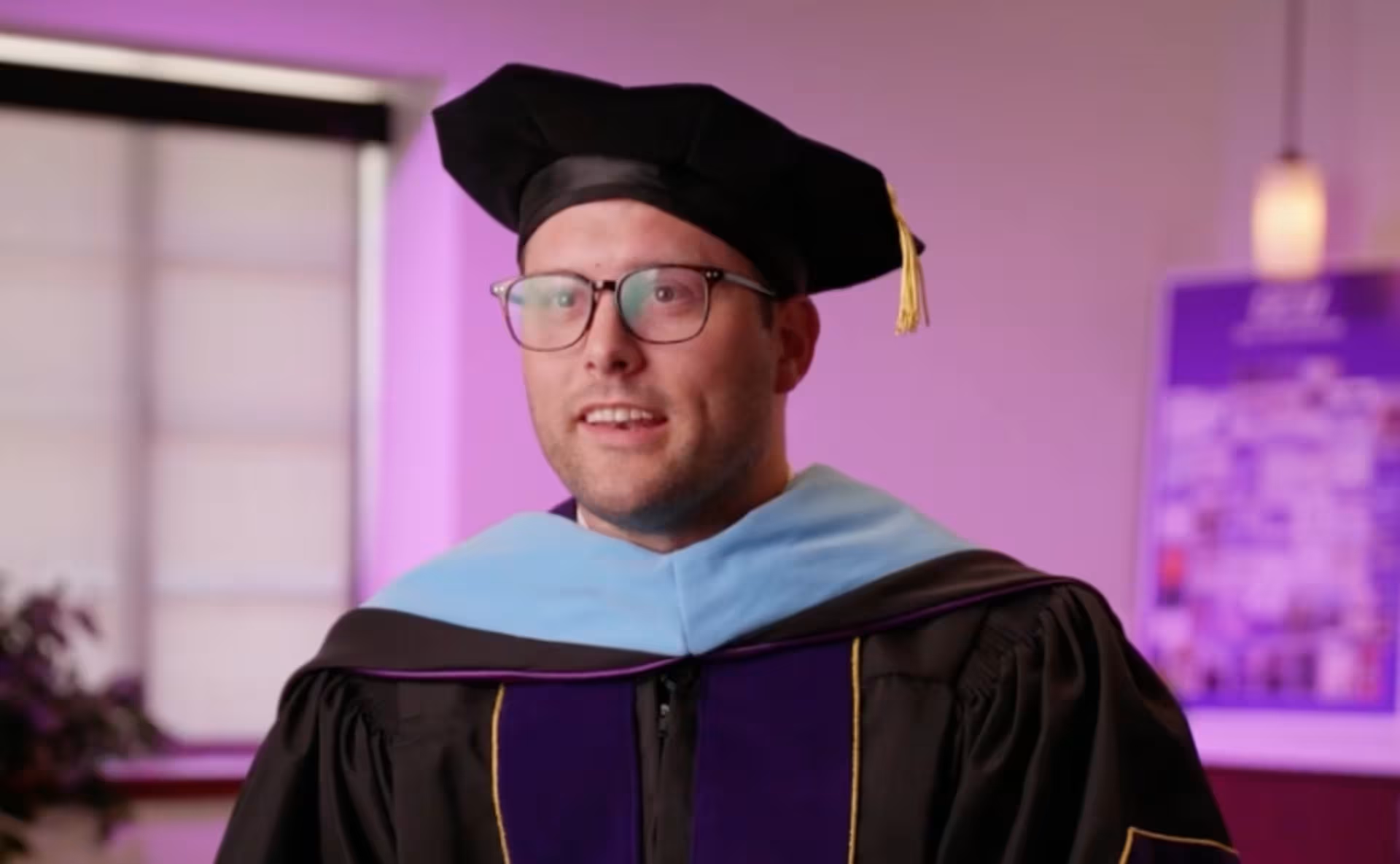
"I chose to earn my doctorate online because of the flexibility, and it allowed me to still work a full-time job while earning that degree. The College of Doctoral Studies provided a sense of community through the residency programs. The two most important things that I learned from my dissertation committee on my doctoral journey were, one, transformation over transaction, doing everything that I did in regards to change who I am, not just accomplishing a task. The other was to trust people who can help you. I had a ton of help from my dissertation committee, and I needed their help to get there."
"I chose to earn my doctorate online because of the flexibility, and it allowed me to still work a full-time job while earning that degree. The College of Doctoral Studies provided a sense of community through the residency programs. The two most important things that I learned from my dissertation committee on my doctoral journey were, one, transformation over transaction, doing everything that I did in regards to change who I am, not just accomplishing a task. The other was to trust people who can help you. I had a ton of help from my dissertation committee, and I needed their help to get there."
What Will You Study in the Online EdD Organizational Leadership Program?
In this online(See disclaimer 1 )EdD in Organizational Leadership program, you will study both for-profit and nonprofit organizational structures. Through the curriculum you will explore how culture, change, communications, diversity and strategy impact the success of organizations.
Corporate social responsibility, ethical decision-making and the application of leadership theories are at the core of this organizational development degree. You can work to apply what you have studied and practiced to determine how to sustain and grow the best aspects of a well-structured organization.

Core Course Topics in the EdD in Organizational Leadership Program
The EdD in Organizational Leadership: Organizational Development combines theory with application, teaching you principles and frameworks of leadership and decision-making while providing opportunities to explore practical applications. The dissertation process is integrated directly into the coursework from the start of the program, enabling you to begin your research sooner. You will participate in two in-person residencies, which include intensive seminars, collaboration opportunities and the presentation of research.
The EdD degree covers many topics relevant to leadership, including:
Strategy execution
The alignment of vision and ethical decisions with executable strategy
Ethical dilemmas
Ethical frameworks, theories and principles applied to leadership practice
Culturally responsive leadership
Strategies, challenges and opportunities for leading global teams across cultures
Corporate social responsibility
Ethical decision-making that considers all stakeholders, including community, planet and people
Qualitative vs. Quantitative EdD in Organizational Leadership: What’s the Difference?
In this qualitative EdD program, you will analyze descriptive data that focuses on individual experiences and perceptions to help organizations grow and succeed. In the quantitative EdD in Organizational Leadership: Organizational Development degree, students are taught to use numerical and statistical data to effect positive change within their companies. Consider your professional goals and research interests when choosing between the qualitative and quantitative programs.

What Can You Do With an EdD in Organizational Leadership Degree?
After earning a doctorate in organizational leadership, you may pursue a role as an education administrator across all levels of education, based on state licensure requirements. An education career can provide opportunities to make a meaningful impact on the success of students, faculty and staff. Responsibilities vary by academic level, but education administrators generally establish the mission and vision for the school, allocate resources and oversee professional development and academic programs.
Graduates of the EdD program may pursue roles as:
Education administrators in preschool and childcare centers
Create a nurturing, safe environment for young learners in early childhood education settings
Education administrators in elementary schools
Implement enriching programs for elementary school students
Education administrators in secondary schools
Support middle and high schoolers as they prepare for life after graduation
Education administrators in postsecondary institutions
Help college and university students flourish while preparing for their careers
Median annual salary for postsecondary education administrators as of May 2025(See disclaimer 3)
Projected job openings for postsecondary education administrators annually from 2025 to 2035(See disclaimer 4)
Competitive EdD Organizational Leadership Online Tuition
Earning your online(See disclaimer 1) Doctor of Education (EdD) in Organizational Leadership can be a strategic investment in your professional growth. GCU is committed to making doctoral education accessible by offering competitive online tuition rates and resources designed to help students manage the cost of their degree.
As you prepare for advanced leadership opportunities, you can explore financial aid options, scholarships and employer tuition assistance programs that may help reduce out-of-pocket expenses. Review the latest tuition information to estimate the cost of your degree and plan with confidence.

Flexible Online Learning That Helps You Keep Earning
Ways To Save
Your education is an important financial investment, and there are several ways to help manage costs while earning your degree. GCU’s university counselors are available to help you explore available options and provide personalized guidance on your estimated cost of attendance.
Complete the Free Application for Federal Student Aid (FAFSA) annually to determine eligibility for federal grants and student loans. Since some aid is awarded on a first‑come, first‑served basis, GCU recommends submitting the FAFSA as early as possible after Oct. 1 to maximize funding opportunities.
If you’ve earned college credits from another institution, you may be able to complete your degree sooner at GCU by transferring those credits. Submit the Lopes Unofficial Credit Evaluation form, then connect with a university counselor who can provide you with personalized guidance.
You may be able to reduce your college costs by applying for GCU’s on-campus or online student scholarships. We invite you to explore available institutional scholarships and determine which opportunities you may be eligible for. GCU also encourages students to seek out third‑party scholarships and grants.
Explore Your Financial Options
Connect with a university counselor to learn more about tuition, cost-planning resources and available options.
EdD in Organizational Leadership: Organizational Development FAQs
Read through our frequently asked questions on earning an organizational development degree as you prepare to start your GCU journey.
Is an EdD in Organizational Leadership: Organizational Development worth it?
What is the difference between a PhD and an EdD in Organizational Leadership?
What is the dissertation process for the EdD in Organizational Leadership degree?
How does the EdD in Organizational Leadership: Organizational Development degree support skill development?
Can you be a professor with an EdD?
What are the six domains highlighted in the EdD in an Organizational Leadership degree?
What Are the Admission Requirements for an EdD in Organizational Leadership?
GCU has streamlined the process of applying for admission to the university. Doctoral applicants may apply with previously completed master’s or doctoral degree. Specific requirements can vary, depending on the degree or program. Your university counselor will help you navigate the process of applying.
You can apply to a degree program at GCU in just three simple steps. Your university counselor is standing by to assist you with any questions about the application process.
It starts with selecting the program that aligns with your goals from one of GCU's 380+ academic programs — from undergraduate degrees to post-master’s certificate programs to doctoral degrees.
Pick your program
Explore our on-campus, online or evening cohort options under the Degree Programs page to find the right program for you.
Complete our online application
Your university counselor will direct you to the online application. Fill in all required information and submit the form.
Submit supporting documents
Submit your official transcripts and any relevant test scores, and confirm with your university counselor that all forms for your desired program are submitted.
Program Curriculum
Core Courses
Continuation Courses
Doctoral Resources and Articles
Explore compiled blogs in doctoral education as you plan your career pathway.


Develop advanced leadership, organizational development and applied research skills to help lead change and support organizational success. Request more information to learn about GCU's online(See disclaimer 1) EdD program.
(See disclaimer §) MOU-Alumni 10451: The Alumni $5,000 Scholarship for Doctoral Programs is only valid for GCU alumni who enroll in a doctoral program. If you enroll in a doctoral program through any of our online offerings, GCU will provide you a $5,000 tuition scholarship. This tuition scholarship will be applied on a per-course basis over your first and second academic year (as defined in the University Policy Handbook) and at the same time your tuition charges occur. This scholarship cannot be used in conjunction with any other GCU scholarships/awards. This credit will be applied toward your tuition only and you will not receive funds in excess of your charges.
Program has residencies that take place on or near GCU's campus.
- National Center for Education Statistics. (n.d.). Digest of Education Statistics. Retrieved June 2026.
- The earnings referenced were reported by the U.S. Bureau of Labor Statistics (BLS), Postsecondary Education Administrators, as of May 2025, retrieved September 2026. BLS calculates the median using salaries of workers nationwide with varying levels of education and experience. It does not reflect the earnings of GCU graduates as Postsecondary Education Administrators, nor does it reflect the earnings of workers in one city or region of the country or a typical entry-level salary. Median income is the statistical midpoint for the range of salaries in a specific occupation. It is very unlikely that a median salary will reflect an entry-level salary. It represents what you would earn if you were paid more money than half the workers in an occupation, and less than half the workers in an occupation. It may give you a basis to estimate what you might earn at some point if you enter this career. Grand Canyon University can make no guarantees on individual graduates’ salaries. Your employability will be determined by numerous factors over which GCU has no control, such as the employer the graduate chooses to apply to, the graduate’s experience level, individual characteristics, skills, etc. against a pool of candidates.
- Data shown is effective August 2026, which can be found here: U.S. Bureau of Labor Statistics, Occupational Outlook Handbook, Postsecondary Education Administrators, retrieved September 2026.
- U.S. Bureau of Labor Statistics. (2025, Aug. 28). How To Become a Postsecondary Teacher. Occupational Outlook Handbook. Retrieved June 2026.
Approved and verified accurate by the Dean of the College of Doctoral Studies on Aug. 31, 2026.