


Master’s in Engineering Degrees
What Are Engineering Master’s Degrees?
Engineering master’s degrees are graduate programs that help engineers and technical professionals develop advanced expertise beyond the bachelor’s level. These programs typically combine specialized coursework, applied research and project-based problem-solving.
Depending on the field, students may study advanced analysis, systems modeling, optimization, emerging technologies, technical leadership and risk management. The goal is to prepare graduates to solve complex engineering problems, improve system performance, evaluate design constraints and apply research to real engineering projects.

What Types of Engineering Master’s Degrees Are Available?
At GCU, there are many types of engineering master’s degrees available, with programs covering fields such as electrical, biomedical, engineering management, systems and software engineering. Each degree offers specialized knowledge and skills that can prepare graduates to pursue opportunities within different areas of the engineering industry.
Graduate study in electrical engineering focuses on analyzing, designing and integrating electrical and electronic systems. Coursework explores signal processing, communications, control systems, power systems and electronics, while developing advanced skills in the design, analysis and application of electrical technologies.
Biomedical engineering applies advanced engineering methods to biological systems, medical technologies and healthcare challenges. Coursework covers medical device design, biomechanics, biomaterials and biotechnology, with attention to clinical needs, patient safety and regulatory constraints.
A master’s in software engineering focuses on designing and managing large-scale software systems that are secure, scalable, maintainable and reliable. Coursework examines software architecture, secure development, testing, systems integration and lifecycle planning.
Systems engineering focuses on evaluating and coordinating complex, multidisciplinary systems across their lifecycle. Graduate study includes systems architecture, risk analysis, modeling and verification. Unlike discipline-specific engineering, it integrates multiple technical domains.
Engineering management focuses on the business and organizational decisions involved in leading technical work. Graduate study covers project finance, quality systems, process improvement, strategy and resource planning while emphasizing people, budgets, schedules and operations.
Explore All Engineering Graduate Programs
0 Matching Degrees
Which Master’s in Engineering Degree Is Right for You?
Choose the engineering master’s degree that best fits the type of work you want to study in depth. Compare each program’s prerequisites, curriculum and research or project requirements, then consider whether you want to focus on technical analysis, interdisciplinary systems or engineering management.
Power systems, signal processing, communications, control theory, electronics and advanced modeling
Engineers interested in healthcare technology and biological applications
Evaluate and design scalable, maintainable and secure software systems
Power systems, signal processing, communications, control theory, electronics and advanced modeling
Engineers interested in healthcare technology and biological applications
Evaluate and design scalable, maintainable and secure software systems
What Can You Do With a Master’s Degree in Engineering?
A master’s degree in engineering may help prepare you for advanced technical, project-based, research or managerial roles. Engineering career options vary by specialization, professional experience, employer requirements, industry and location.
A degree in engineering does not guarantee employment. Positions in postsecondary education often require additional credentials, experience, education or other qualifications beyond the completion of a degree program.
An engineering master’s degree can help prepare you to pursue engineering roles in the following areas:
Architectural and engineering management
You can apply engineering knowledge to operational planning, team leadership, budgeting, quality oversight, compliance and organizational decision-making while helping technical teams manage project goals, deadlines and resources.
Technical specialization
You can build deeper expertise in a specific engineering discipline and contribute to advanced design, analysis or implementation work. Explore GCU’s engineering career guide to learn more about engineering roles, work settings and areas of specialization.
Project leadership
You can coordinate technical requirements, schedules, resources and cross-functional teams while evaluating project risks, constraints and performance expectations. GCU’s guide to what a project engineer does provides additional insight into project planning, monitoring and evaluation.
Manufacturing leadership
You can oversee engineering activities in manufacturing environments, including production planning, process improvement, quality systems and operational efficiency. Engineers interested in modeling, optimization and resource allocation can also explore how to become an operations research analyst.
Research and development
You have the opportunity to investigate emerging technologies, test engineering concepts and contribute to new products, systems and processes. Students interested in automation, intelligent systems or electromechanical design can also explore how to become a robotics engineer.
Government and public sector engineering
You can support the planning, evaluation and oversight of engineering projects, infrastructure systems and technical initiatives within government agencies and public-sector organizations.
Software engineering
You can design, test and maintain software systems while considering architecture, security, performance and long-term reliability. Learn more about the role, required skills and common responsibilities in GCU’s guide on how to become a software engineer.
Postsecondary engineering education
You have the opportunity to combine subject-matter expertise with teaching, curriculum development, student mentoring or academic research. Engineers interested in higher education can explore GCU’s guide on how to become a college professor.
Median annual wage for architectural and engineering managers in May 2025,(See disclaimer ) according to the BLS(See disclaimer 1)
Estimated number of job openings for architectural and engineering managers each year, on average, from 2025 to 2035(See disclaimer 2)
What’s the Difference Between Online and On-Campus Engineering Master’s Degrees?
Online engineering master’s programs deliver coursework remotely and are designed to provide greater flexibility for students balancing work and other commitments. On-campus programs center on in-person instruction, face-to-face collaboration and hands-on access to engineering labs, equipment and other campus resources. Availability varies by program.

Frequently Asked Questions About Master’s Degrees in Engineering
Explore the answers below to learn more about engineering graduate programs, specialization, career preparation and learning formats.
Is it worth getting a master’s in engineering degree?
Does specializing in engineering help your career?
What is the difference between a master’s in engineering degree and a master’s in engineering management degree?
Can I complete a master’s in engineering program while working full time?
Can I pursue a master’s in engineering while early in my career?
How does a master’s in engineering degree compare to professional certifications?
What To Expect From Engineering Master’s Degrees
Engineering master’s degrees typically involve advanced coursework, applied analysis and discipline-specific problem-solving. You may complete technical reports, simulations, case studies, team projects and applied research while studying topics such as systems modeling, software architecture, signal processing, optimization, engineering management, research methods or emerging technologies. These programs also require you to evaluate complex engineering decisions and communicate technical findings clearly.
GCU has been institutionally accredited by the Higher Learning Commission since 1968. The College of Engineering and Technology shares the university’s commitment to upholding the principles and standards established by our accrediting bodies.
Master’s in Engineering Degree Tuition and Aid
Engineering degree tuition varies depending on factors such as your program, learning format and enrollment status. Explore tuition rates, financial aid opportunities and other funding options to determine what may be available to you.
Discover Your Financial Options
Learn more about graduate tuition, scholarships and financial aid available to qualified students.
Ways To Save
Your education is an important financial investment, and there are several ways to help manage costs while earning your degree. GCU’s university counselors are available to help you explore available options and provide personalized guidance on your estimated cost of attendance.
Complete the Free Application for Federal Student Aid (FAFSA) annually to determine eligibility for federal grants and student loans. Since some aid is awarded on a first‑come, first‑served basis, GCU recommends submitting the FAFSA as early as possible after Oct. 1 to maximize funding opportunities.
If you’ve earned college credits from another institution, you may be able to complete your degree sooner at GCU by transferring those credits. Submit the Lopes Unofficial Credit Evaluation form, then connect with a university counselor who can provide you with personalized guidance.
You may be able to reduce your college costs by applying for GCU’s on-campus or online student scholarships. We invite you to explore available institutional scholarships and determine which opportunities you may be eligible for. GCU also encourages students to seek out third‑party scholarships and grants.
What Are the Admission Requirements for Engineering Graduate Programs?
Admission requirements for engineering graduate programs vary by degree, program and learning format. Applicants are typically expected to hold a bachelor’s degree and may need previous academic preparation in engineering, technology, mathematics, science or a related field.
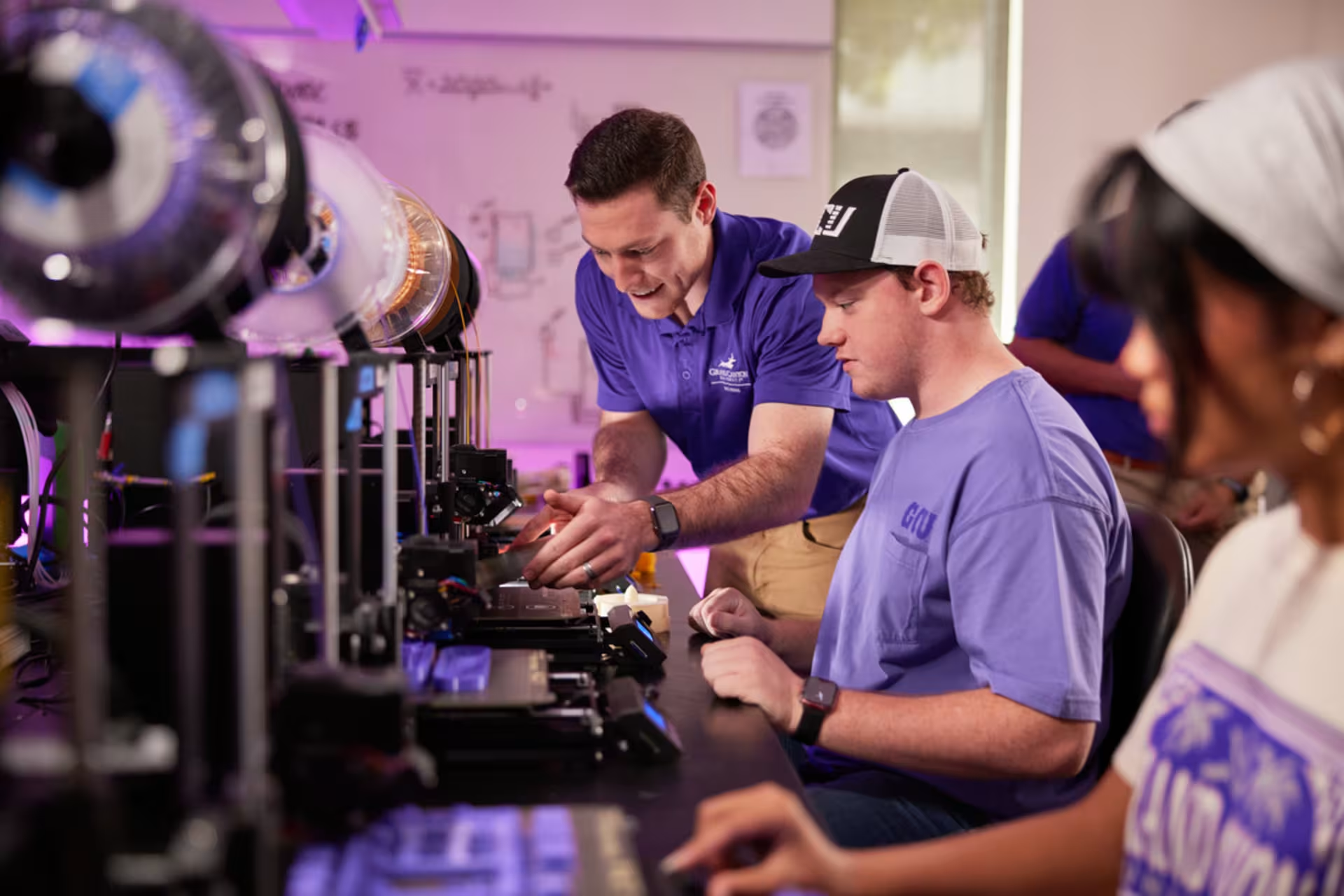
You can apply to a degree program at GCU in just three simple steps. Your university counselor is standing by to assist you with any questions about the application process.
It starts with selecting the program that aligns with your goals from one of GCU's 380+ academic programs — from undergraduate degrees to post-master’s certificate programs to doctoral degrees.
Pick your program
Explore our on-campus, online or evening cohort options under the Degree Programs page to find the right program for you.
Complete our online application
Your university counselor will direct you to the online application. Fill in all required information and submit the form.
Submit supporting documents
Submit your official transcripts and any relevant test scores, and confirm with your university counselor that all forms for your desired program are submitted.
Explore More Engineering Topics
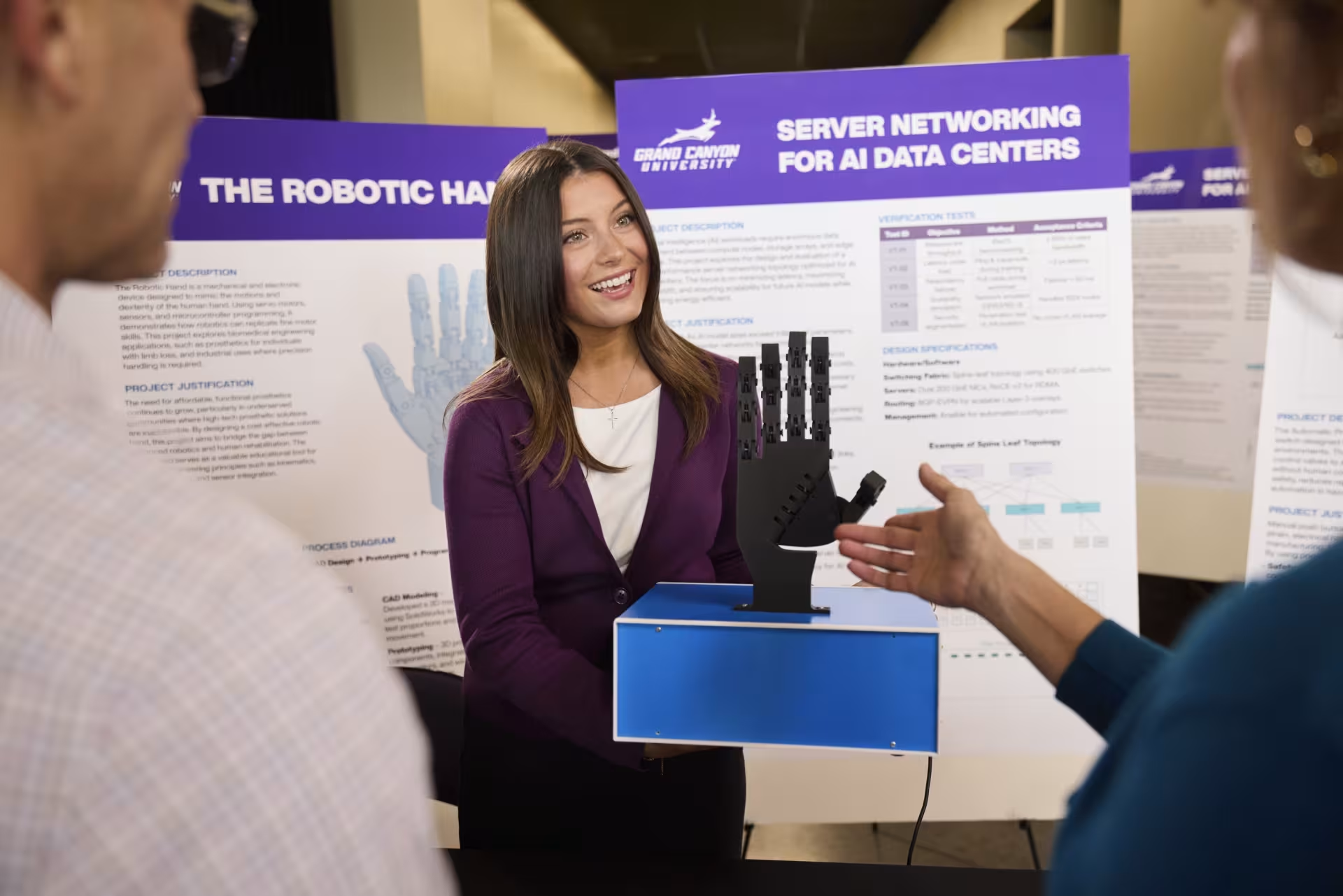



Compare GCU’s online and on-campus engineering master’s degrees, explore areas of specialization and find a program aligned with your academic and professional goals.
- The earnings referenced were reported by the U.S. Bureau of Labor Statistics (BLS), Architectural and Engineering Managers as of May 2025, retrieved September 2026. BLS calculates the median using salaries of workers nationwide with varying levels of education and experience. It does not reflect the earnings of GCU graduates as architectural and engineering managers, nor does it reflect the earnings of workers in one city or region of the country or a typical entry-level salary. Median income is the statistical midpoint for the range of salaries in a specific occupation. It is very unlikely that a median salary will reflect an entry-level salary. It represents what you would earn if you were paid more money than half the workers in an occupation, and less than half the workers in an occupation. It may give you a basis to estimate what you might earn at some point if you enter this career. Grand Canyon University can make no guarantees on individual graduates’ salaries. Your employability will be determined by numerous factors over which GCU has no control, such as the employer the graduate chooses to apply to, the graduate’s experience level, individual characteristics, skills, etc. against a pool of candidates.
- Data shown is effective August 2026, which can be found here: U.S. Bureau of Labor Statistics, Occupational Outlook Handbook, Architectural and Engineering Managers, retrieved September 2026.
Approved and verified accurate by the Assistant Dean of the College of Engineering and Technology on Sept. 25, 2026.