

Once centered on circuits, systems and signals, today’s electrical engineers now work at the crossroads of hardware, data science and software intelligence. Artificial intelligence (AI) has moved from theory to practice — now embedded in everyday engineering workflows. From optimizing power distribution to enabling real-time fault detection, AI is redefining how systems are designed, monitored and maintained.(See disclaimer 1)

“The field has undergone a revolution that's fundamentally changing what it means to be an electrical engineer.” — Dr. Isac Artzi, Associate Professor for the College of Engineering and Technology
Engineers now work with data-rich environments that demand faster decision-making and predictive capabilities. These shifts are not just technical — they’re redefining the role of the engineer itself. Between 2020 and 2025, AI transformed engineering workflows that had remained largely unchanged for decades — compressing chip design cycles from years to months, enabling self-healing power grids and introducing neural receivers that outperform traditional signal processing.(See disclaimer 2,3,4)
According to IEEE, AI is increasingly used in power electronics for tasks like control optimization and proactive diagnostics.(See disclaimer 5 )This evolution is driven by the need for smarter infrastructure and more resilient energy systems.(See disclaimer 5)
What Is AI in Electrical Engineering?
AI in engineering uses algorithms and data-driven models to automate, optimize and enhance problem-solving in complex systems. In electrical engineering, it has become particularly powerful in areas like signal processing, power systems, robotics and control — where precision and adaptability are essential.
Just from 2020 and 2025, long-standing engineering workflows, compressing design cycles and enabling predictive, self-adjusting systems have been transformed by AI.(See disclaimer 6) Recent IEEE surveys show most electrical engineers now use AI tools in their work (especially those early in their careers), a sign that data-driven design and automation are quickly becoming the norm.(See disclaimer 6)
“Today’s electrical engineers need to speak both the language of hardware and the language of data. We want our graduates to be ready for a world where circuits, code and computation are deeply interconnected,” explains Artzi. “Technology moves fast. The tools and frameworks will keep changing. What lasts is a deep understanding of physics, mathematics and systems thinking. That’s the foundation our students can build any specialization on, including AI.”
AI Techniques in Electrical Engineering
Electrical engineers now use AI across signal processing, power systems, robotics and control — creating systems that learn, adapt and respond in real time to dynamic environments.
Common AI techniques in electrical engineering include:
Electrical engineers rely on a range of tools and platforms to bring these techniques to life, such as:
“Our PCB mills on campus are for our electrical engineers to mill out and design custom circuit boards. Students can then immediately cut it out and have it in 30 minutes, rather than shipping it to an outside manufacturer and having it two weeks or a month later.” — AJ Derr, GCU Lab Coordinator
These tools are not just theoretical; they’re actively used in projects ranging from predictive maintenance to intelligent automation. Students interested in exploring AI further can take advantage of GCU’s academic pathways, including the minor in machine learning, the AI Lab and a graduate degree in AI, which allow them to tailor their learning to specific career goals.
"Our students are taught to master the fundamentals first, then have the opportunity to explore AI through focused labs and minors."
Career-Relevant AI Projects in Electrical Engineering
New roles such as embedded AI systems engineers, edge AI architects and robotics hardware developers have emerged across industries, reflecting how AI now drives innovation in energy, autonomy and defense.(See disclaimer 7) While job titles vary, the work often centers on designing intelligent power systems, optimizing edge algorithms and integrating AI directly into hardware.
Across the field, electrical engineers are shifting from reactive to proactive roles, using AI and data-driven systems to predict faults, improve performance and reduce costs through smarter, faster decision-making, such as:(See disclaimer 8)
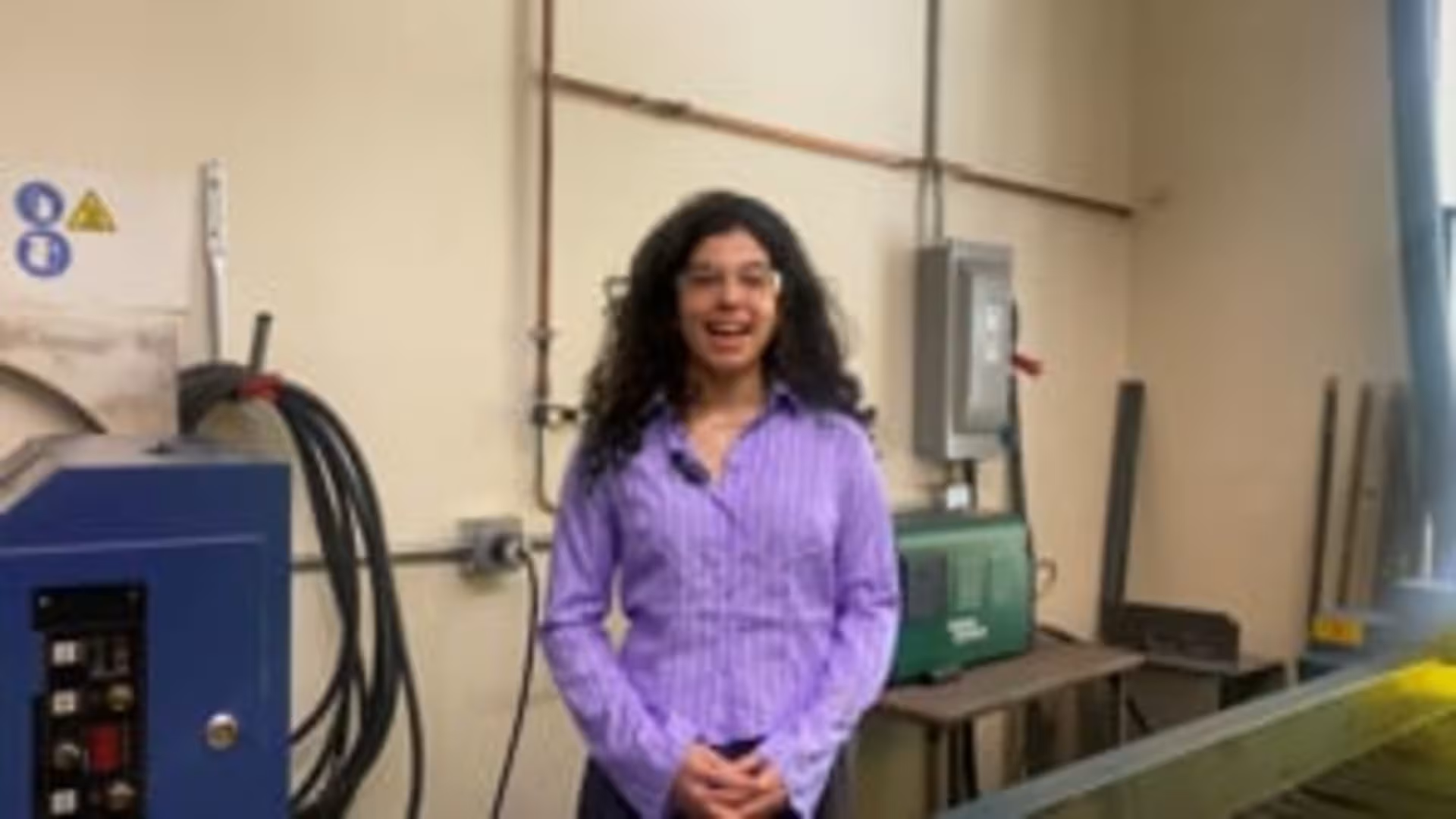
"GCU has welding machines, plasma cutters, 3D printers and the wood shop, with full access starting your freshman year."
The Future of AI in Electrical Engineering
Research in fields such as applied optics shows that integrating AI into electrical systems can enable smarter energy management, predictive fault detection and stronger system resilience.(See disclaimer 13) Looking ahead, AI-driven methods will play a central role in edge computing, IoT integration and sustainable energy — enabling decentralized systems that respond in real time.(See disclaimer 14)
How GCU Prepares Students for AI-Driven Engineering
If you're excited by the possibilities of AI in engineering, Grand Canyon University's MS in Electrical Engineering program offers a hands-on path into the field. Whether you're curious about smart grids, robotics or automation, this program can help you build the skills to turn that curiosity into impact. “AI brings incredible opportunities but also profound ethical questions. Through our Christian worldview, we help students think critically about how technology serves people — not just how to make it faster or more powerful,” said Dr. Artzi.
With a curriculum that blends theory and application, GCU strives to equip graduates to step into careers that are shaping the future of energy, intelligent systems and advanced automation. It's not just about learning the tech — it’s about learning how to lead with it.
AI represents a foundational shift in how electrical systems are designed, managed and optimized. If you’re ready to build the technologies that power tomorrow’s world, GCU’s MS in Electrical Engineering offers the tools, labs and mentorship to help you get there.
Power the Future With AI
Embrace AI-driven design and smart systems with GCU’s MS in Electrical Engineering. Lead innovation with purpose.