

On-Campus GCU Bachelor’s Degrees
What Is a Bachelor’s Degree?
A bachelor’s degree is an undergraduate program that can help you build foundational knowledge in a chosen field while exploring general education topics such as communication, critical thinking and ethics. At Grand Canyon University, on‑campus bachelor’s programs offer an in‑person learning experience built around structured coursework, face‑to‑face instruction and meaningful collaboration with faculty and peers.
You will have the opportunity to engage in hands‑on learning through labs, practicum experiences, group projects and campus resources that support both academic and personal growth. Grounded in a Christian worldview, the GCU on‑campus experience in Phoenix, Arizona, fosters purposeful learning, strong relationships and a clear sense of direction within an active campus community — no matter where students are in their academic journey.
Which Bachelor's Program Is Right for You?
Answer a few quick questions and we'll help point you toward bachelor's programs that match your goals and learning style. Results are meant to guide your search, not guarantee program fit or admission.
Explore On-Campus Bachelor’s Degrees by Area of Study
Discover the range of academic pathways available through our on‑campus bachelor’s degree programs. Each area of study is designed to help students build foundational knowledge, develop practical skills and prepare for careers or advanced education. Whether you’re drawn to analytical thinking, creative exploration or hands‑on application, exploring different areas of study can help you find the program that aligns with your interests, strengths and long‑term goals.
The undergraduate engineering programs emphasize in-person learning through hands-on laboratory work, applied design projects and face-to-face instruction. You will engage with core engineering principles such as analysis, systems thinking and problem-solving while working with industry-relevant tools and methods commonly used in engineering practice within a campus-based setting. These programs offer an immersive academic experience centered on engineering concepts, innovation and professional exploration.
Bachelor’s degree programs on campus at GCU offer an in-person learning experience focused on practical, career-ready skills. Through face-to-face instruction, collaborative projects and hands-on coursework, you can gain a strong foundation in areas such as management, finance, marketing and entrepreneurship within an interactive and welcoming campus environment.
On campus at GCU, you can pursue health and life science bachelor’s degrees through hands-on labs, in-person instruction and experiential learning. These programs cover areas such as healthcare and biological sciences, offering a campus-based environment that supports skill development and preparation for professional or graduate opportunities.
For students pursuing technology-focused careers, GCU’s on-campus computer science and IT bachelor’s programs focus on core computing principles, programming, systems and information technologies. Through collaborative coursework and applied projects, students can develop technical and analytical skills across computing and information technology disciplines within a supportive campus-based environment.
GCU’s on-campus education and creative studies undergraduate programs offer an immersive, campus-based learning experience grounded in practice and collaboration. You will explore instructional practice, communication and creative disciplines — from expressive and performance-based studies to digital and media-driven fields — while building leadership and analytical skills designed to support professional growth and engagement across educational, creative and professional settings.
The on-campus counseling, behavioral and social sciences programs at GCU offer a supportive campus learning environment focused on effective communication, cultural understanding and interpersonal development. You will engage in coursework across counseling, psychology, communication and related social science studies that can help support service-oriented and community-based career paths.
Theology and Ministry
Explore biblical studies, Christian theology and ministry practices within an academic, faith-centered context on campus at GCU. Through structured coursework and guided discussions, you can examine theological traditions and the role of ministry across diverse settings.
In Fall 2025, GCU had over 90,200 bachelor’s-level students studying either on campus or in evening cohorts.1
Featured Undergraduate Campus Programs
Discover a range of undergraduate campus programs designed to help you explore your interests, build practical skills and deepen your academic experience.

GCU’s on-campus biology majors aim to immerse you in the study of living systems through innovative coursework and lab-focused exploration. You can develop technical, analytical and research-based skills while examining biological sciences concepts that support preparation for science-related careers and advanced study.
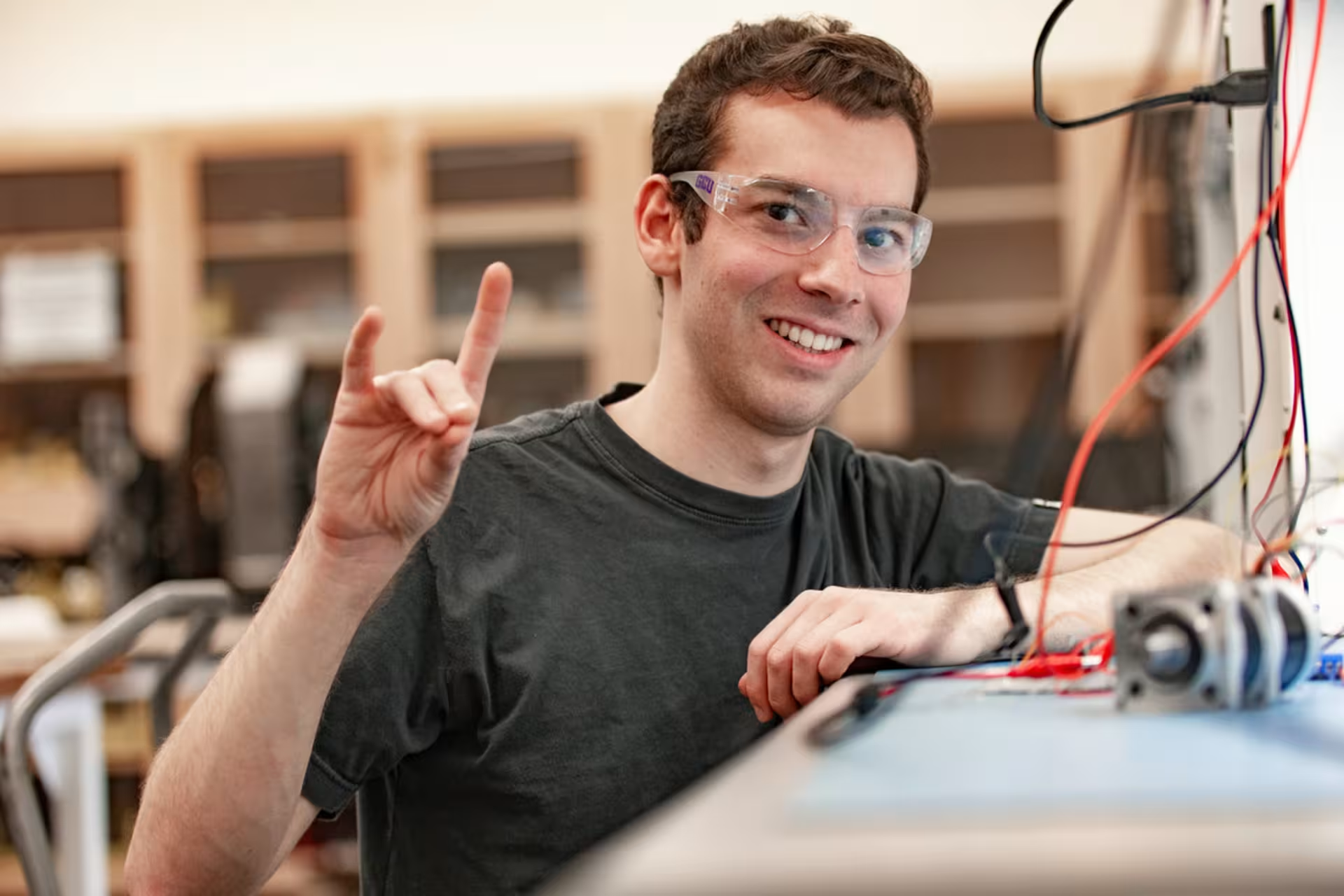
The on-campus mechanical engineering bachelor’s degrees at GCU offer hands-on, in-person learning that can help prepare you for a wide range of engineering careers. Through lab-based coursework, you will explore core areas such as thermodynamics, materials and system design while using advanced modeling and simulation tools. This immersive, face-to-face experience can help you develop practical skills to solve real industrial and engineering challenges.

GCU’s on-campus undergraduate music programs provide an immersive, in-person experience designed to develop both musicianship and academic growth. Through hands-on instruction, live performance opportunities and collaborative coursework, you can build skills for careers in performance, music education and the music industry. Learn and create in a supportive campus environment that brings music to life.
Explore Campus Bachelor’s Degrees
0 Matching Degrees
A Program Designed for Working Adults


"I started thinking about making a career change, and as a working adult, you have to consider your resources. Time is a resource. So, when I started looking into programs, the fact that GCU had a program that was 16 months long,(See disclaimer 2) I thought to myself, I can make this work. "
"I started thinking about making a career change, and as a working adult, you have to consider your resources. Time is a resource. So, when I started looking into programs, the fact that GCU had a program that was 16 months long,(See disclaimer 2) I thought to myself, I can make this work. "
GCU Bachelor's Programs FAQ
Choosing a campus bachelor’s degree can feel overwhelming. Taking time to research your options can help you better understand what fits your interests and goals. Start with our FAQs to learn more about on‑campus programs, learning environments and the academic experience available to students studying on campus.
What majors and areas of study can I choose from?
What is the difference between on-campus and online bachelor’s degrees at GCU?
How many credits are required for a bachelor’s degree from GCU?
What clubs, organizations and campus activities are available on campus?
What financial aid options are available for undergraduate students?
Is on-campus housing available for undergraduate students?
During the Fall 2025 semester, 67% (16,096) of GCU traditional students lived on campus.
Why Should You Consider GCU Bachelor’s Programs?
If you are looking for an on-campus learning experience that combines academic study, practical application and a strong sense of purpose within a supportive community, you should consider GCU’s undergraduate programs. Our bachelor’s degrees connect classroom learning with industry needs through hands-on experiences and applied coursework.
Each program is grounded in a Christian worldview, creating a campus environment where you can grow academically and personally, explore your faith and build meaningful relationships. As an on-campus student, you are part of a welcoming community that values service, respect and shared purpose while supporting your educational journey.
As a private Christian university, GCU is committed to keeping our bachelor’s programs affordable and accessible to all students. Reflecting this commitment, on‑campus tuition rates have been frozen since 2009 — grounded in our belief that a quality education should also be attainable. In addition, GCU offers a variety of scholarships and grants to help offset the cost of an on‑campus education.
GCU has been institutionally accredited by the Higher Learning Commission since 1968, providing a foundation of trust for quality education. Additionally, many of our bachelor’s degree programs have received programmatic accreditation from various independent accrediting bodies.
If you choose to earn your degree as a traditional on-campus student, you’ll have access to our enriching campus life, with numerous clubs, activities, intramural sports and worship services to choose from. Furthermore, our on-campus students can participate in our community service outreach initiatives.
Student Resources
On campus undergraduate students have access to academic resources such as the GCU Library, Career Services, the Canyon Emerging Scholars research program and the Academic Centers for Excellence, which offer tutoring, academic support and mentorship to help students stay engaged and supported in their coursework. These resources are part of GCU’s on‑campus learning environment, offering in‑person support designed to help you navigate your academic experience.

Explore on‑campus GCU bachelor’s programs and discover what your first year could look like.
- Includes all traditional students who have a last date of attendance at least three weeks into the Fall 2025 semester, students who participated in a campus evening class in August or September of 2025 and students who have participated in an online class in August or September 2025. Includes degree-seeking bridge programs, certificate programs, post-masters, education specialist programs, non-degree studies and continuing education.
- Secondary Applicants must transfer a minimum of 60 of the required 123 credits or have completed a baccalaureate degree which includes nine prerequisite courses/labs and 10 general education courses prior to starting the core nursing courses, which can be completed in as few as 16 months. Direct Entry Applicants that do not transfer 60 credits but meet the minimum requirements can complete these credits through GCU prior to starting the core nursing courses. Depending on the state where student has enrolled or intends to complete the program, student may require additional courses. This may include, but is not limited to, additional general education courses, courses in the major, clinical courses, or a different course sequence. See University Policy Handbook. For more information on the accreditation of nursing programs and other university approvals, please visit our University Accreditation and Regulations page.
- Coursera. (2025, Dec. 9). How Many Credits Do You Need to Graduate College? Retrieved March 2026.