


Leadership is often associated with titles, promotions and authority, but some of the most important leadership lessons begin long before someone becomes an executive. Future leaders develop through everyday decisions, relationships, mistakes and opportunities to learn from others.
For students who aspire to step into management or executive leadership roles, building leadership skills early can help prepare them to guide teams, communicate with confidence and take responsibility for the way their choices affect others. Leadership development is not only about learning how to manage tasks. It is also about learning how to influence people, build trust and follow through when challenges arise.

Jerry Colangelo, Hall of Fame business and sports executive and namesake of GCU’s Colangelo College of Business, has spent decades leading organizations, building teams and shaping the sports business community. His career offers practical leadership lessons for students and aspiring executives who want to understand what responsibility and influence look like in action.
What Are Leadership Lessons and Why Do They Matter?
Leadership lessons are the insights people gain through experience, mentorship, decision-making and reflection. They help shape how a person leads, communicates, responds to setbacks and earns the trust of others.
For future executives, these lessons matter because leadership is not built only in classrooms or through formal authority. Education can provide important business knowledge, but leadership is tested through experience. Students may learn leadership principles through coursework, group projects, internships, service opportunities, campus involvement and early career roles.
Colangelo emphasized that education is important, but students should also be ready to keep learning once they enter the workplace. He explained, “Most students prepare themselves through education and believe they are prepared to take the next steps, but you must go through a process of learning in the trenches.”
That process can include challenges, feedback and mistakes. For aspiring leaders, the goal is not to avoid every difficult moment. It is to learn from those moments and become more prepared to lead with responsibility, humility and judgment.
The Difference Between Managing and Leading
Managing and leading are connected, but they are not the same. Management often focuses on planning, organizing, measuring progress and helping ensure work gets completed. Leadership focuses on influence, direction, trust and the ability to bring people together around a shared goal.
A manager may have authority because of a role. A leader earns credibility through their actions. Future executives often need both. They must be able to manage systems and responsibilities while also inspiring people, communicating clearly and making decisions that support the larger mission of the organization.
Why Leadership Development Starts Before You Become a Leader
Students do not need a formal title to begin developing leadership competencies. They can practice leadership behaviors in everyday settings by being dependable, communicating well, listening to others and taking ownership of their responsibilities.
Group projects, student organizations, part-time jobs and internships can all provide opportunities to practice influence without authority. A student who helps organize a team, encourages participation or resolves conflict is already practicing leadership. Colangelo encouraged students to be inquisitive and learn from the experiences of others.
"Look at stories, individuals and opportunities where you can learn how people who came before you accomplished what they accomplished. Some of it comes out of a textbook, and some of it comes from one-on-one relationships."
How Leadership Lessons Shape Long-Term Career Success
Leadership lessons can shape the way professionals respond to opportunity, setbacks and responsibility throughout their careers. A future executive who learns to listen early may become better equipped to make informed decisions later. A student who learns accountability in a small role may be more prepared to take responsibility for larger teams or organizations.
Long-term career growth often depends on more than technical knowledge. Professionals also need leadership qualities such as communication, trustworthiness, resilience, curiosity and sound judgment. These traits are often strengthened through repeated practice over time.
Leadership Lesson #1: Influence and Authority Are Earned Over Time
One of the first leadership lessons future executives should understand is that authority and influence are not the same. Authority may come with a role or title, but influence is earned through trust, consistency and the way others perceive your character. Colangelo explained, “Authority is something you earn over a period of time through your conduct, your experiences and how people look at your decision-making process.”
Influence can exist even when someone does not have formal power over others. Students and early career professionals can begin building leadership influence by contributing thoughtfully, supporting team goals, following through on commitments and showing others they can be trusted with responsibility.
Leadership Lesson #2: Experience Teaches What the Classroom Cannot
Education can provide an important foundation for leadership development, but experience often teaches lessons that cannot be fully understood through coursework alone. Colangelo described this as “learning in the trenches,” explaining that students should be prepared for challenges, mistakes and growth as they enter the business world.
“The greatest lessons I’ve learned came when I made mistakes,” Colangelo said. “When you do that, you learn what not to do as well as what to do.” For aspiring executives, mistakes can become valuable leadership lessons when they lead to reflection, accountability and better judgment.
Leadership Lesson #3: Listening Is One of the Most Important Leadership Skills
Colangelo shared that listening is one of the most important leadership skills future executives can develop. Leaders are often expected to speak with confidence and make decisions, but effective leadership also requires the humility to listen before acting. Colangelo said one of the major lessons of his career was realizing how much he still had to learn. “I tried to become a very good listener and surround myself with people who had been through a process, so I could learn from their experiences,” he said.
For students, listening can be practiced in class discussions, team projects, internships and mentorship conversations. Colangelo encouraged young people entering business to “find people who you identify as leaders and try to absorb as much as you can from them.”
Leadership Lesson #4: Trust Is Built Through Follow-Through
Trust is one of the most important foundations of leadership influence. People are more likely to follow leaders who are reliable, honest and consistent, especially during change or uncertainty. Colangelo explained that people trust leaders because of “how you perform, your word being your bond and your ability to bring people together.”
Future executives should understand that trust cannot be demanded. It must be earned through repeated action. Students can begin developing this leadership quality by keeping commitments, communicating honestly and taking responsibility when challenges arise.
Leadership Lesson #5: Communication Builds Relationships and Influence
Communication is one of the most important executive leadership skills because it affects relationships, trust and influence. Leaders communicate through their words, actions, tone and presence, as well as through how well they listen. Colangelo emphasized the importance of being able to relate to people, noting that technology can sometimes become a shortcut.
“A good handshake, good eye contact and communicating with people go such a long way toward breaking barriers and developing relationships,” he said. For students preparing for leadership roles, communication is not limited to presentations or formal meetings. It can be practiced in everyday conversations, group work, interviews and professional networking.
Leadership Lesson #6: Great Leaders Never Stop Learning
Leadership development requires curiosity. Future executives should stay open to learning from classes, mentors, professional experiences and the examples of people who came before them. Colangelo encouraged students to be inquisitive and look for mentors and leaders to learn from.
This insight is especially relevant for students. Academic learning can provide structure and knowledge, while curiosity helps students continue learning beyond assignments and exams. By asking thoughtful questions, seeking feedback and studying the habits of successful leaders, students can begin developing an executive mindset before they hold a formal leadership role.
How to Develop an Executive Mindset as a Student
An executive mindset involves responsibility, long-term thinking, communication and the ability to understand how decisions affect others. Students can begin developing this mindset before they have formal leadership responsibilities.
One way to start is by treating current responsibilities seriously. A class project, internship or campus leadership role can become a place to practice accountability, communication and follow-through. Students can also look for opportunities to lead through service, athletics, clubs, employment or volunteer work.
Developing an executive mindset also means learning to think beyond personal success. Leaders consider the needs of teams, organizations and communities. They ask how their decisions affect others and how they can contribute to a larger goal.
Key Leadership Skills Future Executives Should Focus On
Future executives can benefit from developing leadership skills that support influence, responsibility and sound decision-making. These skills can be practiced throughout college and early career experiences.
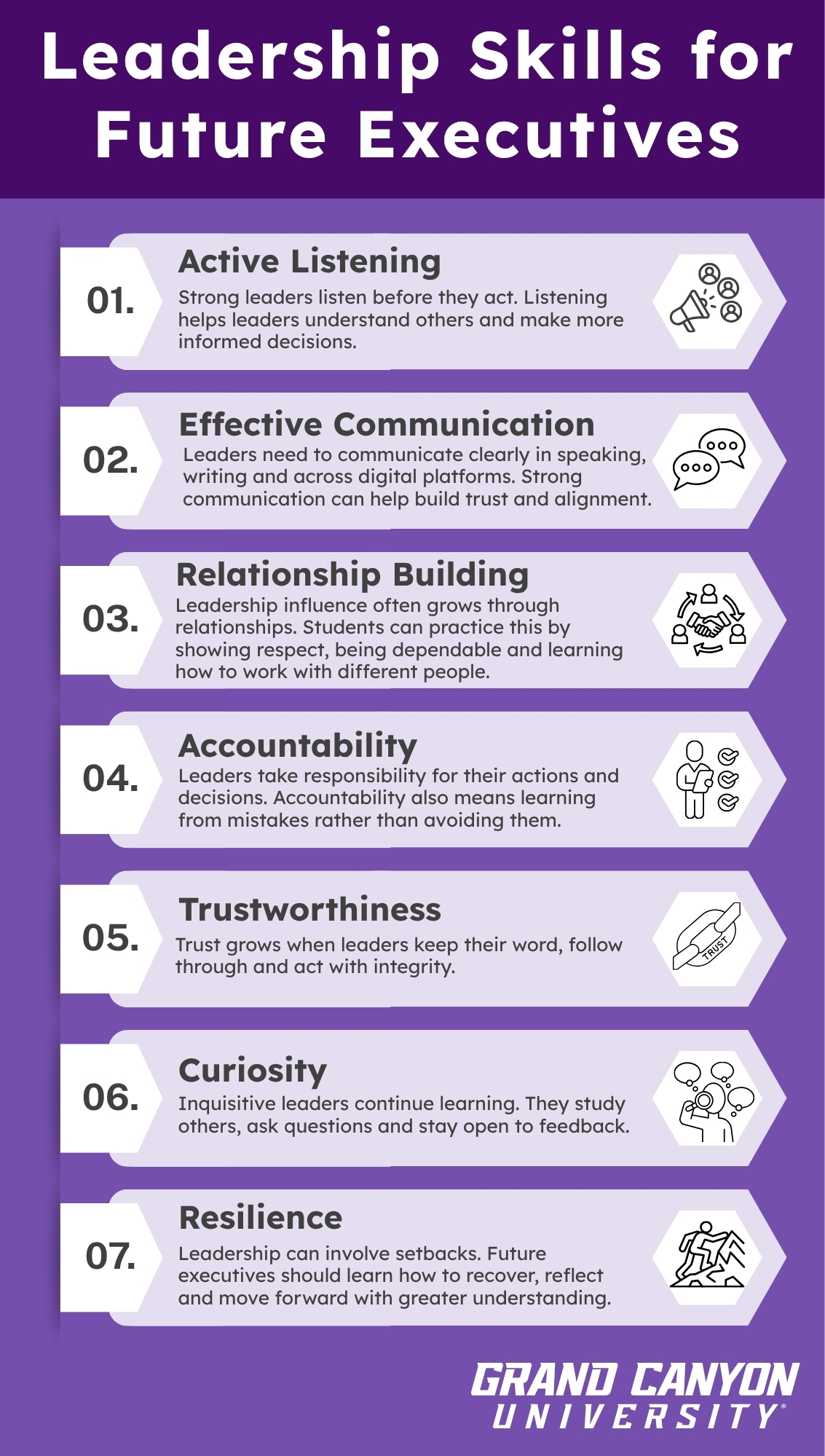
Leadership Lessons for the Next Generation of Executives
Leadership development is a lifelong process. Students who want to become executives can begin preparing now by building habits that support influence, responsibility and trust. Listening, communication, curiosity and accountability can all help shape the kind of leader a person becomes.
Colangelo’s advice reminds future leaders that success is not only about titles or recognition. It is also about learning through experience, building relationships and staying open to growth. Mistakes, mentorship and daily responsibilities can all become part of a person’s leadership development.
For students considering business education, GCU offers a Christian-based learning environment where leadership, ethics and professional growth can be explored together. Reflecting on GCU, Colangelo said, “It’s a blessing to have the opportunity to get an education at a place like GCU, which is Christian based. There is a feeling that exists on the campus with the student body, faculty and leadership that bodes well for a place where you can succeed and accomplish goals.”
Future executives do not become leaders all at once. They grow through choices, challenges and the willingness to keep learning. The leadership lessons students practice now can help prepare them to lead with responsibility, influence and purpose in the years ahead.
Study Management and Leadership at GCU’s Colangelo College of Business
Leadership development is a continual process shaped by education, experience, mentorship and the willingness to keep learning. For students who want to strengthen their leadership skills and prepare for future opportunities in business, GCU’s management and leadership programs offer a foundation in areas such as organizational behavior, communication, ethical decision-making and strategic leadership. Explore GCU’s business degree programs to find a path that aligns with your goals and helps you build the confidence to lead with responsibility and influence.
Develop Your Leadership Potential
Explore GCU's business degree programs and start building the knowledge and leadership skills for future executives.


