


Metabolomics is becoming increasingly important and impactful in the healthcare industry. It is important because it can reveal biomarkers for diseases like cancer, diabetes, cardiovascular disorders and neurodegenerative conditions. Early detection is key for many of these conditions, so metabolomics provides a promising outlook for creating treatment plans.
What Is Metabolomics?
Metabolomics is the comprehensive study of metabolites. Metabolites are small molecules such as sugars, amino acids and lipids that exist in biological systems. These metabolites are the end products of cellular processes, so analyzing them provides a snapshot of the organism’s physiological state. It identifies and quantifies these molecules in biological samples, including blood, urine and tissues.
How Metabolomics Works: The Science Behind Metabolite Profiling
Metabolomics analysis works by examining metabolites that reflect the body’s biological activity. These compounds are produced not only by human cells but also by gut microbes, creating a chemical fingerprint that reveals how the body responds to diet, stress, medications and environmental factors.
By performing metabolite profiling, researchers can uncover meaningful links between gut microbiome activity and key areas of health, including immune regulation, mental well-being and metabolic disorders. This systems-level approach allows scientists to move beyond single nutrients or pathways and instead understand how entire networks of biochemical reactions shape overall health.
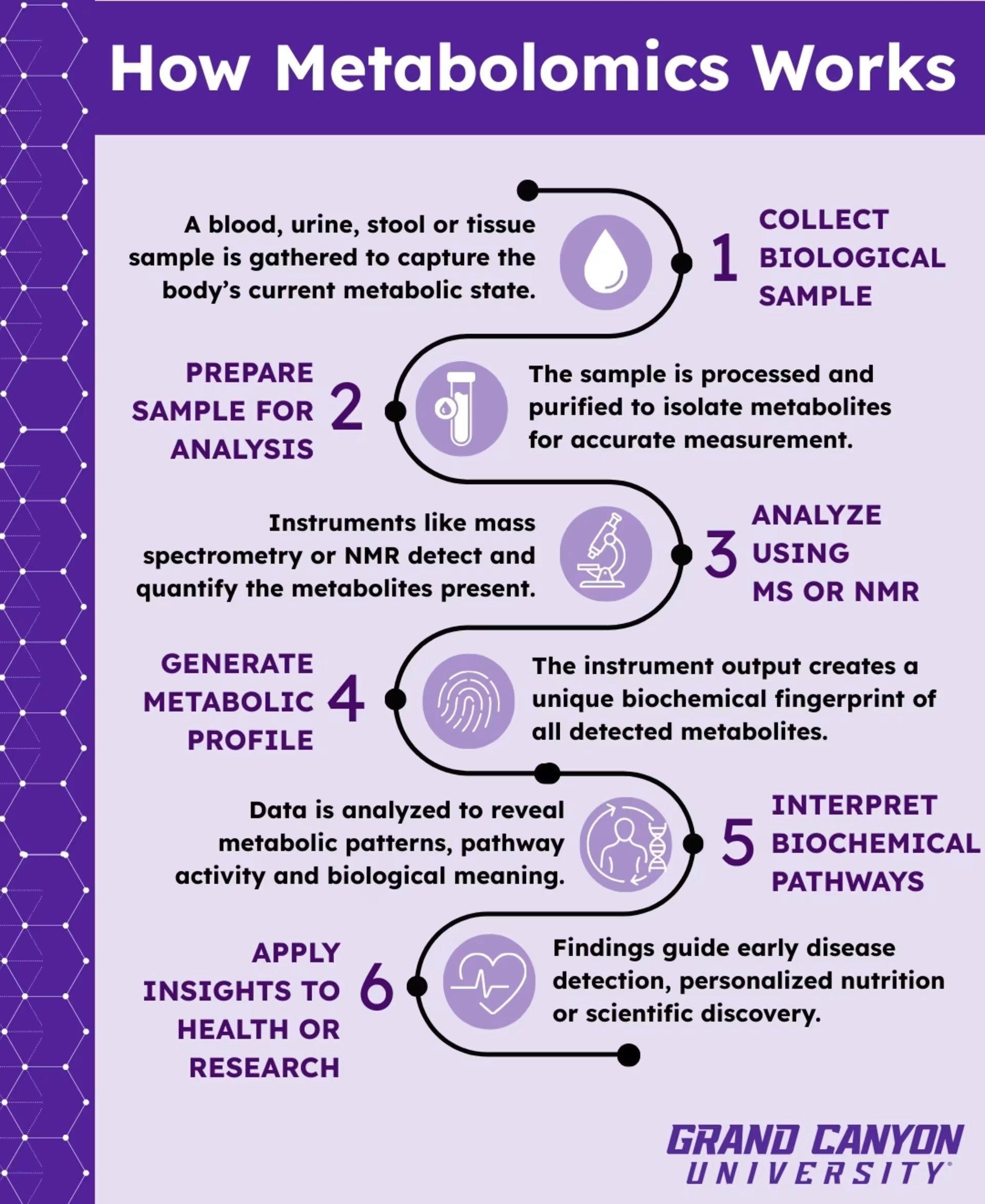
Targeted vs. Untargeted Metabolomics
Targeted metabolomics looks at a specific set of molecules in the body that scientists already know are important. It’s very precise and great for answering focused questions, like checking how certain chemicals change during disease progression. The downside is that it only measures what you choose ahead of time.
Untargeted metabolomics, on the other hand, looks at all the small molecules in a sample without picking molecules ahead of time. This approach is used when researchers want to discover new patterns or find unexpected changes. It gives a big-picture view but is harder to analyze and less exact for individual molecules. It requires complex data analysis.
Common Techniques: Mass Spectrometry and NMR
Mass spectrometry is highly sensitive and can detect a wide range of metabolites. Mass spectrometry measures the mass-to-charge ratio of molecules. Samples are turned into charged particles, then separated and detected based on their mass. This technique is used when high sensitivity is required, as it can detect very small amounts of metabolites. The downside to this technique is that it can damage the samples.
Nuclear magnetic resonance (NMR) is nondestructive and provides structural information. NMR uses magnetic fields and radio waves to study the magnetic properties of atomic nuclei in molecules. This reveals the structural and chemical information of the molecules. This technique is commonly used because the particles stay intact after analysis and the results are consistent. NMR requires a higher concentration in the sample than mass spectrometry.
What Is Precision Nutrition?
Precise nutrition (also called precision nutrition) is an approach to diet and health that is tailored to an individual’s unique biology, lifestyle and environment. It uses data from genetics, metabolism, gut microbiome and even daily habits to understand how a person processes nutrients and responds to different foods.
It is becoming important in healthcare because it can support nutritionists in disease prevention, managing conditions like diabetes or obesity and improving overall health outcomes by focusing on what works best for your individual biology.
Linking Metabolomics to Personalized Nutrition
A goal of metabolomics is to create personalized nutrition plans that prevent disease and optimize health. For example, two people might eat the same meal, but their bodies could react very differently. Precision nutrition helps predict and manage those differences. Metabolomics supports precision nutrition by tailoring diets to individual metabolic profiles.
Benefits for Chronic Disease Management and Wellness
Metabolomics offers powerful insights into both chronic disease management and overall wellness by capturing a real-time snapshot of the body’s biochemical activity. Metabolites reflect the outcome of genes, environment, diet and lifestyle, helping track metabolic changes over time to understand disease stages. It is especially useful in chronic disease management and therapy optimization.
Applications of Metabolomics
Metabolomics analysis has become an essential tool across many scientific and healthcare fields, offering deep insight into how biological systems function and respond to change. Below are some of the key areas where metabolomics is making a meaningful impact.
Clinical Diagnostics and Biomarker Discovery
Metabolite profiling plays a major role in identifying biomarkers that can detect diseases earlier and more accurately than traditional methods. Because metabolites change quickly in response to disease processes, they can reveal early signs of conditions like cancer, diabetes, cardiovascular disease and neurological disorders.
In clinical settings, metabolomics can help distinguish between disease subtypes, predict disease progression and monitor how patients respond to treatment. This supports more personalized and proactive healthcare, improving patient outcomes by catching disease activity before symptoms fully develop.
Drug Development and Pharmacology
In pharmaceutical research, metabolomics is used to understand how drugs affect the body and how the body metabolizes medications. It helps researchers observe metabolic pathways influenced by a drug, determine whether a drug is working as intended and identify any potential side effects early in development.
Metabolomics also supports precision pharmacology by helping tailor medications to an individual’s metabolic profile. This approach can improve drug safety, optimize dosages and reduce the risk of adverse reactions. Ultimately, metabolomics speeds up drug discovery while lowering development costs and improving therapeutic effectiveness.
Public Health and Epidemiology
Metabolomics provides valuable insights into how environmental exposures, diet, lifestyle and community-level factors influence population health. By analyzing metabolic changes across large groups, public health researchers can identify risk factors for chronic diseases, track nutritional deficiencies and study how pollutants or toxins affect biological systems.
In epidemiology, metabolomics strengthens population studies by offering objective biochemical data rather than relying solely on self-reported behaviors. This leads to more accurate public health recommendations, better understanding of disease patterns and improved strategies for prevention.
Careers and Education in Metabolomics
Metabolomics is expanding rapidly across multiple industries as organizations recognize the value of biochemical insights for improving health. Metabolomics connects biology, chemistry and data analysis, so professionals in this field can contribute to a wide range of sectors focused on research, development and problem solving. Industries such as healthcare, biotechnology, nutrition, agriculture and environmental sciences increasingly depend on metabolomic data to guide decision making, create new products and understand complex biological systems.
As the field grows, educational programs in biochemistry, molecular biology, nutrition, data science and analytical chemistry provide the foundation needed to participate in metabolomics-related work. Students and professionals should focus on programs that build skills in laboratory methods, analytics and biological interpretation.
What Skills Do You Need?
Working in metabolomics requires a mix of soft and technical skills. Here are some of the most important skills for working in this field:
How GCU Prepares You for Metabolomics and Precision Nutrition Careers
GCU offers programs designed to help students build the scientific, analytical and practical skills needed for the field of nutrition and healthcare. Through hands-on laboratory coursework, exposure to modern analytical techniques and a curriculum grounded in biological and nutritional sciences, students can study the skills required to understand metabolic pathways, interpret biochemical data and apply nutrition science in practical settings.
Whether you’re drawn to research, healthcare, public health or the growing area of personalized nutrition, GCU provides academic pathways that support your career goals. The Bachelor of Science in Molecular and Cellular Biology and the Bachelor of Science in Chemistry both provide an academic foundation that is relevant to the field of metabolomics. The Bachelor of Science in Nutritional Science gives students a strong grounding in chemistry, biology and human nutrition. For those pursuing certification in nutrition, the Master of Science in Nutrition and Dietetics offers deeper knowledge in medical nutrition therapy, evidence-based practice and community nutrition.
Build Skills for Nutrition Science
Explore GCU’s nutrition programs to take the next step toward a career in health sciences.


