

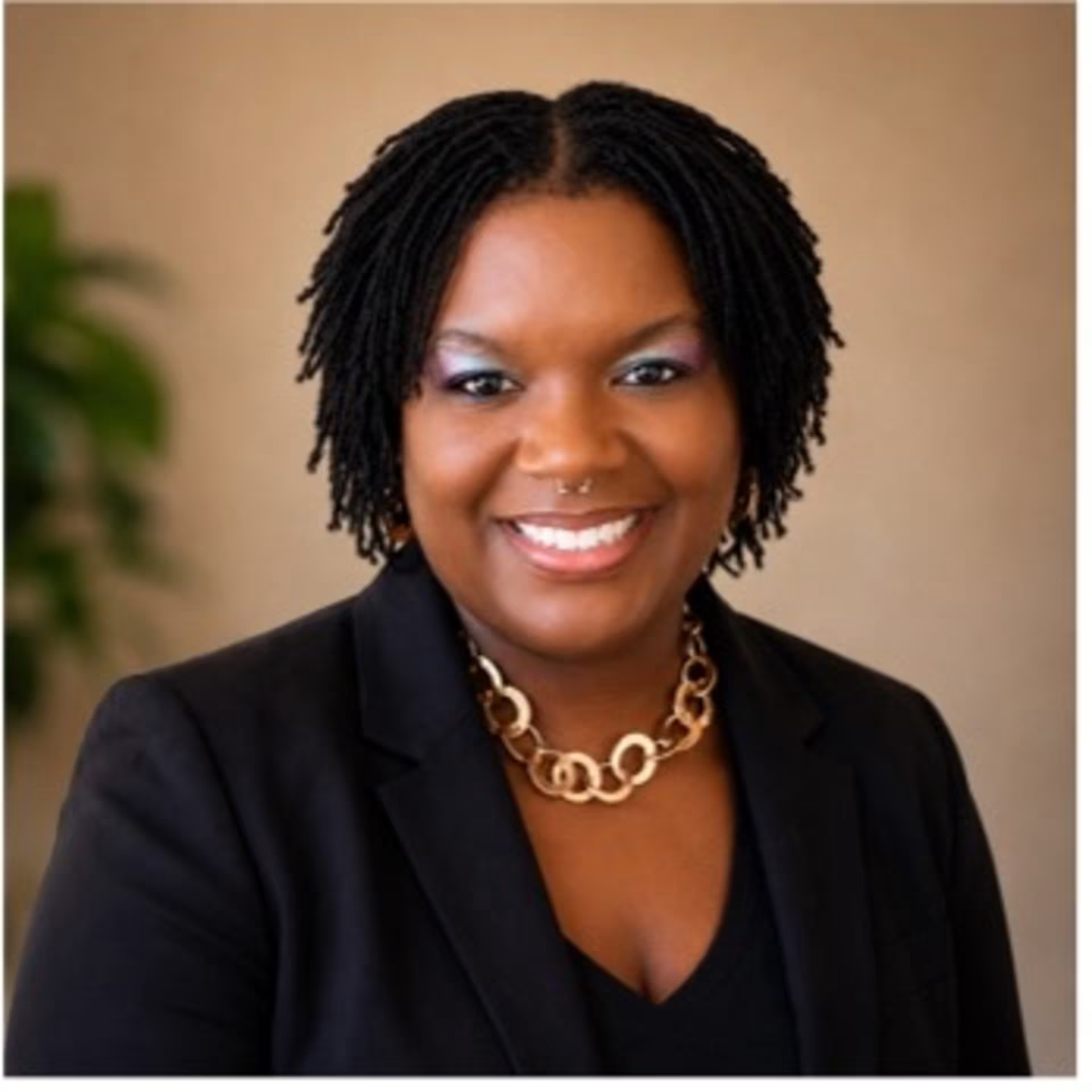
Mental health counselors help individuals improve emotional well-being and develop coping strategies. While many recognize their impact, few understand the daily realities of the role. Here, we explore the daily activities of mental health counselors, the challenges and rewards they encounter and the qualities essential for the role. We also feature insights from Dr. Erica Varner-Anderson, a Licensed Professional Counselor (LPC), Licensed Associate Marriage and Family Therapist (LAMFT) and National Certified Counselor (NCC). As a full-time faculty member at Grand Canyon University and a member of the Admissions Committee, Dr. Varner-Anderson combines clinical and academic experience to guide those interested in pursuing a career in mental health counseling.
What Is a Mental Health Counselor?
A mental health counselor is a licensed professional who helps individuals, couples, families and groups manage emotional, psychological and interpersonal challenges, such as anxiety, depression, trauma and relationship difficulties. They focus on identifying underlying problems and developing coping skills.
It’s important to understand the educational and licensure requirements. You can learn how to become a mental health counselor by exploring the necessary steps, including earning a graduate degree such as GCU’s Master of Science in Clinical Mental Health Counseling, which is designed to prepare students for professional counseling careers.
A Typical Day in the Life of a Mental Health Counselor
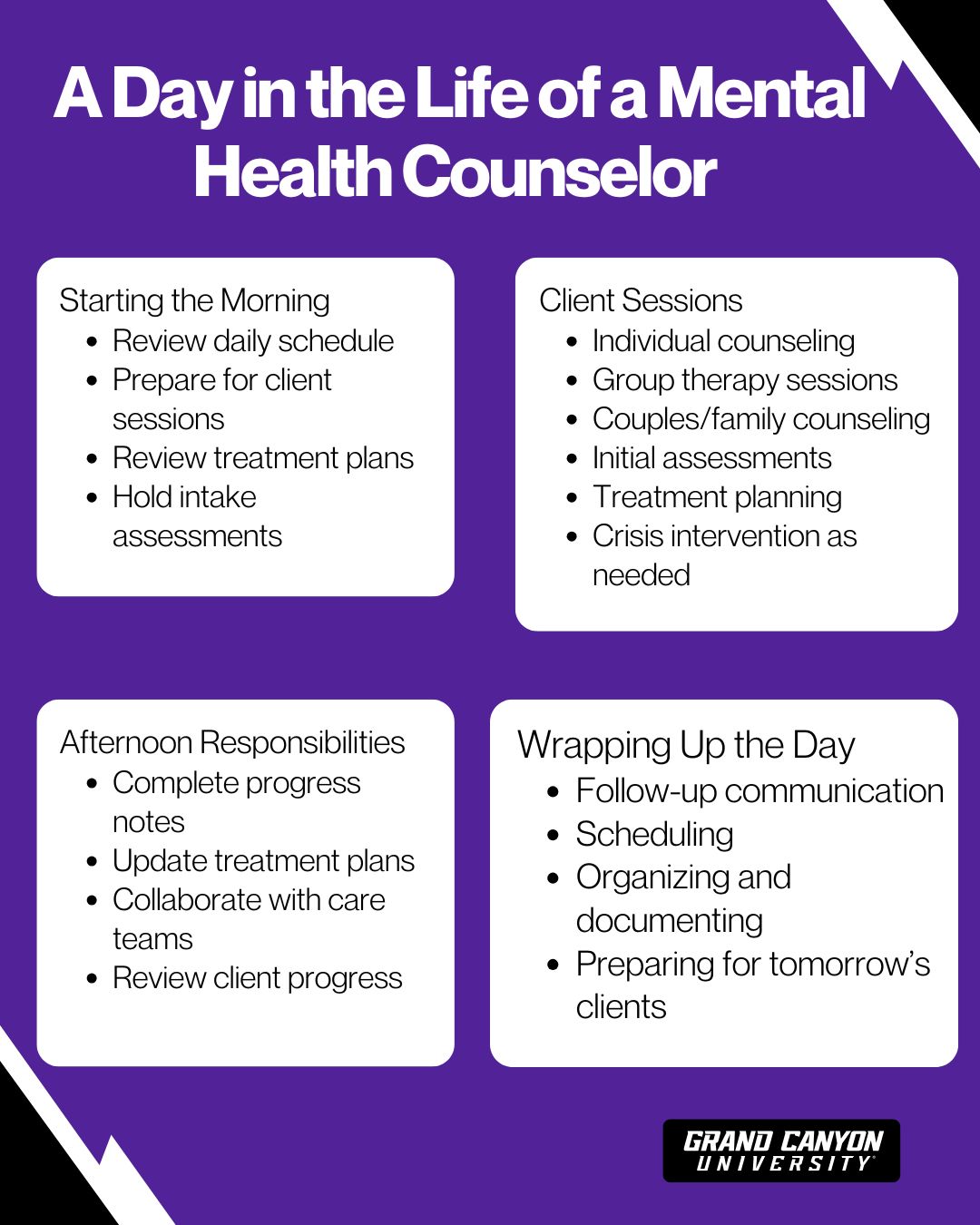
While every workday is different, a mental health counselor often balances client care, documentation, treatment planning and professional collaboration. From the first appointment of the day to the final case note, counselors remain focused on helping clients progress toward their goals.
Starting the Morning
Many counselors begin the day by reviewing their schedules, preparing for upcoming sessions and checking documentation from previous appointments. This preparation helps them stay informed about each client’s progress, challenges and treatment goals before each session.
Before an initial appointment, some counselors connect with prospective clients during an initial consultation. According to Dr. Erica Varner-Anderson, this early conversation helps establish rapport and ensures clients feel comfortable beginning the counseling process. “What I like to do before the initial session is have a consultation with the client. And the reason I do that, rather than just waiting to get to the first session, is to kind of help the client to get a feel of who I am and make sure that they’re in the correct place.”
She explains that these conversations often include questions about a client’s goals, previous therapy experiences and expectations for counseling. “But most importantly, in that consultation, and even in the first session, you want to make sure that the client feels heard.”
Midday Client Sessions
As the day progresses, counselors may conduct individual therapy sessions, family/couples counseling, group counseling meetings and initial assessments for new clients. One client may be working through anxiety, while another may be seeking support for grief, relationship challenges or major life transitions.
A significant part of these sessions involves creating and updating treatment plans. Dr. Varner-Anderson emphasizes that treatment planning should be a collaborative process rather than something counselors develop independently. “It’s important that we do treatment planning with our client and that treatment planning is not something that we just put together, but something that we put together collaboratively with our clients to make sure that there’s a mutual agreement of why we’re in the therapy sessions in the first place.”
Counselors apply different therapeutic approaches based on each client’s needs. Dr. Varner-Anderson notes that case conceptualization plays a key role in this process. “The importance of doing a case conceptualization is that it helps create a roadmap for working with that particular client.”
For example, one client may respond well to cognitive behavioral therapy, while another may benefit from solution-focused therapy. Factors such as communication style, personal experiences and culture help guide treatment decisions.
Afternoon Responsibilities
Following client sessions, counselors often shift their focus to documentation, treatment planning and consultation with colleagues or supervisors. Accurate recordkeeping is a critical responsibility that supports continuity of care and ethical practice. As Dr. Varner-Anderson explains, “After we see a client, we want to make sure that we document our sessions.”
Counselors maintain accurate client records, document treatment progress and ensure their work aligns with professional and ethical standards. As Dr. Varner-Anderson explains, “Typically, the documentation process includes maintaining accurate and timely clinical records, which usually include assessments, informed consent, treatment plans and the completion of progress notes after every session. Most importantly, we want to make sure our documentation and work is guided by the ACA Code of Ethics.”
Counselors typically end their day by addressing follow-up communications, scheduling future appointments and preparing for upcoming sessions.
Skills Mental Health Counselors Use Every Day
Mental health counselors depend on a combination of interpersonal, analytical and professional skills to support clients effectively. While therapy techniques and clinical knowledge are important, many of the skills counselors use depend on qualities such as the ability to build trust, understand client needs and provide ethical, client-centered care.
Active Listening and Empathy
Active listening is a valuable skill for counselors, as clients want to feel heard and respected when discussing difficult emotions. Effective counselors listen attentively, ask insightful questions and validate clients’ perspectives without judgment.
Dr. Erica Varner-Anderson emphasizes the importance of creating a supportive environment through listening and validation: “Listening to them, validating them, of course, being honest with our clients is very important.” When counselors demonstrate empathy, clients are often more willing to engage in the therapeutic process and work toward meaningful change.
Communication and Rapport Building
Building rapport is essential to a successful counseling relationship. According to Dr. Varner-Anderson, consistency and follow-through play a major role in building that trust. “If we say we’re going to contact our clients or send them something, we want to make sure we do that in a timely manner.”
She also notes that remembering important details about clients’ lives can strengthen the therapeutic relationship and help clients feel valued. “Another good thing is to remember what our clients are saying, because sometimes it means a lot. I’ve heard some clients say, ‘My past therapist did not remember what we were talking about in the last session.’ But when you ask them, ‘Hey, you mentioned in our last session that grandma was sick. How’s grandma doing?’ That makes them feel very comfortable and like they belong.”
Critical Thinking and Problem-Solving
Each client presents a unique situation, requiring counselors to think critically and adapt their approach. Mental health counselors regularly evaluate client concerns, identify appropriate interventions and adjust treatment strategies when necessary.
These skills help counselors:
Ethical Decision-Making
Mental health counselors are guided by professional ethical standards that help protect clients and maintain the integrity of the counseling profession. Ethical decision-making is woven into virtually every aspect of their work, from confidentiality and documentation to boundaries and informed consent. Counselors must carefully consider client welfare while adhering to professional codes of ethics and legal requirements.
Cultural Competence
Counselors work with individuals from a wide variety of cultural, social and personal backgrounds. Cultural competence helps professionals provide treatment that is respectful, welcoming and responsive to each client’s experiences.
This may involve:
Organization and Professional Development
Behind every counseling session is a significant amount of planning, documentation and ongoing learning. Mental health counselors must stay organized while managing client records, treatment plans and scheduling responsibilities.
It’s also important to commit to lifelong learning. Dr. Varner-Anderson encourages aspiring professionals to seek opportunities to grow their skills both inside and outside the classroom. “I would say some areas of success for counselors include attending trainings.”
She notes that many students wait until after graduation to pursue professional development opportunities, but early involvement can help build confidence and practical knowledge. “Some of my students now don’t attend these trainings because they think that they have to complete their program to do so.”
Dr. Varner-Anderson also advocates for experiential learning and professional networking.
"I teach from a student-centered perspective, meaning that rather than focusing solely on lectures, I value teaching students how to apply a particular model or intervention through interactive role-play and case studies, so that they can know what to expect with clients and practice developing their own therapeutic approach."
To gain additional experience, she recommends:
And for students who are hesitant about presenting at conferences, she encourages them to do so: “Another good way to set themselves up for success is attending some of these conferences and presenting. And if they are afraid to present, definitely contact those networks and find someone to present with them.”
Where Do Mental Health Counselors Work?
Many aspiring counselors gain their first professional experience in community-based mental health settings. These environments often expose new professionals to a wide range of client needs and clinical situations, helping them develop foundational counseling skills. As Dr. Erica Varner-Anderson explains, “Early on in someone’s career, I will be very honest with you, most people early on in their career work in community-based mental health.”
Beyond community agencies, a mental health counselor may work in a variety of settings, including:
The growth of telehealth has expanded access to counseling services. According to Dr. Varner-Anderson, virtual counseling became much more common during the COVID-19 pandemic and has remained popular because of its convenience. “I find that a lot of clients find it very convenient. I’ve had some clients who have met with me on their lunch break in their office or in their car in a parking garage.” Counselors must also comply with state licensure requirements and other regulations when providing virtual care.
Challenges and Rewards of Being a Mental Health Counselor
A career in counseling can be both rewarding and demanding. Mental health counselors help clients navigate life’s most difficult experiences, which requires emotional resilience, strong boundaries and an ongoing commitment to personal and professional growth. While the work comes with challenges, many counselors find the rewards well worth the effort.
Common Challenges
One of the most frequently discussed challenges in the counseling profession is burnout. Managing large caseloads, supporting clients through difficult circumstances and balancing administrative responsibilities can take a toll over time, particularly in community mental health settings.
To prevent burnout, Dr. Varner-Anderson encourages counselors to prioritize self-care and maintain healthy habits throughout the workday. I usually recommend that counselors make sure they are scheduling their lunch and making time for physical activities like taking a walk, stretching and yoga.”
She also reminds them not to overlook the importance of taking time off. “Some clinicians are afraid to take time off for fear of losing clients or hours. I remind them of the importance of taking this time and let them know their clients will be there when they get back.”
Another challenge is maintaining professional boundaries. Counselors must balance compassion and connection while adhering to ethical standards. “Sometimes we have clients who will want to be our friend. Sometimes we might find ourselves wanting to be friends with the client as well.”
Meaningful Rewards
Despite the challenges, many counselors describe the work as rewarding. One of the greatest benefits is witnessing clients make progress, develop new skills and move toward healthier, more fulfilling lives.
Dr. Varner-Anderson explains that counseling often becomes a learning experience for both the client and the professional. “I think what is very rewarding about this field is there’s a lot that we learn from our clients while we are working with them.”
Counselors regularly gain new perspectives, develop greater self-awareness and become more aware of experiences that differ from their own. “It is rewarding... because we may have certain biases and triggers that we may become aware of when introduced to certain client populations, which is also a continual learning process.”
Frequently Asked Questions About Mental Health Counseling
Before discussing common questions about counseling, it’s important to note that a counselor’s experience varies by work environment, client population and specialization. Nonetheless, prospective students and career changers often have similar inquiries about the field.
How Many Hours Do Mental Health Counselors Work?
Work schedules for mental health counselors vary by setting and client needs. Many work full-time (about 40 hours a week), but schedules can include evenings and weekends, especially in hospitals or residential treatment centers. Counselors in private practice have more flexibility and may offer evening or weekend appointments. School-based counselors typically follow traditional weekday hours aligned with the academic calendar.
Is a Career as a Mental Health Counselor Right for Me?
A career in mental health counseling is ideal for those who are passionate about helping others. Successful counselors possess strong communication skills, empathy, emotional resilience and a commitment to ethics. Dr. Erica Varner-Anderson advises students to explore various professions in the mental health field to understand how they differ and overlap.
“The advice that I would give is just to do their research, to look at the different mental health fields first.” She explains that social workers, psychologists, counselors, marriage and family therapists and psychiatric providers each serve distinct functions within behavioral healthcare. Understanding those distinctions can help prospective students determine which profession best aligns with their interests and career goals. “Counselors focus on the overall well-being of the client, helping them improve their mental health, develop coping skills and work toward their personal goals."
Learn About GCU’s Clinical Mental Health Counseling Program
Grand Canyon University’s Master of Science in Clinical Mental Health Counseling program equips students with essential counseling knowledge, ethical decision-making skills and practical abilities for a professional counseling career.
GCU emphasizes mentorship, professional development and community. Dr. Erica Varner-Anderson notes that one of the qualities that stands out most about the program is the commitment of faculty and leadership to supporting students’ success both inside and outside the classroom. “I love how our leadership, especially our assistant dean, Dr. Edgeston, encourages us to reach out to students and help them get their foot in the door, whether it’s networking with people, connecting them to a person or inviting someone into the classroom.”
Dr. Varner-Anderson has also been impressed by GCU’s encouragement of student research and conference participation. “I was very impressed with Dr. Edgeston encouraging us to include our students in our research as co-authors and inviting students to present with us at conferences as well.”
Whether through practical learning experiences, supportive faculty mentorship, flexible online learning options or GCU’s integration of a Christian worldview, students have opportunities to grow both professionally and personally.
Prepare for a Career in Counseling
Explore GCU’s mental health counseling degrees and prepare for a career supporting others’ well-being.