


"Do not conform to the pattern of this world, but be transformed by the renewing of your mind."
— Romans 12:2, NIV
On Oct. 31, 1517, a Catholic monk named Martin Luther’s hammer rang out in Wittenberg, but its echoes reached far beyond Germany’s borders. What began as a protest against indulgences and a call to reform the Church’s teachings became a sweeping religious revolution, one that reshaped Christian thought, worship and identity across continents and centuries. Over 500 years later, it is still recognized as one of the most pivotal events in theological history: the Reformation.
Luther’s emphasis on sola gratia (grace alone) and sola fide (faith alone) laid the foundation for a new theology, one that was not being heavily taught at the time within the Roman Catholic Church. Years later, this specific segment of religious ideology became known as Lutheranism (even though Martin Luther himself did not wish it to be named after him). But the Reformation didn’t stop there.
Movement of Many Voices
In Switzerland, Reformation figures like Ulrich Zwingli and John Calvin emphasized the authority of Scripture and the sovereignty of God. In England, the movement took a different path, shaped by both theological convictions and political necessity, eventually giving rise to Anglicanism.
Meanwhile, the Anabaptists championed believers’ baptism and radical discipleship. Their courage and convictions planted seeds for later Baptist, Mennonite and other church traditions.
Each of these movements, though diverse in doctrine and practice, shared a common conviction: that the Church must continually return to the Word of God, and that faith must be personal, transformative and rooted in grace.
A Costly Conviction
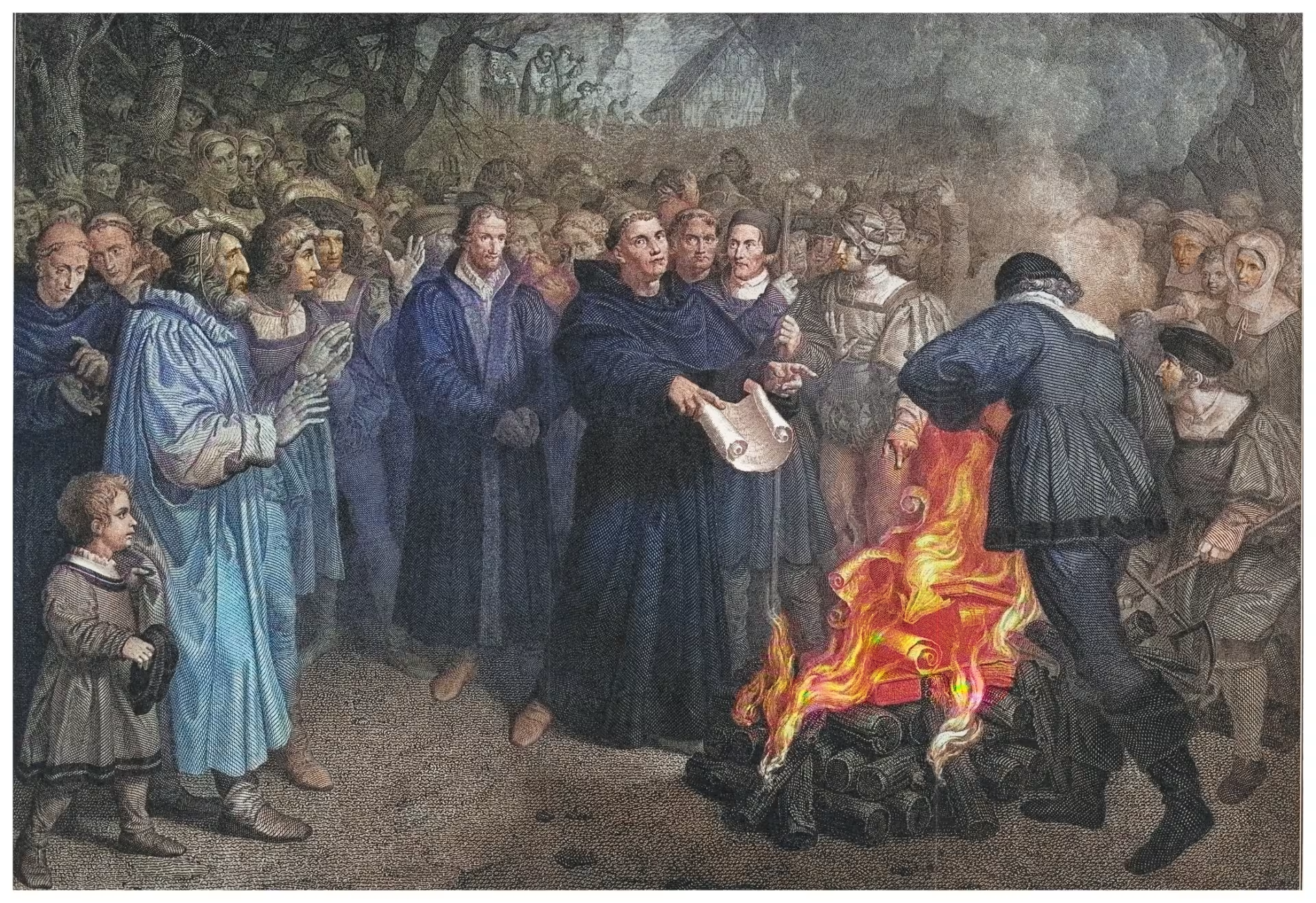
During the Reformation, many paid a steep price for their convictions. Written works and theological commentaries were burned, and those who challenged it were often imprisoned, exiled or executed. The courage to speak truth and pursue reform came with real danger. Yet through their sacrifice, the Church was renewed and the gospel was clarified for generations to come.
We are the spiritual heirs of that movement. As Christians, we can worship freely, study Scripture openly and explore theology without fear. This freedom is a gift as well as a call — a call to pursue a stronger, deeper faith in whatever denomination or tradition we belong to, a call to live boldly, humbly and gratefully, knowing that others gave everything so we could walk in grace.
Present Day
Today, we live in the legacy of the Reformation. Whether we worship in Lutheran, Reformed, Baptist, Anglican, Pentecostal or non-denominational communities, we are united in Christ and blessed with the freedom to follow the path of faith that resonates with us.
May we never forget that the Reformation was not just about changing institutions — it was about
freedom made possible by a courageous generation who dared to ask hard questions, challenge religious authority, seek deeper truth and trust that God was — and still is — sovereign over all.
At Grand Canyon University, we are invited to live in that same spirit. Not just historically, but spiritually. To be reformed and always reforming. To let Scripture shape our minds, grace soften our hearts and Christ lead our lives.
Live Redeemed
Discover how GCU can equip you for your calling today.


