


Bachelor of Science in Elementary Education: ESL Emphasis
Prepare To Become an Elementary ESL Teacher
The Bachelor of Science in Elementary Education with an Emphasis in English as a Second Language degree program at Grand Canyon University focuses on preparing teacher candidates for teaching in a K–8 classroom specifically geared toward working with students who are considered English Language Learners (ELL). Upon graduation, you may decide to work toward seeking a teaching license to teach your students in an elementary classroom setting.

Up to 90 credits, only 84 can be lower division
Credits: Fill out the Lopes Eval to find out what will transfer
Admission Requirements (Bachelor's)
- 16+ years old
- High School Graduate
- 2.8+ Unweighted GPA
OR 2.5+ Unweighted GPA and
- ACT: 19
- SAT: 1000*
Admission requirements may differ based on degree level, program and modality, or transfer status. Some programs of study may require a higher GPA and/or other qualifying criteria for admission. Please review full admission and program requirements in the University Policy Handbook.
*Math and reading only on a 1600 point scale (test date after 3/1/2016). SAT score of 1380 required for 2400 point scale (test date before 3/1/2016).
Earn a BS in Elementary Education With an ESL Emphasis From GCU
Earning a bachelor’s degree with an emphasis in teaching elementary ESL can enable you to make a difference not only in education, but in helping students gain the essential skill of mastering the English language. This skill is imperative for successfully moving forward in education and life in English-speaking countries.
At GCU, you will be taught curriculum that is built from the Christian worldview. You have the opportunity to develop not only into an ESL educator, but a servant leader who possesses the ethics, morals and compassion to meet the varying needs of ESL students.
Pursue Your Online BS in Elementary Education: ESL Emphasis
This elementary ESL emphasis is offered in a variety of modalities, which offer flexibility and convenience, allowing you to study from virtually anywhere. If you choose to earn your degree online, you will have access to the same quality of instruction and you can benefit from interactive discussions with your peers on our learning platform.
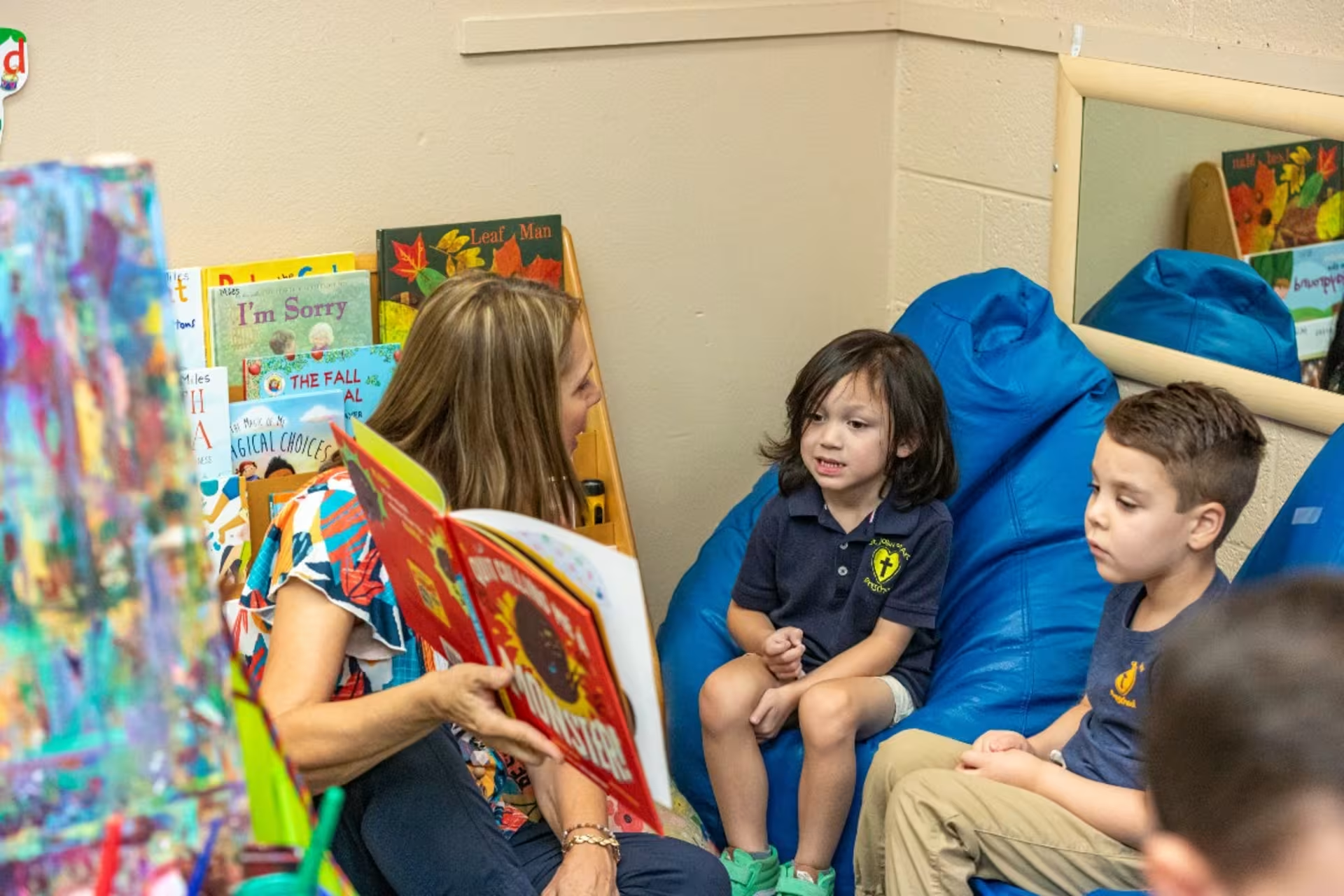
ESL Educator Requirements
You will have opportunities to enhance your learning during the elementary ESL emphasis through the application of concepts, theories and research. Course assignments guide you through 160 hours of observational and practice-based experiences. You must have access to an elementary ESL classroom to complete these assignments.
Consult the University Policy Handbook and a university counselor for information regarding the policies and procedures within a teacher licensure program.
ESL teaching candidates must be able to:
Complete the five courses focused on Arizona requirements for an ESL endorsement
Contact their state department of education for licensure requirements and program approval
Review state-specific requirements for a complete endorsement
Complete a 15-week student teaching component for a 1-8 ESL classroom
Elementary ESL Coursework Covered
This program embraces the intricate realm of teaching young learners who are English language learners, empowering students with the knowledge and strategies that can foster effective communication and language development. Through coursework, hands-on experiences and alignment with industry standards, you'll be taught the skills to assist the educational landscape for elementary ESL students.
As a future ESL educator, you may have the opportunity to deliver transformative education to your students. Non-fluency in English can significantly impede a student’s ability to navigate life and academics in an English-speaking country, and may negatively affect their future prospects.(See disclaimer 1,2) When you choose to become an English as a second language major, you’re making a choice to work toward creating a positive difference in the lives of your students.
ESL-focused content areas of the curriculum include:
Practicum and Field Experience
This program concludes with a practicum/field experience that focuses on helping you prepare to go on to seek certification. This is a full-time, 15-week experience that includes practical ESL elementary classroom experiences.(See disclaimer 3 )Once you earn qualification to be an elementary ESL teacher, this signifies that you have achieved the skills and abilities to teach students in the K–8 environment, specifically ELL students.
Throughout this BS degree: elementary ESL emphasis, English as a second language majors will participate in hands-on learning activities and be taught:
Adolescent development
Instructional planning
Educational trends
Cultural differences/cross-cultural studies
Student engagement
Learning environment management
Career Opportunities With a Degree in Elementary Education: ESL Emphasis
Potential workplaces can range from schools to social service organizations and more. Career outcomes for this elementary ESL emphasis can include these positions:

Institutionally Accredited by the Arizona State Board of Education
The teaching English as a second language emphasis at GCU offers a comprehensive program that is institutionally accredited and endorsed by the Arizona State Board of Education. The curriculum is tailored to enhance students' existing teaching knowledge and skills, while being led by knowledgeable instructors in linguistics, second language acquisition and curriculum development.
Aligned with the practices of the Interstate Teacher Assessment and Support Consortium (InTASC) and the standards set by the Teachers of English to Speakers of Other Languages (TESOL), graduates of the program may qualify for the provisional English as a Second Language (ESL) endorsement in Arizona.
BS in Elementary Education: ESL Emphasis FAQs
Choosing to pursue a career as an elementary ESL teacher is a significant life decision. It’s always a good idea to weigh your options carefully before making any major decisions about your career path. You may find the following frequently asked questions and answers helpful as you consider your options.
What does an elementary ESL teacher do?
Is being an ESL teacher a good career?
Can I teach ESL without a degree?
What graduate degrees are offered in ESL?
Program Curriculum
General Education Requirements
Required General Education Courses
Core Courses


GCU welcomes the next class of future educators who hope to make a positive difference in the lives of children in their communities. Apply today and prepare to pursue a meaningful career as an elementary ESL educator.
If you are seeking licensure/certification, please refer to the "Accreditation and Compliance/State Disclosures” link for the specific program of interest’s website for your location and/or employment state’s licensure requirements, per 34 CFR 668.14(b)32 and 668.43(c).
- McCusker, Carolyn and Cohen, Rhaina. (2021, April 25). Tower Of Babble: Nonnative Speakers Navigate The World Of 'Good' And 'Bad' English. NPR. Retrieved on Aug. 21, 2023.
- Med, Oman J. (2020, April 30). Implications of Language Barriers for Healthcare: A Systematic Review. National Library of Medicine. Retrieved on Aug. 21, 2023.
- Excluding observational and practice-based experiences, and student teaching.
- U.S. Bureau of Labor Statistics (2022, Oct. 4). What Adult Basic and Secondary Education and ESL Teachers Do. Occupational Outlook Handbook. Retrieved July 26, 2023.
- U.S. Bureau of Labor Statistics (2022, Oct. 4). How to Become an Adult Basic or Secondary Education or ESL teacher. Occupational Outlook Handbook. Retrieved July 26, 2023.
- TEFL (n.d.). Teach English abroad without a degree. Retrieved July 26, 2023.