


Mechanical Engineer Career Guide
What Is a Mechanical Engineer?
A mechanical engineer designs, builds and improves machines and systems that involve motion, force, heat or energy. In this career, you could develop anything from robotic components and medical devices to engines, manufacturing equipment or heating and cooling systems.
Your work may involve creating digital models, calculating how components will perform, testing prototypes and investigating why equipment fails. According to the U.S. Bureau of Labor Statistics (BLS), most entry-level positions require a bachelor's degree in mechanical engineering or mechanical engineering technology; some research and advanced technical positions may require graduate education.(See disclaimer 1)
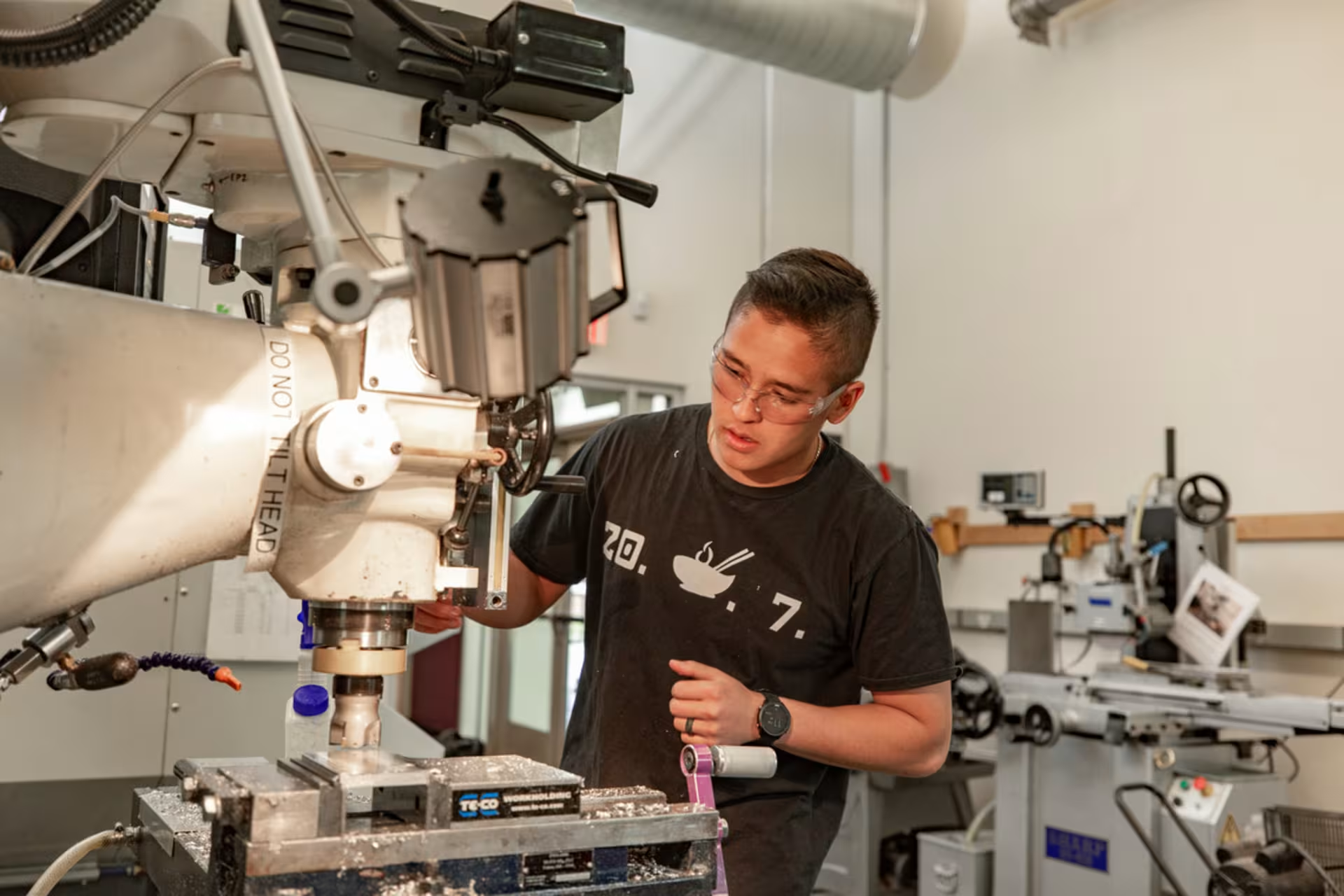
Mechanical Engineer Career Snapshot
Mechanical engineering offers career opportunities across numerous industries and specialties. This career snapshot summarizes the education, career paths, tools, engineering principles and work styles common in the profession.
What Does a Mechanical Engineer Do?
Mechanical engineers analyze problems and design, develop and test machines, components and mechanical systems. Their work may include investigating equipment failures, performing engineering calculations, creating digital designs, testing prototypes and supporting designs through manufacturing.
Although responsibilities vary by industry and role, mechanical engineering work typically involves three areas:(See disclaimer 3)
You examine performance requirements, measurements, test results and equipment failures to identify the engineering problem. That might mean determining why a shaft fractures repeatedly, why a mechanism vibrates excessively or where a thermal system is losing efficiency.
You translate requirements into detailed designs using CAD and engineering calculations, selecting dimensions and materials based on factors such as load, motion, temperature, durability and manufacturability. You may then build or evaluate prototypes and revise the design based on test results.
You may work with manufacturing teams to help ensure a design can be produced reliably and according to specification. This can involve reviewing tolerances, materials, production methods and test results, as well as refining designs to address manufacturing challenges before or during full-scale production.
What Is the Salary and Job Outlook for Mechanical Engineers?
Mechanical engineering offers a positive career outlook, with opportunities across industries that design, manufacture and maintain machines, products and mechanical systems. The need for mechanical engineers is expected to be driven in part by the integration of increasingly complex automation machinery into existing systems.(See disclaimer 4) Because mechanical engineering skills apply across areas such as manufacturing, transportation, building systems and product development, the field can offer multiple directions for building a career.
Earning potential can vary considerably based on your experience, industry, location and responsibilities, so national salary figures are best viewed as a benchmark rather than an expected starting salary. Explore the latest employment, median wage and projected job growth data below to better understand the current outlook for mechanical engineers.(See disclaimer 5)

Number of jobs for mechanical engineers by 2035(See disclaimer 4)
Median annual wage for mechanical engineers as of May 2025(See disclaimer 5)
Projected job growth rate for mechanical engineers from 2025 to 2035(See disclaimer 4)
Where Does a Mechanical Engineer Work?
Mechanical engineers work anywhere machines, mechanical systems or physical products are designed, tested, manufactured or maintained. Depending on your role, you could spend one day building a 3D model at a computer and another examining a prototype, production line or malfunctioning piece of equipment. The BLS reports that mechanical engineers generally work in offices but may visit worksites when equipment requires direct attention.(See disclaimer 6)
Some of the most common employers for mechanical engineers are:(See disclaimer 6)
Engineering and building firms
You may design mechanical systems that keep buildings functional, including heating, ventilation and cooling equipment, elevators or other building machinery. Your work can involve fitting equipment into physical spaces while accounting for performance, safety and project requirements.
Engineering and building firms
You could work close to production equipment, helping turn an engineered design into something that can be manufactured consistently. Expect problems involving materials, tolerances, machinery performance, production efficiency and quality.
Automotive and transportation companies
You may work on vehicle components and systems where weight, airflow, vibration, temperature, durability and performance interact. Projects can range from improving aerodynamics to developing mechanical components for new propulsion technologies.
Electronics and medical-device manufacturers
Mechanical engineers help solve the physical-design challenges inside products that also contain electronics. You might work on housings, thermal management, moving components, manufacturing processes or mechanically reliable medical equipment.
How To Become a Mechanical Engineer
Becoming a mechanical engineer typically involves earning a relevant bachelor's degree, building practical engineering experience and pursuing an entry-level role where you can apply your technical skills.(See disclaimer 1) As your career develops, you may also pursue Professional Engineer (PE) licensure if it is required for your responsibilities or supports your career goals.(See disclaimer 1)
Follow these steps to learn how to become a mechanical engineer:
Earn a mechanical engineering degree
Use internships, laboratory courses, capstone projects or engineering teams to gain experience beyond the classroom. These opportunities can help you practice creating CAD models, analyzing designs, building and testing prototypes and documenting results while learning how factors, such as performance, safety, cost and manufacturability influence engineering decisions.
Build technical skills and gain practical experience
Use internships, laboratory courses, capstone projects or engineering teams to gain experience beyond the classroom. These opportunities can help you practice creating CAD models, analyzing designs, building and testing prototypes and documenting results while learning how factors, such as performance, safety, cost and manufacturability influence engineering decisions.
Pursue entry-level mechanical engineering roles
After earning your degree, you can pursue entry-level roles in areas such as product development, manufacturing, building systems, energy or transportation. Early-career roles allow you to apply engineering principles to real projects while gaining experience with technical standards, project requirements and multidisciplinary teams.
Pursue professional licensure as needed
The Fundamentals of Engineering (FE) exam is not generally required for entry-level mechanical engineering positions. However, it can help you move toward Professional Engineer (PE) licensure, which may be valuable or required for certain future responsibilities or career paths.(See disclaimer 1)
What Education Does a Mechanical Engineer Need?
A bachelor's degree in mechanical engineering or a related field is the typical educational path into the field. In fact, according to the BLS, nearly all mechanical engineer positions require a bachelor's degree (97.4%). During your degree, expect calculus, differential equations, physics and engineering courses that progressively move from scientific principles into design problems. You may study mechanics, thermodynamics, fluid mechanics, materials, manufacturing and computer-aided design, then apply those concepts in laboratories and team projects where you build, measure, test and refine physical or simulated systems.
Percentage of mechanical engineer positions requiring a bachelor's degree(See disclaimer 7)
Degrees for Aspiring Mechanical Engineers






What Skills Does a Mechanical Engineer Need?
Mechanical engineers need to combine quantitative analysis with practical design judgment. You must be able to calculate how a system should behave, recognize when real test results do not match your assumptions and communicate the changes needed to improve the design.
These four skills are especially important in mechanical engineering:(See disclaimer 1,3)
Problem-solving
You need to break an ambiguous failure or design challenge into measurable variables, identify likely causes, evaluate competing solutions and determine whether the final design actually resolves the problem.
Mathematics
You use mathematics to quantify forces, motion, heat transfer, fluid behavior, dimensions and other engineering relationships. The goal isn't simply solving equations; it's knowing which mathematical model represents the physical problem in front of you.
Design judgment
Engineering creativity operates inside constraints. You may need to balance strength against weight, performance against cost or an ideal geometry against what can realistically be manufactured.
Technical communication
You must explain calculations, design decisions, test findings and technical risks clearly enough that engineers, technicians, manufacturers, managers or clients can act on them.
Mechanical Engineer FAQs
What is a mechanical engineer career like? Explore the following FAQs and answers to learn more.
What’s the difference between mechanical and electrical engineering?
How does mechanical engineering compare to aerospace engineering?
Can mechanical engineers work in renewable energy?
What is the difference between mechanical engineering and civil engineering?
Is a mechanical engineering degree worth it?
Can mechanical engineers work in robotics and automation?
Is a Career as a Mechanical Engineer Right for Me?
Mechanical engineering may be a strong career fit if you enjoy using math, science and design to understand how physical systems work and solve practical problems. The field can be especially well-suited to those who enjoy analyzing challenges, testing and improving designs and developing solutions that balance performance, efficiency and practical constraints.
No single interest or preference determines whether mechanical engineering is the right career for you. Consider whether the field’s combination of technical analysis, practical problem-solving, design and iterative work aligns with the type of work you want to pursue.
Explore More on Mechanical Engineers
Learn more about mechanical engineering and the different career opportunities in this field with these blog posts.



Develop the engineering knowledge and hands-on skills that can help prepare you for a career in mechanical engineering. Explore GCU’s mechanical engineering degree programs and find an educational path that aligns with your goals.
- U.S. Bureau of Labor Statistics. (2026, Aug. 27). How To Become a Mechanical Engineer. Occupational Outlook Handbook. Retrieved September 2026.
- MechaniCalc. (n.d.). Most Important Software for Mechanical Engineers. Retrieved August 2026.
- U.S. Bureau of Labor Statistics. (2026, Aug. 27). What Mechanical Engineers Do. Occupational Outlook Handbook. Retrieved September 2026.
- Data shown is effective August 2026, which can be found here: U.S. Bureau of Labor Statistics, Occupational Outlook Handbook, Mechanical Engineers, retrieved September 2026.
- The earnings referenced were reported by the U.S. Bureau of Labor Statistics (BLS), Mechanical Engineers as of May 2025, retrieved September 2026. BLS calculates the median using salaries of workers nationwide with varying levels of education and experience. It does not reflect the earnings of GCU graduates as mechanical engineers, nor does it reflect the earnings of workers in one city or region of the country or a typical entry-level salary. Median income is the statistical midpoint for the range of salaries in a specific occupation. It is very unlikely that a median salary will reflect an entry-level salary. It represents what you would earn if you were paid more money than half the workers in an occupation, and less than half the workers in an occupation. It may give you a basis to estimate what you might earn at some point if you enter this career. Grand Canyon University can make no guarantees on individual graduates’ salaries. Your employability will be determined by numerous factors over which GCU has no control, such as the employer the graduate chooses to apply to, the graduate’s experience level, individual characteristics, skills, etc. against a pool of candidates.
- U.S. Bureau of Labor Statistics. (2026, Aug. 27). Mechanical Engineers: Work Environment. Occupational Outlook Handbook. Retrieved September 2026.
- U.S. Bureau of Labor Statistics. (2026, Aug. 27). Occupational Requirements Survey (2025). Retrieved November 2026.
- Guerra, J. (2025, June 4). Mechanical Engineers Thrive in the Green Economy. The American Society of Mechanical Engineers. Retrieved September 2026.
Approved and verified accurate by the Assistant Dean of the College of Engineering and Technology on Oct. 28, 2026.