

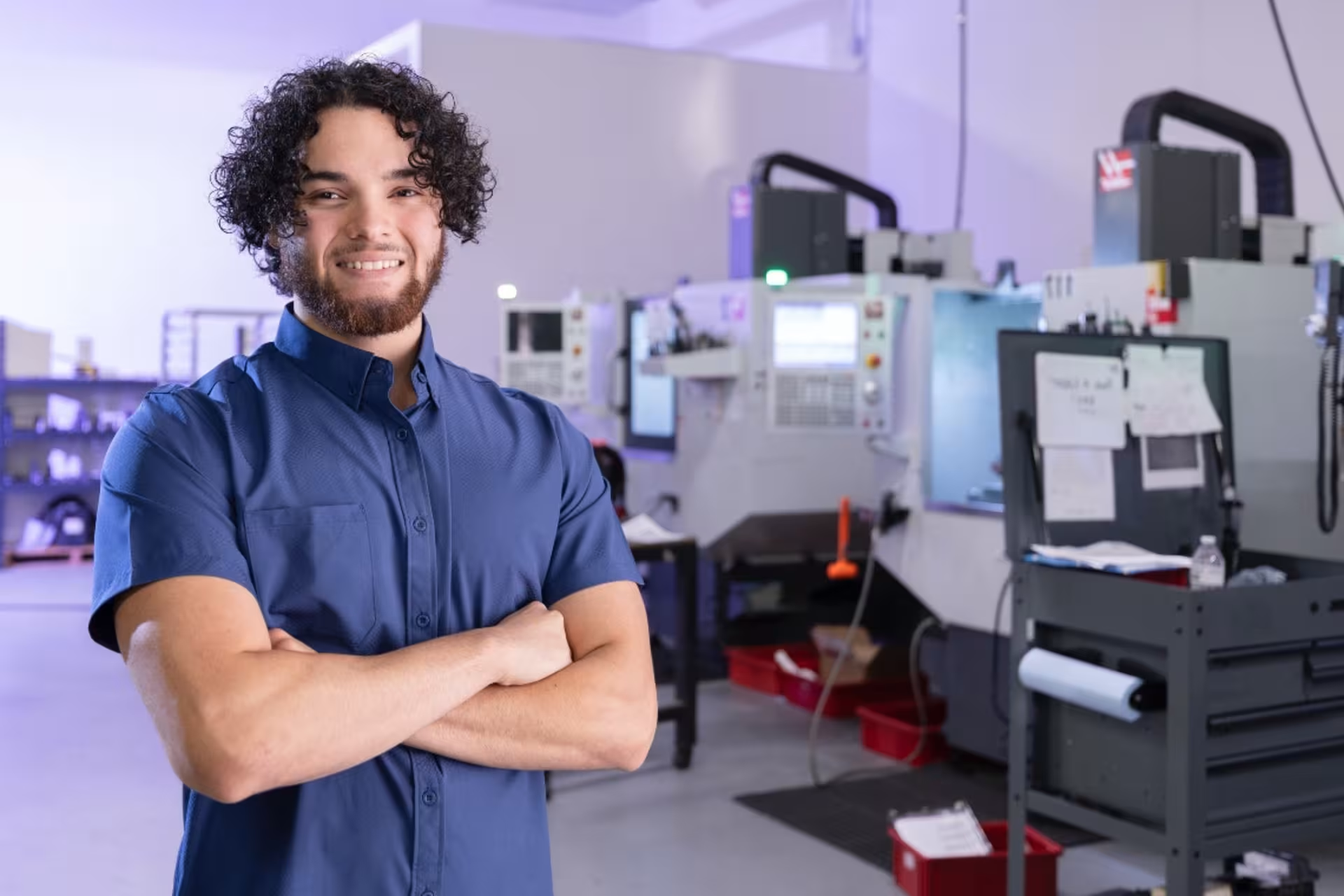
BS in Mechanical Engineering: Facilities Engineering Emphasis
Design Solutions for Complex Facility Systems
The Bachelor of Science in Mechanical Engineering with an Emphasis in Facilities Engineering at Grand Canyon University is designed for students who want to apply engineering principles to the systems that keep modern facilities running safely and efficiently. Offered fully on campus, this program is best suited for those who want a hands-on role in designing, improving and maintaining complex facility equipment and who are interested in large-scale operations — commercial buildings, power plants and manufacturing environments.

Campus: $8,250 per semester [More Info]
Up to 90 credits, only 84 can be lower division
Credits: Fill out the Lopes Eval to find out what will transfer
Admission Requirements (Bachelor's)
- 16+ years old
- High School Graduate
- 2.8+ Unweighted GPA
OR 2.5+ Unweighted GPA and
- ACT: 19
- SAT: 1000*
Admission requirements may differ based on degree level, program and modality, or transfer status. Some programs of study may require a higher GPA and/or other qualifying criteria for admission. Please review full admission and program requirements in the University Policy Handbook.
*Math and reading only on a 1600 point scale (test date after 3/1/2016). SAT score of 1380 required for 2400 point scale (test date before 3/1/2016).
Study Engineering Solutions for Energy and Environment
If you want hands-on experience in labs that simulate industry-specific skills and strong career support, GCU offers the resources to help you pursue your educational goals. All GCU students, regardless of their degree or year of study, have access to STEM-related engineering and technology research labs.(See disclaimer 1) GCU's engineering building offers a variety of hands-on experiences to its students via high-tech labs that are paired with their scheduled classes and additional labs that can be used by students outside of their classes.
Grounded in GCU’s Christian worldview, the curriculum encourages you to approach engineering with integrity, stewardship and ethical leadership. Graduates have the opportunity to emerge prepared to communicate across disciplines, contribute to diverse engineering teams, conduct research and apply for technical roles — or pursue advanced study — in the growing field of facilities engineering.(See disclaimer 2)
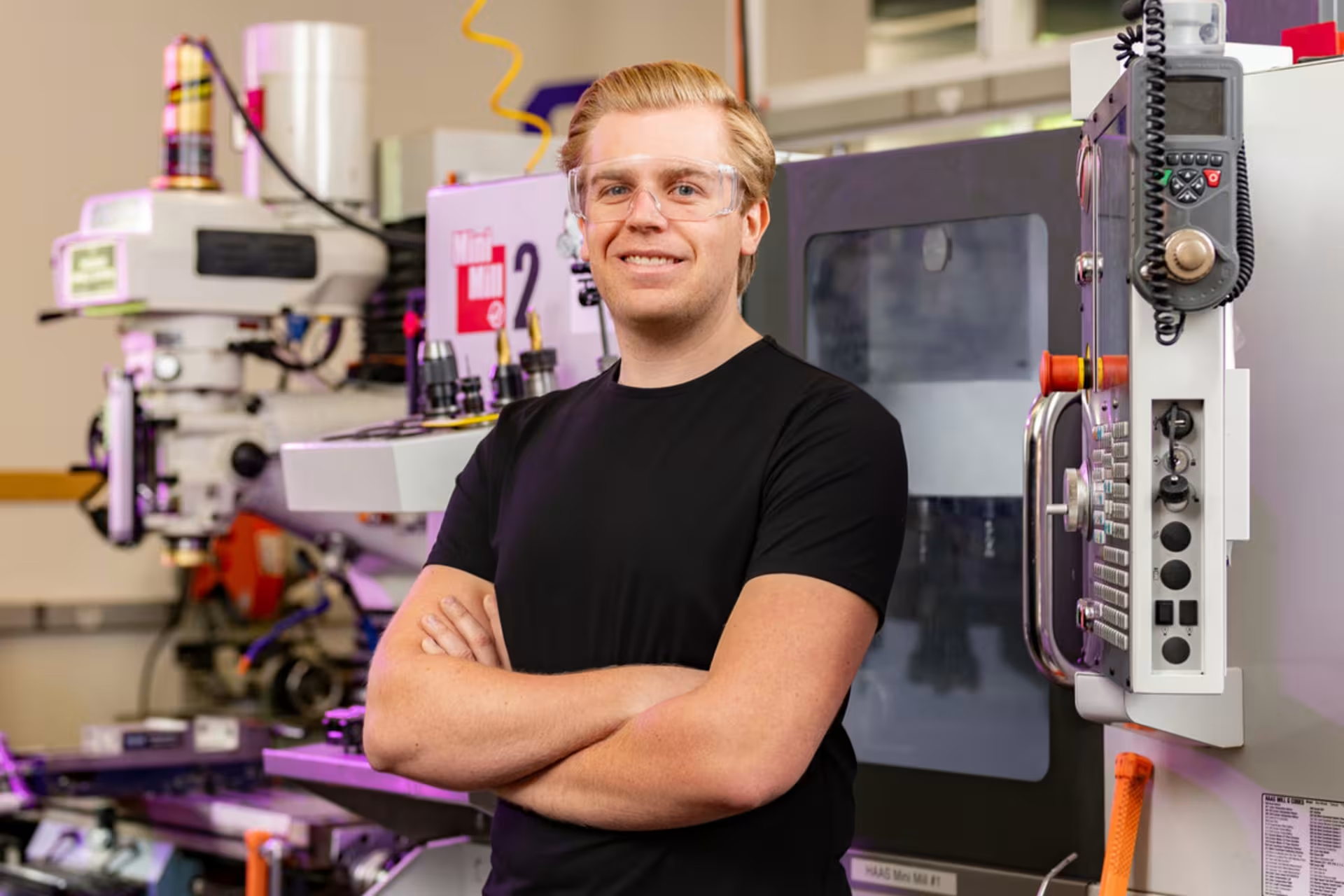
Develop Practical Skills Through Facilities Engineering Courses
Students in this program build practical, industry-ready skills through a blend of foundational engineering, advanced mechanical systems and specialized facilities-focused coursework. Alongside topics like chemistry, physics, design, thermodynamics, electrical systems and construction management, you’ll also engage with areas such as fluid systems, Programmable Logic Controller (PLC) operation and relevant computer programming.
The curriculum emphasizes hands-on learning through in-person labs, collaborative projects and professional engineering tools — preparing you to design, analyze and manage the complex systems that keep modern facilities running.
Key topics covered in facilities engineering courses:
Discover Other Mechanical Engineering Pathways
Discover mechanical engineering degree options tailored to your interests and long-term goals. From robotics and aerospace to energy systems, you’ll find flexible pathways and industry-experienced faculty who can help you build the skills needed to create and adapt in a wide range of fields.
Career Opportunities for BSME: Facilities Engineering Graduates
Graduates with a BSME can earn relevant skills that align well with facilities engineering roles, where building systems, mechanical infrastructure and operational efficiency are central. While the BLS does not report specifically on facilities engineering, mechanical engineers — who perform similar work — are often employed in sectors such as transportation equipment manufacturing, engineering services, research and development, government and computer and electronic product manufacturing.(See disclaimer 3)
Here are some possible career paths graduates may pursue:
Mechanical engineer
Architectural and engineering manager
Cost estimator
Aerospace engineer
Median annual wage for mechanical engineers as of May 2024(See disclaimer 4)
Job growth for mechanical engineers from 2024 to 2034(See disclaimer 2)
Earn Your Mechanical Engineering Degree From an Accredited University
GCU has held continuous institutional accreditation by the Higher Learning Commission since 1968. The College of Engineering and Technology shares the university’s commitment to upholding the principles and standards established by our accrediting bodies.
Frequently Asked Questions
As you consider embarking on a journey toward becoming a mechanical engineer, take some time to research the career field. The following frequently asked questions and answers can provide a starting point.
What is facilities engineering?
What does a facilities engineer do?
Is a bachelor's in mechanical engineering: facilities engineering emphasis worth it?
Program Curriculum
General Education Requirements
Required General Education Courses
Core Courses
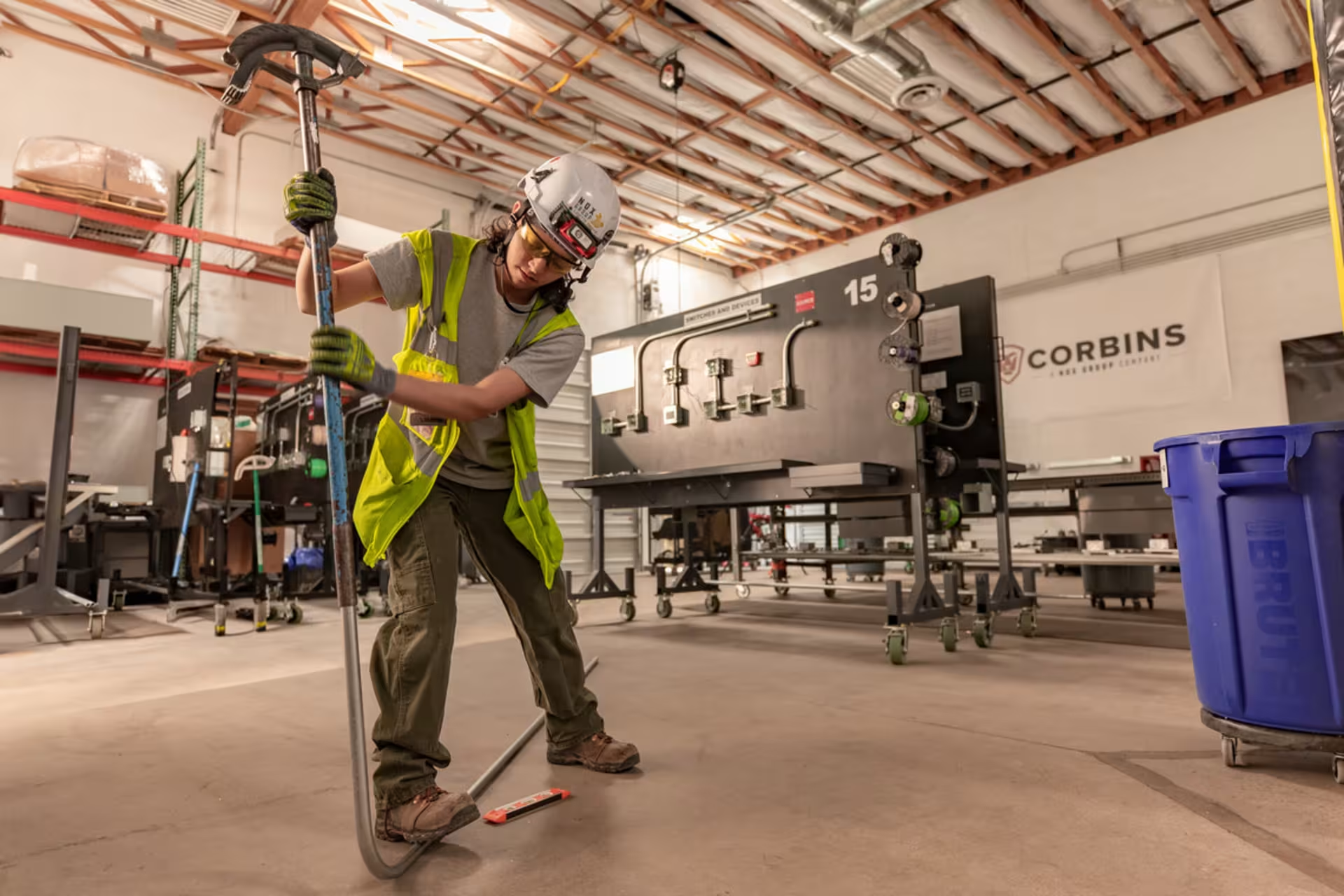

Earn your BS in Mechanical Engineering: Facilities Engineering emphasis and gain the skills to manage critical building systems, improve efficiency and solve real industry-based challenges. Start your path today!
- Labs include GCU’s technology labs, metal shop, wood shop, 3D printing areas and Labellelabs. This does not include labs in classroom environments.
- COVID-19 has adversely affected the global economy and data from 2020 to 2023 may be atypical compared to prior years. Accordingly, data shown is effective August 2025, which can be found here: U.S. Bureau of Labor Statistics, Occupational Outlook Handbook, Mechanical Engineers, retrieved November 2025.
- U.S. Bureau of Labor Statistics. (2025, Aug. 28). Mechanical Engineers: Work Environment. Occupational Outlook Handbook. Retrieved November 2025.
- The earnings referenced were reported by the U.S. Bureau of Labor Statistics (BLS), Mechanical Engineers as of May 2024, retrieved November 2025. Due to COVID-19, data from 2020 to 2023 may be atypical compared to prior years. BLS calculates the median using salaries of workers nationwide with varying levels of education and experience. It does not reflect the earnings of GCU graduates as mechanical engineers, nor does it reflect the earnings of workers in one city or region of the country or a typical entry-level salary. Median income is the statistical midpoint for the range of salaries in a specific occupation. It is very unlikely that a median salary will reflect an entry-level salary. It represents what you would earn if you were paid more money than half the workers in an occupation, and less than half the workers in an occupation. It may give you a basis to estimate what you might earn at some point if you enter this career. Grand Canyon University can make no guarantees on individual graduates’ salaries. Your employability will be determined by numerous factors over which GCU has no control, such as the employer the graduate chooses to apply to, the graduate.