

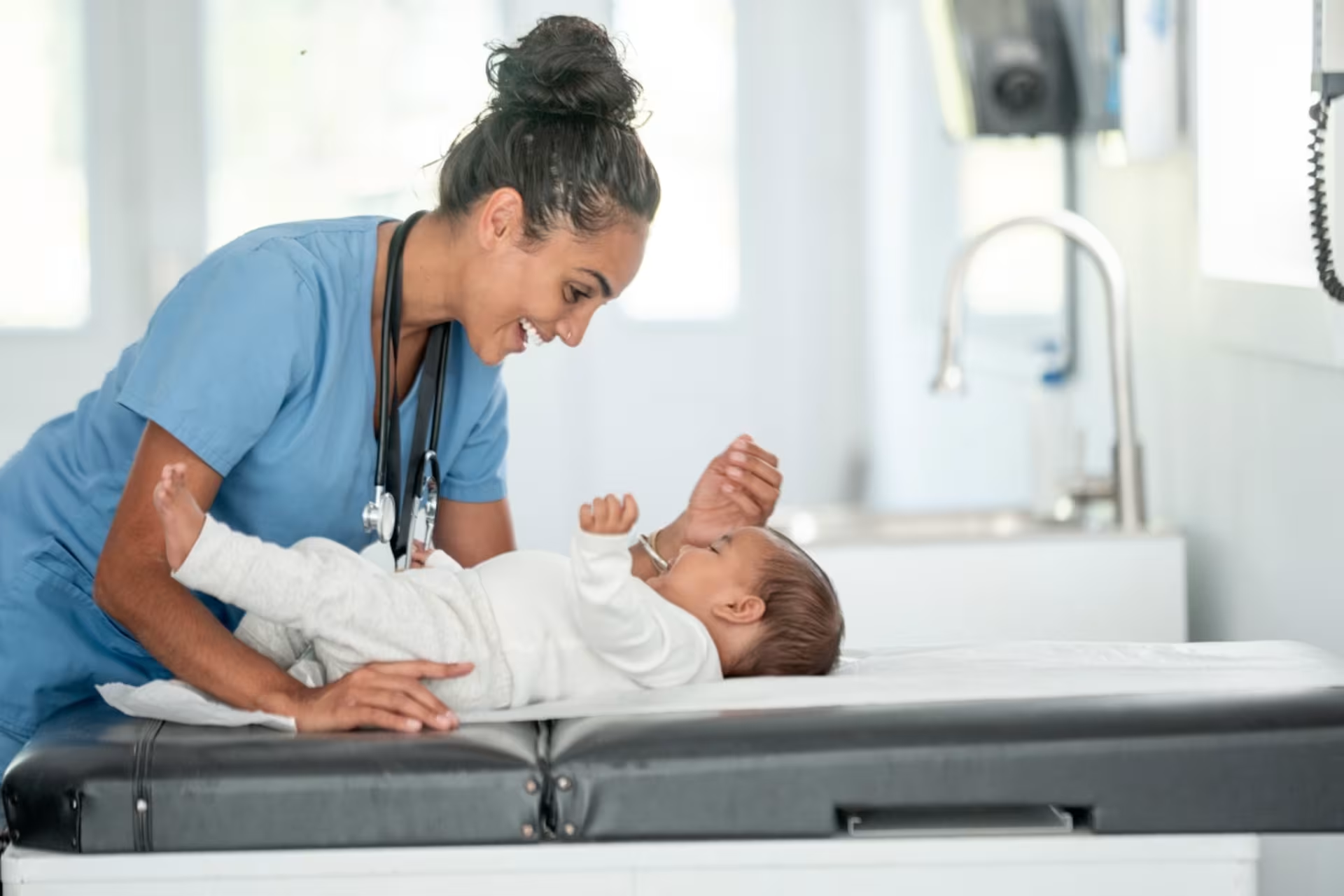
NICU Nurse Career Guide
What Is a NICU Nurse?
A NICU nurse, or neonatal nurse, is a registered nurse who cares for premature infants and newborns with serious illnesses or medical complications in a neonatal intensive care unit (NICU). NICU nurses monitor patients, administer medications, perform life-saving interventions and educate families while working as part of a multidisciplinary healthcare team.
A neonatal nurse needs a nursing degree, such as a Bachelor of Science in Nursing, as well as a nursing license, according to the U.S. Bureau of Labor Statistics (BLS).(See disclaimer 1) According to the National Association of Neonatal Nurses (NANN), neonatal nurses may pursue advanced career opportunities as neonatal nurse practitioners (NNPs), which requires graduate-level nursing education and national certification.(See disclaimer 2)

NICU Nurse Career Snapshot and Key Information
Neonatal nurses work with premature newborns, as well as infants born with other health problems such as birth defects and cardiac malformations. In the NICU unit, nurses provide continuous monitoring and rapid intervention when needed. Neonatal nurses can obtain certification in their nursing specialty to demonstrate their expertise and skills. They may also choose to pursue graduate-level nursing education and certification as an advanced practice registered nurse (APRN), such as an NNP or clinical nurse specialist (CNS).(See disclaimer 2)
What Does a NICU Nurse Do?
A neonatal nurse’s job responsibilities can vary, depending on the level of NICU they work in. In Level I, the well-baby unit, newborns need basic nursing care. In Level II, III and IV NICUs, nurses care for increasingly high-acuity infants who may require specialized interventions.(See disclaimer 4) Nurses operate sophisticated medical equipment while caring for premature and other critically ill infants, including those who require surgery.
A NICU nurse’s three main responsibilities are:
NICU nurses continually assess their young patients to quickly identify changes in cardiac, respiratory and renal status, as well as other indicators of health.
Neonatal nurses administer medications and provide tube feedings, blood transfusions and catheter care, as well as provide routine newborn care.
Neonatal nurses educate parents about their child’s condition and about routine newborn care. They provide comfort to newborns and offer empathy to parents.
NICU Nurse Salary and Career Outlook
According to the BLS, a registered nurse’s median annual salary is $97,550 as of May 2025.(See disclaimer 6) The BLS projects a job growth rate of 6% from 2025 to 2035 for all types of RNs, indicating that there will be about 180,800 job openings per year during this time period.(See disclaimer 5) This means aspiring neonatal nurses would be entering a profession in which employers are expected to continue needing registered nurses, including to fill positions created by workforce turnover and retirement.

Where Does a NICU Nurse Work?
This type of RN most often works in a neonatal intensive care unit within a hospital. There are four different levels of NICUs, with Level I treating stable patients and Level IV treating the most critically ill patients. Along with NICUs, a neonatal nurse may work in a medical transport unit or home health agency.(See disclaimer 4)
The typical work settings for a NICU nurse include:(See disclaimer 4)
Level I Well-Baby Unit
The well-baby unit cares for babies who are stable and need only basic nursing care.
Level II NICU
In the Level II NICU, nurses care for premature infants who may have a low birth weight and other health problems.
Level III NICU
The Level III NICU provides more intensive care for premature infants and those with severe medical and/or surgical conditions, including those requiring ventilation.
Level IV NICU
The Level IV NICU treats the most critically ill infants, providing advanced respiratory support and other complex interventions.
How To Become a NICU Nurse

NICU patients can require intensive monitoring and specialized interventions, so NICU nurses need strong clinical assessment skills and experience responding to rapidly changing conditions. For this reason, NICU nursing is not always an entry-level specialty, and some employers may prefer or require nurses to first gain experience in areas such as pediatrics, obstetrics or other acute care settings.(See disclaimer 4)
The path begins with earning a nursing degree, such as a BSN, and obtaining RN licensure by passing the NCLEX-RN.(See disclaimer 1) RNs may then gain clinical experience in a related specialty, such as pediatrics or obstetrics, before applying to neonatal nursing jobs. After gaining experience in the NICU, nurses may pursue a specialty certification, such as the critical care registered nurse (CCRN-Neonatal) or the neonatal intensive care nursing (RNC-NIC) certification.(See disclaimer 4)
Follow these steps to learn how to become a NICU nurse:(See disclaimer 1,4)
Earn a bachelor’s degree
There are multiple ways to become an RN. Some nurses begin with an ADN and later earn a BSN.
Obtain an RN license
All aspiring nurses must pass the NCLEX-RN to obtain an RN license.
Gain clinical experience
Nurses should gain one to two years of experience in a related specialty, such as pediatrics, before pursuing a neonatal nursing job.
NICU Nurse Education Requirements
It’s possible to become a NICU nurse with an Associate Degree in Nursing (ADN) or with a non-degree nursing diploma.(See disclaimer 1) However, diploma programs for nursing are being discontinued in many places.(See disclaimer 2) Additionally, there has been an industry-wide movement toward a baccalaureate-prepared nursing workforce. According to the National Council of State Boards of Nursing (NCSBN), which conducts an annual workforce survey, 73% of RNs held a bachelor’s degree or higher as of 2024. This represents the most well-educated nursing workforce ever documented by the NCSBN.(See disclaimer 7)
Percentage of RNs with a minimum of a bachelor’s degree as of 2024(See disclaimer 7)
Compare Education Pathways for Aspiring NICU Nurses
There is more than one educational route to becoming a registered nurse and pursuing work in a NICU. The right path may depend on your current education, career goals, timeline and preferred learning format. Compare the common nursing pathways below to understand the typical education involved, potential advantages and important considerations for each option.
Degrees and Programs for Aspiring NICU Nurses


What Skills Does a NICU Nurse Need?
Neonatal nurses need strong clinical skills in areas such as respiratory support and catheter care. They must be able to operate sophisticated medical equipment and have very strong patient assessment and monitoring skills. In this environment, nurses need to adjust nursing interventions to suit their young patients. For example, blood transfusions must be administered more frequently, but in smaller amounts. Along with these clinical skills, a variety of soft skills are essential.(See disclaimer 4)
Some of the most important soft skills for a NICU RN include:(See disclaimer 4)
Observant
NICU RNs must be observant, monitoring their patients for subtle signs of a change in health status.
Empathetic
NICU RNs must be compassionate and empathetic, as well as nurturing when working with newborns and their parents.
Dexterous
Manual dexterity is essential when working with small patients and child-sized medical equipment.
Effective communicator
NICU RNs must clearly communicate with their fellow nurses, other providers and parents.
NICU Nurse FAQs
Explore the following frequently asked questions and answers about this career and how to become a NICU nurse.
What is the average NICU nurse salary?
How long does it take to become a NICU nurse?
Do NICU nurses need a BSN?
Can a new graduate work in a NICU?
Is NICU nursing emotionally demanding?
What is the difference between a NICU nurse and a neonatal nurse practitioner?
Is NICU Nursing Right for Me?
NICU nursing can be a rewarding specialty for registered nurses who want to care for premature and critically ill newborns while supporting their families during challenging circumstances. Because the role combines advanced clinical care, teamwork and compassionate communication, it's important to consider whether the day-to-day responsibilities and work environment align with your interests, strengths and long-term career goals.
If NICU nursing sounds like a good match for your interests and strengths, consider exploring nursing degree programs, speaking with practicing NICU nurses or participating in clinical experiences that provide exposure to neonatal care. Learning more about the specialty can help you determine whether a career caring for the smallest and most medically fragile patients is the right path for you.
Explore More on Nursing Topics
Take a closer look at the nursing profession and become familiar with the fundamentals, such as the different levels of nursing.


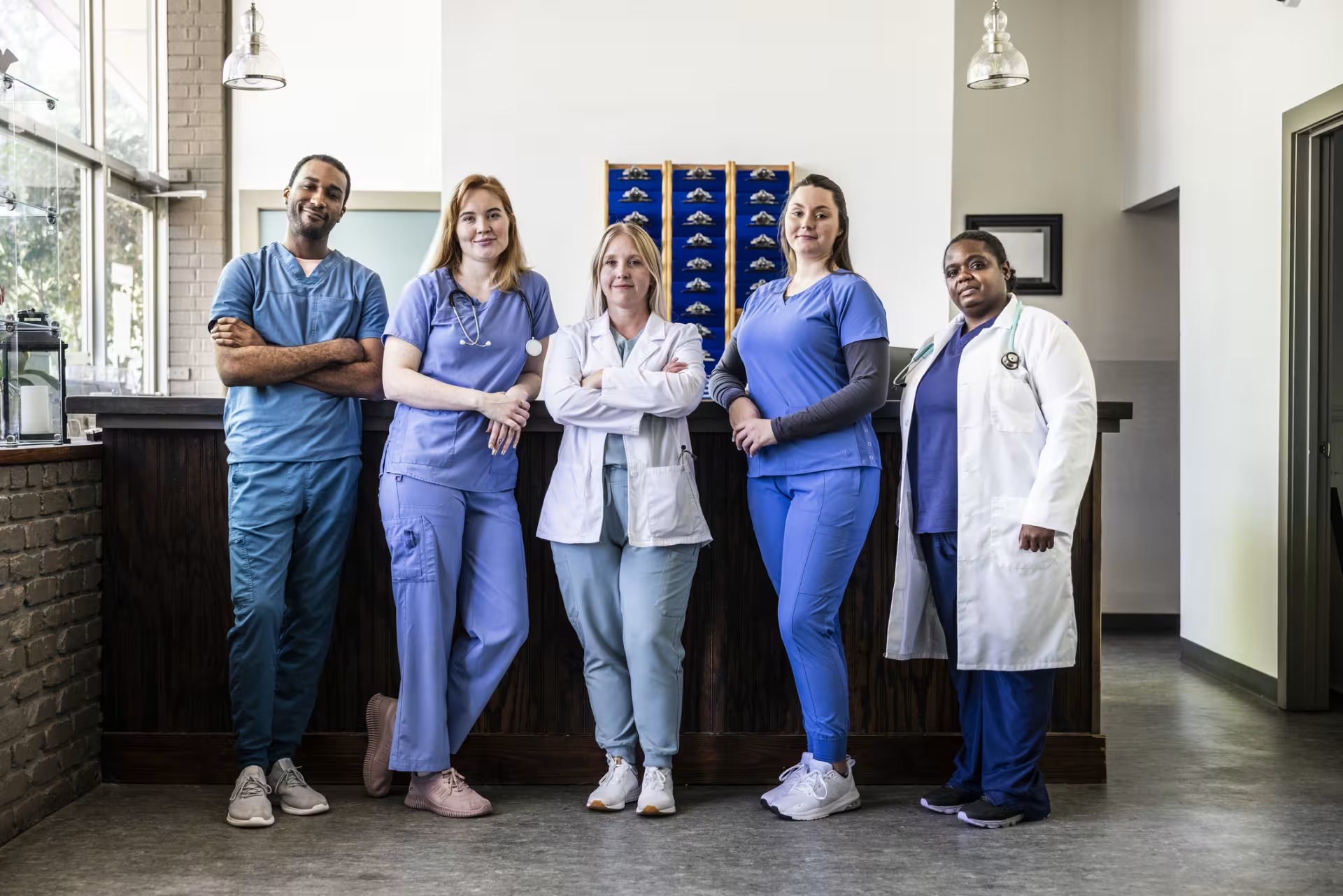

Build the knowledge, clinical skills and confidence needed to pursue a career caring for premature and critically ill newborns. Explore GCU's nursing degree programs and learn how they can help prepare you for RN licensure and future opportunities in neonatal nursing.
- U.S. Bureau of Labor Statistics. (2025, Aug. 28). How To Become a Registered Nurse. Occupational Outlook Handbook. Retrieved July 2026.
- National Association of Neonatal Nurses. (n.d.). What Is Neonatal Nursing? Retrieved July 2026.
- Cleveland Clinic. (2026, June 8). NICU Nurse. Retrieved July 2026.
- Trusted. (n.d.). Neonatal Intensive Care Unit (NICU) Nurse. Retrieved July 2026.
- Data shown is effective August 2026, which can be found here: U.S. Bureau of Labor Statistics, Occupational Outlook Handbook, Registered Nurses, retrieved September 2026.
- The earnings referenced were reported by the U.S. Bureau of Labor Statistics (BLS), Registered Nurses as of May 2025, retrieved September 2026. BLS calculates the median using salaries of workers nationwide with varying levels of education and experience. It does not reflect the earnings of GCU graduates as registered nurses, nor does it reflect the earnings of workers in one city or region of the country or a typical entry-level salary. Median income is the statistical midpoint for the range of salaries in a specific occupation. It is very unlikely that a median salary will reflect an entry-level salary. It represents what you would earn if you were paid more money than half the workers in an occupation, and less than half the workers in an occupation. It may give you a basis to estimate what you might earn at some point if you enter this career. Grand Canyon University can make no guarantees on individual graduates’ salaries. Your employability will be determined by numerous factors over which GCU has no control, such as the employer the graduate chooses to apply to, the graduate’s experience level, individual characteristics, skills, etc. against a pool of candidates.
- National Council of State Boards of Nursing, Inc. (n.d.). Leaders in U.S. Nursing Workforce Research. Retrieved July 2026.
- Nurse.com. (2026, April 24). Schooling and Experience Required for Neonatal Nursing. Retrieved July 2026.
- Hagen, L.W., Rød, I., & Kynø, N.M., et al. (2025, July 1). Compassion Fatigue Among Nurses in Neonatal Intensive Care Units. National Library of Medicine. Retrieved July 2026.
Approved and verified accurate by the Associate Dean of the College of Nursing and Health Care Professions on Aug. 24, 2026.