
The main differences between an RN, BSN, and an LPN is that RNs and LPNs are different types of nurses, while a BSN is a type of nursing degree. An RN is a registered nurse, and an LPN is a licensed practical nurse. A BSN is a Bachelor of Science in Nursing degree.
There are multiple levels of nursing and different pathways toward pursuing a career in the field. The education and licensure requirements to become an RN, for example, are different from those required to become an LPN.
If you feel that nursing is your calling, you should take some time to explore the different types of nurses and the educational and licensure requirements for those careers. Asking the question, what can each type of nurse do is the first step to learning about each role and their respective responsibilities. Then, you can determine which pathway to nursing is the right choice for you.
Licensed Practical Nurse (LPN) Overview
A licensed practical nurse may also be referred to as a licensed vocational nurse (LVN), depending on the state.
LPNs provide basic nursing care, such as:
LPNs work under the supervision of an RN or other healthcare provider.
Does an LPN have a degree? No, they are not required to have an associate or bachelor's degree in nursing. Rather, future LPNs must complete a state-approved training program, typically at a community college, which is shorter than a typical degree program.(See disclaimer 1)
During their training program, future LPNs study nursing fundamentals, including anatomy and physiology. After graduating, they must pass a licensure exam to become LPNs. They may later decide to enhance their career qualifications as LPNs by earning voluntary certifications in areas such as gerontology or wound care.(See disclaimer 1)
Another way to advance a nursing career is to transition from LPN to RN.
Registered Nurse (RN) Overview
To understand the differences between an LPN, RN and BSN, you’ll need to take a closer look at the role of the registered nurse. An RN is the next step up from an LPN. They can provide extensive patient care, including developing or contributing to a patient care plan.
Some of the typical responsibilities of a registered nurse include the following:
Another important role of the RN is that of patient educator. RNs must help patients and family caregivers understand the diagnosis and treatment options. RNs teach patients and their loved ones how to manage an illness, injury or chronic condition at home.
RNs can choose from a wide range of nursing specialties. There are opportunities in oncology, pediatrics, labor and delivery, medical-surgical nursing and many other specialties.
Becoming an RN requires earning a nursing degree, although it's also possible to become an RN by completing an RN diploma program. An RN may have an Associate Degree in Nursing (ADN), an Associate of Science in Nursing (ASN) or a Bachelor of Science in Nursing (BSN). Registered nurses must also pass an RN licensure exam.(See disclaimer 2)
Some registered nurses who have a diploma in nursing or an associate degree may decide later to return to school for a BSN. There is a specialized pathway designed specifically for these nurses: the RN to BSN program. An RN to BSN program builds on the nurses’ prior knowledge to help them earn a BSN in less time than the traditional pathway.
Bachelor of Science in Nursing (BSN) Overview
A Bachelor of Science in Nursing degree program can lay a foundation for an impactful career in nursing.
During this program, students will typically study topics in:
A pre-licensure BSN degree combines coursework with applied and immersive clinical learning experiences, teaching both nursing theory and nursing skills. By the time students graduate with a BSN, they will be ready to take the RN licensure exam and pursue a job as an RN.
When comparing the differences between an RN vs. BSN vs. LPN, it’s important to note that there are different types of BSN programs.
Although students take different paths to get there, pre-licensure BSN, ABSN and RN-BSN programs confer a BSN degree. No matter which BSN program you choose, you can expect broader, more in-depth clinical training and leadership preparation compared to a diploma in nursing or associate degree.
Key Differences Between an LPN, RN and BSN
When you’re trying to establish your goals for your nursing career and determine the appropriate academic pathway, it can be helpful to see a breakdown of the differences between the types of nurses.
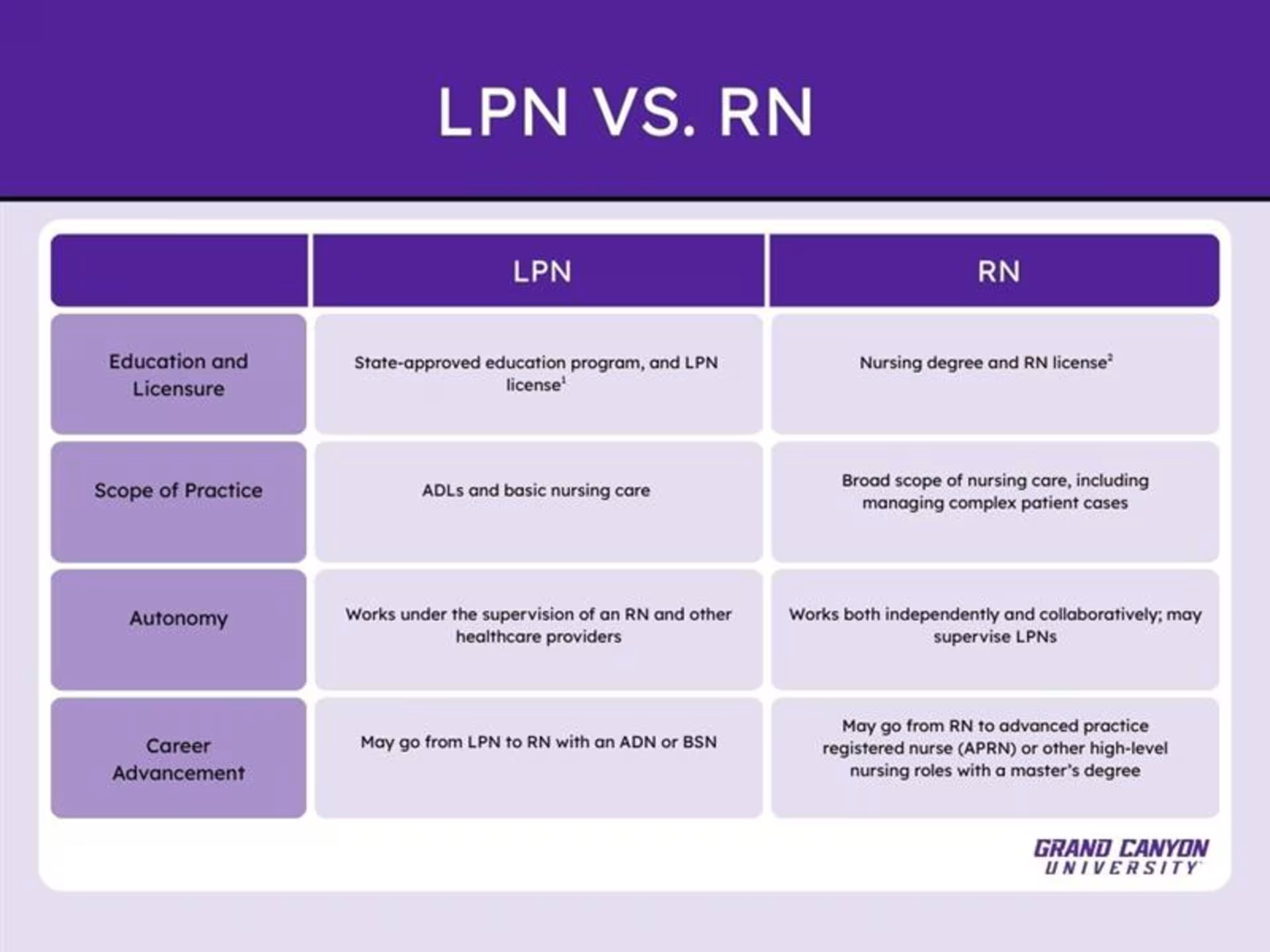
It can also be helpful to consider the advantages a BSN can offer compared to an ADN. Some of these include:
Why Choose GCU for Nursing?
Grand Canyon University's College of Nursing and Healthcare Professions supports nursing students and nurses throughout the various stages of their careers. Our nursing school is devoted to educating tomorrow's nursing leaders with flexible options, including online classes.
GCU strives to deliver practice-focused clinical simulation experiences and meaningful clinical learning experiences that thoroughly prepare future nurses to deliver evidence-based, patient-centered nursing care. Our immersive simulation centers for our pre-licensure and accelerated nursing tracks have received teaching and education accreditation from the Society for Simulation in Healthcare (SSH).
At GCU, we’re proud to offer multiple flexible options for nursing students at varying stages of their nursing career. Our Bachelor of Science in Nursing (Pre-Licensure) degree program is intended for high school graduates or GED holders.
Our accelerated BSN (ABSN) degree enables individuals with a bachelor’s degree or sufficient college credits in a non-nursing field to pursue a career in nursing faster. Meanwhile, our RN to BSN degree program is designed for licensed, working nurses who are interested in advancing their nursing education. GCU also offers MSN degree programs and doctoral-level nursing programs for RNs with a BSN who are interested in furthering their education.
To learn more about applying to a nursing degree program at GCU, fill out the form on this page to speak with a university counselor. We’ll help you determine which nursing program is best suited to your needs and career goals.
Elevate Standards of Nursing Care
Turn your passion for helping others into purpose for your future in nursing.