


Chemist Career Guide
What Is a Chemist?
A chemist is a scientist who studies the composition, structure and properties of substances and how they interact or change. Chemists conduct experiments and analyze substances to better understand chemicals or to develop and improve products and materials. Their work may contribute to products such as medicines, cosmetics, plastics, textiles and industrial chemicals.
Becoming a chemist typically requires a bachelor’s degree in chemistry or a related science, according to the U.S. Bureau of Labor Statistics (BLS).(See disclaimer 1) Some research positions may require a master’s degree or Doctor of Philosophy (PhD) in Chemistry. Chemists may also receive on-the-job training in laboratory equipment and procedures.
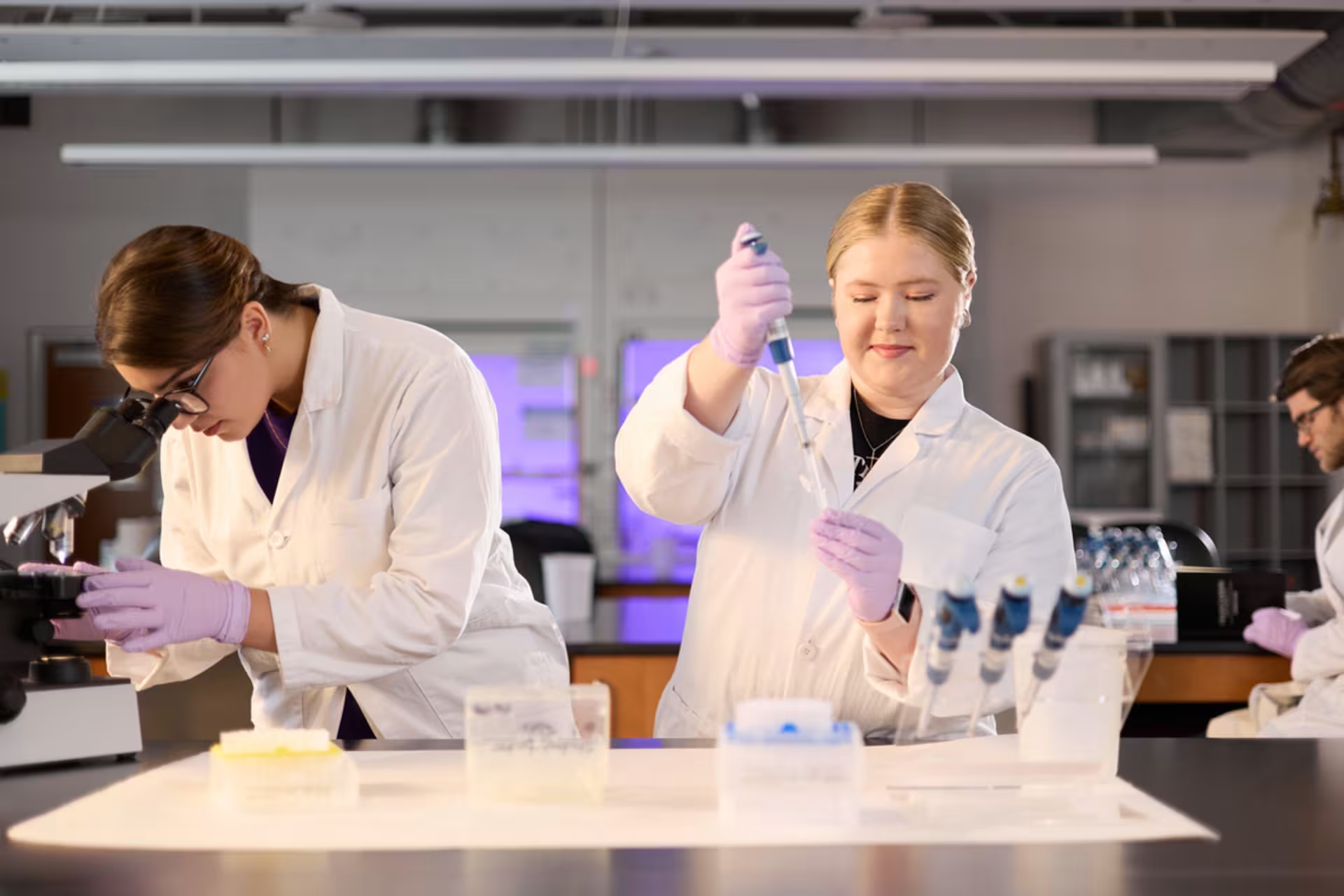
Chemist Occupation Snapshot
Chemists study the composition, properties and interactions of substances by conducting laboratory experiments, analyzing chemical data and contributing to research or product development. Review the table for an overview of a chemist’s education requirements, key skills, responsibilities and common work environments.
What Does a Chemist Do?
Chemists conduct experiments and analyze substances to understand their properties, composition and behavior. Their work may involve conducting research, developing or improving products and materials, and documenting and communicating their findings. Chemists may also collaborate with professionals such as physicists, chemical engineers, biochemists, microbiologists and industrial engineers.(See disclaimer 3)
Common responsibilities of chemists include:
Chemists use laboratory techniques and instruments to identify substances, measure their properties and evaluate how they react or change.
Chemists apply their research findings to help develop or improve products and materials, such as medicines and plastics.
Chemists plan and conduct laboratory research projects, which typically involve preparing solutions, compounds and reagents.
Chemists document their findings by writing technical reports and by presenting their work to colleagues and other scientists.
What Is the Career Outlook for Chemists?
The BLS projects employment of chemists to grow 6% from 2025 to 2035.(See disclaimer 4) This projected growth reflects an ongoing need for chemists to research and develop new products and materials and address scientific challenges in areas where chemistry plays an important role. The BLS also reports that chemists had a median annual wage of $91,240 in May 2025.(See disclaimer 5)
For aspiring chemists, career opportunities can extend across research, product development, laboratory testing and chemical analysis in settings such as chemical manufacturing, testing laboratories and pharmaceutical companies. The type of opportunity you pursue may depend on your education, laboratory experience and area of specialization; some research and advanced positions may require graduate education.
Projected employment of chemists in 2035(See disclaimer 4)
Median annual salary of chemists as of May 2025(See disclaimer 5)
Projected job growth rate for chemists from 2025 to 2035(See disclaimer 4)
Where Do Chemists Work?
Chemists work primarily in laboratories, but they may also work in offices and industrial or manufacturing facilities. Their workplaces vary by specialization and may include chemical manufacturers, testing laboratories, pharmaceutical companies and forensic laboratories. Most chemists work full time, and some positions may require additional hours or occasional travel.(See disclaimer 2) Because chemists may handle hazardous substances, laboratory and industrial roles can also require following safety procedures and wearing personal protective equipment (PPE).(See disclaimer 2)
Common work settings for chemists include:(See disclaimer 2)
Chemical manufacturing
Chemists working for chemical manufacturers may research, develop and test chemicals or improve existing products and processes.
Testing laboratories
Chemists may work for laboratories that analyze and test substances and materials; about 11% of chemists, per the BLS.
Pharmaceutical companies
Medicinal chemists may work in pharmaceutical research and development, where they contribute to the development and testing of drugs.
Forensic labs
Forensic chemists analyze physical evidence using chemical testing and laboratory techniques to support criminal investigations.
How To Become a Chemist
Becoming a chemist typically starts with earning a bachelor's degree in chemistry or a related science and gaining laboratory experience. Some research and advanced positions may require a master's degree or PhD.(See disclaimer 1)
A typical pathway to becoming a chemist includes:(See disclaimer 1)
Earn a bachelor’s degree
You can complete a bachelor’s degree in chemistry or a related science to build foundational knowledge and laboratory skills.
Gain laboratory experience
Look for internships or other opportunities to gain hands-on laboratory experience while in college; chemists may also receive employer-specific training in laboratory procedures, safety practices and equipment.
Consider a graduate degree
A master’s degree or PhD may be required for some research or advanced positions. Certain research careers may also involve postdoctoral training.
What Are the Chemist Education Requirements?
Chemists typically need at least a bachelor’s degree in chemistry or a related field.(See disclaimer 1) Some research and advanced positions may require a master’s degree or PhD, and employers may also look for relevant laboratory or work experience.
Chemistry students may also have opportunities to specialize in particular areas of the field. Some undergraduate programs offer specialization options, while specialization is more common at the graduate level. Choosing an area of concentration can help students develop knowledge and laboratory skills related to the type of chemistry career they want to pursue.
Which Degree Can Help You Become a Chemist?



What Skills Does a Chemist Need?
Chemists need a combination of scientific, mathematical and problem-solving skills to conduct experiments and evaluate their results. A strong understanding of chemistry, the scientific method and laboratory techniques is important for laboratory work, while organization and time-management skills help chemists manage research tasks. Communication and interpersonal skills are also valuable when working with multidisciplinary teams.
Some of the most important skills for a chemist include:(See disclaimer 1)
Mathematics skills
Chemists regularly perform calculations using calculus, statistics and other mathematical systems.
Analytical thinking
Chemists use analytical skills to evaluate experimental results, interpret findings and determine what the results indicate.
Problem-solving skills
Scientific research can involve trial and error. Chemists may need to conduct multiple experiments and refine their methods before reaching useful or conclusive results.
Laboratory skills
Chemists use laboratory procedures, instruments and safety practices to prepare materials, conduct experiments and collect reliable results.
Frequently Asked Questions for Aspiring Chemists
Explore the following frequently asked questions and answers to learn more about how to become a chemist.
How long does it take to become a chemist?
Can you become a chemist with a bachelor’s degree?
What types of experiments do chemists conduct?
What technology and equipment do chemists use?
What areas can chemists specialize in?
How much math do chemists use?
Is a Career as a Chemist a Good Fit for You?
A career as a chemist may align with your interests if you enjoy using science to investigate questions, working carefully with laboratory procedures and analyzing evidence to solve problems. Chemists may work independently on experiments and also collaborate with other scientists and technical professionals, depending on their role and workplace.
A chemistry career may be worth exploring if you:
Chemistry careers can involve repeated experimentation, precise documentation, mathematical analysis and work around potentially hazardous substances. If those aspects of the profession do not match your interests, related careers such as chemical technician, environmental scientist, forensic science technician or natural sciences manager may offer different combinations of laboratory, scientific and management work.
Explore More About Chemistry Careers
Learn more about this career field and reflect on whether it’s right for you with the following blogs.


Develop foundational knowledge of chemical properties, reactions and laboratory practices through a chemistry degree program at GCU. Explore your program options and request more information about taking the next step in your education.
- U.S. Bureau of Labor Statistics. (2026, Aug. 27). How To Become a Chemist or Materials Scientist. Occupational Outlook Handbook. Retrieved September 2026.
- U.S. Bureau of Labor Statistics. (2026, Aug. 27). Chemists and Materials Scientists: Work Environment. Occupational Outlook Handbook. Retrieved September 2026.
- U.S. Bureau of Labor Statistics. (2026, Aug. 27). What Chemists and Materials Scientists Do. Occupational Outlook Handbook. Retrieved September 2026.
- Data shown is effective August 2026, which can be found here: U.S. Bureau of Labor Statistics, Occupational Outlook Handbook, Chemists, retrieved September 2026.
- The earnings referenced were reported by the U.S. Bureau of Labor Statistics (BLS), Chemists as of May 2025, retrieved September 2026. BLS calculates the median using salaries of workers nationwide with varying levels of education and experience. It does not reflect the earnings of GCU graduates as Chemists, nor does it reflect the earnings of workers in one city or region of the country or a typical entry-level salary. Median income is the statistical midpoint for the range of salaries in a specific occupation. It is very unlikely that a median salary will reflect an entry-level salary. It represents what you would earn if you were paid more money than half the workers in an occupation, and less than half the workers in an occupation. It may give you a basis to estimate what you might earn at some point if you enter this career. Grand Canyon University can make no guarantees on individual graduates’ salaries. Your employability will be determined by numerous factors over which GCU has no control, such as the employer the graduate chooses to apply to, the graduate’s experience level, individual characteristics, skills, etc. against a pool of candidates.
Approved and verified accurate by the Dean of the College of Natural Sciences on Oct. 27, 2026.