


Accelerated Nursing Program in St. Louis (ABSN)
Earn Your Accelerated BSN (ABSN) in St. Louis
GCU’s accelerated nursing program in St. Louis is a hybrid nursing program for students with prior college education who want to earn a Bachelor of Science in Nursing on an accelerated timeline. Eligible students, who may also include those with no prior college credits, can complete the core nursing curriculum in as few as 16 months.(See disclaimer 1)
The program combines online nursing coursework with in-person skills labs, simulation experiences and clinical rotations with Mercy and other medical facilities in the St. Louis area. Applicants may qualify with a non-nursing bachelor’s degree or eligible transfer credits.
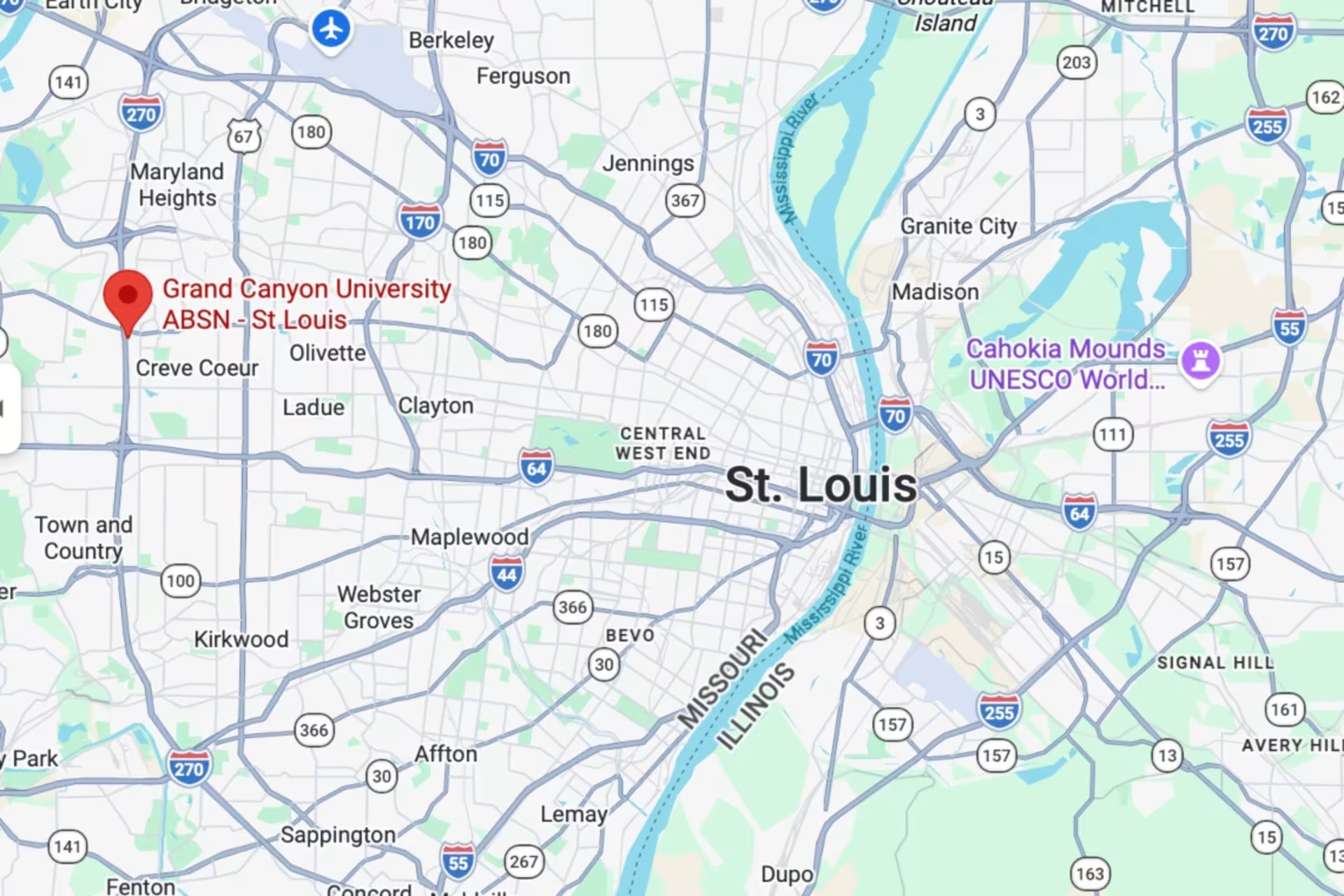
Where Is the St. Louis ABSN Learning Site?
Our accelerated BSN program in St. Louis is located near the intersection of I-270 and Route 340 in the Creve Coeur suburb of St. Louis.
721 Emerson St.
St. Louis, MO 63141
What To Expect From GCU's Accelerated Nursing Program in St. Louis
Our ABSN in St. Louis can help you make a switch to nursing more quickly by leveraging your prior education. This accelerated nursing option may be ideal for transfer students or established professionals who are interested in pursuing a role in healthcare. The program combines online coursework with hands-on learning opportunities in clinical environments, providing comprehensive nursing education. Our curriculum is integrated with our Christian worldview, encouraging our nurse candidates to serve their future patients with faith and integrity.
This ABSN program offers a hybrid approach to nursing education for greater flexibility and convenience. You can complete nursing theory coursework online(See disclaimer 2) using our intuitive e-learning platform, which provides access to interactive discussion boards and learning activities.
You will gain experience working with patients during your clinical rotations. Under the supervision of experienced clinical instructors, you will practice applying nursing theory and refining your clinical skills while providing direct patient care in various nursing specialties.
Our ABSN in St. Louis includes nursing skills labs and immersive simulation suites. These in-person learning components guide you in developing essential nursing skills, including patient assessment and medication administration. You’ll also participate in simulated clinical scenarios.
St. Louis ABSN Program Requirements and Details
Admission Process
Our accelerated BSN program in St. Louis is designed for individuals who have either a non-nursing degree, transfer credits or no prior coursework. You may be eligible with a minimum number of transfer credits. There are also prerequisite course requirements that must be met. Your prior education may fulfill some prerequisites.

Cost of Attendance
In addition to tuition, the total cost of GCU’s ABSN in St. Louis may include program fees, books, course materials, supplies and other nursing-related expenses. Costs and financial aid eligibility can vary, so visit our ABSN tuition page or contact a university counselor for a personalized cost estimate.
Transfer Credits
Our ABSN program in Missouri offers multiple admission pathways to meet the needs of more students. You may be eligible to apply with either a completed non-nursing bachelor’s degree or a minimum number of transfer credits. You can speak with a university counselor to explore how your college credits might transfer to a BSN degree.

Accredited Program
This ABSN program features immersive simulation centers that have been accredited in the area of teaching and education by the Society for Simulation in Healthcare (SSH). This accreditation reflects the quality of our immersive nursing education.
GCU has been institutionally accredited by the Higher Learning Commission since 1968. The College of Nursing and Health Care Professions shares the university’s commitment to upholding the principles and standards established by our accrediting bodies.
View our Postsecondary State Authorizations and SARA and State Disclosures information for Missouri.
Our university counselors help make the admission process as seamless as possible. Working with prospective ABSN students, these university counselors know the nuances of the program and provide personalized support throughout the admission process. They will review your eligibility and answer your questions about this accelerated path to a nursing career.
There is a sequence of steps to pursue admission to the accelerated nursing program in St. Louis.
Talk to a university counselor
Fill out the form on this page to speak with a specialized university counselor about our ABSN program and its admission requirements.
Complete prerequisite courses and pre-admission interview
Your university counselor will determine which prerequisites you need to take, as well as help you schedule a pre-admission interview.
Apply to the ABSN program
You can complete your application online and make arrangements to submit supporting documents, such as official transcripts.
Why Choose GCU for Your Accelerated Nursing Program in St. Louis
The second largest community in Missouri, historic St. Louis has much to offer to ABSN students. This area is popular among young professionals who are working on building their careers, as there are plenty of things to do and see.(See disclaimer 3) You can explore numerous must-see attractions, including parks, museums of all kinds and the world-famous Gateway Arch. If you’re a sports fan, you can look forward to attending games year-round. St. Louis is home to professional hockey, baseball and soccer teams, along with 16 Division I NCAA sports teams.(See disclaimer 4)
Some of the benefits of pursuing your BSN in St. Louis include:
Healthcare facilities
St. Louis is home to some of the top-ranked hospitals in Missouri, including Barnes-Jewish Hospital and Mercy Hospital St. Louis.(See disclaimer 5)
Dining options
St. Louis offers a widely lauded culinary scene, with iconic dishes like St. Louis-style pizza and barbecue.(See disclaimer 4)
Outdoor recreation
St. Louis boasts numerous green spaces, including Forest Park and Rockwoods Reservation.(See disclaimer 4)
Live entertainment
There is no shortage of live entertainment in St. Louis, from small stages at Tin Roof and The Garage to large arena shows at The Dome at America’s Center and more.(See disclaimer 4)
Median annual salary of RNs in St. Louis in May 2025(See disclaimer 8)
What Is the Nursing Career Outlook in St. Louis?
Missouri is experiencing a shortage of registered nurses (RNs). According to the 2026 Workforce Report from the Missouri Hospital Association (MHA), the vacancy rate for RNs in the state was 10.9% for 2025. In the St. Louis region, 10.3% of all RN positions were unfilled that year, indicating a need for more RNs in St. Louis-area hospitals and clinics.(See disclaimer 6)
St. Louis provides ample opportunity for aspiring nurses looking to establish themselves in the healthcare field. There are about 105 general hospitals in the St. Louis metro area.(See disclaimer 7) As an ABSN student in St. Louis, you have the opportunity to help close workforce gaps and positively contribute to the overall health of your community.
Frequently Asked Questions About the ABSN Program in St. Louis
Explore the following frequently asked questions to learn more about earning your BSN degree with our ABSN in St. Louis.
Where are ABSN programs offered?
What are the prerequisites for GCU’s St. Louis ABSN program?
Can I become a registered nurse with an ABSN degree?
How does an accelerated BSN compare to a traditional BSN?
Can you work while enrolled in the accelerated BSN program in St. Louis?
Does completing an ABSN program qualify me to take the NCLEX-RN exam?
Explore More on Nursing


Prepare to pursue your nursing goals through GCU’s accelerated BSN program, combining online coursework with in-person skills labs, immersive simulations and clinical rotations.
- Secondary Applicants must transfer a minimum of 60 of the required 123 credits or have completed a baccalaureate degree which includes nine prerequisite courses/labs and 10 general education courses prior to starting the core nursing courses, which can be completed in as few as 16 months. Direct Entry Applicants that do not transfer 60 credits but meet the minimum requirements can complete these credits through GCU prior to starting the core nursing courses. Depending on the state where student has enrolled or intends to complete the program, student may require additional courses. This may include, but is not limited to, additional general education courses, courses in the major, clinical courses, or a different course sequence. See University Policy Handbook.
Clinical, practicum and immersion hours completed locally.
- Neighborhood Scout. (n.d.). St. Louis, MO: Real Estate and Demographic Data. Retrieved August 2026.
- Explore St. Louis. (n.d.). 25 Things to Do in St. Louis. Retrieved August 2026.
- Newsweek. (n.d.). America’s Best in-State Hospitals: 2025. Retrieved August 2026.
- Missouri Hospital Association. (2026). 2026 Workforce Report. Retrieved August 2026.
- Cause IQ. (n.d.). St. Louis General Hospitals. Retrieved August 2026.
- The earnings referenced were reported by the U.S. Bureau of Labor Statistics (BLS), Registered Nurses, as of May 2025, retrieved August 2026. BLS calculates the median using salaries of workers nationwide with varying levels of education and experience. It does not reflect the earnings of GCU graduates as registered nurses, nor does it reflect the earnings of workers in one city or region of the country or a typical entry-level salary. Median income is the statistical midpoint for the range of salaries in a specific occupation. It is very unlikely that a median salary will reflect an entry-level salary. It represents what you would earn if you were paid more money than half the workers in an occupation, and less than half the workers in an occupation. It may give you a basis to estimate what you might earn at some point if you enter this career. Grand Canyon University can make no guarantees on individual graduates’ salaries. Your employability will be determined by numerous factors over which GCU has no control, such as the employer the graduate chooses to apply to, the graduate’s experience level, individual characteristics, skills, etc. against a pool of candidates.
- U.S. Bureau of Labor Statistics. (2025, Aug. 28). How To Become a Registered Nurse. Occupational Outlook Handbook. Retrieved August 2026.
Approved and verified accurate by the Associate Dean of the College of Nursing and Health Care Professions on Sept. 14, 2026.