


Bachelor's in Dance Education Degree for Secondary Education
Dance Education Degree: Opening Doors to Teaching Possibilities
Teach the next generation the art of dance with your Bachelor of Arts in Dance for Secondary Education.(See disclaimer 1) Offered by the College of Arts and Media in conjunction with the College of Education, this program can prepare you to design, maintain and grow a dance program in middle and high schools. It includes extensive coursework in different dance forms, as well as educational training, such as classroom management.
From dance history to choreography, you will be immersed in all aspects of dance. You will have the opportunity to study competencies in teaching various forms of dance effectively and designing a curriculum that is historically grounded, developmentally appropriate, inquiry-oriented, culturally responsive and based upon state and national standards.
Campus: $8,250 per semester [More Info]
Up to 90 credits, only 84 can be lower division
Credits: Fill out the Lopes Eval to find out what will transfer
Admission Requirements (Bachelor's)
- 16+ years old
- High School Graduate
- 2.8+ Unweighted GPA
OR 2.5+ Unweighted GPA and
- ACT: 19
- SAT: 1000*
Admission requirements may differ based on degree level, program and modality, or transfer status. Some programs of study may require a higher GPA and/or other qualifying criteria for admission. Please review full admission and program requirements in the University Policy Handbook.
*Math and reading only on a 1600 point scale (test date after 3/1/2016). SAT score of 1380 required for 2400 point scale (test date before 3/1/2016).
From Classroom to Stage at GCU
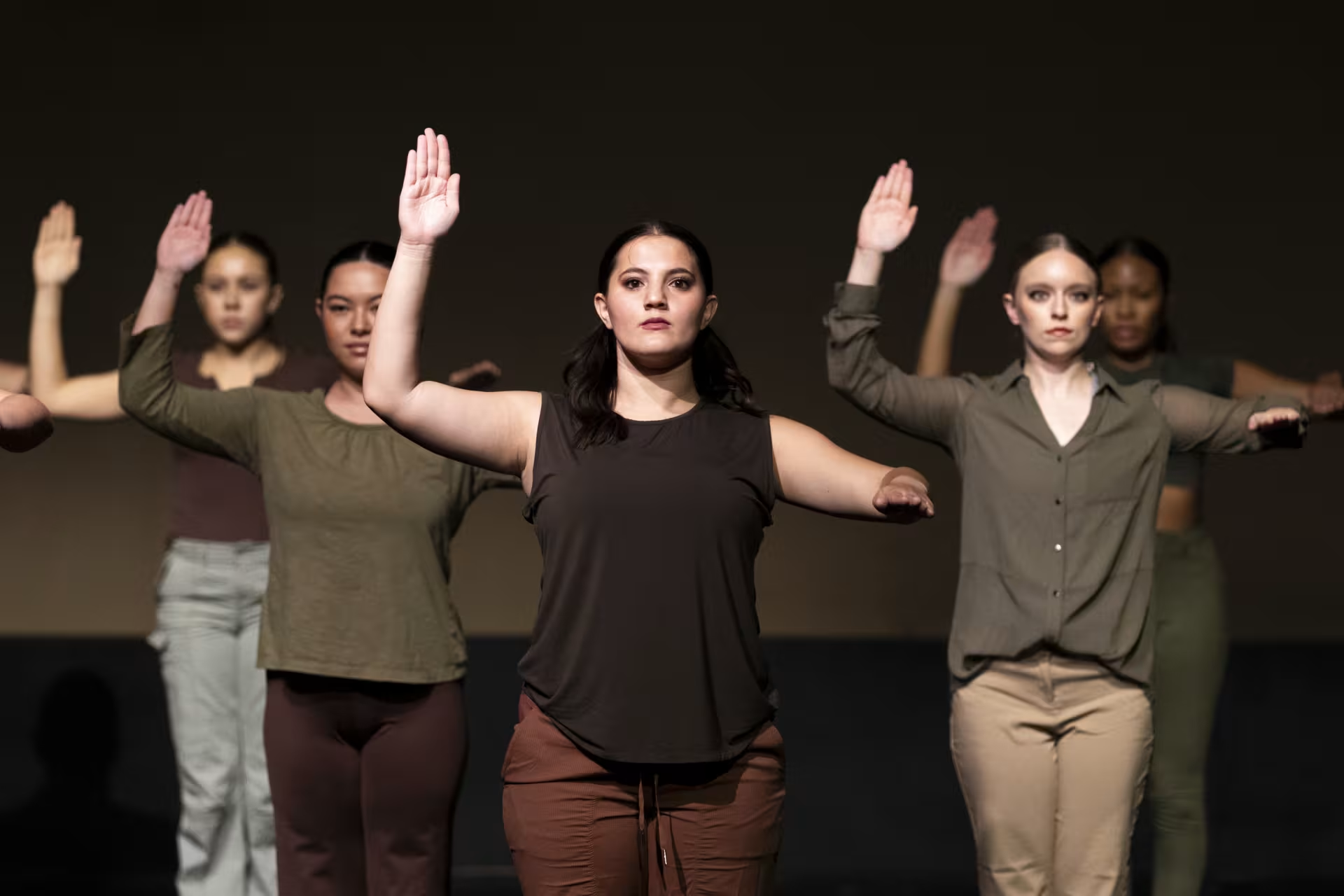
It requires student teaching experience in preparation for a career in dance education. In addition to classroom studies, you will be required to participate in the Ethington Dance Ensemble, which includes four main concerts throughout the year. This allows you to experience the entire creative process, from planning and rehearsals to the live performance, from both onstage and offstage perspectives. This bachelor’s degree in dance education also requires you to participate in the Elementary Dance Tour, which brings exciting multi-media productions to local schools.
This dance education major leads to initial teacher licensure
Dance Education Course Topics
Our bachelor’s in dance for secondary education curriculum combines observational and practice-based dance experiences. It can prepare you to position yourself to be both a dance practitioner and a dance educator.
Courses covered in this dance education degree examine a range of topics, including:

Learn Skills To Become a Middle or High School Dance Teacher
Our holistic approach to teaching dance balances theory with practice, with the aim of producing graduates who are prepared to work toward their future career. After completing the full-time practicum/field experience of this program, you may be prepared to teach in a range of middle or high school settings – public or private, rural or urban, large or small. Students may also work toward seeking educational dance opportunities available in community organizations and performing arts institutions.
The BA in dance education degree can prepare you to pursue endorsements in additional subject areas. Make the most of your passion for dance and shape your future as a dance education major.
Take Dance Education From an Accredited University
When contemplating a bachelor's degree in dance education, your choice of university should prioritize proper institutional accreditation. GCU is accredited by the Higher Learning Commission, underscoring the university's dedication to providing quality education. GCU takes pride in its mission to empower students through dedicated instruction and guidance.
This dance education degree will teach you to connect with your future students and tackle challenges in the classroom. It was designed using National Association of Schools of Dance (NASD) standards and all courses within this degree program are directly aligned with the Interstate Teacher Assessment and Support Consortium (InTASC) principles.
Student-Led Event: A Night of Worship, Music and Dance
Students use their passion for dance to create a collaboration between the worship arts department and the dance department. This student-led night of worship, music and dance ignites a magical evening of their artistic abilities.

Bachelor’s Degree in Dance Education FAQs
Before you decide whether to pursue a dance education degree, it can be helpful to learn more about the profession and your potential career path. The following frequently asked questions and answers can provide a starting point for your career-related research.
What skills are needed to be a dance teacher?
Can you become a dance teacher without a degree?
Program Curriculum
General Education Requirements
Required General Education Courses
Core Courses


Pursue your passion for dance and work toward your dream of becoming a middle or high school dance educator by pursuing a dance education major at GCU.
If you are seeking licensure/certification, please refer to the "Accreditation and Compliance/State Disclosures” link for the specific program of interest’s website for your location and/or employment state’s licensure requirements, per 34 CFR 668.14(b)32 and 668.43(c).
- U.S. Bureau of Labor Statistics. (2023, Aug. 10). How To Become a High School Teacher. Occupational Outlook Handbook. Retrieved Aug. 14, 2023.
- U.S. Bureau of Labor Statistics. (2022, Sept. 8). How To Become a Dancer or Choreographer. Occupational Outlook Handbook. Retrieved Aug. 14, 2023.