

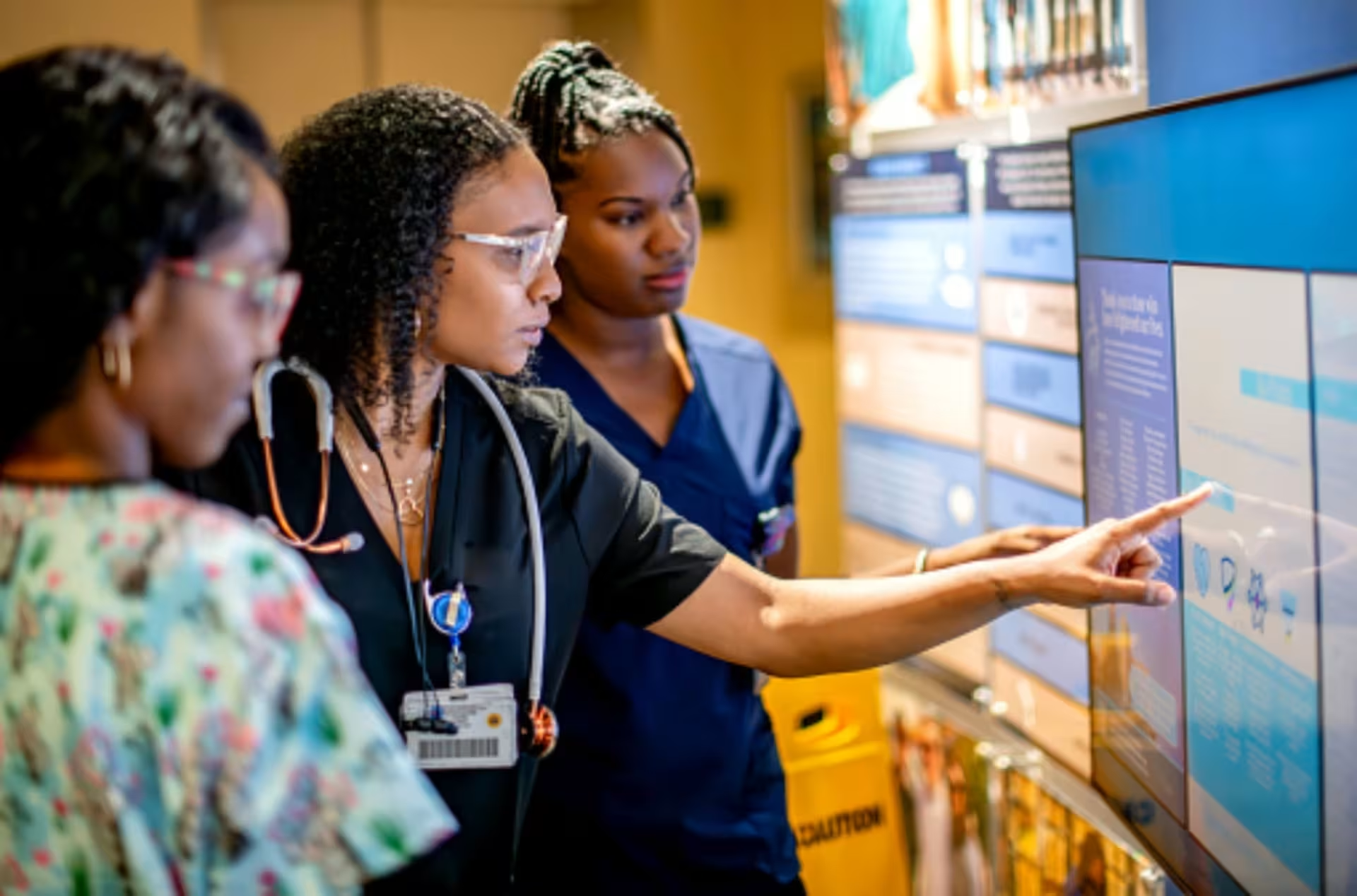
Online MSN: Nursing Education Degree
What Is an MSN: Nursing Education Degree?
An MSN: nursing education emphasis is a graduate degree for licensed registered nurses who want to teach, mentor and evaluate future nurses. Designed for working RNs, GCU’s online(See disclaimer 1) Master of Science in Nursing with an Emphasis in Nursing Education explores advanced nursing practice, health assessment, pharmacology, curriculum design, teaching strategies and learner assessment.
Graduates may apply these skills in academic, clinical or staff development settings, including roles such as postsecondary nursing instructor. This program also supports an industry need for qualified nurse educators who can help prepare the next generation of nursing professionals.(See disclaimer 2)

Online: $610 per credit [More Info]
Up to 12 credits or 1/3 of the total program requirements in transfer (whichever is less)
Credits: Fill out the Lopes Eval to find out what will transfer
Admission requirements may differ based on degree level, program and modality or transfer status. Some programs of study may require a higher GPA and/or other qualifying criteria for admission.
Please review full admission and program requirements in the University Policy Handbook.
What Is It Like To Earn an Online MSN: Nursing Education Emphasis?
Earning an MSN: Nursing Education degree gives working nurses the opportunity to improve their teaching, leadership and clinical knowledge while preparing to support future nursing professionals. You will explore nursing education through a Christian worldview, with emphasis on ethical decision-making, compassionate leadership, human dignity and service to others. The program experience is designed to help nurses grow as educators who can guide learners, contribute to academic or clinical training environments and model professional nursing values.
What To Expect From an MSN With an Emphasis in Nursing Education
How Does the Online MSN: Nursing Education Program Work?
The online(See disclaimer 1) nursing education format allows registered nurses to complete coursework while managing work and personal responsibilities. Through the digital learning platform, students participate in course discussions, receive instructor guidance and collaborate with classmates from diverse nursing backgrounds. In-person field/practicum hours offer opportunities to apply concepts such as instructional planning, learner assessment and evidence-based teaching strategies in nursing education settings.

Accreditation and Academic Quality
GCU has been institutionally accredited by the Higher Learning Commission since 1968. The College of Nursing and Health Care Professions shares the university’s commitment to upholding the principles and standards established by our accrediting bodies. For more information on the accreditation of nursing programs and other university licensures, please visit. our Nursing Accreditation and Regulations page.
Support Services for Online MSN Students
As an MSN student, you have access to support services designed to help you progress through graduate nursing coursework and required field experiences. Technical support is available to assist with the online learning platform, while the Office of Field Experience coordinates practicum requirements to align with academic and professional expectations. You can also explore scholarly nursing and healthcare research through GCU’s peer-reviewed academic journals, connecting classroom learning with current discussions in nursing education, healthcare practice and patient care improvement.
What Will I Study in an MSN: Nursing Education Program?
In an MSN: Nursing Education program, you will study advanced clinical concepts, research methods, leadership principles and instructional approaches used in nurse educator roles. Coursework may include pathophysiology, pharmacology, health assessment, translational research, organizational leadership, nursing informatics and educational technology.
These subjects help registered nurses strengthen clinical judgment, evaluate evidence, use data-informed decision-making and design learning experiences for nursing students. The curriculum connects advanced nursing knowledge with educator-focused competencies needed to support instruction in academic, clinical and healthcare training environments.

Core Course Topics in the MSN: Nursing Education Emphasis
Core MSN: Nursing Education coursework focuses on applying graduate-level nursing knowledge to teaching, research and practice improvement. You will have the opportunity to develop an evidence-based practice project proposal that identifies a concern in your practice area, reviews relevant evidence and outlines strategies for implementation and evaluation. The program also includes 200 field/practicum hours, allowing you to strengthen advanced nursing competencies while observing and participating in educator-focused activities tied to curriculum, instruction, assessment and professional practice.
Some of the competencies covered in this MSN: nursing education include:
Pathophysiology
Nursing theories in bodily functions and the effects of disease and injury
Pharmacology
The biochemical or physiological effects of drugs on cells, tissues and organs
Health assessment
Physical, psychosocial and spiritual health assessment, as well as risk and functional assessment
Curriculum design
Structure and methods for developing curriculum aligned with professional standards
Teaching methods
Effective methodologies for fostering learning and critical thinking skills
Program evaluation
Methods of assessing and improving academic programs in traditional and nontraditional settings
Gain the Skills To Teach and Lead in Nursing Education

This nursing education emphasis can help registered nurses build advanced assessment, clinical reasoning and organizational decision-making skills that can support future educator roles. Coursework and direct patient care clinical hours emphasize evidence-based research, diagnostic reasoning and the evaluation of patient needs.
You can also explore how to translate clinical expertise into instruction, mentorship and curriculum-aligned learning experiences for nursing students. The degree follows National League for Nursing (NLN) competencies for academic nurse educators, supporting preparation in teaching, learner development, curriculum design and professional leadership.
What Can You Do With an MSN: Nursing Education Degree?
An MSN: Nursing Education degree can help prepare registered nurses to teach, mentor and evaluate current and future nursing professionals in academic and clinical learning environments. Graduates may pursue roles such as postsecondary nursing instructor, clinical instructor or nurse educator, helping students develop the knowledge, clinical judgment and professional competencies needed for nursing practice.
According to the American Association of Colleges of Nursing (AACN), nursing schools continue to face faculty shortages that limit student enrollment, contributing to the continued need for qualified nurse educators.(See disclaimer 3)
Graduates with an MSN: Nursing Education degree may teach or support nursing education in a variety of healthcare and academic settings, including:(See disclaimer 4)
Colleges and universities
Educating pre-licensure and graduate nursing students through classroom, laboratory and clinical instruction
Community colleges
Preparing future registered nurses in associate degree nursing programs
Educational support services
Developing educational programs, learner support resources and NCLEX-RN(See disclaimer ®) preparation initiatives
Hospitals
Providing clinical education, staff development, onboarding and continuing education for nurses
Median annual wage for postsecondary nursing instructors as of May 2024(See disclaimer 5)
Projected job growth for postsecondary nursing instructors from 2024 to 2034(See disclaimer 6)
MSN: Nursing Education Tuition and Financial Options
GCU believes that quality higher education should be accessible to all. Because a degree is an investment in your future, our university counselors can help you explore options and better understand your estimated cost of attendance.

Ways To Save
Your education is an important financial investment, and there are several ways to help manage costs while earning your degree. GCU’s university counselors are available to help you explore available options and provide personalized guidance on your estimated cost of attendance.
Complete the Free Application for Federal Student Aid (FAFSA) annually to determine eligibility for federal grants and student loans. Since some aid is awarded on a first‑come, first‑served basis, GCU recommends submitting the FAFSA as early as possible after Oct. 1 to maximize funding opportunities.
If you’ve earned college credits from another institution, you may be able to complete your degree sooner at GCU by transferring those credits. Submit the Lopes Unofficial Credit Evaluation form, then connect with a university counselor who can provide you with personalized guidance.
You may be able to reduce your college costs by applying for GCU’s on-campus or online student scholarships. We invite you to explore available institutional scholarships and determine which opportunities you may be eligible for. GCU also encourages students to seek out third‑party scholarships and grants.
Explore Your Financial Options
Connect with a university counselor to learn more about tuition, cost-planning resources and available options.
Frequently Asked Questions About MSN: Nursing Education
Find answers to common questions about GCU’s MSN: Nursing Education emphasis, including teaching qualifications, career pathways, admissions background and related graduate nursing options.
What skills can you develop after earning an MSN in nursing education?
Can you teach nursing with a master's degree?
What are the advancement opportunities for nurses with an MSN in nursing education?
What background is helpful for an MSN: nursing education program?
Is an MSN: nursing education program worth it?
What other types of master's degrees in nursing are there?
What Are the Admission Requirements for the MSN: Nursing Education Program?
Applicants to the MSN: Nursing Education program must be registered nurses with a current, unencumbered RN license. Graduate admission may be based on a minimum GPA or qualifying GRE/GMAT scores, depending on the applicant’s academic background and program requirements. GCU does not require an application fee, personal statement or admission essay. Because requirements can vary by degree program, you can work with a university counselor to review eligibility, required documentation and next steps in the application process.
You can apply to a degree program at GCU in just three simple steps. Your university counselor is standing by to assist you with any questions about the application process.
It starts with selecting the program that aligns with your goals from one of GCU's 380+ academic programs — from undergraduate degrees to post-master’s certificate programs to doctoral degrees.
Pick your program
Explore our on-campus, online or evening cohort options under the Degree Programs page to find the right program for you.
Complete our online application
Your university counselor will direct you to the online application. Fill in all required information and submit the form.
Submit supporting documents
Submit your official transcripts and any relevant test scores, and confirm with your university counselor that all forms for your desired program are submitted.
Program Curriculum
Core Courses
Explore More Nursing Topics




Explore how GCU's online MSN: Nursing Education emphasis can help you strengthen your teaching, leadership and clinical expertise.
Excluding residencies, practicums, internships and field experience.
- U.S. Bureau of Labor Statistics. Occupational Employment and Wages: 25-1072 Nursing Instructors and Teachers, Postsecondary. Retrieved July 2026.
- American Association of Colleges of Nursing. (2026, February). Nursing Faculty Shortage Fact Sheet. Retrieved July 2026.
- U.S. Bureau of Labor Statistics. (2024, April 3). Occupational Employment and Wages, May 2023: Nursing Instructors and Teachers, Postsecondary. Retrieved July 2026.
- The earnings referenced were reported by the U.S. Bureau of Labor Statistics (BLS), Postsecondary Nursing Instructors as of May 2024, retrieved July 2026. Due to COVID-19, data from 2020 to 2023 may be atypical compared to prior years. BLS calculates the median using salaries of workers nationwide with varying levels of education and experience. It does not reflect the earnings of GCU graduates as Postsecondary Nursing Instructors, nor does it reflect the earnings of workers in one city or region of the country or a typical entry-level salary. Median income is the statistical midpoint for the range of salaries in a specific occupation. It is very unlikely that a median salary will reflect an entry-level salary. It represents what you would earn if you were paid more money than half the workers in an occupation, and less than half the workers in an occupation. It may give you a basis to estimate what you might earn at some point if you enter this career. Grand Canyon University can make no guarantees on individual graduates’ salaries. Your employability will be determined by numerous factors over which GCU has no control, such as the employer the graduate chooses to apply to, the graduate’s experience level, individual characteristics, skills, etc. against a pool of candidates.
- COVID-19 has adversely affected the global economy and data from 2020 to 2023 may be atypical compared to prior years. Accordingly, data shown is effective August 2025, which can be found here: U.S. Bureau of Labor Statistics, Occupational Outlook Handbook, Postsecondary Nursing Instructors, retrieved July 2026.
- American Association of Colleges of Nursing. (n.d.). Master’s Education. Retrieved July 2026.
Approved and verified accurate by the Associate Dean of the College of Nursing and Health Care Professions on Aug. 10, 2026.