


A doctoral dissertation proposal is the first step in developing a research idea into a structured academic study. For students wondering how to write a dissertation proposal, understanding its purpose, structure and requirements is essential. A dissertation proposal outlines the research purpose, significance and methodology and must typically go through a review process for approval.
This guide will cover the purpose, key sections, formatting, writing strategies and proposal defense preparation for dissertation proposals. Insights from Dr. Jimmy Brown, a dissertation chair at Grand Canyon University, will provide further insight into what committees seek in strong proposals.
What Is a Dissertation Proposal?
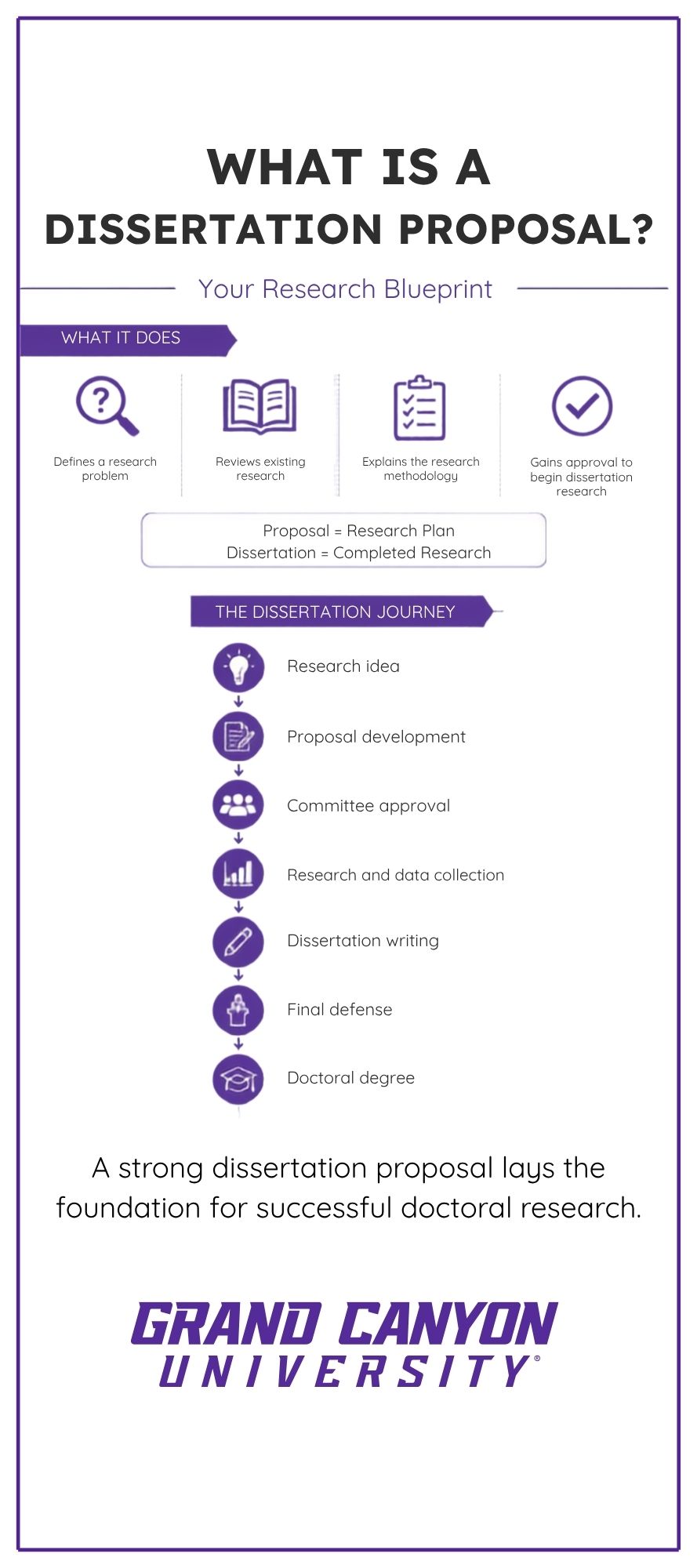
A dissertation proposal is a formal document detailing a doctoral student’s planned research, including the study’s problem, significance, research questions and methods for data collection and analysis. It must be submitted to a faculty committee for approval before research can begin. While the proposal outlines the intended study, the final dissertation presents the data, analysis and conclusions. The proposal serves as a roadmap, helping students assess feasibility and enabling faculty to evaluate academic rigor and ethical considerations.
A dissertation proposal helps students:
Why the Proposal Matters

According to Dr. Jimmy Brown, the proposal phase is when students explain what they plan to study and how they will conduct their research.
"A dissertation has two big phases. One is the proposal phase, where you say what you’re going to study. A doctorate is not like a bachelor’s degree, where you’re showing you can absorb information, or a master’s degree, where you show you can apply it. Here you show that you can generate new thoughts, new answers, new insights."
Because doctoral research is designed to contribute new knowledge to a field, students must gather and analyze original data. Dr. Brown describes the dissertation proposal as a project plan that demonstrates how the study will be conducted appropriately and ethically.
“Your proposal is your plan to show how you’re going to do that in an appropriate and ethical way. It’s kind of like a project plan that you’re showing to your committee and stakeholders to explain how you’re going to complete the project.”
Once the proposal is approved, students move into the research phase. As Dr. Brown explains, “The dissertation itself is once you have collected your data, analyzed it and answered your research questions.” Approval of the proposal provides the foundation needed to move confidently into that next stage of doctoral research.
The Dissertation Proposal Process at GCU
While dissertation proposals are a standard requirement across doctoral programs, Dr. Brown notes that GCU emphasizes supporting students during their dissertation journey by guiding them in developing a clear research plan and ensuring ethical and academic standards are met before data collection begins.
"Grand Canyon’s a little bit different than a lot of universities because we’re probably the most supportive university I’ve ever worked at."
Dr. Brown emphasizes that the proposal clarifies the study’s scope and direction for students, faculty and reviewers. Without it, students may undertake projects without adequate oversight or without meeting institutional requirements. The proposal process is crucial for safeguarding students and research participants by requiring Institutional Review Board (IRB) approval before data collection.
Dr. Brown cautions that conducting research without an approved proposal can lead to serious consequences: “There are some pretty big ethical risks to not having a clear proposal and not getting IRB approval. I’ve seen situations at other institutions where people collected data without approval and had to start over.”
Ultimately, the proposal process helps establish a strong foundation for the dissertation while ensuring that research is conducted responsibly and ethically. “It’s important because it keeps everybody out of trouble,” says Dr. Brown.
Understanding the Dissertation Journey
A dissertation unfolds in stages, starting with a proposal that bridges the development of an idea and original research. The process begins by identifying a research problem that fills a gap, followed by refining research questions, reviewing literature and creating a proposal outlining the study. According to Dr. Brown, the proposal phase involves explaining the intended study and research plan. Once the dissertation committee approves the proposal and any necessary IRB approvals are secured, students can proceed with data collection.
A typical dissertation journey includes:
As Dr. Brown explains, the proposal phase focuses on what you plan to study. The dissertation itself documents the research that was actually conducted, the findings that emerged and the conclusions drawn from the data.
Key Components of a Dissertation Proposal
Most dissertation proposals include key sections that help committees assess the research’s quality, feasibility and academic value. Following a clear dissertation proposal outline can help students organize these components effectively and ensure all required elements are included. These components show that the student has identified a significant research problem, is familiar with existing scholarship and has a clear plan for conducting doctoral-level research.
Most dissertation proposals include:
Introduction and Problem Statement
The introduction outlines the research topic, identifies a specific problem or gap that warrants further investigation and presents a clear problem statement that explains what remains unknown in the existing literature and why it merits scholarly focus.
Literature Review
The literature review analyzes existing research on the topic, showcases the student’s understanding, synthesizes key studies, identifies trends and highlights gaps that the proposed research aims to address. According to Dr. Brown, the literature review is one of the most important parts of a proposal. “The first thing you need to see is a good, detailed literature review to show you have become an expert in this domain.” Dr. Brown notes that doctoral students are expected to demonstrate expertise not only in their subject area but also in the research methods they plan to use.
Research Questions or Hypotheses
Research questions guide a study’s direction and inform what the researcher aims to discover. In quantitative studies, students may formulate testable hypotheses. Clear, focused questions ensure the study remains manageable and relevant to the problem being investigated.
Methodology
The methodology section explains how the research will be conducted. Students describe their research design, participants, sampling strategy, data collection methods and analysis procedures. Committees often pay close attention to this section because it demonstrates whether the chosen methods are appropriate for answering the research questions. As Dr. Brown explains: “I want to see a very clear description of your methodology. It must be aligned with the general knowledge base.”
Significance of the Study
This section outlines the importance of the research, highlighting its potential contributions to theory, practice, policy and future research. The significance statement helps committees recognize the value and impact of the proposed work.
Preliminary Timeline and References
Many proposals conclude with a projected timeline outlining major research milestones, such as proposal approval, data collection, analysis and writing. The references section provides complete citations for the scholarly sources used throughout the proposal.
Dr. Brown believes strong proposals should also include a highly detailed execution plan. “Your proposal must be very detailed. Write it so that somebody can gather the data that you need without asking you any questions, just based upon this.” Committees seek evidence of students’ mastery of relevant literature, appropriate methodology and a realistic research plan. A strong proposal lays the groundwork for a successful dissertation journey.
Preparing for the Dissertation Proposal Defense
The proposal defense is an important opportunity for doctoral students to present their research plan to faculty formally. It aims to evaluate the study’s quality and the student’s understanding, not to expose weaknesses. Proper preparation can boost confidence and demonstrate readiness to proceed.
To prepare for a dissertation proposal defense:
- Know your research problem. Be able to clearly explain the issue your study addresses, why it matters and how it contributes to the existing body of knowledge.
- Understand your methodology. Committees often ask detailed questions about research design, data collection and analysis. You should be able to explain and defend each methodological choice.
- Be prepared to justify your study. Expect questions about the significance of your research, its practical implications and why your approach is appropriate.
- Anticipate committee questions. Review your proposal closely and consider areas where reviewers may seek clarification or additional details.
- Practice presenting clearly and confidently. The defense should be a discussion of your research, not a reading of your proposal. Familiarity with your study will help you communicate more effectively.
According to Dr. Brown, the defense is designed to assess students’ understanding of their own research. “The goal of a defense is to make sure that you actually know your stuff and you didn’t just write it down.” He encourages students to become true experts in their chosen topic and expects them to think beyond prepared responses. “I will ask you at least one question in a proposal or dissertation defense that I’ve never asked you before. When you’re out there trying to get folks to participate in your study, you need to know it well enough to answer the questions.”
Common Dissertation Proposal Challenges and How To Overcome Them
Developing a dissertation proposal can be challenging as students must identify a meaningful research problem, demonstrate expertise in the literature and design a rigorous study while managing professional and personal responsibilities. However, with a structured approach and guidance from a dissertation committee, most obstacles can be overcome.
Challenge: Narrowing a broad research topic
Solution: Focus on a specific problem or gap in the literature rather than a broad subject area. A well-defined topic is easier to research, write about and defend.
Challenge: Reading enough scholarly research
Solution: Make reading a regular part of your doctoral routine. Examining peer-reviewed research helps you understand your topic, identify research gaps, evaluate methodologies and develop stronger research questions. According to Dr. Brown, insufficient reading is one of the most common issues doctoral students encounter. “They haven’t read enough,” he says. Dr. Brown compares academic research writing to learning a new language. Students may learn terminology, but true understanding comes from regularly engaging with scholarly literature and seeing how experienced researchers communicate ideas and conduct studies.
“You must become an educated consumer of research,” states Dr. Brown.
He encourages doctoral students to read consistently throughout the dissertation process so they can confidently explain and justify their methodological and theoretical decisions.
Challenge: Finding and evaluating relevant sources
Solution: Go beyond collecting articles. Look for recent, peer-reviewed studies that directly relate to your research problem and pay attention to how researchers frame questions, justify methodologies and discuss findings.
Challenge: Developing clear research questions
Solution: Keep your study focused and manageable. Research questions should address a specific problem and align directly with your methodology and intended outcomes.
Challenge: Choosing an appropriate methodology
Solution: Review methodological literature and work closely with your committee to ensure your research design aligns with your research questions and disciplinary standards.
Challenge: Managing time and revisions
Solution: Use templates, follow committee feedback carefully and break large tasks into smaller milestones. Creating a structured writing schedule can make the proposal process more manageable.
Dr. Brown frequently advises students to resist making their studies unnecessarily complex.
“Simplify, simplify, simplify. It should be a very simple, clear research question.”
Remember that a dissertation proposal isn’t meant to be a perfect scholarly work; it should show your ability to conduct ethical, original research. Utilizing committee guidance, time management and writing support can help you navigate challenges and progress toward proposal approval.
Dissertation Proposal Checklist
Before submitting your dissertation proposal for review, take time to ensure you’ve addressed the essential elements committees typically expect to see. Use this quick checklist to evaluate your readiness before moving into the approval or defense process.
Advice From a Dissertation Chair
The dissertation journey can be rewarding, but it’s not easy. According to Dr.Brown, feeling overwhelmed, frustrated or even uncertain whether to continue is a normal part of the process.
“There’s no way out but through.”
Dr. Brown emphasizes that earning a doctorate requires persistence. Dissertation work can feel isolating at times, especially in an online environment, but students who keep moving forward one step at a time are often the ones who reach graduation.
Another key is building a productive relationship with your dissertation chair and committee members and using the DC Network. Dr. Brown advises students to remain open to feedback and trust the guidance of experienced faculty. “The ones who graduate, more often than not, are the ones who listen and follow instructions.”
He also reminds students that dissertation writing is different from most other forms of academic writing. It requires students to write with precision, support claims with evidence and demonstrate expertise in a focused area of study. “Dissertation writing is very dense. You’ve got to learn to be very concise. You’ve also got to learn to show that you are an expert.”
Finally, Dr. Brown encourages students to remember why they started the journey in the first place. A doctorate can create professional opportunities, expand career options and open doors that may not otherwise be available. For students willing to persevere, the challenges of the dissertation process can ultimately lead to significant personal and professional growth.
Take the Next Step Toward Your Doctoral Degree
Grand Canyon University’s College of Doctoral Studies offers programs designed to support students from proposal development through dissertation completion. With guidance from experienced faculty, structured resources and a supportive academic community, doctoral learners can gain the knowledge, skills and research experience needed to achieve their educational and professional goals. Explore GCU’s doctoral programs to learn how you can take the next step toward becoming a scholar-practitioner and contributing new knowledge to your field.
Advance Your Doctoral Research Goals
Discover expert advice to help you develop, refine and successfully complete your dissertation.


