

Cybersecurity impacts nearly every part of modern life — from the technology we use daily to the systems that keep communities running. In this video, Grand Canyon University cybersecurity alumna Hannah Jenifer talks with faculty and students to explore what cybersecurity is, why it matters and what cybersecurity careers are available.
They also share how GCU prepares students through hands-on learning, industry-driven curriculum and practical experience. Hear their insights and discover what makes GCU’s cybersecurity programs stand out.
What Is Cybersecurity? A Simple Definition for Future Professionals
Hi, I'm Hannah Jenifer, a GCU cybersecurity alumni. I'm here with Mike Manrod. He is an expert in fighting cybercrime and here to define for us what cybersecurity means.
How would you define cybersecurity in simple terms?
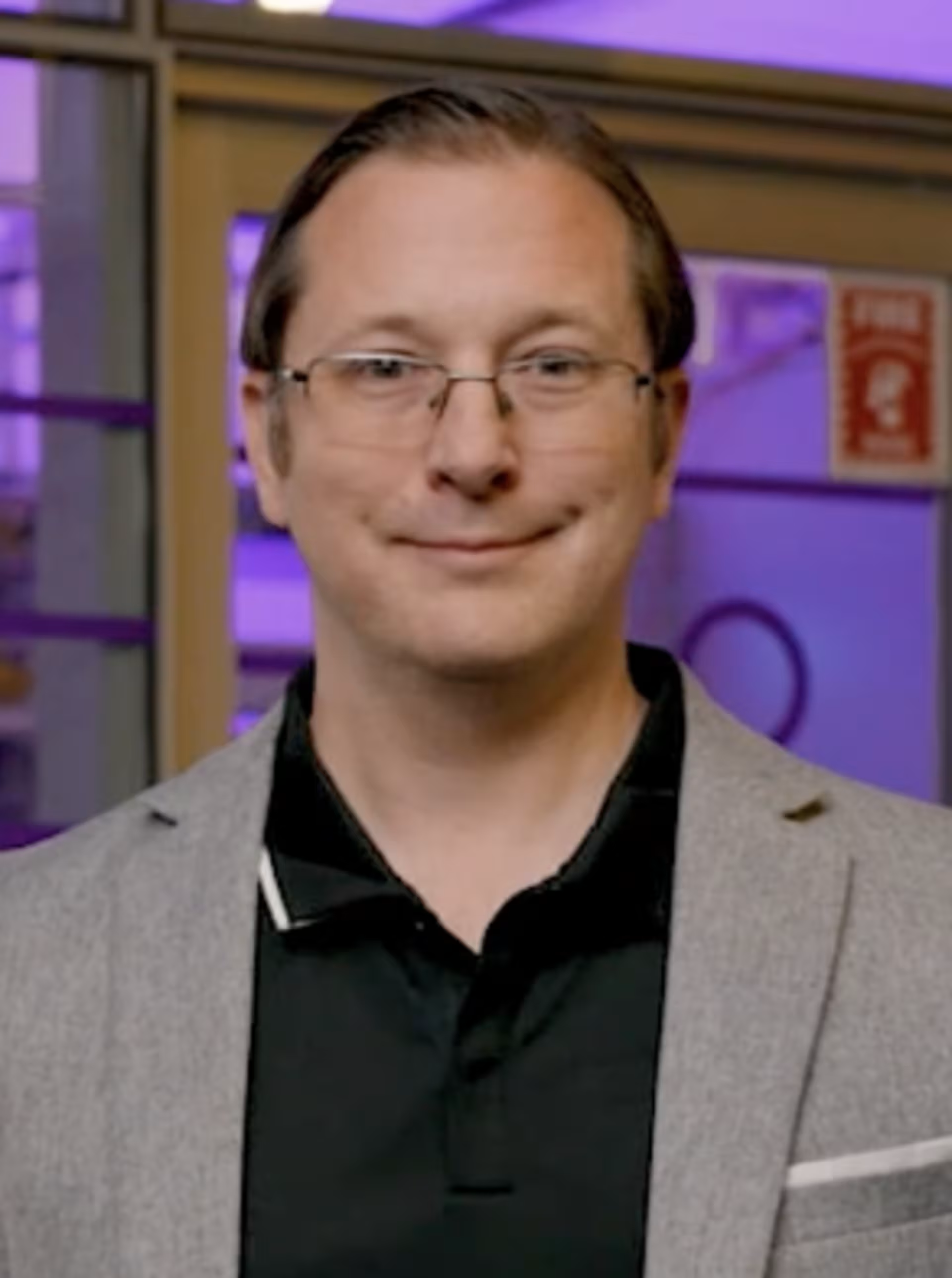 "If I were to define cybersecurity in simple terms, I would really describe it as the art and science of protecting the systems, the infrastructure, the computers and the people that interact with them that we really rely upon for our society and our way of life. One thing I love about cybersecurity is it's very diverse. There's a lot of different kinds of work. There's something for everyone. Do you like to analyze things? There's a job for it. Do you like to fix things? Do you like to break things? There's a lot of different job opportunities within cybersecurity that can include a lot of different types of people and temperaments." – Mike Manrod, Adjunct Faculty, College of Engineering and Technology.
Is Cybersecurity Hard? How GCU Supports Students New to the Field
 "For someone who is looking into cybersecurity and gets scared about the big word that it entails, I would say that there will always be someone within the program that will be willing to teach you and guide you, and you just have to set yourself free from being afraid about asking questions." – Noemi Caballero Rodriguez, GCU Cybersecurity Alumni
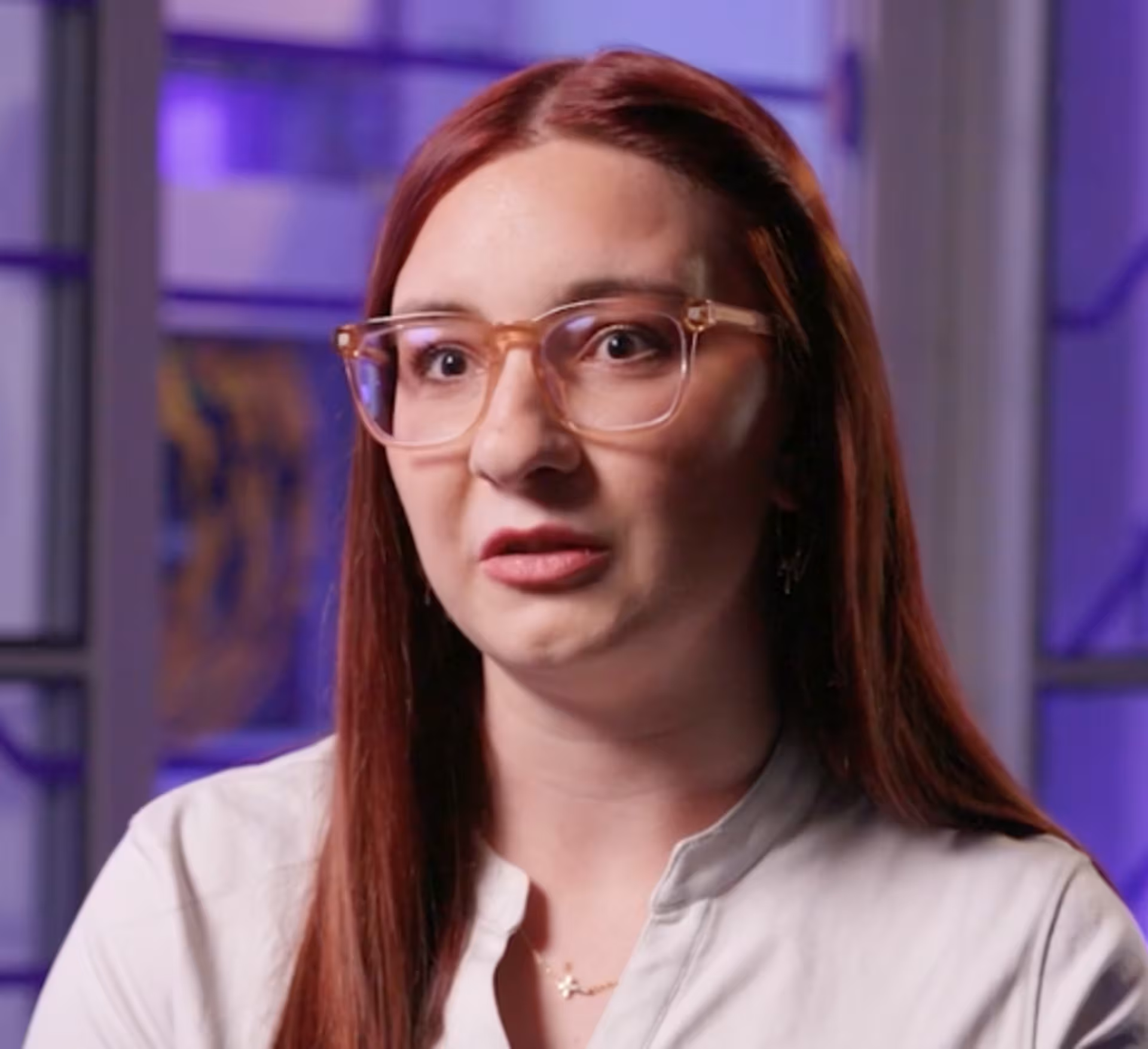 "I'm a psych student. What am I going to do with cybersecurity? How does this apply to me whatsoever? But learning at the end of the day, cybersecurity is still people making decisions. You're still wondering, why did they make that decision? Why did they choose that company to attack? Why did they choose that person to make the call to? That still makes the difference, and that's why we tell students saying, "Hey, you're still working with people." And at the end of the day, the technical difference, that just takes skills. That just takes learning. If you're willing to put in the work by sitting down, watching a YouTube video, talking to a professor, going to your classes, going to clubs, going to extra things, that comes super easily. It's the people who make the difference."
– Alexandra Urbaszewski, GCU Psychology Major, Cybersecurity Minor
 "With respect to nervousness and entering the IT and cyber program, I think it's understandable to be nervous. There's a lot of knowledge that is to be learned. A lot of technical concepts that when I started, I had no idea what anything meant. There are people you can reach out to for help; there's a safety net built around you."
– George Argeris, GCU Cybersecurity Student
Why Cybersecurity Is Essential to Everyday Life
Hannah Jenifer: How do we see this in the world and how does it impact our everyday life?
"Cybersecurity is really a topic that we tend to take for granted because technology is all around us. We go to the water spigot, we get a glass of water. We're relying on technology to deliver all the upstream processes that put water in that glass, when we flip on a light switch, when we safely drive to work. And cybersecurity is all about the things that we need to do to protect all those things we rely upon. There are so many things about how we react and interact with technology every day that cybersecurity applies to, such as did you pick a strong enough password? Is the password for your Facebook the same as your bank account? There are so many touchpoints and opportunities for us to even weave cybersecurity into our day-to-day life to make us safer and more secure."
Cybersecurity Careers: What Jobs Can Graduates Pursue?
Hannah Jenifer: What kind of positions can students be looking for out in cybersecurity?
"In the field of cybersecurity, there are jobs for people who respond to threats and stop attacks. There are jobs for people who engineer solutions and ways to protect a large enterprise. And there are even jobs for ethical hackers and bug bounties, and opportunities to find flaws and then to help fix those flaws based upon security knowledge." – Mike Manrod
"I had Mike Manrod for a malware analysis class, and at the time, I was already working with analyzing malware. So, having the CISO teaching me or guiding me through this experience of analyzing malware and then having his experience at GCU and before GCU was just great." – Noemi Caballero Rodriguez
Cybersecurity Degree Programs Offered at GCU
Hannah Jenifer: Now we're here with Dr. Pam Rowland, associate dean of the College of Engineering and Technology. She's going to walk us through some of the cybersecurity programs offered here at GCU.

"So, the programs that we have here at GCU are a Bachelor of Science degree in cybersecurity, a Bachelor of Science degree in information technology with a cybersecurity emphasis, A Master of Science in Human-Computer Interaction (HCI) and an Online Cybersecurity Graduate Certificate. We also then can move on to get a master's degree in cybersecurity." – Dr. Pam Rowland
Hannah Jenifer: How are these programs unique or different to others?
"So, these programs are special and unique because what we do at GCU is we have industry professionals that actually come alongside us and help us to write the content for the programs. And they review the content, and they offer suggestions so that we make sure that our students are industry-ready."
"One of the things that I felt set me up the most for the field is having professors that were already in the field. So, having their experience, having their stories, their knowledge, their words of wisdom was really what set me the most for the real world." – Noemi Caballero Rodriguez
"Since I work in the Cyber Center of Excellence, I already have had that connection with a couple of the professors, and being able to build into that and going into the classes with them, it made it so much more enjoyable, but also those connections saying, "Hey, I need help with this. I don't know where I'm supposed to go from here." And saying, "Yeah, let me mentor you. Let me work with you. I'm here to help you," it made a huge difference." – Alexandra Urbaszewski
NSA and Department of Defense Designation: What It Means for Cybersecurity Students
Hannah Jenifer: I heard the cybersecurity program here has an impressive designation.
"So, we are designated by the NSA and DOD, and what it is, it's a center of academic excellence in cyber defense. And that basically means that we have to meet their requirements so that our curriculum is rigorous and teaches the expectations of who they want to hire. So, when students come out of the program, they are ready to work for government agencies or the private sector, wherever they choose to go in their field." – Dr. Pam Rowland
I would say that being in this program definitely set me up for success in terms of building connections and having a very solid curriculum.
– Noemi Caballero Rodriguez
Hands-On Cybersecurity Experience at GCU
Hannah Jenifer: What are some additional ways you are supporting students in the program?
Cyber Center of Excellence
"At GCU, we have several different things we have available to students that can expand their knowledge. One is our Cyber Center of Excellence, and in the Cyber Center of Excellence, they can practice ethical hacking; they can practice cybersecurity skills. We hold lots of different events for them where they can hear from industry experts and ask questions about what is it like to be a cybersecurity professional? What are the options that I have? What kind of things will I do? And so we provide those opportunities for students so they can really understand and be able to grow and practice some of those skills so that when they go out in the workforce, they've had some practice." – Dr. Pam Rowland
"They've provided me with plenty of invaluable resources. You're actually able to go and use some of these tools that professionals use and get familiar with them. And by the time you enter the workforce, or by the time you have a class where you need to use some of these tools, you'll be much more familiar."
– George Argeris
Overclock Experience and HACKNet
Hannah Jenifer: It was great hearing from Dr. Rowland. Now let's hear from Mike Manrod about the Overclock Experience.
"The Overclock Experience is an immersive experience that allows students to really experience cyber from where they live and to really get into it. It's really defined by an environment we call HACKNet, which will have an easy zone, a medium zone and a difficult zone. And unlike a lot of learning experiences that are very linear, it'll be like an open-world game where you can go anywhere and invent your own path along the HACKNet for better learning of both attack and defense." – Mike Manrod
"HACKNet is pretty much a mock company that GCU is building and we're designing it so that it has all of the IT infrastructure that a normal company would have. And we're designing it so that students will be able to hack into it and to test knowledge that they've learned in classes."
– George Argeris
Capstone Projects
Hannah Jenifer: Now I'm joined here today with Dr. Dwight Farris, one of the cybersecurity professors here, and he's going to talk about some of the projects that students work on.
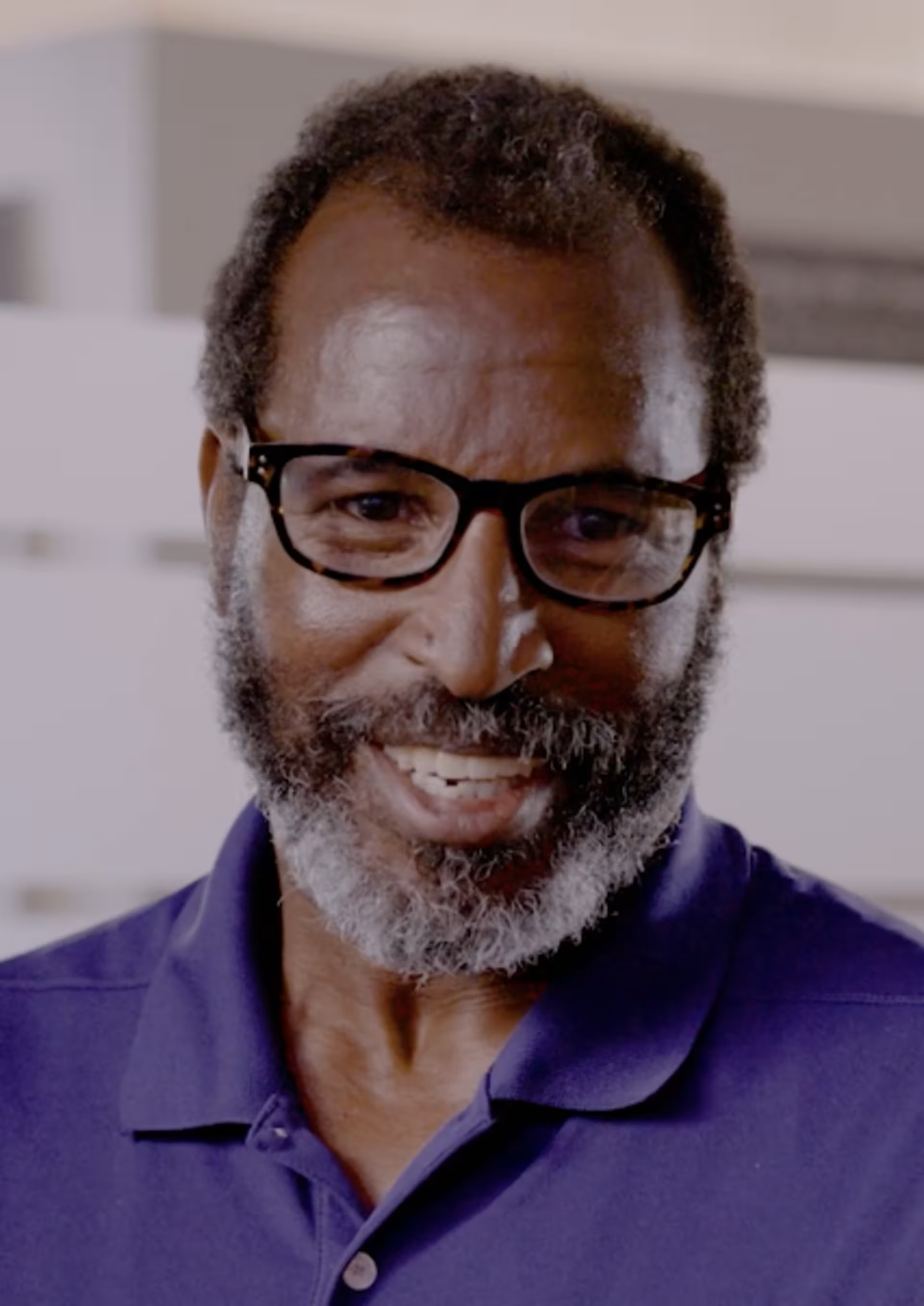 "Yes. One of the things that we are very excited about is the culmination of the cybersecurity program with our capstones. We like to give the students a chance to utilize what they've learned throughout the program, to come up with a project that they are proud of, of completion. Some of them actually come out of industry, but some of them, the students actually think of and create themselves. It involves things like web development, programming, and some of the cybersecurity skills that they have learned throughout the program." – Dr. Dwight Farris, Instructor, College of Engineering and Technology
Hannah Jenifer: What are capstones and how do these prepare students for the real world?
"Well, capstones, think of them as projects that will take all the skills that the students have learned, they put those together into a project that they manage, they schedule out, they scope out, they build, they program, they do whatever they need to finish that. And actually, at the end of all that, they showcase that to us. And yes, this can prepare them for employment because they're going to be doing some of the skills that they're utilizing out in the field." – Dr. Dwight Farris
"So, for my capstone, I thought about creating a platform that introduced and had modules for learning cybersecurity concepts that could teach on real-life examples and real-life experiences." – Noemi Caballero Rodriguez
"Since my major is psychology, I actually have to have a more scientific study-based capstone, but because of that, I made it more cybersecurity-focused. So, my capstone focuses on generational differences and personality types and how it makes them more susceptible to social engineering attacks." – Alexandra Urbaszewski
Faculty Support for Cybersecurity Students
Hannah Jenifer: How do faculty stay up to date in the fast-changing cyber field?
"Well, being one of the lead faculty members, we always try to attend conferences, work with industry partners, read, that thing that we ask our students to do. We do the research, we do the reading, we put all that together into a curriculum so we can pass it on to our students. We have to be aware of what's happening. We all know that cybersecurity is constantly changing, so we have to connect to those items that are happening out in the field, and that's how we take care of that." – Dr. Dwight Farris
"I would say that I had a lot of support from my professors during the development of my capstone project. I can think about Professor Farris, who is leading the program right now for the capstone project. He was great. Throughout the process, we could ask questions. He was very personable and he kind of guided us throughout the way." – Noemi Caballero Rodriguez
"There are so many great professors here at GCU, specifically in cyber and IT. They're very engaging and teach in a really light but informative manner. It's really an incentive. It makes it fun to learn. When learning's fun, it doesn't feel like homework." – George Argeris
Hannah Jenifer: Thanks to everyone for sharing their passions and interests here at GCU in the cybersecurity program. If you're ready to start, this is the place.
Your Path Into Cybersecurity Starts at GCU
Explore GCU’s cybersecurity degree programs to see how hands-on experience, industry-aligned curriculum and experienced faculty can prepare you to protect the systems that power today’s world — and tomorrow’s.
Ready to Begin Your Cybersecurity Journey?
Complete the form on this page to connect with a university counselor.