


Registered Nurse Career Guide
What Is a Registered Nurse?
A registered nurse (RN) is a licensed healthcare professional who assesses patients, coordinates care, administers treatments and helps improve patient outcomes. RNs are often a patient's primary point of contact, helping them navigate the healthcare system and receive quality care.
Registered nurses work in a variety of healthcare settings and specialties. Some focus on specific patient populations, such as children or older adults, while others specialize in areas such as oncology, cardiac care, emergency nursing or critical care.

What Do Registered Nurses Do?
Registered nurses deliver direct patient care, such as assessing and treating patients. Nurses are expected to demonstrate sound nursing judgment and clinical best practices while performing duties such as administering medications, documenting care, performing wound care and operating medical equipment.
RNs generally care for multiple patients at a time. They work as members of a collaborative healthcare team while coordinating care.
Nurses conduct head-to-toe assessments, review test results and use clinical judgment to support nursing diagnoses.
They develop and implement nursing care plans, such as performing wound care, for example.
Nurses help patients and family caregivers understand instructions for at-home care and lifestyle choices.
Is Nursing a Good Career?
Nursing can be a good career for people seeking a healthcare profession with strong job demand, which can come with career stability and opportunities for advancement. According to the U.S. Bureau of Labor Statistics (BLS), job growth of registered nurses is projected to grow 5% from 2024 to 2034, faster than the average for all occupations.(See disclaimer 1 )The BLS projects about 166,100 RN job openings each year during the decade, driven by workforce shortages, retirements and ongoing demand for healthcare services.(See disclaimer 1) Additionally, the median annual wage for registered nurses was $93,600 as of May 2024, according to the BLS.(See disclaimer 2)

Where Can Registered Nurses Work?
According to the BLS, registered nurses can work across many different healthcare settings.(See disclaimer 3) Many nurses, such as those who work in hospitals and long-term care facilities, may work overnight, holiday and/or weekend shifts, as these facilities must provide 24/7 patient care. Some nurses travel for work, such as home health nurses, who provide patient care in private homes.(See disclaimer 3)
Some common workplace options for nurses include:(See disclaimer 3)
Hospitals
As of 2024, about 59% of nurses work in a state, local or private hospital setting.
Ambulatory healthcare services
These settings include physicians' offices, home healthcare and outpatient care centers, and can include a variety of different nursing positions and specialties.
Residential care
Nurses may work in nursing homes and other residential care facilities. They care for senior patients who may have complex health needs.
Schools
School nurses work in K-12 schools or at universities and colleges, providing care to students and maintaining student health records.

How To Become a Registered Nurse
When learning how to become a registered nurse, it’s important to note that not all RNs follow the same path. At the base level, to become a registered nurse, you must earn a nursing degree and pass the NCLEX-RN® to obtain an RN license.(See disclaimer 4)
Review the following steps to becoming an RN:
Enroll in an Accredited Nursing Program
Begin by enrolling in an accredited nursing program that aligns with your educational background and career goals. Depending on the pathway you choose, this can include an associate (ADN) or bachelor's degree in nursing (BSN).
Earn Your Nursing Degree
Complete the required coursework, skills labs and clinical experiences within your nursing program. Upon graduation, you'll earn the degree needed to pursue RN licensure.
Pass the NCLEX-RN Exam
After earning your degree, you must pass the National Council Licensure Examination for Registered Nurses (NCLEX-RN) and satisfy any additional state licensure requirements before practicing as an RN.
ADN vs. BSN vs. ABSN: Which Nursing Pathway Is Right for You?
There are multiple educational pathways that can help prepare you to become a registered nurse. Associate degree in nursing (ADN), Bachelor of Science in Nursing (BSN) and accelerated Bachelor of Science in Nursing (ABSN) programs can each support different goals, timelines and educational backgrounds. The right option depends on where you are in your academic journey, how quickly you want to enter the nursing field and whether you are starting college for the first time or changing careers.
While BSN and ABSN programs offer bachelor’s-level preparation that may support broader clinical knowledge, leadership development and long-term career growth, and ADN can help get you into the nursing workforce sooner. Comparing these options can help you choose the nursing degree pathway that best aligns with your experience and goals.
Registered Nurse Education Requirements
High School Diploma
If you’re aspiring to become a nurse and are still in high school, connect with your school counseling team. They can help suggest classes that may be applicable to a career as a registered nurse, such as various science courses. According to NurseJournal, high school electives in anatomy and physiology, biology, chemistry and first aid may prove useful.(See disclaimer 5)
College Degree
All future RNs must earn a nursing credential, such as a Bachelor of Science in Nursing (BSN).(See disclaimer 4) There are traditional BSN programs, designed for high school graduates, as well as accelerated BSN programs, designed for career switchers. All BSN programs offer didactic coursework and immersive learning opportunities.

Professional Certifications
All RNs must pass the NCLEX-RN, which is the national licensing exam. Earning a nursing degree can qualify individuals to take the exam. Passing this exam enables RNs to obtain a nursing license, which is a requirement for nursing practice. Additionally, experienced nurses may choose to earn professional certifications in their nursing specialty.(See disclaimer 4)
Recommended Degrees for Aspiring RNs


What Skills Do You Need To Be a Nurse?
Registered nurses need to be proficient in a variety of clinical skills, such as IV placement and nasogastric tube insertion. These clinical skills, along with others, are taught in BSN programs. Additionally, RNs can benefit from having a diverse range of soft skills, including communication skills and emotional resilience.(See disclaimer 4)
Some of the most important soft skills for RNs include:(See disclaimer 4)
Communication
Nurses must be able to communicate clearly with patients, family caregivers and colleagues.
Critical thinking
They use critical thinking skills to evaluate their patients and develop nursing interventions.
Attention to detail
Being detail-oriented helps nurses reduce the risk of making nursing errors.
Compassion
Patients can benefit from compassionate, empathetic care.
Organization
Organization skills help nurses coordinate care while managing multiple patients.
Emotional resilience
An emotionally stable personality helps nurses stay calm under pressure.
Registered Nurse Career FAQs
Explore common questions about becoming a registered nurse that can help you better understand RN education pathways, licensure requirements and career options before choosing the nursing program that fits your goals.
What's the difference between an RN and a BSN?
How long does it take to become a registered nurse?
What are the requirements to become a registered nurse?
What degree do you need to become an RN?
Can you become an RN without a BSN?
What is the fastest way to become an RN?
Is Nursing Right for Me?
Nursing may be a rewarding career fit if you feel called to care for others and want to make a difference in patients’ lives. This career can be fit for people who are compassionate, detail-oriented, adaptable and comfortable working with others in fast-paced environments. Registered nurses play an important role in healthcare by assessing patients, coordinating care, communicating with families and supporting treatment plans.
A nursing career can also come with challenges, including long shifts, physical activity, changing priorities and emotionally demanding situations. If you prefer highly predictable routines, limited interaction with others or work that does not involve direct patient care, you may want to compare nursing with other healthcare career paths before choosing a degree program. Understanding your strengths, interests and long-term goals can help you decide whether becoming a registered nurse is the right path for you.

How To Know if Nursing Is the Right Fit for You
Explore More on Nursing



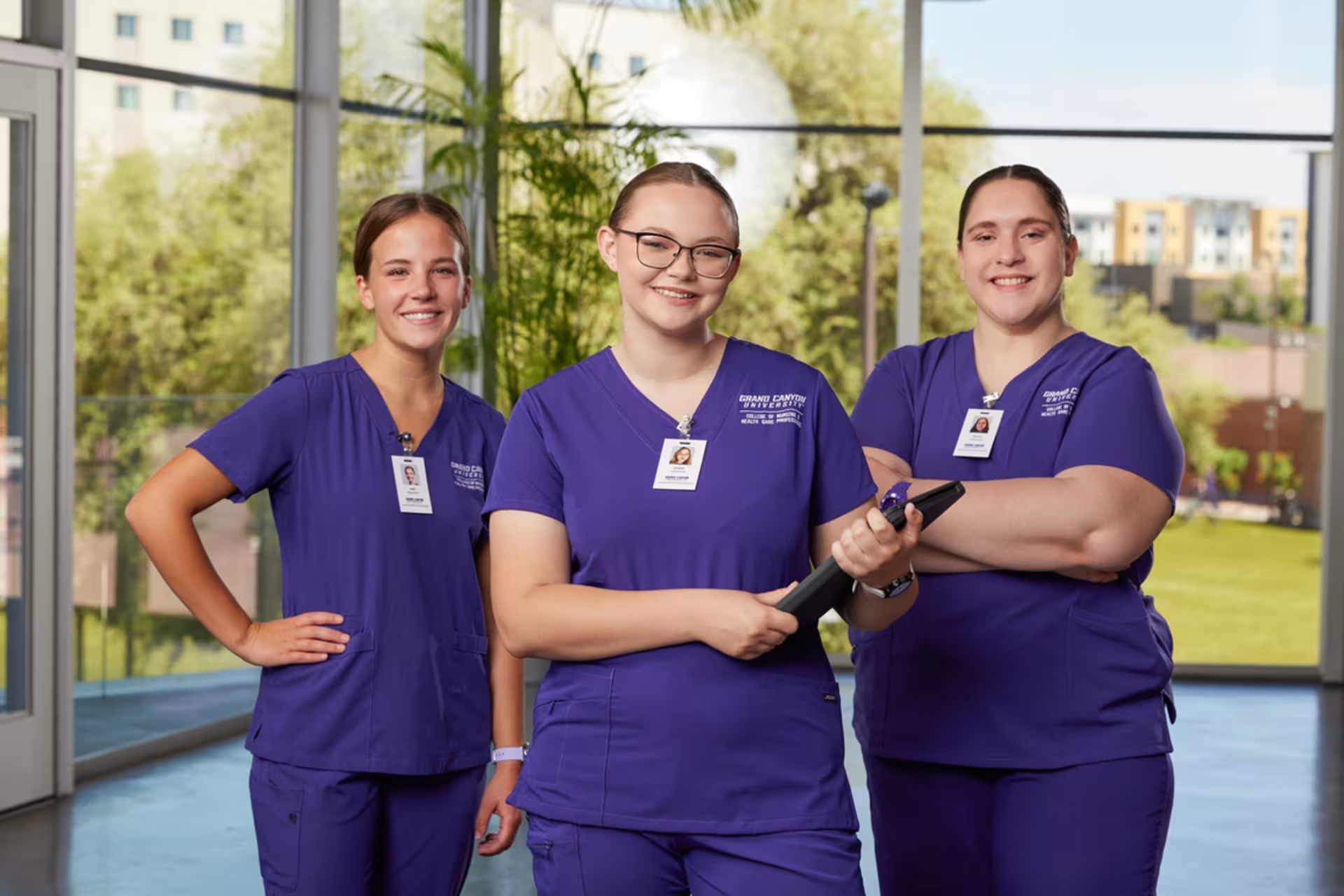
Prepare for a career as a registered nurse by earning a BSN at GCU. Explore multiple nursing degree pathways designed to support different educational backgrounds and career goals.
- COVID-19 has adversely affected the global economy and data from 2020 to 2023 may be atypical compared to prior years. Accordingly, data shown is effective August 2025, which can be found here: U.S. Bureau of Labor Statistics, Occupational Outlook Handbook, Registered Nurses, retrieved June 2026.
- The earnings referenced were reported by the U.S. Bureau of Labor Statistics (BLS), Registered Nurses as of May 2024, retrieved June 2026. Due to COVID-19, data from 2020 to 2023 may be atypical compared to prior years. BLS calculates the median using salaries of workers nationwide with varying levels of education and experience. It does not reflect the earnings of GCU graduates as registered nurses, nor does it reflect the earnings of workers in one city or region of the country or a typical entry-level salary. Median income is the statistical midpoint for the range of salaries in a specific occupation. It is very unlikely that a median salary will reflect an entry-level salary. It represents what you would earn if you were paid more money than half the workers in an occupation, and less than half the workers in an occupation. It may give you a basis to estimate what you might earn at some point if you enter this career. Grand Canyon University can make no guarantees on individual graduates’ salaries. Your employability will be determined by numerous factors over which GCU has no control, such as the employer the graduate chooses to apply to, the graduate’s experience level, individual characteristics, skills, etc. against a pool of candidates.
- U.S. Bureau of Labor Statistics. (2025, Aug. 28). Registered Nurses: Work Environment. Occupational Outlook Handbook. Retrieved June 2026.
- U.S. Bureau of Labor Statistics. (2025, Aug. 28). How To Become a Registered Nurse. Occupational Outlook Handbook. Retrieved June 2026.
- Dunn, A. (2025, Dec. 22). How High School Students Can Prepare for Nursing School. NurseJournal. Retrieved June 2026.