

Bachelor's in Exercise Science: Sports Performance Degree
What Is a BS in Exercise Science: Sports Performance Degree?
A Bachelor of Science in Exercise Science with an Emphasis in Sports Performance is an on-campus program focused on training athletes to peak performance, integrating physiology, biomechanics and strength and conditioning principles. Designed for students interested in sports, fitness and human performance, the program prepares individuals to work with athletic and active populations. Through applied coursework and hands-on learning, students can develop skills in performance assessment, program design and training strategies, helping to prepare them for roles in fitness, sports performance and related fields.
Campus: $8,250 per semester [More Info]
Up to 90 credits, only 84 can be lower division
Credits: Fill out the Lopes Eval to find out what will transfer
Admission Requirements (Bachelor's)
- 16+ years old
- High School Graduate
- 2.8+ Unweighted GPA
OR 2.5+ Unweighted GPA and
- ACT: 19
- SAT: 1000*
Admission requirements may differ based on degree level, program and modality, or transfer status. Some programs of study may require a higher GPA and/or other qualifying criteria for admission. Please review full admission and program requirements in the University Policy Handbook.
*Math and reading only on a 1600 point scale (test date after 3/1/2016). SAT score of 1380 required for 2400 point scale (test date before 3/1/2016).
What’s It Like Going to GCU for Your Bachelor’s in Exercise Science?
GCU is a private Christian university that encourages students to become ethical professionals who serve their communities and fields with integrity. Our industry-aligned curriculum integrates a Christian worldview, while emphasizing exercise science principles, such as human performance, strength and conditioning and biomechanics as they apply to sports performance.
GCU’s close-knit learning community in Phoenix offers a lively campus experience for exercise science students, with access to modern fitness facilities, performance training environments and opportunities to engage in activities that support active, performance-focused lifestyles.

What To Expect in an Exercise Science Degree
A Program Backed by Recognized Accreditation
This BS in Exercise Science: sports performance degree is recognized by the Education Recognition Program (ERP) through the National Strength and Conditioning Association (NSCA). This recognition affirms that the program meets high standards in preparing students for careers in strength and conditioning, sports science and fitness. This designation also recognizes and distinguishes programs with approved and standardized strength and conditioning curricula. It highlights GCU’s ability to prepare students for the NSCA Certified Strength and Conditioning Specialist(See disclaimer ®) (CSCS(See disclaimer ®)) certification. Requirements for the CSCS are changing in 2030, and GCU is developing a new program to meet the new CSCS standards.
GCU has been institutionally accredited by the Higher Learning Commission since 1968. The College of Natural Sciences shares the university’s commitment to upholding the principles and standards established by our accrediting bodies.
Active Campus Life and Recreational Opportunities
As an on-campus exercise science student, you can take advantage of GCU’s active campus environment and modern recreational amenities. Multiple fitness centers offer cardio and strength training equipment, along with group fitness classes that support performance-focused lifestyles. You’ll also find swimming pools, outdoor courts and open recreation areas, plus opportunities to participate in intramural sports and attend NCAA Division I Lopes athletic events.

Academic Resources and Hands-On Learning Support
The College of Natural Sciences provides resources designed to support your academic and professional development while earning a bachelor’s in exercise science. Students have access to fully equipped laboratory spaces and dedicated areas for mentored research and applied learning. Additional support includes faculty guidance, academic advising, internship opportunities, career services and tutoring to help strengthen subject knowledge and prepare for sports performance roles.
Faith-Based Learning at a Christian College in Phoenix
At GCU, we’re proud of our Christian faith, which is integrated directly into the coursework. We encourage our students to become stewards of the faith, to serve others in Christ’s name and to emulate a Christ-like character. You can attend the regularly scheduled worship services on campus and join our smaller, student-led Life Groups to nurture your spirituality. The Department of Spiritual Life can connect you to numerous faith-based opportunities on campus.

What Will I Study in a BS in Exercise Science Sports Performance Degree?
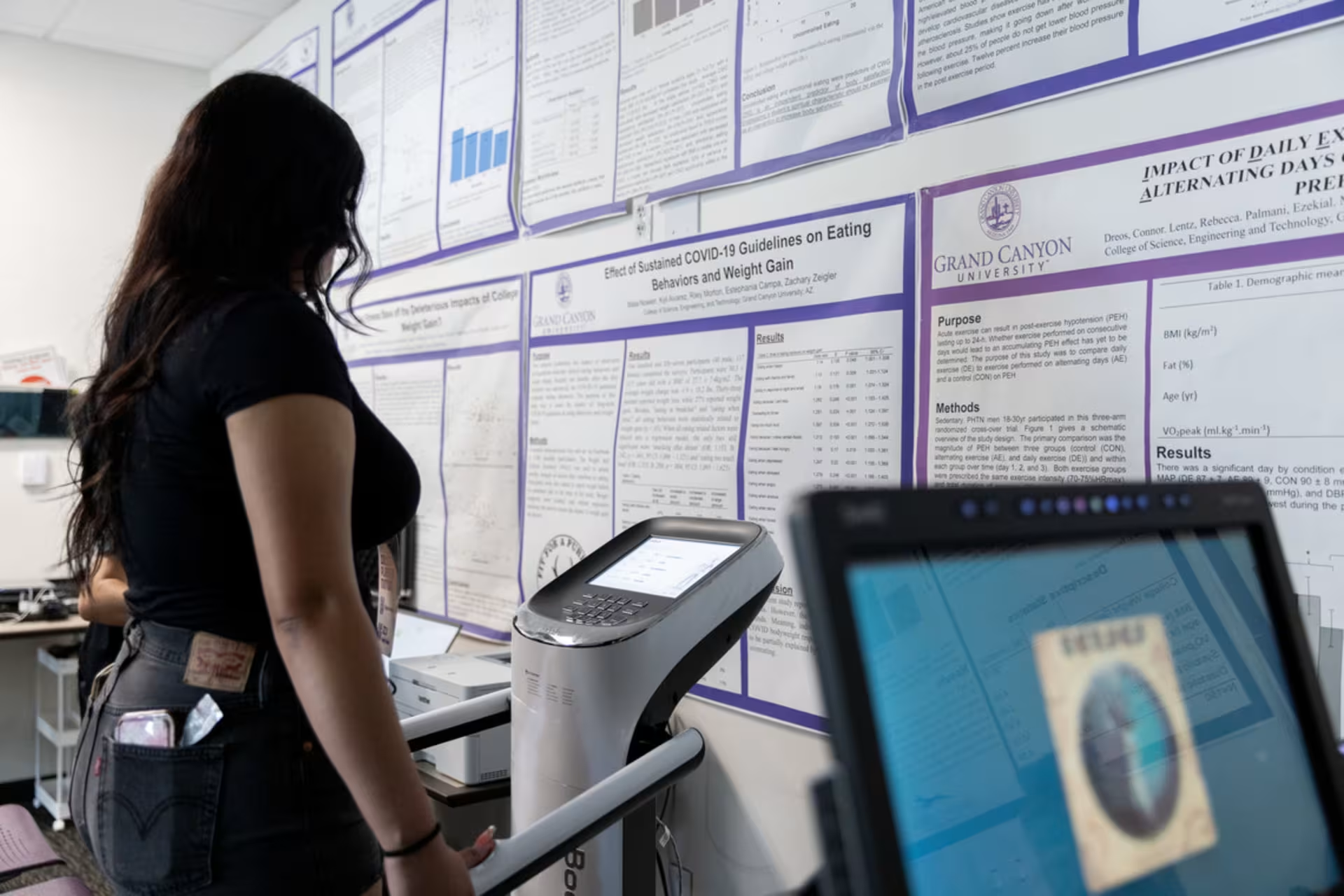
You will have opportunities to examine the many factors that contribute to overall health and wellness, as well as sports performance, such as nutrition and resistance training. This degree program combines didactic coursework with applied learning opportunities in GCU’s laboratory facilities. You’ll be able to see how the principles of exercise science, such as correct movement techniques, can be applied to optimize sports performance.
BS in Exercise Science Core Topics
This bachelor’s degree in exercise science delivers an industry-focused curriculum that teaches applied skills in health promotion, coaching techniques and performance optimization. You’ll dive into foundational topics in human anatomy and physiology and explore the principles of human movement, with a look at corrective or therapeutic exercises.
This program includes a capstone course, which focuses on career preparation through activities such as portfolio creation and networking. Toward the end of the program, you’ll also be expected to complete a course that requires the application of exercise science principles in real life.
This exercise science degree covers competencies such as:
Nutrition for athletes
Analyze dietary strategies to support performance, enhance recovery and maintain overall health
Fitness programming
Design strength and conditioning plans, incorporating cardiovascular training and coaching techniques
Health education
Develop fitness wellness programs tailored to diverse and special populations
Sports performance
Examine human physiology to evaluate and improve athletic performance outcomes
Discover Other Exercise Science Degrees
If you aren’t sure whether an exercise science degree with a focus on sports performance is the right choice for you, you can explore GCU’s other science-intensive programs. Consider earning an exercise science degree in pre-athletic training or pre-physical therapy to focus your studies on healthcare in athletics.
What Can You Do With a BS in Exercise Science: Sports Performance Degree?
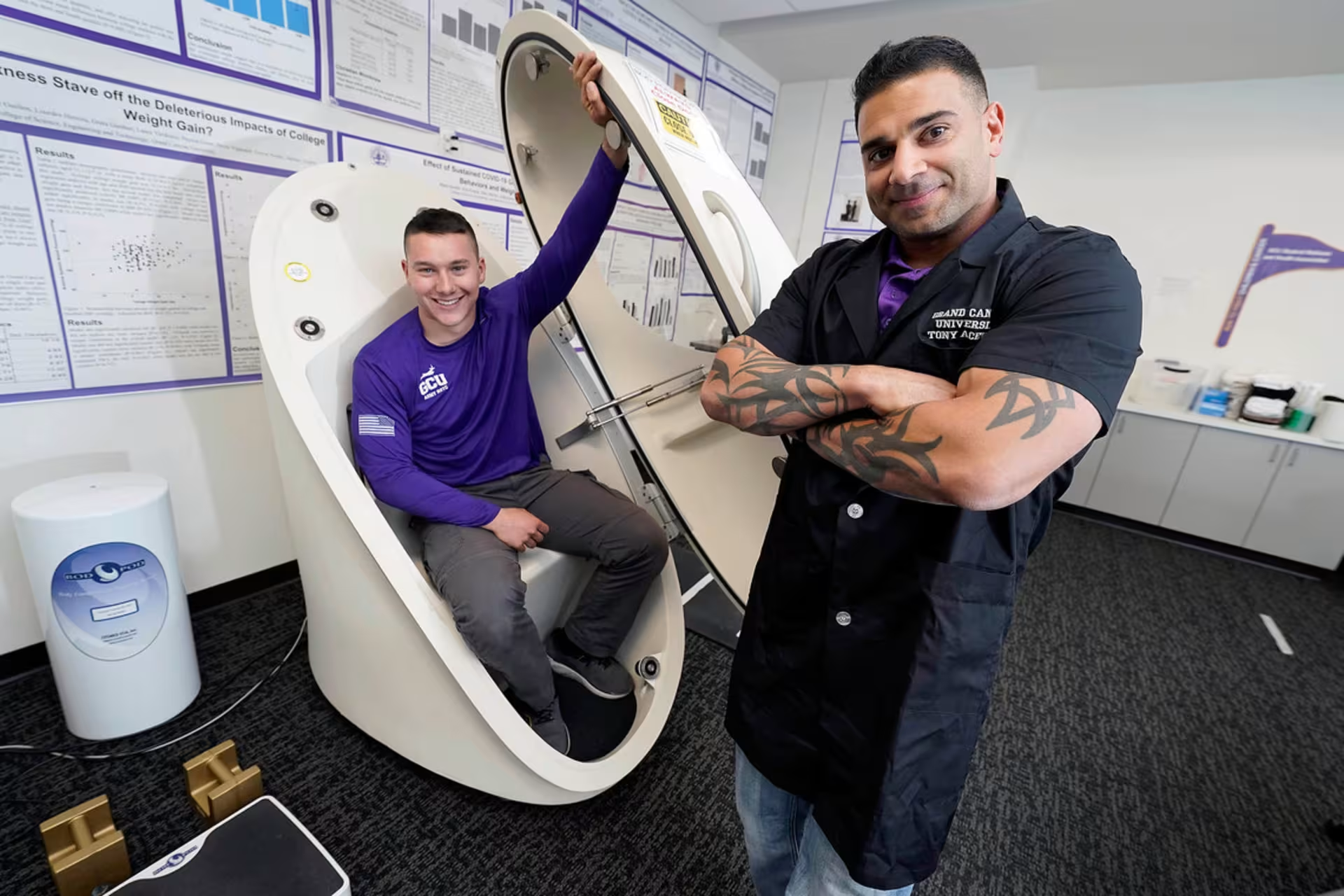
Sports and exercise science is a broad field that offers a variety of options and can be applied across a range of industries. With a foundation of competencies in this field, you might pursue a career as an exercise physiologist. Some graduates may decide to earn a master’s or doctoral degree to further specialize in sports performance or a related field.(See disclaimer 1) Graduates may additionally pursue advanced certifications in the fitness and sports performance industry.
Settings where exercise physiologists work, include:(See disclaimer 2)
Hospitals
Deliver clinical exercise support by developing and monitoring rehabilitation and recovery programs for patients with acute and chronic conditions
Schools
Lead physical development initiatives by training student athletes and supporting fitness programs for diverse student populations
Fitness centers
Instruct clients in strength and conditioning by creating, implementing and adjusting individualized fitness programs
Private practices
Operate performance or wellness services that assess client needs, develop training plans and provide ongoing fitness guidance
Median annual wage for exercise physiologists as of May 2024(See disclaimer 3)
Projected job growth rate for exercise physiologists from 2024 through 2034(See disclaimer 4)
The BS in Exercise Science: Sports Performance Emphasis is compatible with the following professional certifications:
Exercise Science Degree Tuition
GCU believes that quality higher education should be accessible to all. We’re committed to helping students pursue their academic goals by freezing on-campus tuition rates and offering millions in institutional scholarships. An education at GCU is an investment in your future.

GCU has not increased campus tuition rates since 2009
Ways To Save
Your education is an important financial investment, and there are several ways to help manage costs while earning your degree. GCU’s university counselors are available to help you explore available options and provide personalized guidance on your estimated cost of attendance.
Complete the Free Application for Federal Student Aid (FAFSA) annually to determine eligibility for federal grants and student loans. Since some aid is awarded on a first‑come, first‑served basis, GCU recommends submitting the FAFSA as early as possible after Oct. 1 to maximize funding opportunities.
If you’ve earned college credits from another institution, you may be able to complete your degree sooner at GCU by transferring those credits. Submit the Lopes Unofficial Credit Evaluation form, then connect with a university counselor who can provide you with personalized guidance.
You may be able to reduce your college costs by applying for GCU’s on-campus or online student scholarships. We invite you to explore available institutional scholarships and determine which opportunities you may be eligible for. GCU also encourages students to seek out third‑party scholarships and grants.
Explore Your Financial Options
Connect with a university counselor to learn about available savings opportunities and cost-planning resources.
Frequently Asked Questions
GCU has compiled the following frequently asked questions and answers to help inform your decision-making process as you consider whether a bachelor’s in exercise science is the right choice for you.
What is sports performance science?
Is a degree in exercise science worth it?
What is the difference between exercise science and kinesiology degrees?
What skills are important for sports performance careers?
What can you expect from the capstone course in an exercise science degree?
What types of hands-on learning are included in an exercise science degree?
Getting Into GCU
GCU has streamlined the admission process. Our school does not require a personal statement or essay, and there is no application fee. High school students may meet the admission requirements with either a minimum GPA, SAT or ACT exam scores. Specific requirements can vary, depending on the degree or program. Your university counselor will help you navigate the process of applying.
You can apply to a degree program at GCU in just three simple steps. Your university counselor is standing by to assist you with any questions about the application process.
It starts with selecting the program that aligns with your goals from one of GCU's 380+ academic programs — from undergraduate degrees to post-master’s certificate programs to doctoral degrees.
Pick your program
Explore our on-campus, online or evening cohort options under the Degree Programs page to find the right program for you.
Complete our online application
Your university counselor will direct you to the online application. Fill in all required information and submit the form.
Submit supporting documents
Submit your official transcripts and any relevant test scores, and confirm with your university counselor that all forms for your desired program are submitted.
Program Curriculum
Core Courses
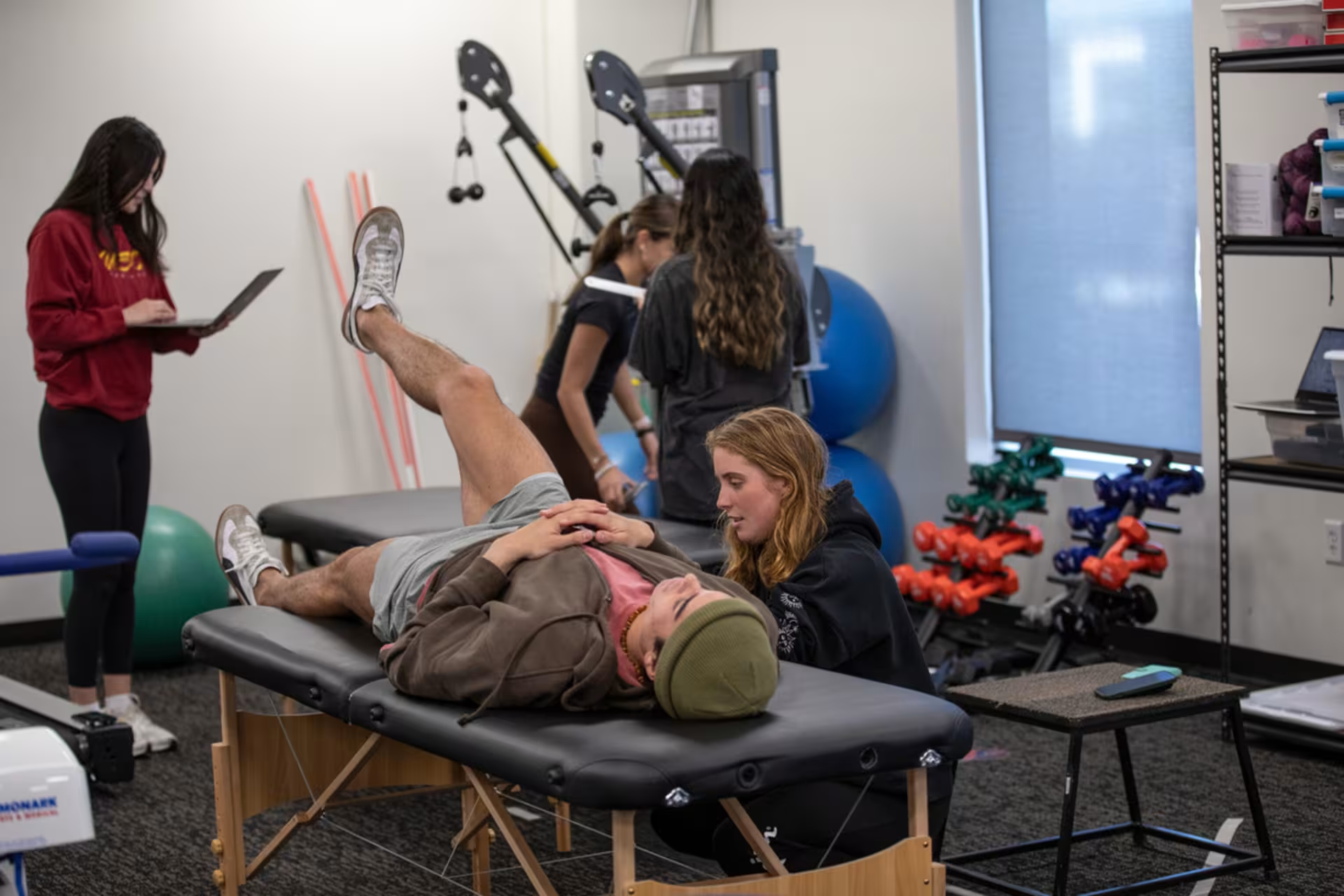

Blend your passion for sports and fitness with purpose for your future. Study exercise science and sports performance at GCU.
- U.S. Bureau of Labor Statistics. (2025, Aug. 28). How to Become an Exercise Physiologist. Occupational Outlook Handbook. Retrieved May 2026.
- U.S. Bureau of Labor Statistics. (2025, Aug. 28). Exercise Physiologists: Work Environment. Occupational Outlook Handbook. Retrieved May 2026.
- The earnings referenced were reported by the U.S. Bureau of Labor Statistics (BLS), Exercise Physiologists, as of May 2024, retrieved May 2026. Due to COVID-19, data from 2020 to 2023 may be atypical compared to prior years. BLS calculates the median using salaries of workers nationwide with varying levels of education and experience. It does not reflect the earnings of GCU graduates as exercise physiologists, nor does it reflect the earnings of workers in one city or region of the country or a typical entry-level salary. Median income is the statistical midpoint for the range of salaries in a specific occupation. It is very unlikely that a median salary will reflect an entry-level salary. It represents what you would earn if you were paid more money than half the workers in an occupation, and less than half the workers in an occupation. It may give you a basis to estimate what you might earn at some point if you enter this career. Grand Canyon University can make no guarantees on individual graduates’ salaries. Your employability will be determined by numerous factors over which GCU has no control, such as the employer the graduate chooses to apply to, the graduate’s experience level, individual characteristics, skills, etc. against a pool of candidates.
- COVID-19 has adversely affected the global economy and data from 2020 to 2023 may be atypical compared to prior years. Accordingly, data shown is effective August 2025, which can be found here: U.S. Bureau of Labor Statistics, Occupational Outlook Handbook, Exercise Physiologists, retrieved May 2026.
- U.S. Bureau of Labor Statistics. (2025, Aug. 28). What Exercise Physiologists Do. Retrieved May 2026.