

For many registered nurses (RNs), earning a Bachelor of Science in Nursing (BSN) can be an opportunity to expand their knowledge, strengthen their confidence and prepare for new professional goals. Whether an RN to BSN program is personally worth it for you depends on your circumstances, career aspirations and personal motivations.
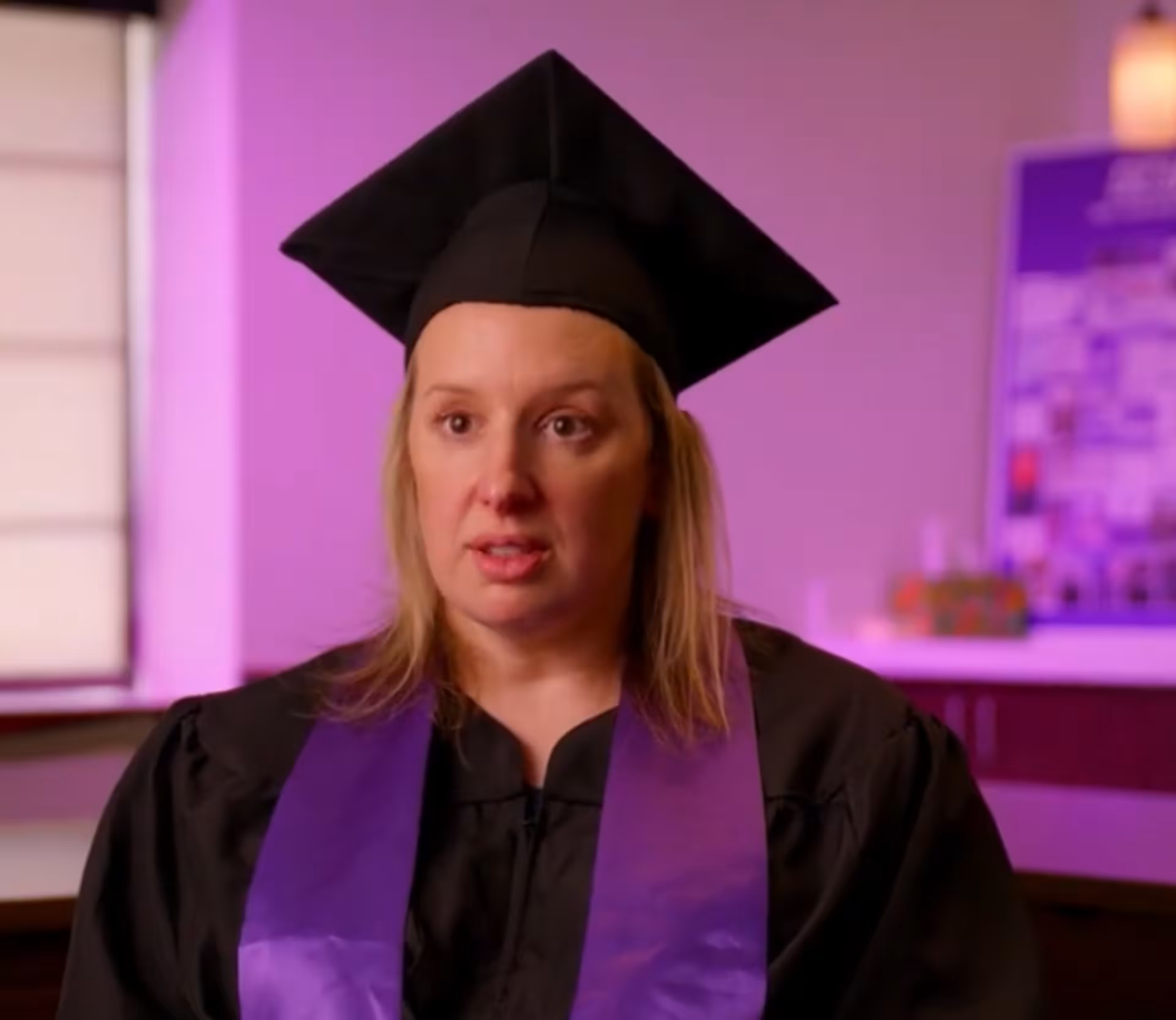
For Rebekah Swindler, a 2026 RN to BSN graduate, the decision to return to school was about more than earning another credential. After witnessing the compassionate care her husband received during his battle with cancer, she felt called to nursing. As a wife, mother of four and full-time RN, she chose to earn her BSN online through GCU to continue growing both personally and professionally.
Her story offers a firsthand look at the challenges, rewards and opportunities that can come with pursuing an RN to BSN program.
Why Nurses Choose an RN to BSN Program
RNs return to school for many different reasons. Some want to deepen their clinical knowledge, while others are preparing for future career opportunities, graduate education or roles that may prefer or require a BSN. Others simply want to challenge themselves through continued professional development. According to the American Nurses Association (ANA), lifelong learning is an important part of nursing practice as healthcare continues to evolve.(See disclaimer 1)
For Rebekah, the decision to pursue nursing began long before she enrolled in an RN to BSN program. After graduating from high school, she studied early childhood education. However, when her husband was diagnosed with cancer, her plans changed.
"Being in all the different clinical settings with my husband, it really was the healthcare workers that just their kindness and their steadfastness that propelled me toward wanting to be a nurse," she said.
After becoming an RN, Rebekah decided to continue her education by earning a BSN. While every nurse's motivation is different, her journey reflects a common theme: Investing in your education can be a way to continue growing both personally and professionally while preparing for what comes next.
How an RN to BSN Program Helps Build Confidence
Many RNs wonder whether they have the time, ability or confidence to complete a bachelor's degree while balancing work, family and personal life. Rebekah recalls struggling with self-confidence during nursing school and questioning whether she was capable of succeeding academically.
That mindset gradually changed as she worked through GCU's RN to BSN program. Looking back, she says the experience helped her recognize her own strengths as both a student and a nurse.
"I've learned a lot about myself going through this program. I think it really helped boost my confidence in the fact that I do know things, I am knowledgeable and I do have something to say."
She also credits coursework that explored ethical issues in healthcare with encouraging personal and professional growth. The discussions challenged her to think about how her Christian faith could shape compassionate patient care while respecting the beliefs and values of every patient she serves.
For Rebekah, earning a BSN became about more than expanding her nursing knowledge. It gave her greater confidence in her voice, her clinical judgment and her ability to continue growing throughout her nursing career.
What Benefits Can an RN to BSN Degree Provide?
While every nurse’s experience is unique, earning a BSN can provide benefits that extend beyond the classroom. RN to BSN programs often build on existing nursing knowledge while exploring competencies that can help prepare nurses to navigate today’s increasingly complex healthcare environment. This includes areas such as:
One of the greatest benefits for Rebekah wasn’t just what she learned, but who she became. As she completed the program, she gained confidence in her knowledge and ability to contribute as a nurse, along with growth that continues to influence her work today in a rural critical care unit.
For Rebekah, one of the most rewarding aspects of nursing is being able to recognize subtle changes in a patient's condition and noticing “the small changes in a patient to see if they're either declining or if they're actually improving and getting better.”
Whether your goal is to strengthen your clinical knowledge, build confidence or prepare for future opportunities, an RN to BSN program can help you continue developing as a nursing professional.
Career Opportunities After Earning a BSN
Earning a BSN can be an investment in your long-term professional growth. According to the American Association of Colleges of Nursing (AACN), baccalaureate nursing programs build on the education provided in diploma and associate degree programs by offering more in-depth study of nursing research, public and community health, nursing management, the sciences and the humanities.(See disclaimer 2) This additional coursework is designed to prepare nurses for a broader scope of practice and a deeper understanding of the factors that influence patient care and healthcare delivery.
For Rebekah, earning her BSN has also encouraged her to think about what's next. While she currently works in a rural critical care unit, she hopes to continue her education and eventually become a nursing educator, explaining that, “I do foresee me getting my master's. I eventually want to go into teaching nursing."
Although every nurse's career journey is different, a BSN can provide a strong foundation for nurses who are considering graduate education or exploring future opportunities that align with their interests and goals. Some positions may also require additional experience, certification or advanced education beyond a bachelor's degree.
Can an RN to BSN Degree Increase Earning Potential?
Whether earning a BSN increases your earning potential depends on a variety of factors, including your employer, geographic location, years of experience, nursing specialty and job responsibilities. The U.S. Bureau of Labor Statistics (BLS) reports salary information for registered nurses as a whole and does not distinguish earnings based on degree level. According to the BLS, registered nurses earned a median annual salary of $93,600 in May 2024.(See disclaimer 3)
Although a BSN does not guarantee a higher salary, some healthcare organizations prefer or require BSN-prepared nurses for certain positions. According to the AACN, employers increasingly recognize the value of baccalaureate-prepared nurses because BSN programs provide additional education in leadership, evidence-based practice, community health and quality improvement.(See disclaimer 2)
How To Decide if an RN to BSN Program Is Worth It
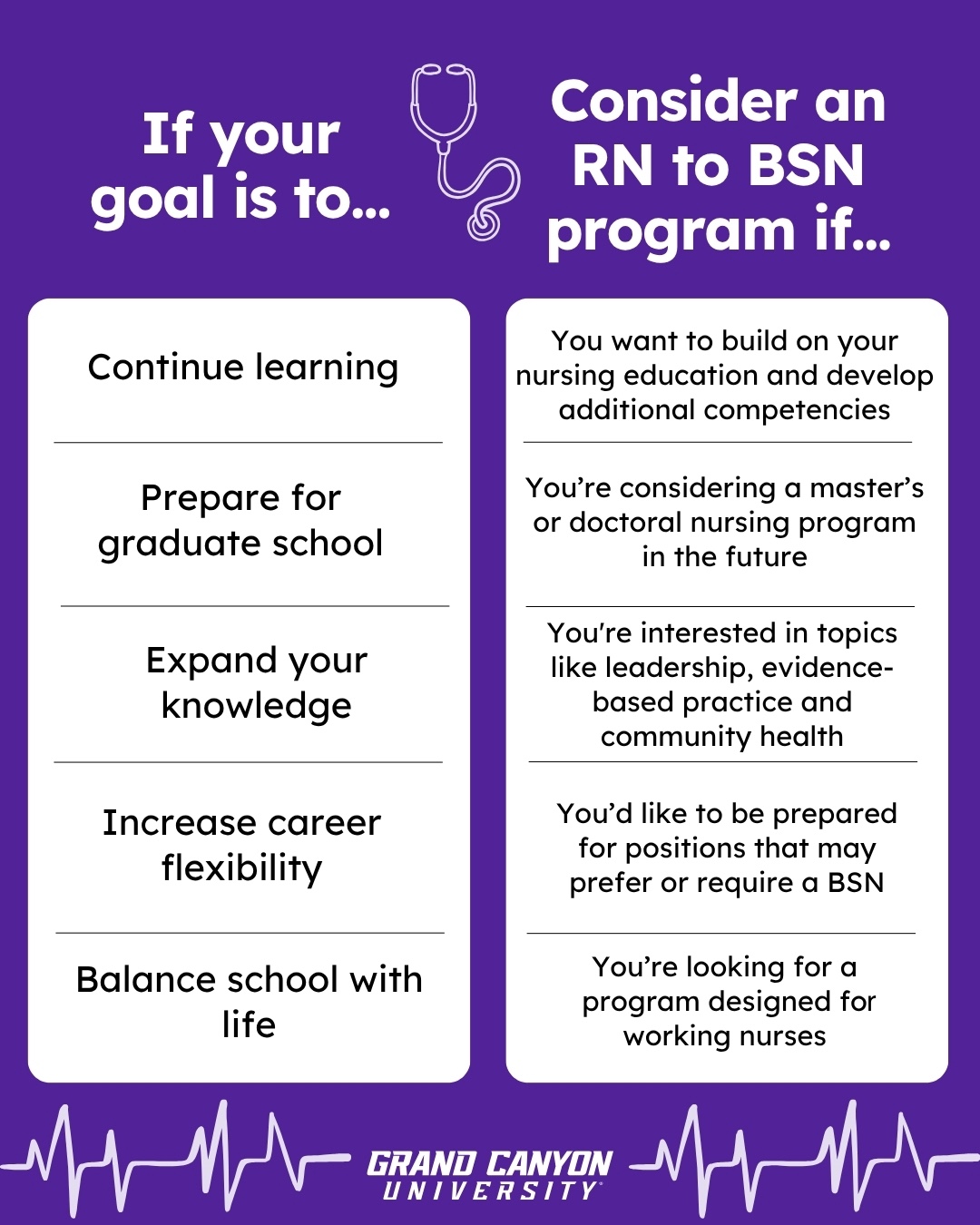
For some nurses, earning a BSN is worth it because it is a step toward graduate education or preparing for positions that may prefer a bachelor's degree. For others, it's an opportunity to build confidence, expand their knowledge and continue growing professionally.
For Rebekah, the decision came down to investing in herself. While earning a BSN supported her long-term goal of eventually becoming a nurse educator — which requires a master’s — it also helped her rediscover confidence in her own abilities and reaffirm her calling to care for others.
As you evaluate your options, consider your current role, future goals and the type of nursing career you envision for yourself.
Common Challenges When Returning to School for a BSN
Returning to school while working as an RN can feel overwhelming. Between long shifts, family responsibilities and everyday commitments, finding time for coursework may seem like a challenge. Some nurses may also be returning to school after several years away from the classroom and need time to adjust to academic writing, online learning or new technologies.
Despite these challenges, many nurses find that earning a BSN is achievable with careful planning, effective time management and a strong support system. Choosing a program designed for working RNs can also make it easier to balance coursework alongside professional and personal responsibilities.
Balancing Work, Family and an RN to BSN Program
For Rebekah, flexibility was one of the biggest factors in choosing how to earn her BSN. While completing her degree, she balanced a full-time position with raising her children and managing everyday responsibilities.
She found that the online(See disclaimer 4) learning format allowed her to complete coursework around her schedule, making it easier to continue progressing toward her degree while remaining present for her family and patients.
“The online(See disclaimer 4) format really helps me balance work life, my four kids. It was very successful for me.”
Rebekah also appreciated that the program could adapt when life became unpredictable, giving her the opportunity to pause when needed before continuing toward graduation. For nurses who are balancing multiple responsibilities, finding a program that fits their lifestyle can make returning to school feel more achievable.
Questions To Ask Before Choosing an RN to BSN Program
Choosing an RN to BSN program is about more than earning a degree. It's about finding a learning environment that supports your goals and fits your life. Not all RN to BSN programs are the same. Before enrolling, take time to compare your options and consider which program best aligns with your personal, professional and educational goals. Asking the right questions can help you make an informed decision.
- Is the nursing program accredited?
Accreditation helps ensure a nursing program meets established standards for academic quality. You may want to verify that the university is institutionally accredited and that the nursing program holds specialized nursing accreditation. - Is the program designed for working registered nurses?
If you plan to continue working while earning your degree, look for a program that offers flexibility in format and schedule to fit your lifestyle. - Does the curriculum support my long-term goals?
Review the courses you'll take and consider whether they align with your interests. Topics such as leadership, evidence-based practice, community health and professional communication may help prepare you for future opportunities in nursing.(See disclaimer 2) - What student support services are available?
Consider what resources the university offers, such as academic support, technical assistance and access to faculty. These services can make a difference as you balance school with work and family responsibilities. - Can this program help me prepare for what's next?
If you're considering graduate education or exploring future nursing pathways, look for a program that aligns with your long-term plans.
"I feel like I'm finally waking up to me and to the fact that I still have a calling, that God still has a purpose for me."
Take Your Next Step in Nursing at GCU
For Rebekah, earning her BSN became part of a much larger journey. After facing years of uncertainty while caring for her husband and raising her children, she found renewed confidence in herself and a clearer vision for the future. Today, she continues caring for patients while looking ahead to her next goal of earning a master's degree and eventually teaching nursing.
If you're a registered nurse wondering is an RN to BSN worth it?, consider where you want your nursing journey to take you. GCU's online(See disclaimer 4) RN to BSN program is designed for licensed RNs who want to build on their existing education through coursework in leadership, evidence-based practice, community health and professional communication while balancing work and life's responsibilities.
Explore our RN to BSN degree program to learn more about admission requirements, curriculum and how the program can support your professional goals.
Ready To Continue Your Nursing Journey?
Discover how GCU's online(See disclaimer 4) RN to BSN program can help you build on your nursing education with greater flexibility.