
If you’ve ever watched dance shows like “So You Think You Can Dance,” you’ve likely seen contemporary dance, but what is contemporary dance? Contemporary dance blends elements of modern, ballet, jazz, Hip-Hop and other movement practices, such as acro, while giving dancers the freedom to express themselves in personal and innovative ways.
Modern Dance vs. Contemporary Dance
Modern dance, which emerged in the early 20th century, began as a rebellion against the restrictions of classical ballet. Since its beginnings, modern dance has steadily evolved, adapting as each generation of dancers discovers new methods for conveying ideas, emotions, and stories through movement.
Over time, modern dance established several codified techniques, each reflecting the artistic values and philosophies of its choreographer or teacher. Notable examples include:
While modern dance began as a rebellion against the rigid structure of classical ballet, it has gradually become more formalized through these established techniques. Contemporary dance, by contrast, remains relatively unstructured, drawing from modern and ballet practices while allowing for greater freedom, experimentation and individual interpretation.
Contemporary dance is often performed to today’s popular music. It can be seen in a wide range of settings, from commercial dance in advertisements and television to live performances at concerts like Taylor Swift’s, on Broadway, in regional theaters, and of course, on platforms like TikTok.
Techniques and Styles in Contemporary Dance
What is contemporary dance style? Contemporary dance does not have a separate movement vocabulary. The movements are pulled from both ballet and modern dance, blending their movement vocabularies while utilizing them with greater freedom.
Here are some common movement elements integrated into contemporary dance:
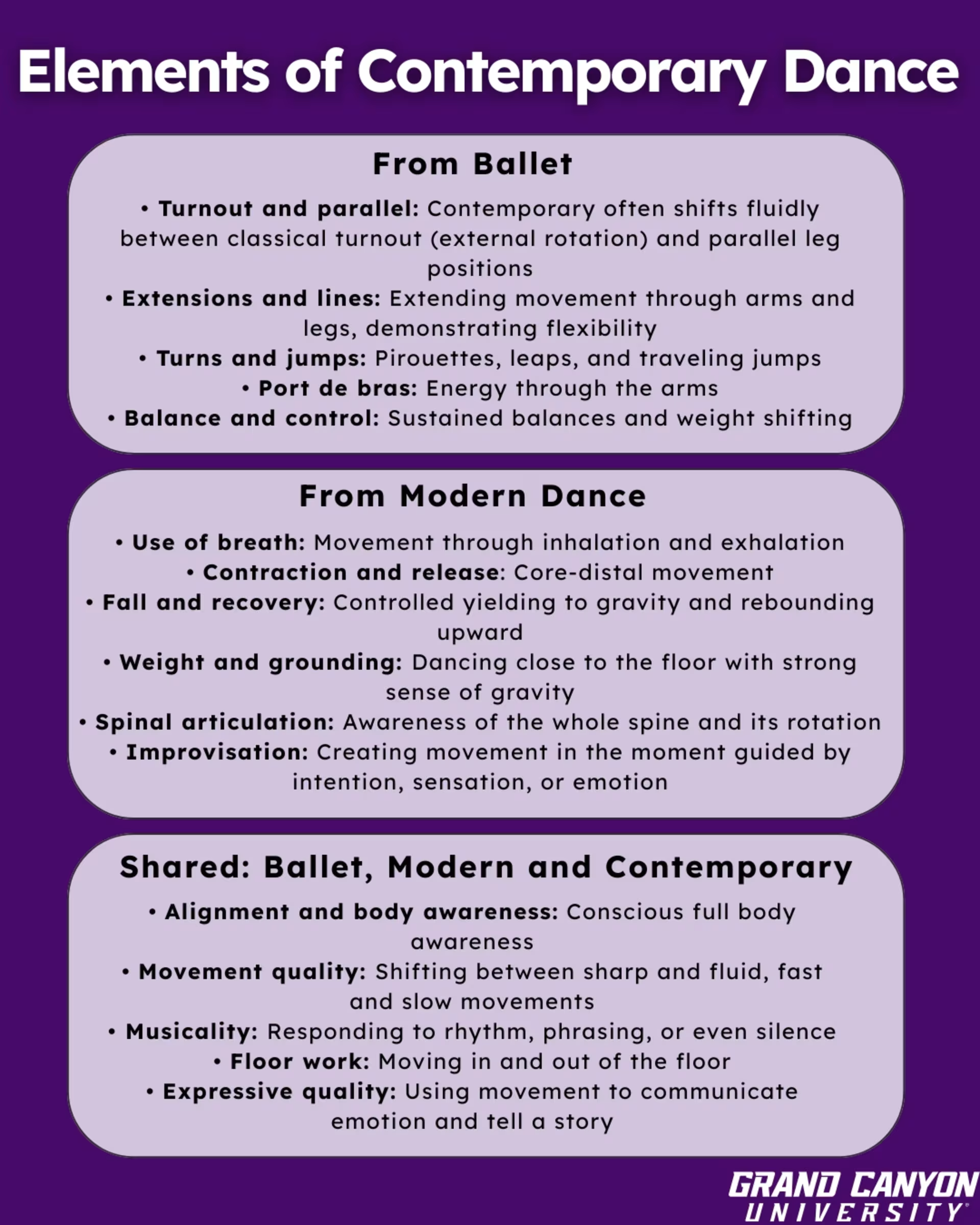
In contemporary dance, these elements are often deconstructed, fused or reimagined, allowing dancers to move seamlessly between classical precision and modern freedom.
How To Learn Contemporary Dance
If you are interested in learning contemporary dance, it is important to train with a qualified teacher, whether through online classes or in-studio instruction. A knowledgeable instructor can guide you in moving dynamically with proper alignment, which is essential for both efficiency and injury prevention. Check local dance studios, community centers or online classes.
Wear athletic clothing that allows for full range of motion without being overly baggy; this helps instructors clearly see your alignment for feedback and ensures your clothing does not restrict movement. Contemporary dance is often performed barefoot, though it’s always best to check with the instructor for specific class requirements. Knee pads are also recommended for floor work. If you choose to take classes online, be sure that you are able to dance in an open, unobstructed space free of furniture or objects you could bump into and on a suitable surface such as a wood or linoleum floor. Carpet is not a recommended or safe surface for dancing and concrete should also be avoided, as contemporary dance involves floor work and jumping that require proper shock absorption.
Why Contemporary Dance Is Popular Today
Contemporary dance is popular because it’s a powerful way to express yourself. Moving your body connects mind and body, giving both physical benefits, like strength and flexibility, and mental benefits, such as stress relief and emotional release. You can see contemporary dance examples everywhere today: on TV, in commercials, TikTok and in live performances. In a world of artificial intelligence (AI) and screens, dance remains a physical, hands-on practice. It offers anyone a chance to relieve stress, turn inward and express themselves outward through movement.
Careers in Contemporary Dance
Examples of some careers in contemporary dance include choreographer and dancer. In recent years, the number of dance studios has continued to grow.(See disclaimer 1) Many studios seek teachers trained in contemporary dance, one of the most popular styles today.(See disclaimer 2)
Dance conventions are also growing in popularity.(See disclaimer 3) These regional and national events provide young dancers with opportunities to train with a variety of professional instructors and choreographers. Contemporary dancers are now performing widely across the commercial and professional industries, including regional and national theatres, amusement parks, cruise ships and major sporting events such as dancing in the Super Bowl.
For those with a strong interest in creating movement, choreography is another potential career route. Choreographers work in many of the same venues, as well as in television, film and other media.
"Like a phoenix rising from the ashes, contemporary dance will continue to reinvent itself, shaped by its audiences, popular music and ever-changing social media trends."
The Future of Contemporary Dance
The future of contemporary dance is both exciting and unpredictable. TikTok has transformed the dance and entertainment industries by redefining how movement is created, shared and discovered. Short-form dance videos have propelled choreographers and performers into the global spotlight, turning viral moments into professional opportunities and influencing music, commercial work and live performance.
The platform has blurred the lines between concert, commercial and social media dance, while inviting audiences to actively participate by learning, remixing and reshaping choreography. By accelerating trends and democratizing access to visibility, TikTok has reshaped the creative landscape; much like AI is poised to do next, with the potential to further transform how contemporary dance is created, taught and experienced.
As AI becomes more integrated into the creative landscape, the ways technology and contemporary dance may intersect remain uncertain, yet full of possibility. To thrive in this evolving art form, dancers must stay open, adaptable and willing to grow alongside contemporary dance itself.
Make Contemporary Dance Part of Your Education
A college dance program allows you to refine your technique through intensive training with qualified faculty who bring professional experience into the studio. You’ll be taught how to move with efficiency and intention: essential skills for building a long, healthy and sustainable dance career.
At GCU, students are supported not only as performers but as artists. In addition to strengthening technical skills, dancers develop their creative process by learning the foundations of choreography and composition. With guidance from faculty mentors, students are encouraged to explore movement, take creative risks and discover their own artistic voice. Performance is central to the experience. Students are given multiple opportunities to perform and showcase their own choreography both on and off campus, gaining the confidence, versatility and professional preparation needed to become a part of today’s contemporary dance world.
If you’re dreaming of a professional career in dance, pursuing a bachelor’s degree in dance can be a powerful next step. Consider applying to GCU’s Bachelor of Arts in Dance today.
Explore Your Dance Future
Earn your BA in Dance and explore how contemporary movement, creativity and performance can shape your future.
.jpg)