


Every product or service we enjoy began as an idea. Entrepreneurs are individuals who take these ideas and develop them in to businesses. Entrepreneurial success involves a broad range of personal skills that develop over a lifetime. We spoke with Nathan Hollis II, assistant professor at GCU’s College of Education, to learn more about how educators can teach entrepreneurship and the benefits of learning these skills in childhood.
“Teaching entrepreneurship to kids at an early age helps with their personal development and prepares them for the world around them. Entrepreneurship encourages kids to think outside the box, solve problems creatively and explore new ideas. These skills are valuable not just in running a business, but also in career and life situations,” explains Hollis II.
Why Entrepreneurship Matters for Kids
Teaching entrepreneurship to kids supports holistic student development. It requires children to think about the needs of society (convergent thinking), come up with unique solutions (divergent thinking) and situate these products or services within a competitive market. Like life, markets are adaptive and constantly changing, so learning how to navigate these contexts is an ongoing process.
Hollis II adds, “As children develop, it is crucial that they embody a growth mindset.” In an updated book in her series titled, "Mindset: Changing the Way You Think to Fulfill Your Potential," Dr. Carol S. Dweck described a growth mindset as your brain being filled with the possibility of ‘what if’.(See disclaimer 1) When discussing how to apply this mindset in the classroom, Hollis II explains, “It could mean not knowing, and being okay with not knowing, how something works, who is involved or what could be the potential outcome. For teachers, introducing entrepreneurial skills to children at an early age may mean allowing children to make mistakes without fear of being in trouble.”
Experience coordinating and negotiating with others through entrepreneurship can help refine young entrepreneurs’ social skills and demonstrate the value of lifelong learning. Innovation and adaptability are important skills that can support students throughout their lives and careers.
Teaching the Basics of Entrepreneurship
While entrepreneurship involves many general life skills, children can benefit greatly when adults help create contexts in which entrepreneurial skills can be applied and practiced. According to Hollis II, “some of the most complex business concepts, like communication, negotiation and decision-making can begin early on in a child’s life when a teacher models the behavior. Vygotsky called this concept of learning the zone of proximal development, where children can learn about things and practice them independently or with the guidance of others.”(See disclaimer 2)
He adds, “It is important to introduce young children to relevant vocabulary to build their knowledge base. Terms like idea, money, price, sell, buy, trade, goals, plan, problem and solution will help them understand the world of ideas, work and value in a fun and age-appropriate way. As the various terms are introduced, allow the child to observe you interact in various business exchanges while speaking with colleagues in the front office. Before, during and after the exchange, have intentional conversations with the child about what was at stake, your goals for the exchange and whether or not the goals were met. When appropriate, encourage the young child to participate in the exchanges by taking inventory or requesting supplies, negotiating with colleagues or planning for fieldtrips and classroom parties.”
In other words, teaching entrepreneurship to kids involves navigating social interactions, so the concepts and terms used in these interactions might best be learned in the contexts in which they are applied. While concepts like price setting or negotiation could be explained abstractly, there is no substitute for observing the process directly. In addition to observing these practical business interactions, children can practice entrepreneurial skills in games that require forms of cooperative and competitive coordination.
Fun Activities To Spark Entrepreneurial Thinking
Classroom activities should encourage creativity and business thinking, such as product design challenges, classroom markets or budgeting games. Emphasizing hands-on learning and collaboration can make entrepreneurship an engaging and memorable experience.
When thinking about creating activities in the classroom, Hollis II notes it is important to remember that “pretend play and role play activities are huge influences for helping younger children develop the type of deliberate thinking that aligns with entrepreneurship. One study identified Lev Vygotsky’s beliefs about the power of play for children as extremely significant.(See disclaimer 2) Essentially, children can create an imaginary situation, act out various roles and follow a set of rules determined by the specific roles. Activities where children can use their imagination to create or develop their decision-making and leadership skills can stimulate entrepreneurial thinking.”
Some fun entrepreneurial activities you can incorporate in the classroom include:
"From lemonade stands to bake sales, there are a ton of traditional activities to spark entrepreneurial thinking in kids. Think about it: have there been missed opportunities for you to help your child develop business skills while selling those delicious cookies every year with her troop? No matter the interest or occasion, there is a chance that every child can participate in fun, hands-on activities that help spark entrepreneurial thinking."
— Nathan Hollis II, Associate Professor, College of Education
Resources and Curriculum for Kids
Teaching entrepreneurship to kids can be both fun and transformative. With the right tools and curriculum, educators can nurture creativity from an early age. Nathan Hollis II explains how to offer structured, engaging ways to bring entrepreneurial thinking into the classroom. “One rising software to consider is ESTEAM® through VentureLab, which involves curriculum on Entrepreneurship, STEM and the arts. The program includes hands-on activities, workbooks and practical problem-solving for children in grades 1-5. Specific concepts ranging from ideas to pitch to career exploration are featured in the program,” Hollis II adds.
In addition, “the Kid Startupper is another viable source for young entrepreneurs. It is an AI-powered platform for ages 10-15 with step-by-step entrepreneurship training, including planning, building and promoting a business. The service can be home-based or school-based learning with video lessons, e-books, quizzes and exercises. Learners can earn a certificate in entrepreneurial skills upon completion,” explains Hollis II. These programs can make a great addition to your curriculum.
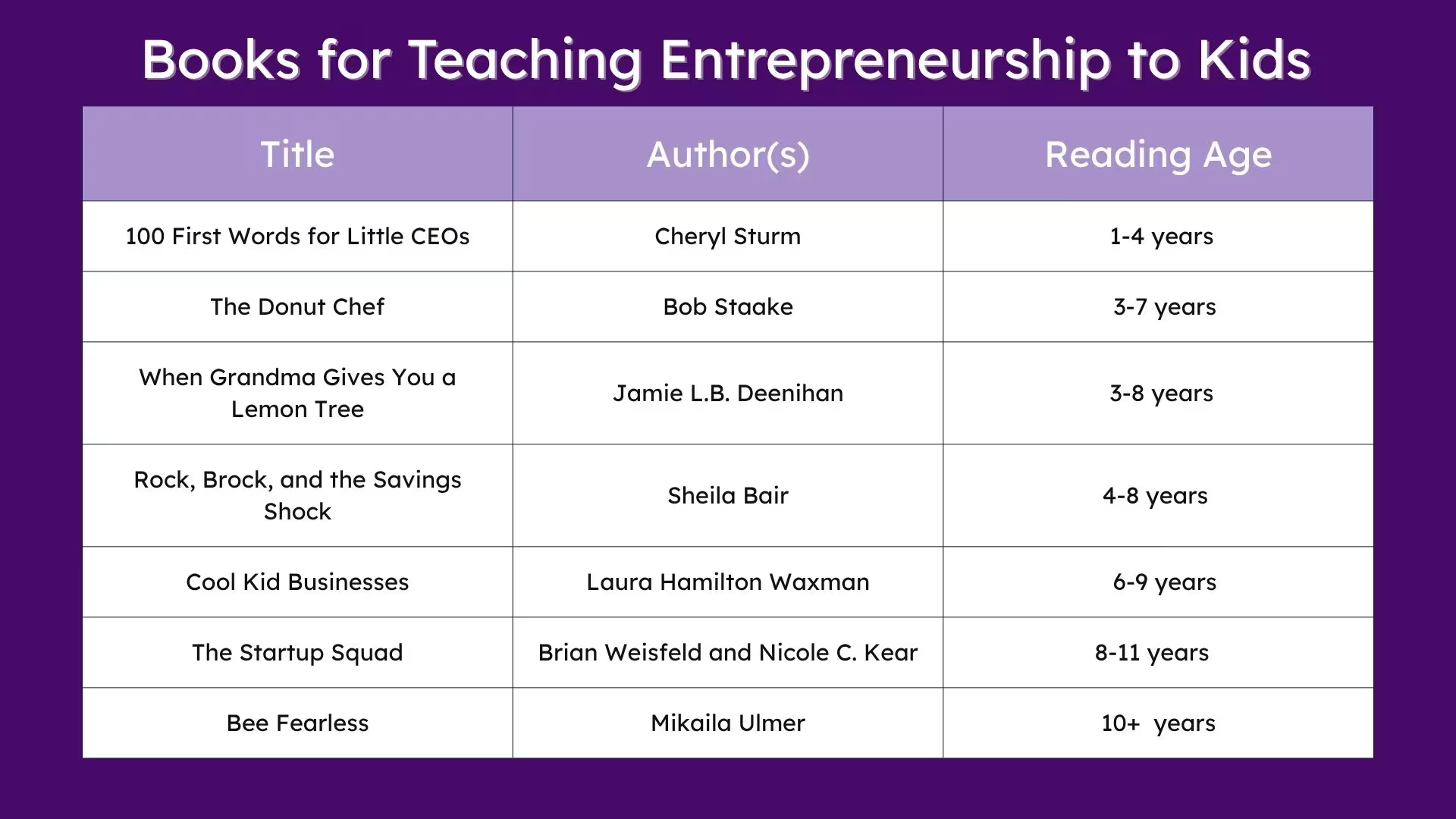
These books are recommended for teachers to share with children who display an interest in entrepreneurship:
Small Business Ideas for Kids
As a teacher, you can guide students in brainstorming and launching simple ventures. When thinking about how to teach kids entrepreneurship, focus on classroom-friendly business ideas that can be done individually or in groups, and that teach key concepts like planning, budgeting and marketing.
Here are some of Nathan Hollis II’s favorite realistic small business ideas that kids can start with minimal resources:
Supporting Your Student's Journey
As you mentor and encourage young entrepreneurs, remember the importance of fostering a growth mindset, celebrating effort and guiding students through challenges. Hollis II notes, “much like entrepreneurship, missed opportunities are not mistakes, but they are learning opportunities where children acquire the knowledge and skills needed to develop their efforts into something greater. Errors and blunders can become opportunities for children to analyze what did not go according to plan so they can continue their journey to improvement and success.”
Long-Term Benefits of Youth Entrepreneurship
Teaching entrepreneurship to youth isn’t just about starting a business, it is a mindset that fosters independence for a lifetime. As Hollis II puts it, “children reap a great amount of benefit from being introduced to entrepreneurship at an early age. When parents, teachers and caregivers take the initiative for the child’s continuous development in this way, connections will be made to learning in school and effectively managing social relationships.”
Hollis II outlines just a few of the many advantages of kids learning entrepreneurship early on:
"The job market will continue to evolve. However, certain entrepreneurial skills like adaptability, initiative and innovation will remain valuable resources. Early exposure to such skills not only helps children prepare for existing career opportunities, but they also help them to be equipped for ones that may not even exist yet."
— Nathan Hollis II
Empower Tomorrow’s Entrepreneurs
In alignment with the university’s mission to promote human flourishing and President Mueller’s vision of entrepreneurship as a force for community growth, teaching kids the principles of entrepreneurship can help empower the next generation to create positive change. GCU’s teaching degrees can equip you with essential skills needed to teach and inspire young innovators, including lesson planning, curriculum development and classroom management for K-12 classrooms.
If you have a passion for business, GCU offers a Bachelor of Science in Entrepreneurial Studies that can help you turn your ideas into action plans. Whatever career path you choose, our degree programs can help you explore creative problem-solving and prepare for a future in entrepreneurship.
Foster Lifelong Learning Through Entrepreneurship
Help students unlock their potential with entrepreneurial skills. Learn more about GCU’s teaching degrees and start your application today.


