


How To Become a Private Investigator
What Is a Private Investigator?
A private investigator is a professional trained to uncover facts and gather evidence through observation and research. They work independently for hire or with law firms, corporations and government agencies. Private investigators play a vital role in uncovering the truth, protecting assets and ensuring accountability, especially when discretion and impartial fact-finding are necessary. Their contributions often inform legal decisions, resolve disputes and clarify complex or sensitive circumstances.
Private investigators who have completed a bachelor’s degree.(See disclaimer 1)
What Do Private Investigators Do?
Private investigators, or PIs, uncover facts and gather evidence through traditional fieldwork and advanced technology. Their work includes conducting surveillance, performing background investigations and interviewing individuals connected to the investigation to build a comprehensive understanding of events.(See disclaimer 2) PIs often analyze data, research public records and use investigative software tools to connect the dots. In cases involving digital evidence, they may perform computer forensics or track subjects using GPS technology.
The findings from their investigations are compiled into detailed reports that can be used in court or by clients for decision-making. Whether working undercover, locating missing persons or investigating corporate misconduct, private investigators depend on discretion, critical thinking and various tools to get results.
Common tasks private investigators perform include:
Observation and reporting
Conduct surveillance to observe and document behavior
Assessment
Analyze data to identify patterns or inconsistencies
Records searches
Research public records for background checks and legal history
Digital investigation
Perform computer forensics to uncover digital evidence
Location surveillance
Use GPS tracking to monitor the movements of vehicles or individuals
What Experience and Education Does a Private Investigator Need?
Becoming a private investigator typically requires a blend of formal education and practical experience. Some employers prefer candidates with a bachelor’s degree(See disclaimer 2) in fields like criminal justice, legal studies or law enforcement, which provide essential knowledge of investigative techniques, legal procedures and ethical standards.
While some agencies may not mandate previous experience, having a background in a related area can enhance your qualifications. In addition to education, many private investigators enter the profession after gaining experience in areas such as military service, law enforcement and insurance claims.
High School Diploma
College Degree
Private Investigator Licensing
Degrees for Private Investigators
While no degree is required, specific academic programs can provide specialized knowledge and practical skills that closely align with the profession’s demands. These paths can equip students with the tools to navigate cases effectively.
Degree programs often explore:
Criminal law
Surveillance techniques
Forensic science
Ethics
Investigative Interviewing
Potential Degrees for Private Investigators
Grand Canyon University offers degree programs to help aspiring private investigators establish a solid academic and professional foundation. Our curriculum can provide practical skills in law enforcement, legal analysis and forensic science. These degrees can prepare you to manage complex investigations, navigate legal systems and apply evidence-based strategies.
Bachelor’s Programs
GCU’s bachelor’s degrees can provide a solid starting point for those interested in a career in private investigation. The BA in Government: Legal Studies offers foundational knowledge in legal systems and public policy, while the BS in Law Enforcement Advancement focuses on policing strategies, criminal behavior and investigative procedures. For those drawn to the scientific side of investigations, the BS in Forensic Science introduces students to evidence analysis, crime scene processing and lab techniques.
What Skills Does a Private Investigator Need?
While working toward your bachelor’s degree, you can begin developing the core skills and qualities that characterize successful private investigators. This profession requires a combination of technical abilities, effective communication and mental discipline to handle intricate cases and accurate evidence.
Key skills and characteristics of private investigators include:
Effective communication
Computer proficiency
Photography
Surveillance
Critical thinking and objectivity
Data analysis
Report writing
Patience
Where Do Private Investigators Work?
Private investigators can find work in a variety of professional settings, depending on their specialization and the needs of their clients. Their work often involves surveillance, background checks, fraud detection and gathering evidence for legal proceedings. Whether self-employed or part of a larger organization, PIs help to uncover facts and protect the interests of their clients.
Common workplaces for private investigators include:
Law firms
Private investigators at law firms review case details, locate persons of interest and witnesses and gather evidence to support their clients’ legal strategies.
Corporations and businesses
In corporate settings, private investigators handle internal inquiries into fraud, misconduct and business disputes.
Retail organizations
They assist retail organizations by identifying patterns of shoplifting, monitoring inventory shrinkage and preventing organized theft.
Insurance companies
In the insurance sector, these professionals verify claims and uncover fraudulent activities through surveillance and interviews.
Government agencies
Government agencies rely on PIs to conduct background checks, support criminal investigations and ensure compliance with regulations.
Private detectives and investigators employed in retail trade.
Private investigators employed with private companies(See disclaimer 3)
Advancement Opportunities Within Private Investigation
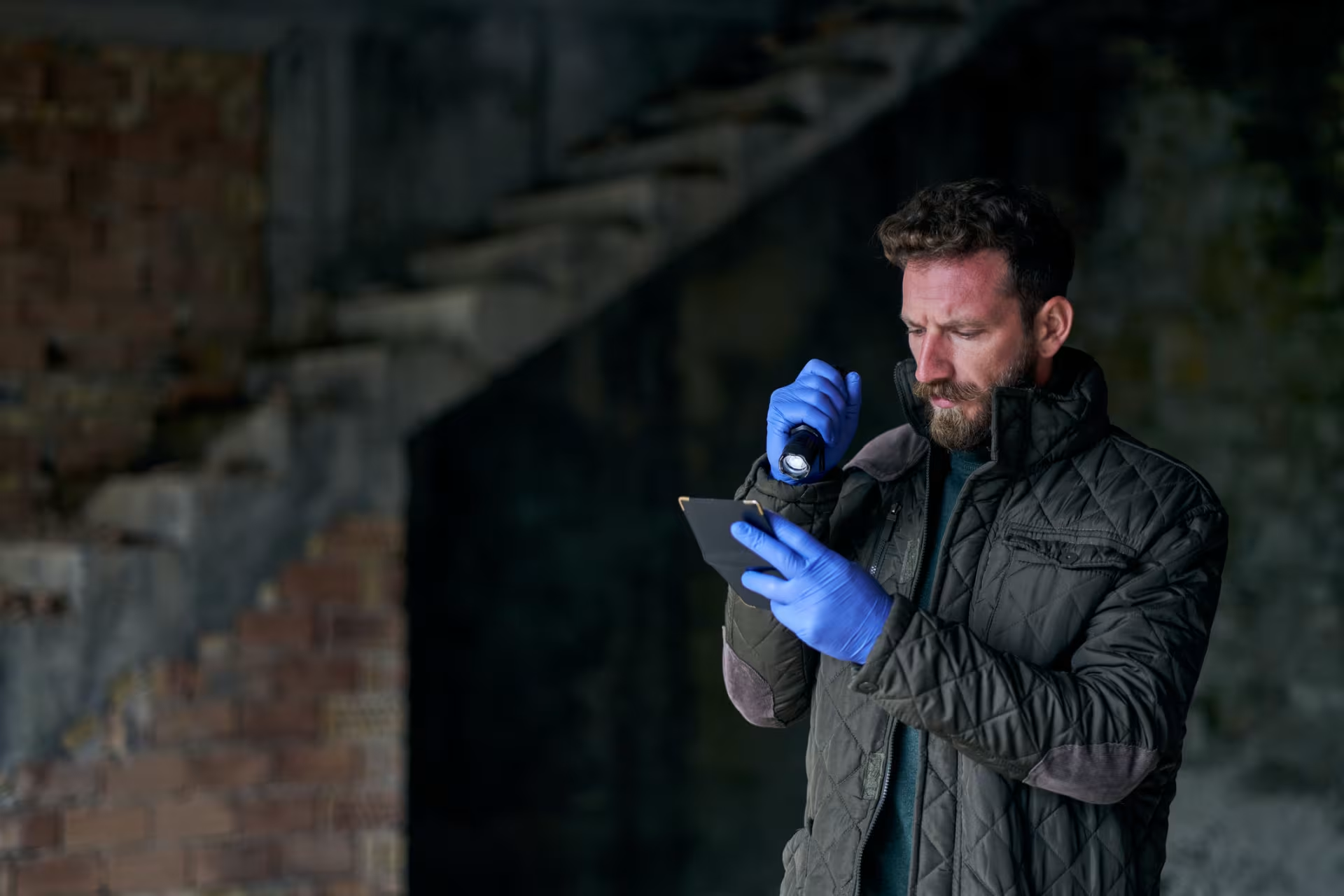
As private investigation professionals gain experience and establish a reputation for integrity and results, they often specialize in cybercrime, insurance fraud or corporate investigations. Focusing on these niches allows them to develop deeper expertise and potentially open doors to more complex assignments. Some seasoned investigators start their own firms or take on leadership roles, managing teams and overseeing large-scale operations. Some private investigators may also transition into roles within law enforcement, legal teams or government agencies.
Explore More on Private Investigators
Discover the world of private investigation and how to become a private investigator.

Crime scene investigation involves the careful documentation, collection and analysis of evidence to support criminal investigations. This blog explores CSI fundamentals and includes insights shared by experienced faculty with investigative expertise.

Detectives and private investigators both conduct investigations, but their roles differ. Detectives are law enforcement officers who handle criminal cases and make arrests. Private investigators are hired by individuals or businesses to investigate matters such as infidelity and insurance fraud. Explore their responsibilities, authority and career paths.

Read about career paths like forensic chemistry, anthropology and digital analysis. Learn what each role involves, the skills you’ll need and how science meets law enforcement to solve crimes.

Transform your curiosity into purpose by uncovering the truth and supporting justice. Get started at GCU.
- Zippia. (n.d.). Private Investigator Education. Zippia.com. Retrieved September 2025.
- U.S. Bureau of Labor Statistics. (2024, May). Private Detectives and Investigators. Retrieved September 2025.
- Zippia. (2025, Jan. 8). Private Investigator Demographics and Statistics in the U.S. Zippia.com. Retrieved September 2025.