


Medical lab scientists (MLS) and medical lab technicians (MLT) both contribute to the essential diagnostic testing and research that underpins the modern healthcare system. Although MLSs and MLTs have some overlap in their responsibilities, they require different training and educational backgrounds, and MLSs perform additional duties. Understanding the differences between these roles can help you select the right degree program for your career goals.

We spoke with Kara Hansen-Suchy, medical laboratory science program director and associate professor at Grand Canyon University, to learn more about becoming a medical lab scientist and the value of an MLS degree. “Medical laboratory professionals are the unseen detectives of healthcare, analyzing samples, validating results and providing critical data that guide nearly every medical decision,” Hansen-Suchy explains.
What Is a Medical Lab Technician (MLT)?
MLTs are the professionals who carry out many of the day-to-day operations that drive medical laboratory testing facilities. They are often trained in the use of specific laboratory equipment or software. The role of an MLT has a practical focus in performing diagnostic testing on patient samples. While they are trained in their area of work, they may not possess the comprehensive and specialized knowledge of medical laboratory testing of an MLS.
Core Responsibilities and Typical Work Settings
MLTs work in a variety of medical contexts as they utilize their technical skills to operate equipment and carry out diagnostic testing. “Medical laboratory technicians often work in community hospitals, clinics or physician offices and perform routine and moderately complex tests, prepare samples and maintain analyzers.(See disclaimer 1) Their focus is on the technical and operational side of the lab,” states Hansen-Suchy. MLTs are expected to pay close attention to detail, follow instructions precisely and gain proficiency in both hardware and software.
Education and Certification Requirements
Since the role of an MLT focuses on the more automated and routine aspects of the laboratory testing, the required education is less comprehensive than that of an MLS. Some MLTs can qualify for a technician job with an associate degree or MLT certification. Some states also require licensure.(See disclaimer 1)
What Is a Medical Lab Scientist (MLS)?
MLSs play a complementary role to MLTs in a medical lab, but they typically hold more responsibility for the vision and objectives behind the lab. MLSs use their broad understanding of medical science to conduct specialized testing, interpret complex results and conduct quality assurance. MLSs often supervise MLTs.(See disclaimer 2)
What Does a Lab Scientist Do?
While MLSs are still involved in practical tasks, they often focus on management of the lab while allowing MLTs to handle the implementation. Hansen-Suchy explains that “Medical laboratory scientists usually work in large hospital systems, reference labs, research centers or public health facilities. They conduct highly complex tests, validate methods and troubleshoot unusual results. These individuals may take on leadership roles as senior technologists, quality managers or lab educators.”
Advanced Duties and Scope of Practice
Medical laboratory scientists play a critical role in diagnosing and monitoring patient health. Beyond general testing, many professionals choose to specialize in advanced areas of laboratory science, allowing them to develop deep expertise and contribute to highly complex diagnostic processes.(See disclaimer 2) Specialization not only can enhance career opportunities but also ensures accuracy in fields that require precision and advanced technology.
Some of these specialized areas include:(See disclaimer 2)
Some MLS professionals may choose to work for a research laboratory. As they gain experience and expertise, they may apply for grants, publish research papers, present the lab’s research, purchase materials, manage budgets and be involved in staffing the lab.
Degree and Licensing Requirements
One main difference between MLT and MLS positions is the level of education. MLSs have a high degree of responsibility and typically require a bachelor’s degree.(See disclaimer 1) A medical laboratory science degree program can prepare MLSs with the foundational concepts needed for analyses and to clearly communicate their results.
These programs cover topics including:
MLT vs. MLS: Main Differences
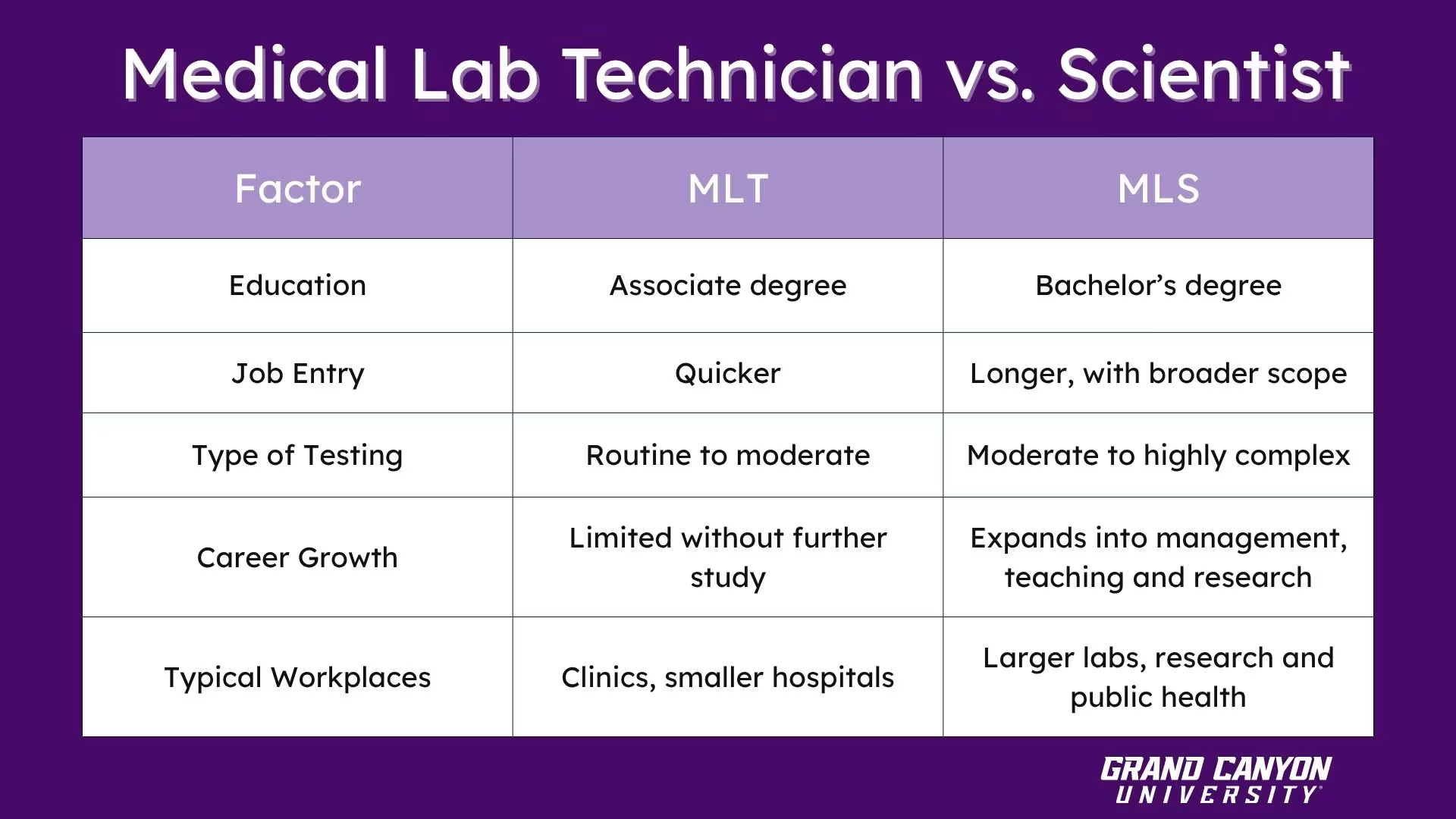
Students who want to become a medical laboratory professional may be unsure which role to target. As Hansen-Suchy explains, the distinction lies in the complexity of tasks and decision-making authority: “Both MLTs and MLSs keep the lab running smoothly but the level of responsibility and complexity of testing differ. Think of it this way: MLTs make sure the tests run properly. MLSs make sure the lab runs intelligently.”
In other words, MLTs focus on performing tests accurately and efficiently, while MLSs take on a broader role that includes interpreting results, troubleshooting complex issues and ensuring the lab operates at a high level of analytical integrity. Understanding these differences can help students choose the role that matches their desired level of responsibility and career trajectory.
Education and Training
Entering the medical laboratory field requires formal education, but the path you choose will shape what program is best for you. “If you’re eager to join the field quickly, MLT might be your best first step. But if you see yourself leading, teaching or specializing, MLS is your long-term destination. An MLS conducts more complex testing and carries greater responsibility and leadership potential,” Hansen-Suchy explains.
Many educational pathways are flexible. Some programs allow MLTs to bridge to an MLS degree, applying prior coursework and professional experience toward a bachelor’s program. This creates an opportunity for MLTs to become an MLS without starting from scratch.
Salary and Career Growth
According to the U.S. Bureau of Labor Statistics (BLS), clinical laboratory technologists and technicians had a median annual wage of $61,890 in May 2024.(See disclaimer 3) The BLS estimates that about 22,600 openings for clinical laboratory technologists and technicians are projected each year, on average, over the decade (from 2024 to 2034). Many of those openings are expected to result from the need to replace workers who transfer to different occupations or exit the labor force, such as to retire.(See disclaimer 4)
Research shows that medical laboratory scientists (also known as clinical laboratory technologists) are typically paid a higher salary than an MLT, due to their higher education credentials.(See disclaimer 5)
Which Career Path Is Right for You?
As students gain experience in medical laboratory science, the roles that suit their skills and interests may become clearer. Hansen-Suchy advises that “Whether you choose the MLT or MLS path, you’ll be joining a profession that’s vital and evolving. From disease detection to research innovation, lab professionals play a quiet yet powerful role in saving lives every single day.”
Benefits of the MLT path include shorter education time, hands-on work and a more routine job environment.(See disclaimer 5 )The benefits of becoming an MLS include the ability to position yourself to potentially pursue leadership focused roles and greater autonomy in the lab.(See disclaimer 2 )
Deciding which path is right for you involves considering your current educational background, preferred job environment and personal and professional goals. Becoming an MLT is a practical path that can provide earlier professional employment and allow individuals to decide if they enjoy working as a medical lab professional. Becoming an MLS may be a good choice for highly motivated individuals with a passion for science and the commitment to completing a bachelor’s degree program.
Transition Options (MLT to MLS)
There are options for current MLTs who want to transition into an MLS role. Hansen-Suchy explains, “Starting as an MLT doesn’t mean stopping there. Many professionals bridge to MLS roles later and the transition is much smoother than you might think. GCU offers an MLT-to-MLS pathway, allowing you to apply your associate credits toward a bachelor’s degree.”
Transitioning from an MLT to MLS doesn’t have to mean putting your career on hold. Online programs offer flexibility and convenience, making it possible to advance your education while continuing to work and gain valuable experience that you can apply in your MLS career.
"The program blends science, ethics and servant leadership, producing graduates who bring both competence and compassion to the healthcare team."
— Kara Hansen-Suchy, MLS Program Director, College of Natural Sciences
Advance Your Future in Medical Laboratory Science
If you are ready to advance your education in medical lab science, GCU offers two flexible pathways to earning your MLS degree. Students can enroll in a traditional Bachelor of Science in Medical Laboratory Science or an MLT to MLS track for certified technicians. With GCU’s commitment to pursuing NAACLS accreditation, graduates can be prepared to sit for the ASCP Board of Certification (BOC) exam.
Gain hands-on experience in advanced campus labs using analyzers and real specimens, and benefit from immersive clinical rotations through partnership with leading healthcare organizations like Banner Hospitals, Mayo Clinic and Sonora Quest Laboratories.
Explore Your Path to Become an MLS
GCU’s flexible, affordable and career-focused MLS programs are your opportunity to make a difference in the future of healthcare.


