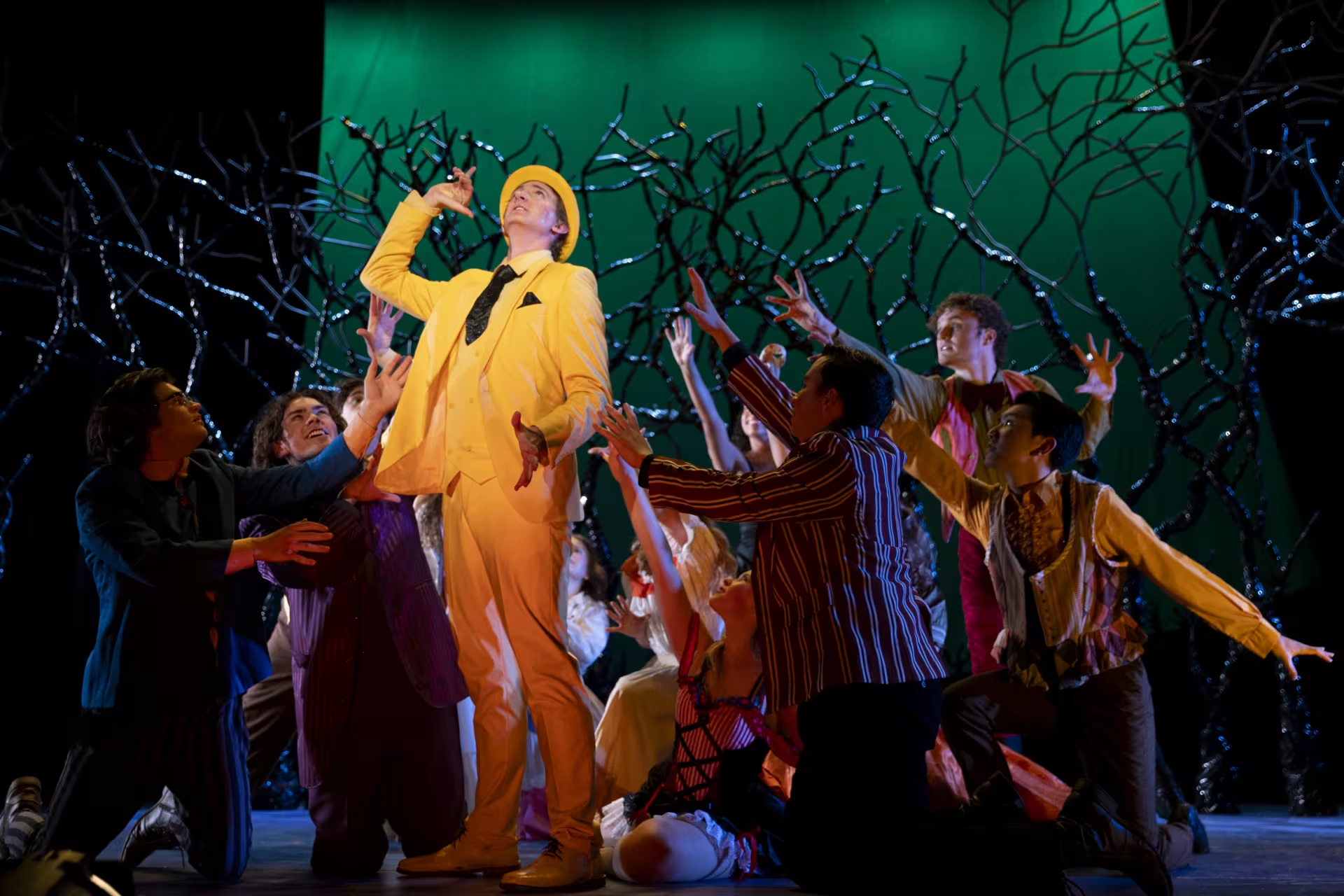

A dress rehearsal is one of a series of practice performances of a live show, such as a theatrical performance or an orchestral performance. During a dress rehearsal, everything is done as if it were a live performance. This allows the performers to make sure everything runs smoothly and to troubleshoot any problems.
A dress rehearsal is a very important aspect of the show. Participating in a dress rehearsal is mandatory for performers, as it’s essential for the success of the show. In some cases, family and friends of performers and invited guests may be allowed to watch a dress rehearsal.(See disclaimer 1)
Understanding Dress Rehearsal Meaning and Purpose
What is a dress rehearsal in theatre and its main purpose? Its purpose lies in the dress rehearsal: theatre definition, which is several run throughs of the entire production several weeks or months in advance prior to the opening night. During a dress rehearsal, all the performers are in full costumes and makeup, all the technical elements, such as lighting and props are used, and the show proceeds with potential interruptions, in order to make adjustments and fix errors before opening night.
The point of a dress rehearsal is to allow the performers, director and crew to identify any lingering issues and fine-tune the details so that the live audience performance proceeds smoothly. During dress rehearsals, the director and crew pay attention to the timing of the scenes and the cues that are used, tweaking as needed to ensure complete coordination.
What are the benefits of a dress rehearsal in theatre? Along with allowing for any last-minute adjustments, a dress rehearsal encourages stronger teamwork among the entire company — actors, designers, technicians, researchers, crew and stage managers. It gives performers confidence before the live performance and ensures that all technical and creative elements come together to perfect the overall production.
Enhance Teamwork and Collaboration on Stage
Live performances are truly based on teamwork. Every single member of the production fulfills an essential role, which means that the absence of any one performer or crew member can negatively impact the entire performance. Everyone has a job that is vital to the entire show and, as such, is expected to contribute their full effort.
The dress rehearsal allows teamwork and collaboration to take the spotlight and serves to further enhance coordination among the performers, director and crew. Dress rehearsals can improve communication and allow the team to resolve any last-minute issues prior to opening night.
Backstage Jobs
The people backstage are like a well-oiled machine that all collaborate to ensure everything looks perfect on stage. Here are some of the roles that different departments hold:
Build Professionalism and Confidence on Stage
During the dress rehearsal, performers and technicians, stage management and crew have the opportunity to evaluate their work under the conditions of a live show. They can act as if there is an audience out there watching their performance while also gaining helpful feedback from the director and production, gaining confidence and muscle memory of the routine.
It can even be beneficial when mistakes are made during the dress rehearsal in order to learn their weaknesses and work together as a team to connect on stage for the audience. Everyone makes mistakes, and it is bound to happen from time to time. When mistakes happen during the dress rehearsal, crew and cast members have the ability to correct them before the live show and gain confidence in doing so. Encouraging one another and helping fellow teammates when things go off track is key.
Confidence isn’t the only thing cast and production team members can develop during dress rehearsals. These final run-throughs can allow performers and crew members to develop better professionalism. Dress rehearsals reinforce the importance of punctuality, self-discipline and the ability to perform under pressure. All these skills are important not only for theatrical performances, but they may also transfer to other professional settings.
Perfect Your Performance Through Practice and Feedback
As a theatre practitioner, you probably take pride in what you do, especially if you can do it well. The key to improving your performance — in theatre as well as any other type of performing art — is to practice it over and over again. With each repetition, you can pay close attention to what you’re doing and the effect it may have on the audience, and look for ways of refining your skills.
Dress rehearsals provide a safe space for performers and production team members to tweak their work before they are in front of a paying audience. Similarly, a dress rehearsal provides a final opportunity for both performers and crew members to receive constructive feedback on their work. Directors, head designers and technicians can provide constructive criticism in their respective areas to ensure collaboration and communication between the departments. This feedback can not only help improve that particular theatrical performance but also inform the actor’s or crew member’s work for future productions.
What Makes a Good Dress Rehearsal?
Not all dress rehearsals proceed smoothly. An effective dress rehearsal is executed with no or with only minimal disruptions. It’s ideal to run the entire performance from start to finish with few to no stops.
Another factor that separates effective dress rehearsals from ineffective ones is preparedness. It’s essential that all performers, crew members and the director arrive at the rehearsal with the same level of preparedness that they’d be expected to have for the live event. In other words, a dress rehearsal needs to be treated as if it were a live performance before an audience.
Explore Theatre Careers With GCU
Grand Canyon University strives to cultivate a thriving arts community here at our campus in the heart of Phoenix. The College of Arts and Media brings together a diverse range of degree options for creative students interested in pursuing their passion for performing arts.
Along with music and digital design degrees, we’re pleased to offer the Bachelor of Arts in Theatre and Drama. As a theatre and drama student at GCU, you will be able to immerse yourself in every aspect of theatrical productions — from stagecraft and stage lighting to acting, playwriting and even the business side of theatres. Theatre students are required to participate in multiple areas of work within a theatrical production. GCU empowers performing arts students to transform their passion into purpose through a career-focused approach.
Embrace Your Passion for the Stage
Gain experience with acting and stagecraft. Apply to GCU’s theatre and drama degree today!