


Online Master of Science in Nursing (MSN) Programs
What Is an MSN Degree?
A Master of Science in Nursing (MSN) is a graduate nursing degree for registered nurses (RNs) seeking advanced clinical, leadership, education, informatics, quality or public health expertise. Online MSN programs typically combine online coursework with specialization-specific requirements; some pathways, particularly nurse practitioner programs, also require supervised clinical or other in-person experiences.
Nurses may choose to pursue an MSN program to deepen their understanding of evidence-based practice, healthcare systems, patient care and professional leadership while preparing for evolving responsibilities within the profession. Online(See disclaimer 1) MSN programs can also provide a convenient option for working nurses seeking to continue their education while balancing professional and personal commitments. Program requirements vary based on the area of study, and some specializations include practicum or clinical experiences.
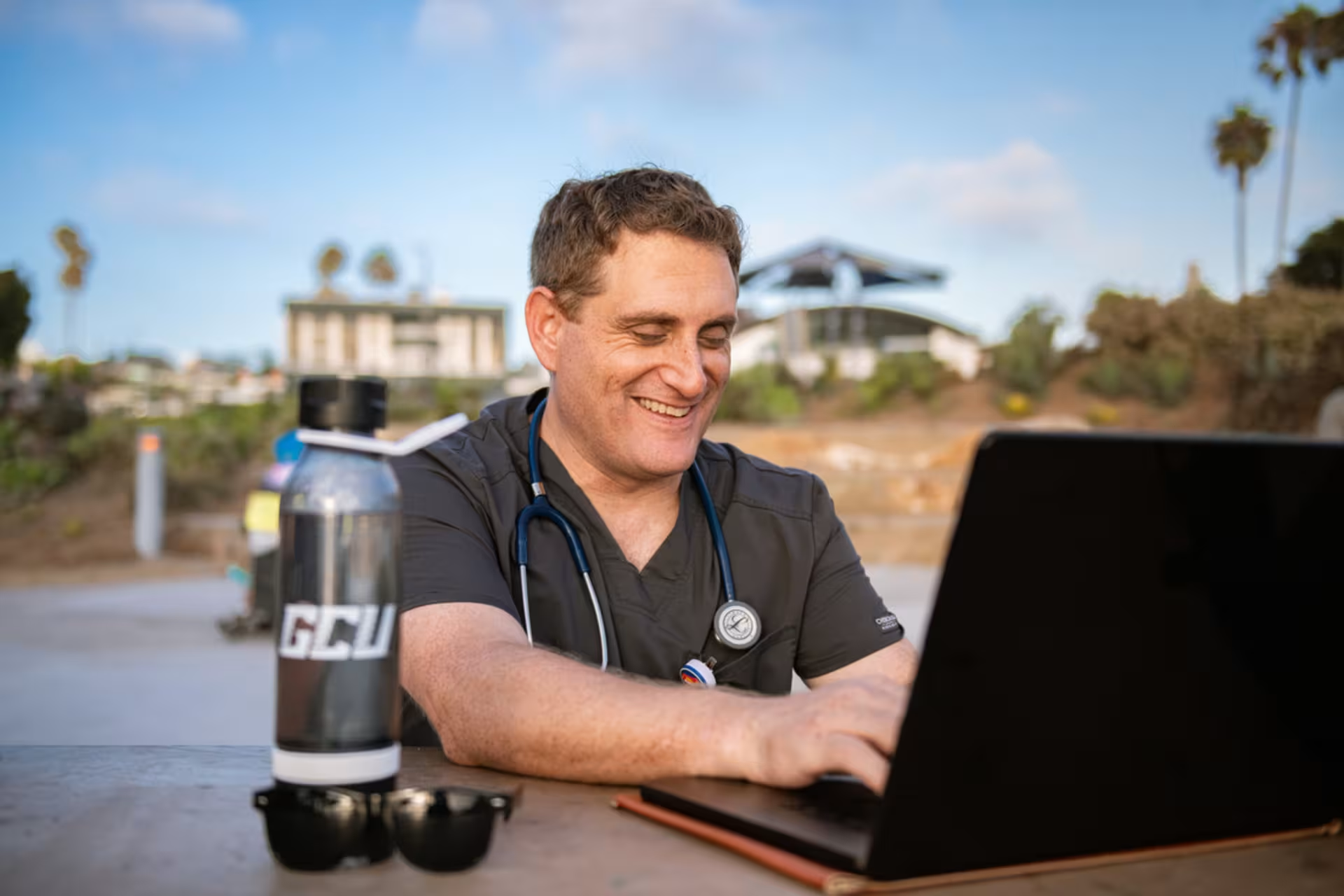
What MSN Specializations and Concentrations Are Available?
Choosing the right MSN program begins with identifying the area of nursing that best aligns with your interests and professional goals. Whether you're interested in advanced patient care, nursing leadership, education or healthcare innovation, a master’s in nursing can prepare you to build specialized knowledge in your chosen field.
Prepare to pursue advanced practice nursing roles focused on diagnosing, treating and managing patient care across a variety of populations and healthcare settings
Develop leadership and management competencies that can help prepare you to oversee nursing teams, improve healthcare operations and support organizational initiatives
Study teaching strategies, curriculum development and educational leadership to prepare for nursing education roles in academic or healthcare settings
Explore how healthcare technology, electronic health records and data management can support clinical decision-making, workflow improvement and patient care
Examine quality improvement strategies, patient safety initiatives and evidence-based approaches that support healthcare excellence across organizations
Study population health, community health initiatives and health promotion strategies designed to improve outcomes for diverse populations
Explore All Online MSN Programs
8 Matching Degrees




Can You Earn Your MSN Degree Online?
Our online MSN programs combine convenient online coursework with hands-on learning experiences that vary by specialization. While much of your graduate coursework can often be completed online, some programs include practicum experiences, supervised clinical hours or other field-based requirements that take place in healthcare or educational settings.
The learning format depends on your chosen concentration. For example, nurse practitioner programs generally include clinical experiences that meet certification and licensure requirements, while leadership, education and informatics programs may incorporate practicum experiences, projects or applied learning opportunities. This can make an MSN program a convenient option for working nurses seeking to continue their education while balancing professional and personal responsibilities.

Which Master of Science in Nursing Degree Is Right for You?
The right MSN pathway depends largely on the type of nursing work you want to pursue. Nurse practitioner programs may fit nurses interested in advanced direct patient care, while nursing leadership and education pathways focus on leading teams or teaching.
Consider your nursing background, professional interests, preferred healthcare setting and long-term career goals as you compare MSN programs.
If You Want To…
Provide advanced direct patient care
Consider This MSN Pathway
Why It May Be a Good Fit
Nurse practitioner pathways focus on advanced clinical knowledge and patient management for specific populations and healthcare needs.
If You Want To…
Lead nursing teams and healthcare organizations
Consider This MSN Pathway
Why It May Be a Good Fit
Leadership-focused MSN programs can help nurses develop skills in healthcare operations, team management and organizational improvement.
If You Want To…
Teach future nurses or train healthcare professionals
Consider This MSN Pathway
Why It May Be a Good Fit
Education pathways emphasize teaching strategies, curriculum development and student support in academic or clinical settings.
If You Want To…
Improve healthcare technology and data systems
Consider This MSN Pathway
Why It May Be a Good Fit
Informatics programs combine nursing knowledge with technology, data management and healthcare information systems.
If You Want To…
Enhance patient outcomes and healthcare quality
Consider This MSN Pathway
Why It May Be a Good Fit
These programs focus on quality improvement, patient safety initiatives, risk reduction and performance measurement.
If You Want To…
Improve health at the community or population level
Consider This MSN Pathway
Why It May Be a Good Fit
Public health nursing pathways emphasize disease prevention, health promotion and community-based healthcare strategies.
If You Want To…
Consider This MSN Pathway
Why It May Be a Good Fit
Provide advanced direct patient care
Nurse practitioner pathways focus on advanced clinical knowledge and patient management for specific populations and healthcare needs.
Lead nursing teams and healthcare organizations
Leadership-focused MSN programs can help nurses develop skills in healthcare operations, team management and organizational improvement.
Teach future nurses or train healthcare professionals
Education pathways emphasize teaching strategies, curriculum development and student support in academic or clinical settings.
Improve healthcare technology and data systems
Informatics programs combine nursing knowledge with technology, data management and healthcare information systems.
Enhance patient outcomes and healthcare quality
These programs focus on quality improvement, patient safety initiatives, risk reduction and performance measurement.
Improve health at the community or population level
Public health nursing pathways emphasize disease prevention, health promotion and community-based healthcare strategies.
What Can You Do With an MSN Degree?
An MSN can help prepare you for specialized nursing roles in advanced clinical practice, leadership, education, informatics and other areas of healthcare. Depending on your specialization, you may provide advanced patient care, lead nursing teams, educate future nurses or use healthcare technology to improve patient outcomes.
Potential career paths for MSN graduates vary by specialization and may require additional certification, licensure or experience. Some examples include:
Nurse anesthetists, nurse midwives and nurse practitioners
Provide advanced patient care within a specialty area, such as a nurse anesthetist, nurse midwife or nurse practitioner, by assessing patients, developing treatment plans and managing ongoing care
Medical and health services managers
Plan, direct and coordinate healthcare services while supporting operational efficiency and quality patient care
Postsecondary nursing instructors and teachers
Educate aspiring nurses through classroom instruction, curriculum development and clinical education
Annual median salary for nurse anesthetists, nurse midwives and nurse practitioners as of May 2024(See disclaimer 2)
Estimated job growth for nurse anesthetists, nurse midwives and nurse practitioners as of May 2024(See disclaimer 3)
Frequently Asked Questions About MSN Programs
Dive deeper into Master of Science in Nursing programs, including online learning formats, admission considerations and how an MSN degree can support your professional goals.
What is the difference between an MSN and other nursing master's degrees?
Do online MSN programs require clinicals or in-person experiences?
Can I earn my MSN while working as a nurse?
Is an MSN higher than an RN?
What skills can you develop in an MSN program?
What Can You Expect During Your MSN Degree?
As you pursue your Master of Science in Nursing, you'll have opportunities to build specialized nursing knowledge while learning within a Christian worldview that encourages compassionate, ethical leadership and service to others.
As an MSN student, you'll also have access to academic and student support resources designed to help you navigate graduate education. Depending on your chosen specialization, you may engage in online coursework, practicum or clinical experiences and collaborative learning opportunities that connect theory with professional practice.
When comparing MSN programs, it's also important to consider accreditation and educational quality. Accredited nursing programs are evaluated against established standards, helping prospective students make informed decisions about their education. Because accreditation may vary by specialization, review the details for your intended MSN program to learn more about its specific accreditation status.
Tuition and Savings for Online MSN Programs
The cost of an MSN degree varies based on your program, enrollment status and eligibility for financial assistance. As you compare online MSN programs, consider tuition, fees and available financial aid options to better understand the total cost of earning your degree and plan for your graduate education with confidence.
Discover Your Financial Options
Explore financial aid opportunities, scholarships and tuition resources that may help make your graduate nursing education more manageable.
Ways To Save
Your education is an important financial investment, and there are several ways to help manage costs while earning your degree. GCU’s university counselors are available to help you explore available options and provide personalized guidance on your estimated cost of attendance.
Complete the Free Application for Federal Student Aid (FAFSA) annually to determine eligibility for federal grants and student loans. Since some aid is awarded on a first‑come, first‑served basis, GCU recommends submitting the FAFSA as early as possible after Oct. 1 to maximize funding opportunities.
If you’ve earned college credits from another institution, you may be able to complete your degree sooner at GCU by transferring those credits. Submit the Lopes Unofficial Credit Evaluation form, then connect with a university counselor who can provide you with personalized guidance.
You may be able to reduce your college costs by applying for GCU’s on-campus or online student scholarships. We invite you to explore available institutional scholarships and determine which opportunities you may be eligible for. GCU also encourages students to seek out third‑party scholarships and grants.
What Are the Admission Requirements for an MSN Degree?
Admission requirements vary by MSN program and may differ based on your educational background and chosen specialization. Applicants are generally expected to meet graduate admission requirements and hold a qualifying nursing degree. Some programs may also require an active RN license or additional prerequisites.
Review the admission requirements for your intended MSN program to learn about eligibility criteria, required documentation and the application process before applying.

You can apply to a degree program at GCU in just three simple steps. Your university counselor is standing by to assist you with any questions about the application process.
It starts with selecting the program that aligns with your goals from one of GCU's 380+ academic programs — from undergraduate degrees to post-master’s certificate programs to doctoral degrees.
Pick your program
Explore our on-campus, online or evening cohort options under the Degree Programs page to find the right program for you.
Complete our online application
Your university counselor will direct you to the online application. Fill in all required information and submit the form.
Submit supporting documents
Submit your official transcripts and any relevant test scores, and confirm with your university counselor that all forms for your desired program are submitted.
Explore More Nursing Topics


Compare online(See disclaimer 1) MSN programs in advanced practice, nursing leadership, education, health informatics, quality and patient safety and public health nursing. Explore your options and find a pathway aligned with your nursing interests and career goals.
Clinical, practicum and immersion hours completed locally. Requires on-campus experiences.
- The earnings referenced were reported by the U.S. Bureau of Labor Statistics (“BLS”), Nurse Anesthetists, Nurse Midwives and Nurse Practitioners, as of May 2024, retrieved July 2026. Due to COVID-19, data from 2020 to 2023 may be atypical compared to prior years. BLS calculates the median using salaries of workers nationwide with varying levels of education and experience. It does not reflect the earnings of GCU graduates as nurse anesthetists, nurse midwives and nurse practitioners, nor does it reflect earnings of workers in one city or region of the country or a typical entry-level salary. Median income is the statistical midpoint for the range of salaries in a specific occupation. It is very unlikely that a median salary will reflect an entry-level salary. It represents what you would earn if you were paid more money than half the workers in an occupation, and less than half the workers in an occupation. It may give you a basis to estimate what you might earn at some point if you enter this career. Grand Canyon University can make no guarantees on individual graduates’ salaries. Your employability will be determined by numerous factors over which GCU has no control, such as the employer the graduate chooses to apply to, the graduate’s experience level, individual characteristics, skills, etc. against a pool of candidates.
- COVID-19 has adversely affected the global economy and data from 2020 to 2023 may be atypical compared to prior years. Accordingly, data shown is effective August 2025, which can be found here: U.S. Bureau of Labor Statistics, Occupational Outlook Handbook, Nurse Anesthetists, Nurse Midwives and Nurse Practitioners, retrieved July 2026.