


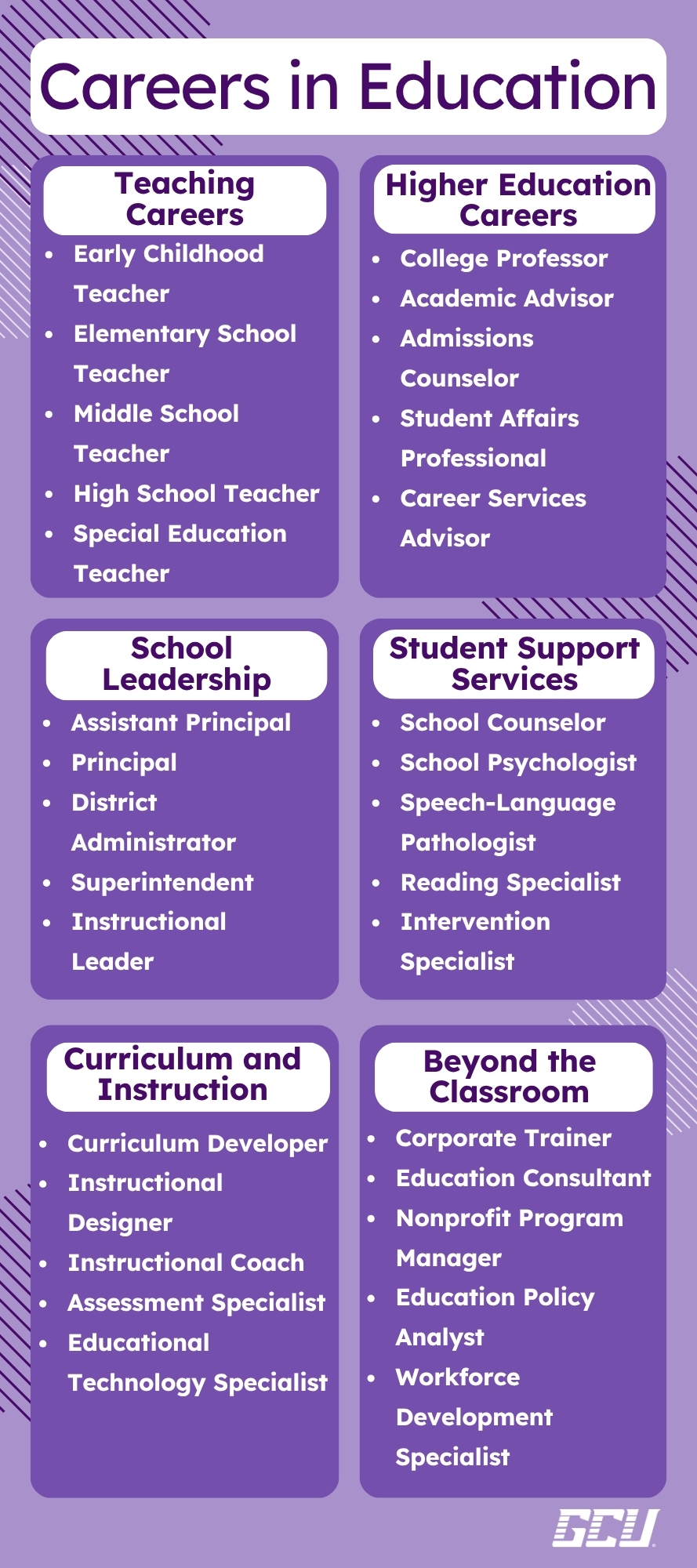
Education is often associated with classroom teaching, but the field offers a wide range of professional opportunities. Careers in education span teaching, curriculum development, school administration, student support services and education policy, allowing professionals to contribute to learning in a variety of settings.
Exploring different education career paths can help you identify a role that aligns with your interests, strengths and long-term goals. Understanding the variety of options available can also support informed decisions about your educational preparation and future career direction.

We spoke with Dr. Katie Sprute, executive faculty chair at Grand Canyon University, to learn more about the education career path and learn from her experience in the field.
She shares, “Having spent more than 20 years in education, including teaching in public schools in Arizona and Washington State and nearly 13 years in higher education at Grand Canyon University, I've learned that education is far more expansive than many people realize.”
“Throughout my career, one common thread has remained constant: advocacy. Whether advocating for K-12 students, supporting future educators or engaging with policymakers on issues affecting the educator workforce, I have come to believe that education is fundamentally about creating opportunities for others to learn, grow and thrive.”
What Are Careers in Education?
Careers in education encompass a broad range of professions focused on teaching, learning, student development and educational systems. While many education careers involve direct instruction, others support student success through counseling, administration, curriculum development, technology and organizational leadership.
The field continues to evolve as schools, colleges and organizations seek professionals who can support learners in diverse settings. As a result, individuals interested in an education career can choose from numerous pathways based on their skills, interests and professional goals.
Teaching Careers in Education
Teaching remains one of the most recognizable roles in education. Teachers help students develop knowledge, critical thinking skills and confidence while supporting their academic and personal growth. Dr. Sprute explains, “When most people think about education careers, they picture a classroom teacher, and for good reason. Classroom teachers play an extraordinary role in shaping students' academic growth, confidence and future opportunities.”
"What unites all education careers is a shared purpose: helping learners succeed."
Early Childhood Education Careers
Early childhood educators work with young children during foundational developmental years. These professionals help students build essential social, emotional and academic skills through age-appropriate learning experiences.
Elementary Education Careers
Elementary teachers typically instruct students in multiple subject areas while fostering a supportive classroom environment. Their role in education extends beyond academics, often helping students develop communication, collaboration and problem-solving skills.
Secondary Education Careers
Secondary educators specialize in subject-specific instruction for middle school and high school students. These careers may appeal to individuals who are passionate about a particular discipline and enjoy helping students prepare for higher education or the workforce.
Special Education Careers
Special education professionals support students with diverse learning needs by providing individualized instruction and accommodations. These educators work closely with families, administrators and support specialists to help students succeed.
Dr. Sprute shares, “My years in special education taught me that student success is truly a team effort. I relied heavily on collaboration with school psychologists, occupational therapists, behavior specialists, speech-language pathologists, general education teachers and dedicated paraprofessionals.
Together, we developed individualized supports and interventions that helped students overcome challenges and achieve meaningful growth. Those experiences reinforced my belief that some of the most impactful work in education happens through collaboration among professionals with diverse expertise.”
Non-Teaching Careers in Education
Not every education professional works in a classroom. Many non-teaching careers contribute to student learning and educational effectiveness behind the scenes.
According to Dr. Sprute, “Throughout my career, I've had the privilege of working alongside educators at every level, from early childhood through higher education, and I have seen the profound impact great teachers have on students' lives.
However, teaching is only one part of a much larger educational ecosystem. Some of the most rewarding careers in education are roles that many students may not initially consider.”
Instructional Design Careers
Instructional designers develop educational materials, learning experiences and training programs. They often collaborate with subject matter experts and leverage learning theories to create engaging content.
Curriculum Development Careers
Curriculum developers evaluate educational standards and design instructional frameworks that guide teaching and learning. Their work helps ensure educational programs remain relevant and effective.
Educational Technology Careers
Educational technology professionals support the integration of digital tools into learning environments. They may help schools and organizations implement technology solutions that enhance teaching and student engagement.
"The growth of online and hybrid learning has created demand for careers that didn't exist at the same scale just a few years ago. Roles such as online instructors, instructional designers, learning experience designers, educational technology specialists and digital curriculum developers continue to grow as organizations seek innovative ways to support learners," shares Dr. Sprute.
Higher Education Careers
Colleges and universities rely on a variety of professionals to support academic programs and student success. Explore these higher education career options.
College and University Faculty Careers
Faculty members teach courses, mentor students and contribute to scholarship within their disciplines. Depending on the institution and role, responsibilities may include teaching, research and service.
Academic Advising Careers
Academic advisors help students navigate degree requirements, course selection and educational planning. They play an important role in supporting student persistence and success.
Student Services Careers
Student services professionals work in areas such as admissions, financial aid, career services and student engagement. Their efforts help create positive experiences for students throughout their educational journey.
Education Administration and Leadership Careers
Leadership positions allow professionals to influence educational outcomes on a broader scale. Dr Sprute says, “Educational leadership is another powerful pathway. Principals, instructional leaders and district administrators create the conditions that allow teachers and students to thrive. Strong leadership helps establish positive school cultures, support educator growth and drive student achievement.”
School Administration Careers
School administrators oversee daily operations, support faculty and staff and help establish a positive learning environment. Roles may include assistant principal, principal or other school leadership positions.
District-Level Education Careers
District leaders support multiple schools by managing budgets, programs, operations and strategic initiatives. These positions often require experience in education and organizational leadership.
Education Policy Careers
Education policy professionals analyze issues affecting schools and educational systems. Their work may involve research, advocacy and the development of policies intended to improve educational outcomes.
Student Support and Services Careers
Student success often depends on support systems that address academic, emotional and developmental needs.
School Counseling Careers
School counselors help students navigate academic planning, social development and future career exploration. They often collaborate with educators and families to support student well-being.
“School counselors serve as advocates, mentors and guides, helping students navigate academic, social-emotional and career-related challenges while ensuring they have access to the resources and support they need to succeed,” explains Dr. Sprute.
School Psychology Careers
School psychologists assess student needs and provide interventions that promote learning and mental wellness. Their expertise helps schools create supportive educational environments.
Speech and Language Support Careers
Speech-language professionals help students improve communication skills that support academic achievement and daily interactions.
Corporate and Nonprofit Education Careers
Educational expertise is valuable beyond traditional school settings. Many organizations rely on education professionals to develop learning experiences, improve workforce skills and expand access to educational opportunities. Whether working for a corporation, nonprofit organization or as an independent consultant, these professionals apply teaching, communication and instructional design skills to help individuals and organizations achieve their goals.
These careers may appeal to individuals who are passionate about learning and development but prefer working in business, community or organizational settings rather than in a classroom.
Corporate Training and Development Careers
Organizations often employ education professionals to design and deliver employee training programs. These roles focus on workforce development, learning strategies and organizational growth.
Education Nonprofit Careers
Education-focused nonprofit organizations work to expand access, improve outcomes and address educational challenges. Professionals in these organizations may support program development, community outreach or advocacy efforts.
Education Consulting Careers
Education consultants provide expertise to schools, organizations and institutions seeking guidance on curriculum, instruction, technology or strategic initiatives.
Education Career Requirements and Qualifications
The qualifications required for careers in education vary depending on the role, level of responsibility and work environment.
Education Degrees and Certifications
There are multiple types and levels of education degrees. Many education careers begin with a bachelor's degree in education or a related field. Some positions may require specialized certifications or advanced degrees depending on the role and state requirements.
For students exploring educational preparation options, GCU offers teaching degree programs designed to help aspiring educators develop foundational knowledge and professional skills.
Licensure and Credentialing in Education
Teaching and certain specialized roles often require state licensure or professional credentials. Requirements vary by state and profession, so prospective educators should review current regulations through their state's education agency or licensing board.
Salary and Job Outlook for Careers in Education
Salary potential and job outlook can vary significantly across education career paths. Factors such as geographic location, education level, specialization and years of experience may influence earnings.
The U.S. Bureau of Labor Statistics (BLS) provides occupational outlook data, salary information and employment projections for a wide range of education-related professions. Prospective students can use these resources to research specific roles and understand workforce trends before selecting a career path. The Occupational Outlook Handbook is updated regularly and includes information about educational requirements, work environments and projected employment opportunities.(See disclaimer 1)
How To Choose the Right Career in Education
Selecting a career in education involves evaluating personal interests, professional goals and preferred work environments.
Aligning Skills and Interests With Education Careers
Consider the populations you would like to serve, the type of work you enjoy and the impact you hope to make. Individuals who enjoy direct interaction with students may be drawn to teaching or counseling, while those interested in systems and strategy may prefer administration, policy or curriculum development.
Exploring Career Progression Opportunities in Education
Many education professionals discover new opportunities as they gain experience. Some transition from classroom teaching into leadership, curriculum development or student support roles, while others pursue advanced degrees.
Exploring different education career paths can help you identify opportunities that align with your evolving interests and professional goals throughout your career.
Dr. Sprute encourages students by explaining, "Most importantly, focus on where your talents and passions intersect with the needs of learners. Education offers countless ways to make a difference, and there is no single 'right' path."
Expert Insights on Careers in Education
To gain additional perspective on the many career opportunities available in education, Dr. Katie Sprute shares her experience in the field and provides insights to anyone interested in pursuing an education career.
What education careers offer opportunities beyond classroom teaching?
Many people associate education careers with teaching, but the field includes a wide range of professional pathways. Dr. Sprute explains, "Whether you're working directly with students, supporting educators, designing learning experiences, advocating for learners or leading educational systems, every role contributes to creating opportunities for growth, achievement and lifelong learning.
There are so many ways to contribute to education beyond the classroom. From designing curriculum and supporting student success to leading institutions and shaping policy, each role plays a part in helping learners achieve their goals."
How can students choose the right education career path?
Dr Sprute explains, “Over the course of my 20 plus years in education, I've learned that finding the right career path often begins with understanding what energizes you and where you want to make an impact. My own career journey has evolved from K-12 teaching to higher education, faculty leadership, online learning and department administration. Along the way, I discovered that education offers far more opportunities than I initially imagined.
For prospective students, I recommend starting with intentional self-reflection. Consider the types of experiences that are most meaningful to you, such as:
Hands-on experience is invaluable. Opportunities such as tutoring, volunteering in schools, internships, mentoring, or working as a teacher assistant provide insight that no career assessment can fully replicate. These experiences allow you to see firsthand what different education roles entail and how they align with your strengths and preferences.
It is also helpful to assess your natural strengths and working style. Some individuals thrive in highly relational roles, while others excel in analytical, creative, or leadership-focused environments. Conversations with professionals working in various education careers can provide valuable perspectives on day-to-day responsibilities and career pathways.
It's also important to recognize that education careers are rarely linear. Many professionals move into new roles as they gain experience, discover new interests, and develop additional expertise. Remaining open to exploration and lifelong learning can lead to opportunities you may not have initially considered.”
What skills are valuable across education careers?
While responsibilities vary across roles, several skills are consistently valuable throughout the education profession:
"Education is truly a team profession," Dr. Sprute notes. “Successful education professionals share a commitment to service, growth and continuous improvement. The best educators are lifelong learners themselves, constantly seeking ways to better support students and communities.”
What emerging opportunities are shaping the future of education careers?
Dr. Sprute explains, “Over the past two decades, I have witnessed tremendous changes in education. Perhaps none have been more significant than the rapid advancement of technology and the growing recognition of students' diverse and evolving needs.
As student needs continue to evolve, education professionals must also serve as advocates for equitable access to learning opportunities. This includes advocating for accessible technology, mental health supports, individualized interventions, and learning environments that meet the needs of increasingly diverse student populations.
Another emerging area is the use of data to improve outcomes. Schools and universities are increasingly using predictive analytics, learning analytics and assessment data to identify student needs earlier and provide targeted support. Professionals who can interpret and apply data to improve learning experiences will be well-positioned for future opportunities.
Looking ahead, I anticipate continued growth in fields related to artificial intelligence, personalized learning, competency-based education, workforce development and lifelong learning. Education is becoming increasingly interdisciplinary, creating opportunities for individuals who can blend expertise in teaching, technology, leadership and innovation.”
Do you have to become a teacher to work in education?
While teaching may be one of the most common education career paths, there are many other options to consider.
According to Dr. Sprute, “One of the biggest misconceptions about education is that the only meaningful career path is classroom teaching. While teaching can be an incredibly rewarding profession, it is far from the only way to make an impact.
If you're interested in education but uncertain about teaching in a traditional classroom, I encourage you to explore the many other roles that support learning and student success.”
What advice would you give someone considering a career in education?
Dr. Sprute shares, “Gaining practical experience is one of the best ways to determine what fits. Volunteer, observe professionals in different roles, seek internships and talk with people working across the field. These experiences often provide clarity about where your strengths and interests align.
I also encourage students to think about education as a profession centered on service and advocacy. Regardless of the role you choose whether teaching in a classroom, supporting students through counseling, designing curriculum, leveraging technology or leading educational programs, your work ultimately involves helping others overcome barriers and reach their potential.
Most importantly, remember that careers in education are rarely fixed. Many professionals discover new passions and opportunities throughout their careers. Stay curious, remain open to possibilities, and focus on finding a role where you can make a meaningful contribution. Education needs talented professionals in a wide variety of capacities, and there has never been a more exciting time to explore the field.”
Earn a Degree in Education From GCU
A career in education can take many forms, from classroom teaching and student support to educational leadership and curriculum development. GCU offers a variety of education bachelor's degrees and master's in education programs aspiring and current educators designed to help on build the knowledge and skills needed to support learners in diverse settings.
As Katie Sprute explains, "Some of the most influential professionals in education are those who use their expertise to advocate for students, families, educators and communities. If you are passionate about helping others learn and grow, there is likely a place for you in education, even if that place looks different from a traditional classroom."
Explore GCU's education programs to learn more about opportunities that align with your interests and career goals.
Find Your Path in Education
Learn how GCU's education degree programs can prepare you for a variety of education careers.


