


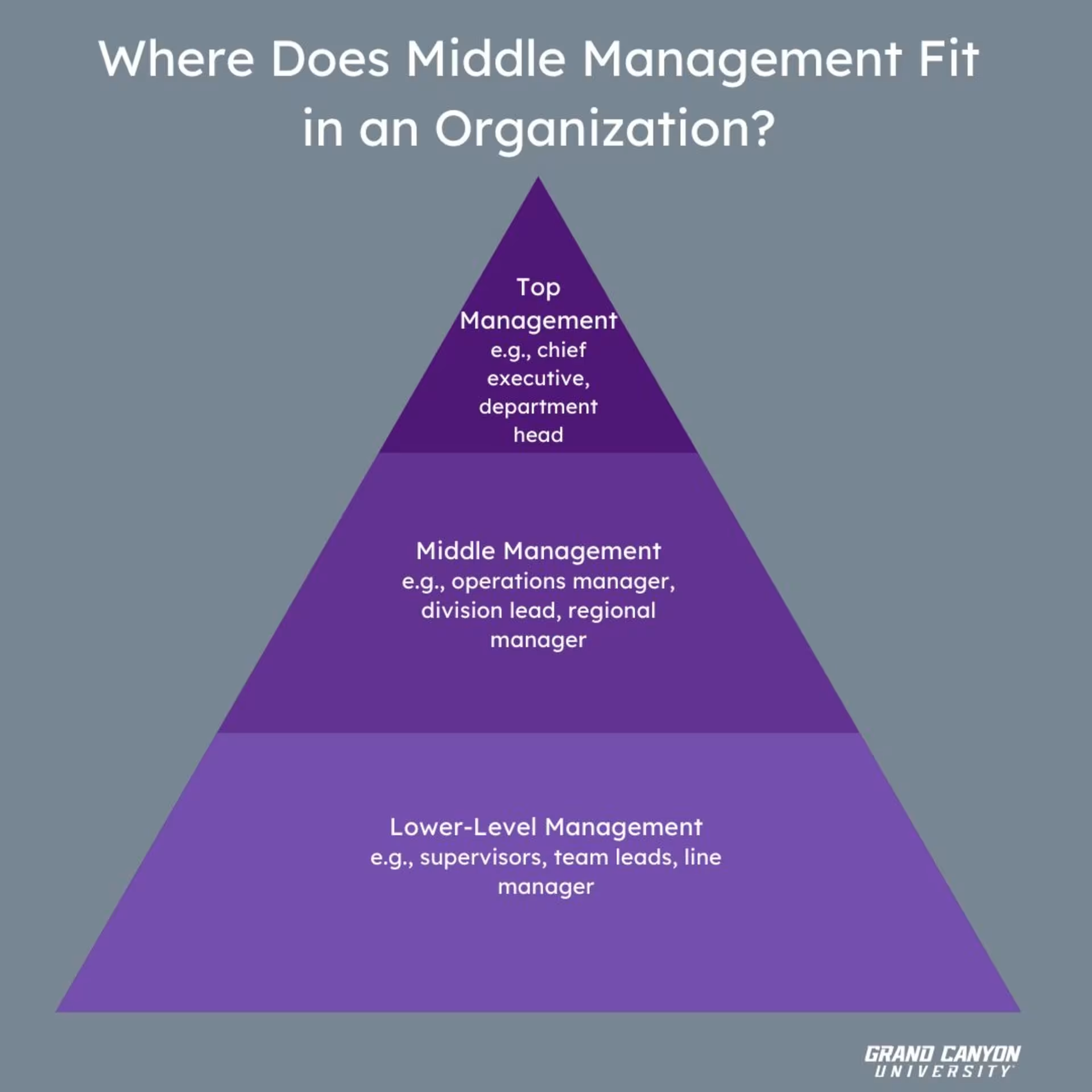
Middle management plays a critical role in organizational structure, keeping staff and management aligned, effective and moving forward. Middle managers fall between frontline employees, lower-level management and executive leadership. This allows higher-level management to focus on other duties while middle managers handle day-to-day tasks and guide culture. But exactly who is middle management? To learn more about the inner and outer workings of middle management, team culture and pursuing a career in this leadership position, we spoke with Lisa Duryee, faculty in the Colangelo College of Business.

“Middle managers are the critical link to help support the mission and vision of the organization through day-to-day operations. They are in the unique position to support strategic goals while motivating and developing their teams to perform at their best by understanding their purpose in the big picture,” Duryee explains. She adds that this role bridges the gap between leadership and employees, letting them know they have their back.
Connection is key in middle management, and with ineffective or a lack of middle management, “organizations risk losing focus and cohesion because there is no one to make those crucial connections,” Duryee adds.
What Does Middle Management Do? Key Responsibilities
Middle managers play a vital role in keeping teams on track. Some of the key responsibilities that middle managers execute on a daily basis include:(See disclaimer 1)
Skills Middle Managers Need
Effective middle managers rely on a combination of interpersonal, communication and leadership skills to navigate the space between strategy and execution. While people in this role can vary greatly as individuals, “generally middle managers are clear communicators, demonstrate a high level of emotional intelligence and adaptability,” Duryee shares. These foundational skills help managers build trust, guide teams through daily responsibilities and respond thoughtfully to shifting priorities.
Duryee listed various skills and components that are essential to middle management, including:
In addition, emotional intelligence allows managers to recognize team concerns, manage conflict constructively and maintain morale, while adaptability helps them adjust quickly as organizational goals or processes evolve.
Common Challenges of Middle Managers
Wearing multiple hats, while a critical part of middle management, can also be one of the most challenging. Dealing with limited authority or resources can be both challenging and stressful. “Things like organizational change, fast-paced technology and continually shifting organizational priorities can also add pressure,” Duryee adds. As a result, “It isn’t uncommon for middle managers to feel ‘caught in the middle,’ which is why resiliency is so important.”
These challenges can contribute to misunderstandings about the role and fuel stereotypes. Because middle management is sometimes viewed through a critical lens, people may ask, Why is middle management so terrible? In reality, this perception usually reflects the challenges of the role rather than its value. It isn’t uncommon for middle managers to find themselves juggling opposing demands from upper leadership and frontline employees. Duryee explains that “they are called on to align with executive vision while at the same time, advocating for their teams' needs and concerns,” which places them in a uniquely complex position within the organization.
However, the idea of middle management as a “bad” job often stems from unclear expectations or organizational cultures that lack support. Duryee supports this, sharing that “the role offers great opportunities for personal and professional growth, as well as for influencing organizational outcomes, but that can be difficult without the proper support and direction from leadership.” She adds that “in stagnant organizations resistant to change, middle managers may appear to be the problem, when in fact they are navigating structural limitations.”(See disclaimer 2)
While challenging at times, with the right mindset, development and support, middle management can be impactful and fulfilling, helping redefine the role as one of influence, growth and meaningful contribution.
"Remember, your influence extends far beyond your own outcomes; you have the power to shape workplace culture, inspire innovation and drive meaningful results across the organization. Build your own confidence, as well as others’."
How To Succeed as a Middle Manager
Effective middle management is crucial in promoting a supportive, aligned organizational culture. When discussing aspects of a successful middle manager, Duryee emphasizes the importance of establishing strong relationships. “First and foremost, build relationships. Middle managers need to get to know and understand not only their team members, but leaders too,” she says.
According to Duryee, other keys to success as a middle manager include:
When looking at successful middle management, strong communication is especially important during times of change. Duryee adds that “middle managers need to be able to paint a clear picture for employees when change arises to reduce fear and anxiety that are common with organizational change.”(See disclaimer 3)
Median annual wage for management occupations in May 2024(See disclaimer 4)
Projected number of job openings for management occupations from 2024 to 2034(See disclaimer 5)
Is Middle Management a Good Career Path?
Middle management can be a career path in itself. “Not everyone wants to reach the top, nor should they feel they need to,” Duryee explains. “While some see it as a pathway to executive roles, many find meaning and satisfaction in the unique position of helping others learn and grow professionally.”
If you’re someone who enjoys solving problems, building trust, mentoring, driving positive change and working toward team excellence, middle management may be a good fit for you. The skills you can develop while working in this position are invaluable, whether you choose to advance your career or not.
Salary and job growth estimations vary depending on the industry you’re working in. However, according to the U.S. Bureau of Labor Statistics (BLS), the median annual wage for management occupations was $122,090 in May 2024.(See disclaimer 4) Additionally, employment is projected grow faster than the average for all occupations from 2024 to 2034, with about 1.1 million openings projected each year on average.(See disclaimer 5)
"GCU offers many opportunities beyond degree programs to help students grow as leaders. Workshops, networking events and guest speaker series connect students with seasoned professionals and emerging trends."
Prepare for Management at GCU
At GCU, we offer a range of opportunities designed to help aspiring managers build the skills and confidence needed for leadership. Duryee states: “GCU’s business programs are designed with practical management challenges in mind, blending practical business knowledge with hands-on leadership development.” Our program curriculum emphasizes communication, critical thinking and ethical decision-making, all essential skills for middle managers across industries. Courses in areas such as project management, organizational behavior and strategic leadership are built to develop hands-on capabilities students can apply in the workplace.
Beyond coursework, GCU offers various opportunities to support leadership development, including:
If you’re an undergraduate student looking to pursue management, explore our management bachelor’s degree options, including the Bachelor of Science in Applied Management and Bachelor of Science in Business Management. For those with an existing bachelor’s, our Master of Business Administration with an Emphasis in Leadership can help you gain additional leadership capabilities to help you position yourself to potentially take the next step in your career.
Explore a Career in Management at GCU
Start building skills that can support your career goals. Learn more about GCU’s management degrees.


