


Online Elementary Education Degrees
What Is an Online Elementary Education Degree?
GCU's online(See disclaimer 1 )elementary education degrees offer bachelor's, master's and doctoral pathways for aspiring and current educators. Offered by the College of Education, these programs cover areas such as instruction, assessment, classroom practice, educational leadership and research, depending on the degree level and program selected.
Some elementary education programs are designed to lead to initial teacher licensure, while others are intended for licensed educators or roles that do not require teacher licensure. Programs that lead to licensure include required in-person field experiences, so prospective students should review the requirements and state disclosures for the specific program they are considering.
GCU’s Online Degrees for Elementary Education
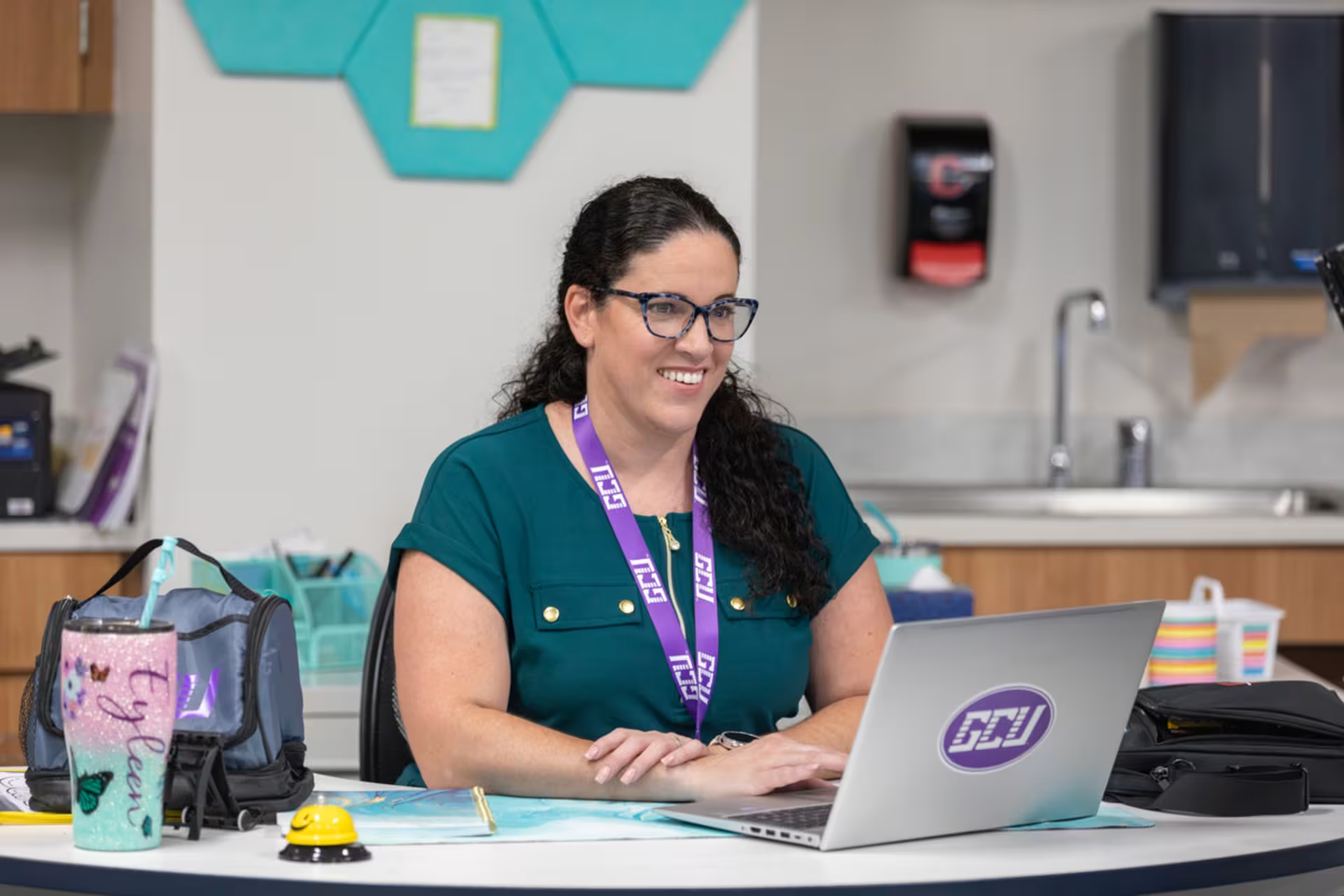
GCU's online(See disclaimer 1 )elementary education degree options span bachelor's, master's and doctoral studies. Program offerings include pathways for students seeking initial teacher licensure, licensed educators continuing their education and experienced professionals pursuing advanced study in education and leadership.
Review each program's degree level, licensure status and required field experiences to identify the option that aligns with your goals.
Licensure vs. Non-Licensure Elementary Education Programs
Some online(See disclaimer 1) elementary education programs are designed to lead to initial teacher licensure, while others are intended for candidates who already hold a teaching license or whose intended role does not require one. Licensure and certification requirements vary by state.
Bachelor’s
An online(See disclaimer 1) bachelor’s degree in elementary education offers a solid foundation for starting your career in education. We provide a variety of online pathways, allowing you to choose the one that best aligns with your goals.
Online(See disclaimer 1) elementary education degrees for bachelor’s students include:
Master’s
Earning an online(See disclaimer 1) master’s degree in elementary education can help you build skills that may expand your career possibilities and deepen your impact as an educator. You’ll be taught advanced, innovative teaching methods that can support your efforts to influence the next generation of learners.
Online(See disclaimer 1) master’s degrees for elementary education include:
Doctoral
GCU offers online(See disclaimer 2) doctoral degrees for experienced educators ready to lead and innovate in the field. These advanced online programs emphasize research, transformative practices and strategic leadership, providing flexibility.
Online(See disclaimer 2) doctoral education programs include:
K-12 Leadership Emphasis (Qualitative)
K-12 Leadership Emphasis (Quantitative)
Special Education Emphasis (Qualitative)
Special Education Emphasis (Quantitative)
in K-12 Leadership
in Teaching and Learning
Education Specialist Degree (EdS)
The EdS guides learners in acquiring core competencies that are immediately applicable in the field. It is not a doctorate degree and doesn’t require a dissertation. The EdS is geared to provide skills for certain educational leadership roles. Check your state’s requirements for these specific roles.
Online(See disclaimer 2) education specialist degree programs include:
Critical Thinking and Lasting Connections
"I got to engage in deeper level thinking and critical thinking with my peers, and I developed a really awesome relationship with my tutor and with my directors."
"I got to engage in deeper level thinking and critical thinking with my peers, and I developed a really awesome relationship with my tutor and with my directors."
What Can You Do With an Elementary Education Degree?
Career options vary by degree level, licensure status and employer requirements. The roles below are most directly associated with teacher-preparation pathways. Graduate and doctoral programs may support different education-focused roles depending on the program selected.
Depending on the program and applicable licensure requirements, potential roles may include:
Elementary school teacher
Special education teacher
Teaching assistant
Students who graduated from GCU’s College of Education as of 2026(See disclaimer 3)
Median annual wage for kindergarten and elementary school teachers as of May 2025(See disclaimer 4)
Frequently Asked Questions
Explore common questions about GCU's online elementary education degrees, including degree levels, online learning, licensure and accreditation.
What degree is best for elementary education?
Can I earn an elementary education degree online?
Does an elementary education degree lead to teacher licensure?
Are GCU's online elementary education degrees accredited?
Why Study Elementary Education Online at GCU?
GCU's online learning environment gives students access to discussion forums, collaborative projects and digital course resources while allowing them to connect with classmates and instructors throughout their coursework.
Admission requirements vary by program and degree level. Review the requirements for the specific elementary education degree you are considering before applying.
Grand Canyon University is institutionally accredited by the Higher Learning Commission, an institutional accreditation agency recognized by the U.S. Department of Education.
Online coursework may include virtual classrooms, multimedia content, discussion forums and collaborative projects, depending on the course and program.
Online Learning Resources
Through our Learning Management System, you can engage with peers and professors in forums and group projects, while also using tools like eBooks, calendar reminders and technical support. Dedicated student services counselors are here to guide you throughout your academic journey.

Compare GCU's online(See disclaimer 1 )elementary education degree options by degree level, licensure pathway and program focus.
Visit the "State Disclosures" section on the page of the program you’re interested in at gcu.edu for details on state restrictions.
If you are seeking licensure/certification, please refer to the "Accreditation and Compliance/State Disclosures” link for the specific program of interest’s website for your location and/or employment state’s licensure requirements, per 34 CFR 668.14(b)32 and 668.43(c).
Excluding observational and practice-based experiences and student teaching.
Program has residencies that take place on or near GCU's campus.
- Includes students who have graduated or completed their program from 1957 to January 2026. This does not include students in bridge programs, high school dual enrollment, non-degree studies or continuing education.
- The earnings referenced were reported by the U.S. Bureau of Labor Statistics (BLS), Kindergarten and Elementary School Teachers as of May 2025, retrieved September 2026. BLS calculates the median using salaries of workers nationwide with varying levels of education and experience. It does not reflect the earnings of GCU graduates as kindergarten and elementary school teachers, nor does it reflect the earnings of workers in one city or region of the country or a typical entry-level salary. Median income is the statistical midpoint for the range of salaries in a specific occupation. It is very unlikely that a median salary will reflect an entry-level salary. It represents what you would earn if you were paid more money than half the workers in an occupation, and less than half the workers in an occupation. It may give you a basis to estimate what you might earn at some point if you enter this career. Grand Canyon University can make no guarantees on individual graduates’ salaries. Your employability will be determined by numerous factors over which GCU has no control, such as the employer the graduate chooses to apply to, the graduate’s experience level, individual characteristics, skills, etc. against a pool of candidates.
Approved and verified accurate by the Dean of the College of Education on Oct. 12, 2026.